Palazzo Cesi-Gaddi: A Renaissance-Era Palace in Rome
Site at a Glance
- Popularity
- Medium
- Country
- Italy
- Primary era
- Early Modern
- Eras represented
- Early Modern
- Civilizations
- Papal States
- Site type
- Domestic
- Remains
- Elite Residence
On this page7 sections
History
Palazzo Cesi-Gaddi is a palace in Rome, Italy, built by the wealthy Florentine merchant family of Gaddi in the early sixteenth century. Its history links family ownership and scientific scholarship with the later work of Italy’s military courts.
From the Gaddi to the Cesi
The palace passed soon after its construction to the Rossi di San Secondo. In 1567, Sigismondo de’ Rossi, Marquess of San Secondo, sold it to Angelo Cesi, a cardinal and bishop of Todi. The Cesi were a noble family of Umbrian origin; Angelo’s parents were Giangiacomo Cesi and Isabella d’Alviano.
By 1570, Ugo Boncompagni possessed the palace. After his election as Pope Gregory XIII in 1572, it returned to the Cesi family.
Federico Cesi and the Accademia dei Lincei
Federico Cesi settled in the palace after marrying Isabella Salviati. In 1603, he founded the Accademia dei Lincei, an Italian society devoted to scientific research, and established a botanical garden. He welcomed scientists to the palace, including his friend Galileo Galilei, an astronomer and natural philosopher who joined the society.
Later ownership and military justice
The Cesi family owned the palace until 1798, when it passed first to Ulisse Pentini and then to Baron Camuccini. Camuccini transferred it to the Duke of Northumberland in 1855. It later belonged to the Santarelli family and, from 1929, to Salvatore Buffardi.
The state expropriated the palace in 1940, and the Ministry of War installed Rome’s Military Tribunal there. In 1994, Antonino Intelisano, military prosecutor general at Italy’s Court of Cassation, discovered the so-called Cabinet of Shame. Sealed from 1960, it contained files concerning Nazi war crimes, including the massacre at Sant’Anna di Stazzema, a Nazi massacre in Italy during the Second World War.
The Ministry of Defence now owns the palace. It remains in use by the Council of Military Judiciary, military prosecution offices, the Military Court of Appeal, and the Military Surveillance Tribunal. One of the prosecution offices serves the Court of Cassation, Italy’s highest court.
Remains
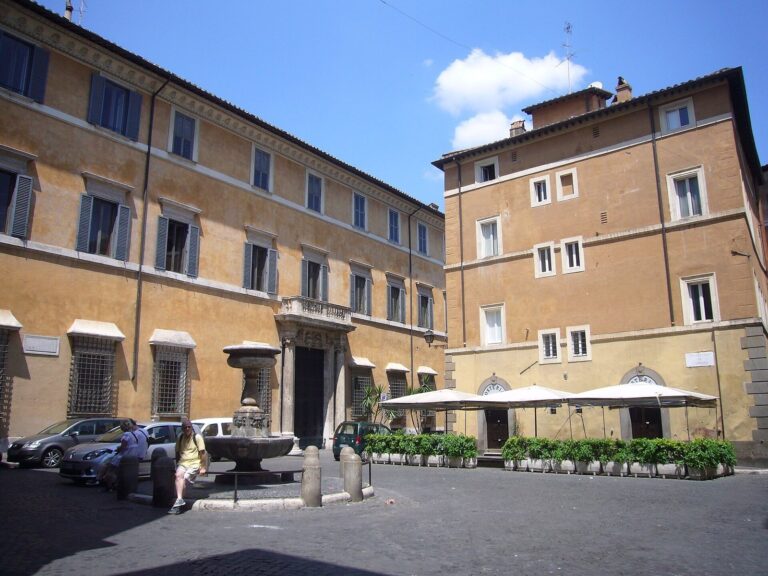
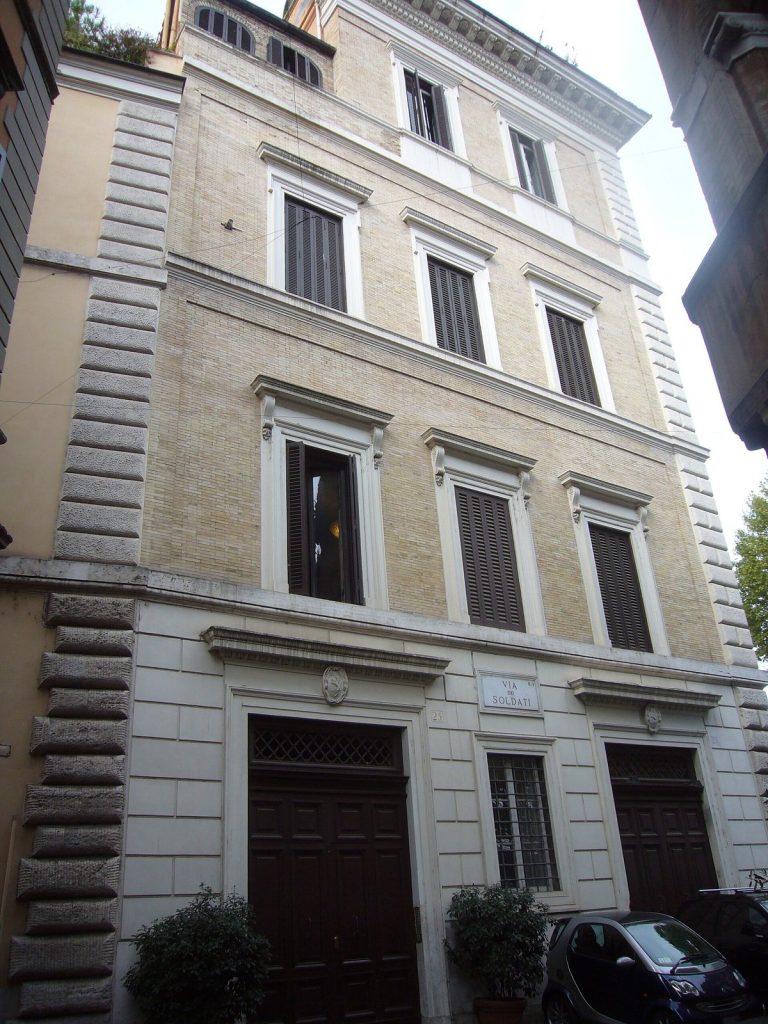
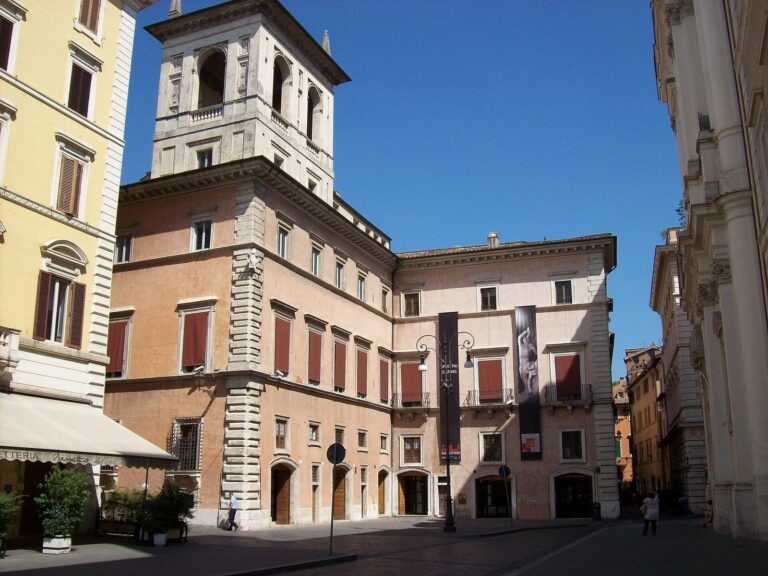
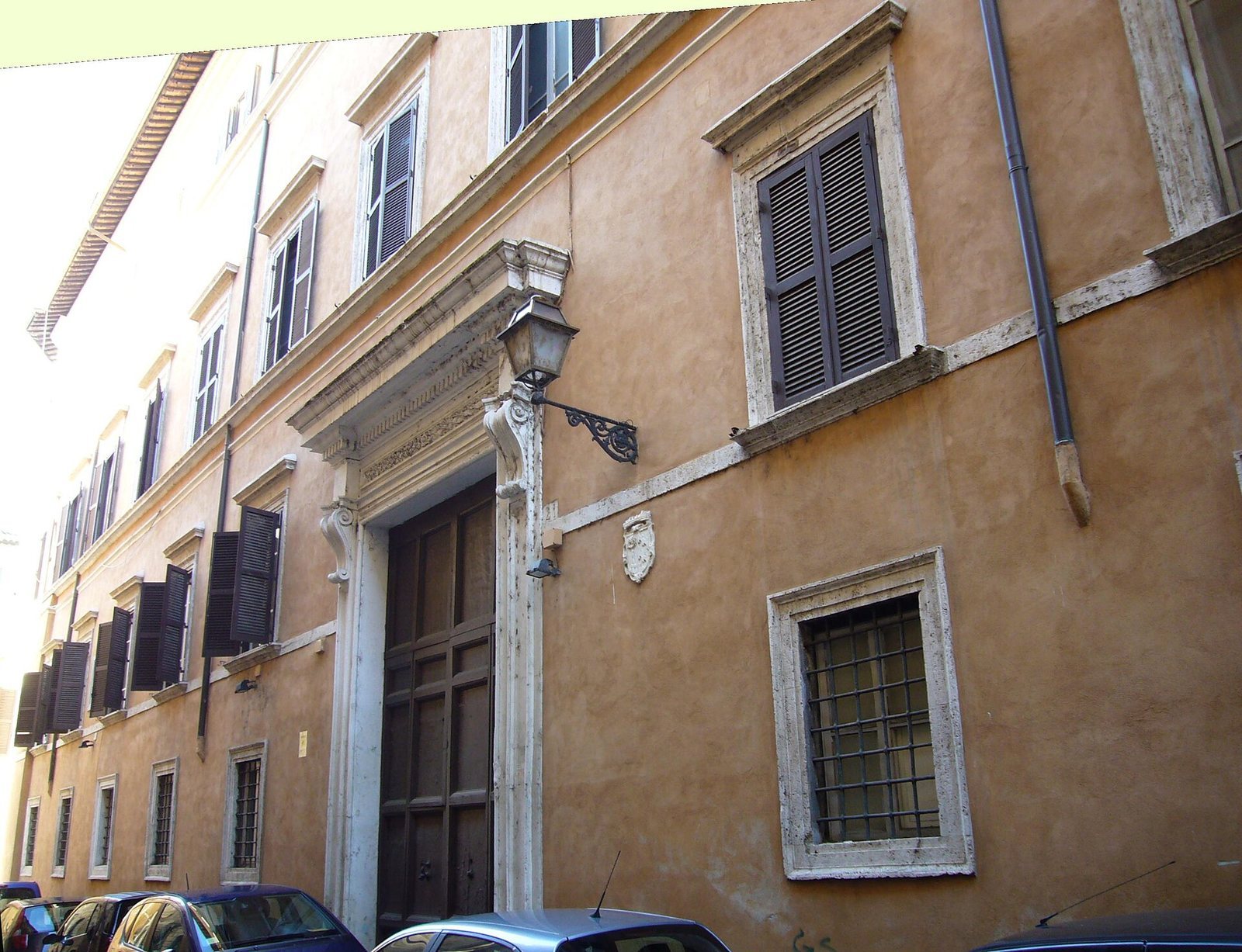
The palace stands on the corner of Via della Maschera d’Oro and Via degli Acquasparta, near Ponte Umberto I and north of Piazza Navona. Under Cesi ownership, the Renaissance façade was retained, the entrance portal was renewed, the interiors were completely redesigned, and a garden was added behind the building.
Street façade and portal
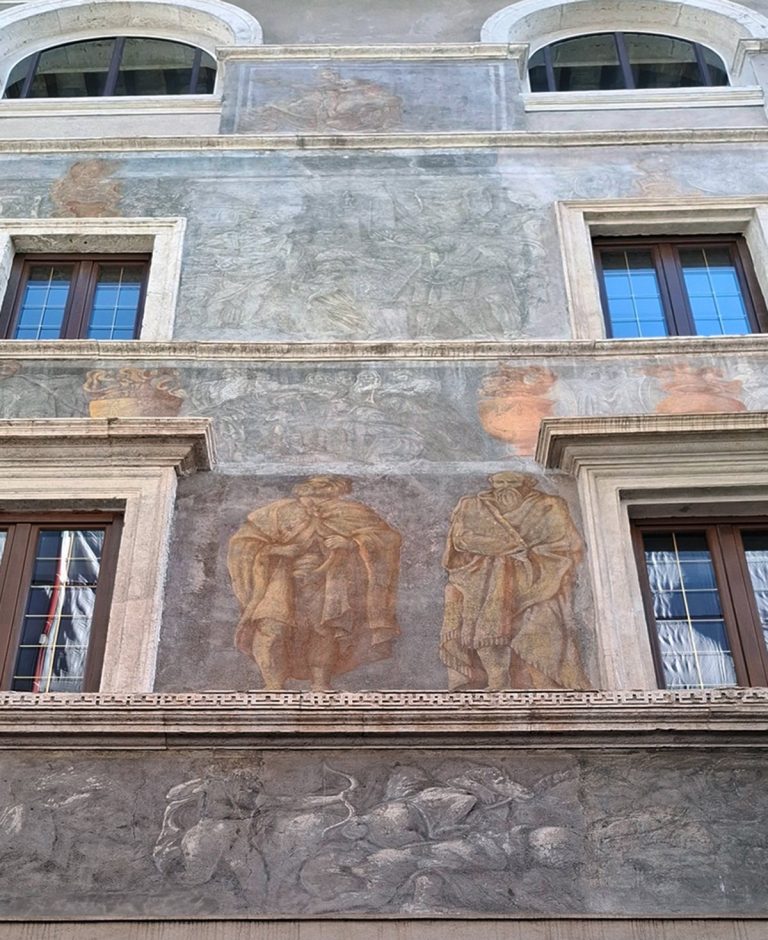
The façade facing Via della Maschera d’Oro once carried frescoes by the Italian Renaissance painters Polidoro da Caravaggio and Maturino da Firenze. Their scenes showed Roman history, warfare, sacrifice, and hunting. Weathering and later repainting erased the paintings, while reproductions held at the Albertina art museum in Vienna preserve a visual record of their appearance. Above the renewed portal at number 21, a coat of arms combines the Cesi and Salviati family emblems.
Garden and sculptures
Two statues depicting kings of Numidia, an ancient kingdom in North Africa, were unearthed in the palace garden. They are now displayed in Rome’s Capitoline Museums.