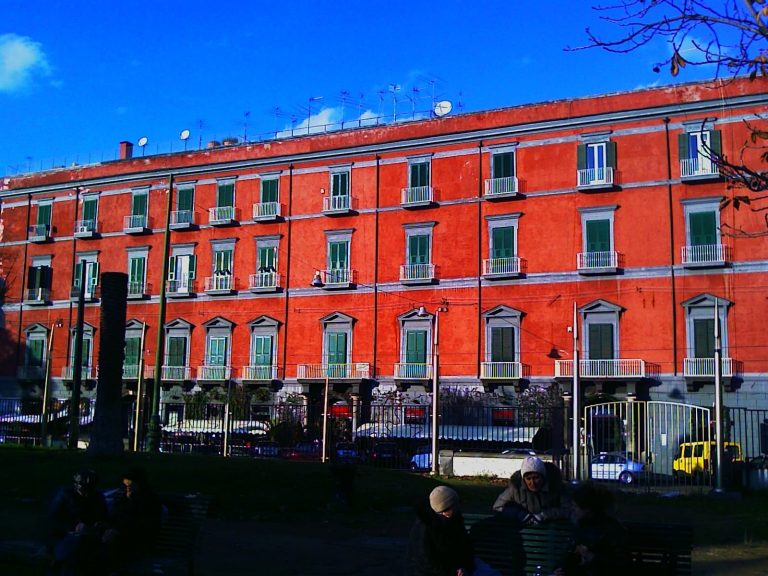
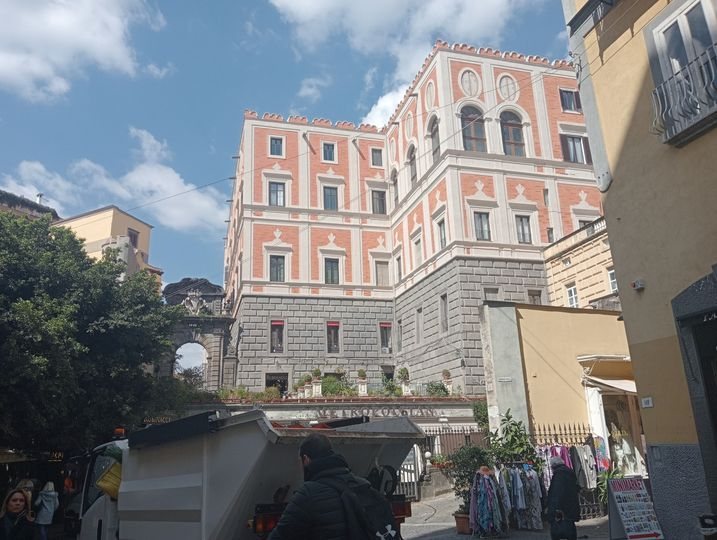
Palazzo Calabritto: A Ducal Palace in Naples
Site at a Glance
- Rating
- 4.3
- Popularity
- Very Low
- Country
- Italy
- Primary era
- Early Modern
- Eras represented
- Early Modern
- Civilizations
- Habsburg, Habsburg Austria, Kingdom of Naples
- Site type
- Domestic
- Remains
- Elite Residence
On this page7 sections
History
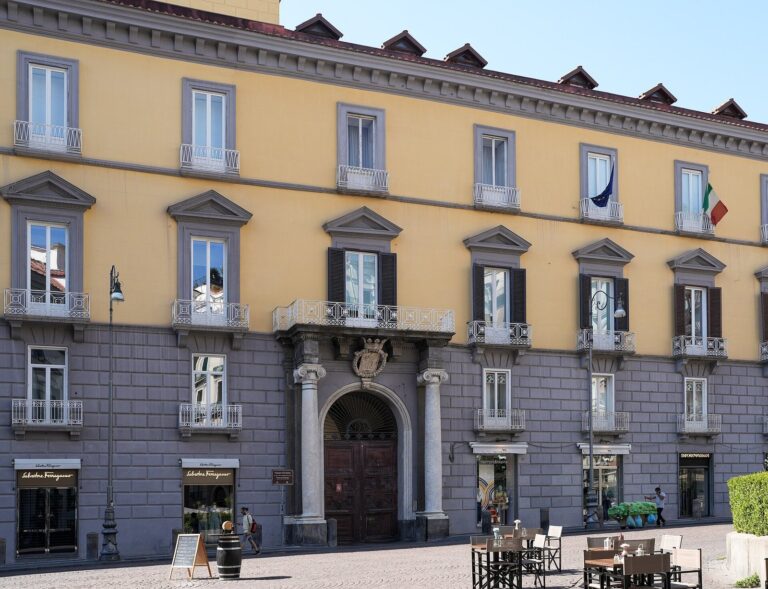
Palazzo Calabritto is a monumental palace in Naples, Italy, begun around 1720 as a residence for the Calabritto ducal family. Members of the family held public offices in the Kingdom of Naples, the historical state in southern Italy centered on the city.
The Tuttavilla family and construction
The family’s Italian branch began with the natural children of Guillaume d’Estouteville, a French cardinal, or senior official of the Catholic Church, who settled in Rome around the mid-15th century. The branch adopted the name Tuttavilla, and in 1630 Orazio and other family members received the title of dukes of Calabritto. Vincenzo Tuttavilla (1692–1731), the fifth duke, acquired land near the church of Santa Maria della Vittoria for a family residence. He reserved part of the property for a public road, now Via Calabritto.
Royal ownership and restoration
Impressed by the palace’s scale, Charles III of Bourbon, then ruler of Naples and later king of Spain, bought it for 34,700 ducats, a historical European currency. He did not intend to finish or occupy the building. In 1754, Vincenzo’s son Francesco bought it back for the same sum and commissioned the 18th-century Italian architect Luigi Vanvitelli to restore it. Vanvitelli substantially altered the staircase and portals.
Occupants and later uses
Over the centuries, the palace housed members of the Calabritto family, Joachim Murat, who ruled Naples under Napoleon, and brothers Florestano and Guglielmo Pepe, active in southern Italian military and political affairs. Other occupants included Neapolitan general Paolo Avitabile, jurists Alberto Marghieri and Bruno Gaeta, and diplomat Filippo Caracciolo. Bombing during the Second World War severely damaged the building. Some rooms later hosted Anglican Church ceremonies and fashion workshops run by Neapolitan designers. In the second half of the 1980s, the palace served as the headquarters of the Napoli football club. It is now used for residences.
Remains
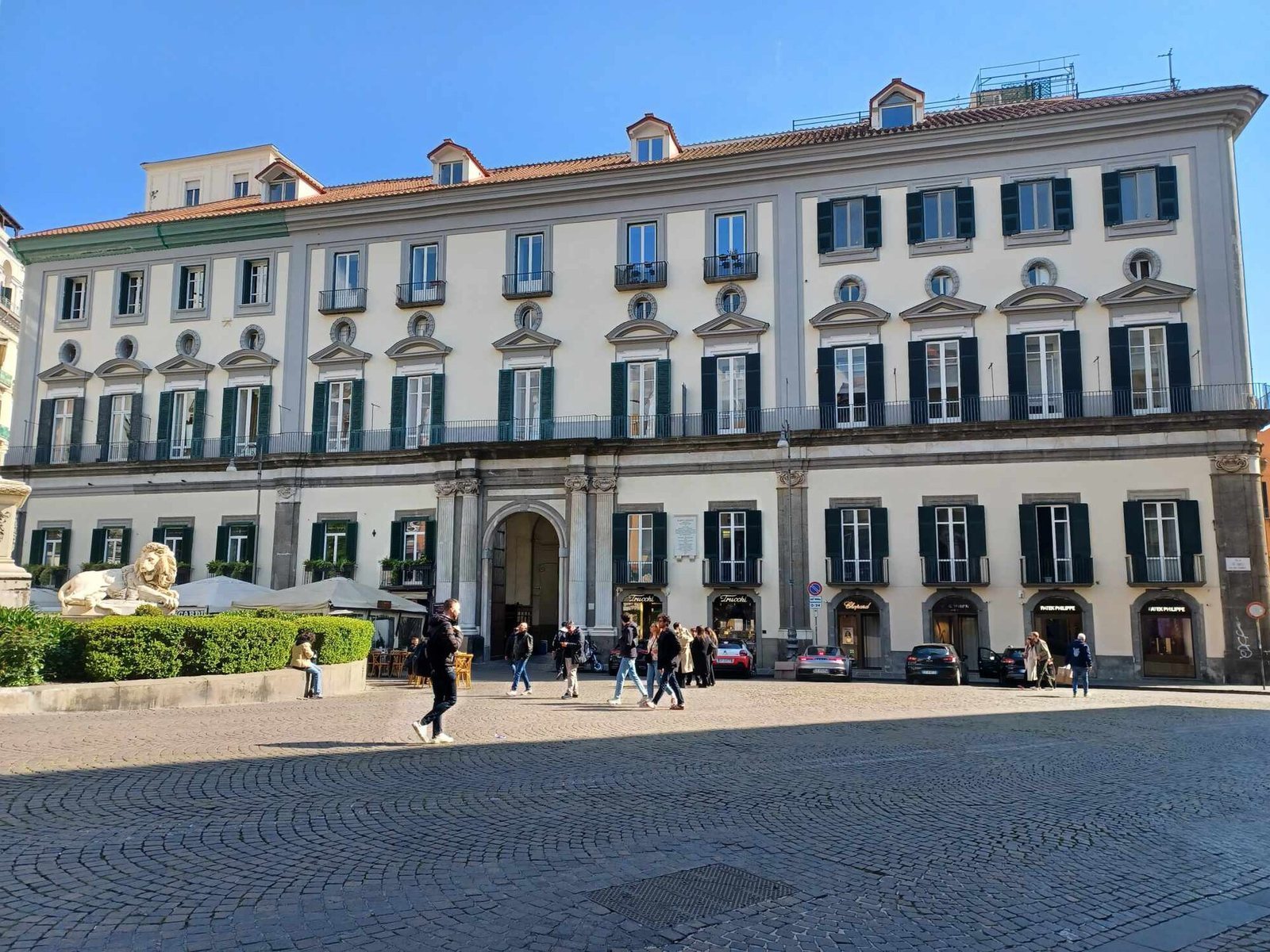
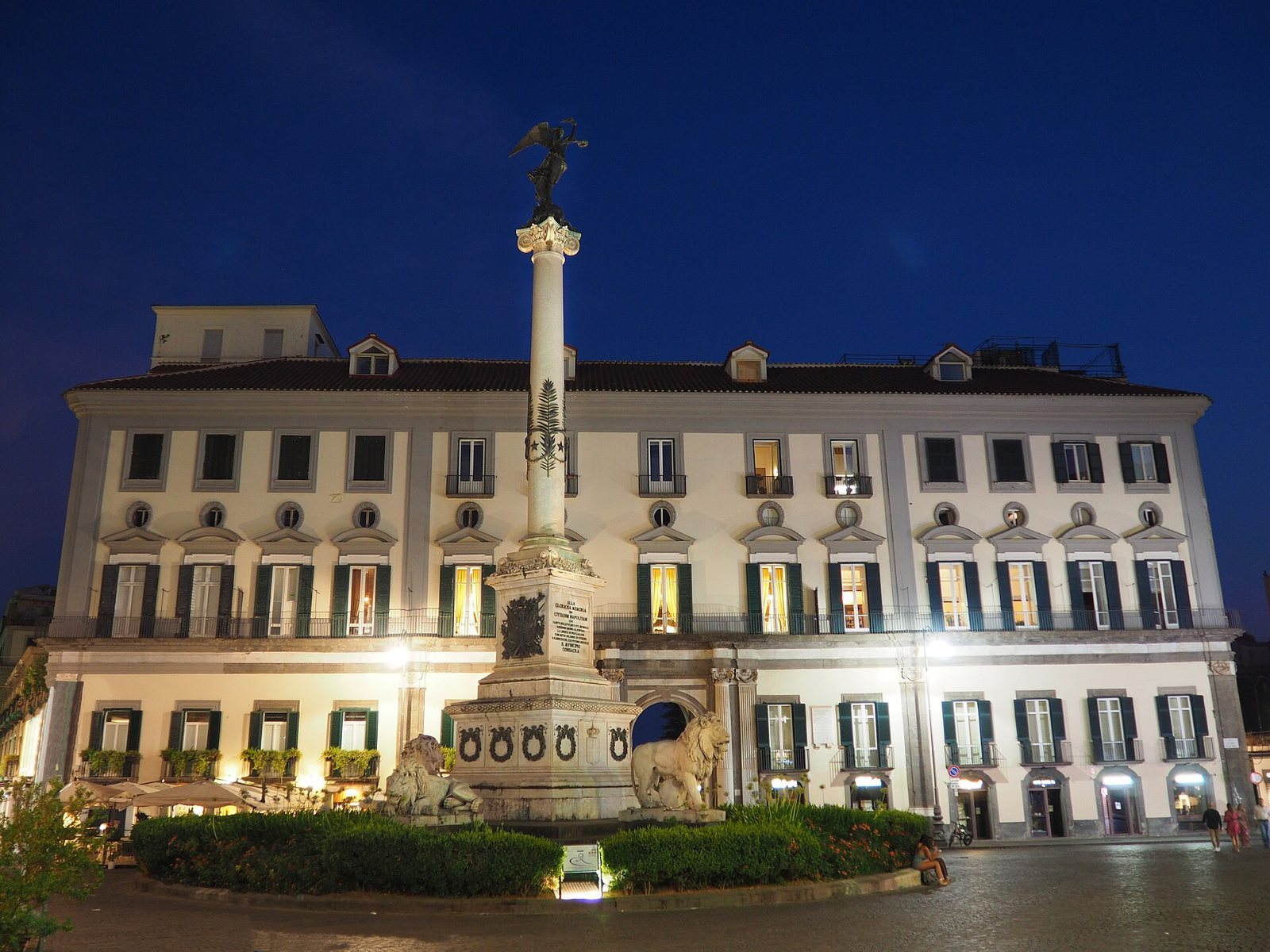
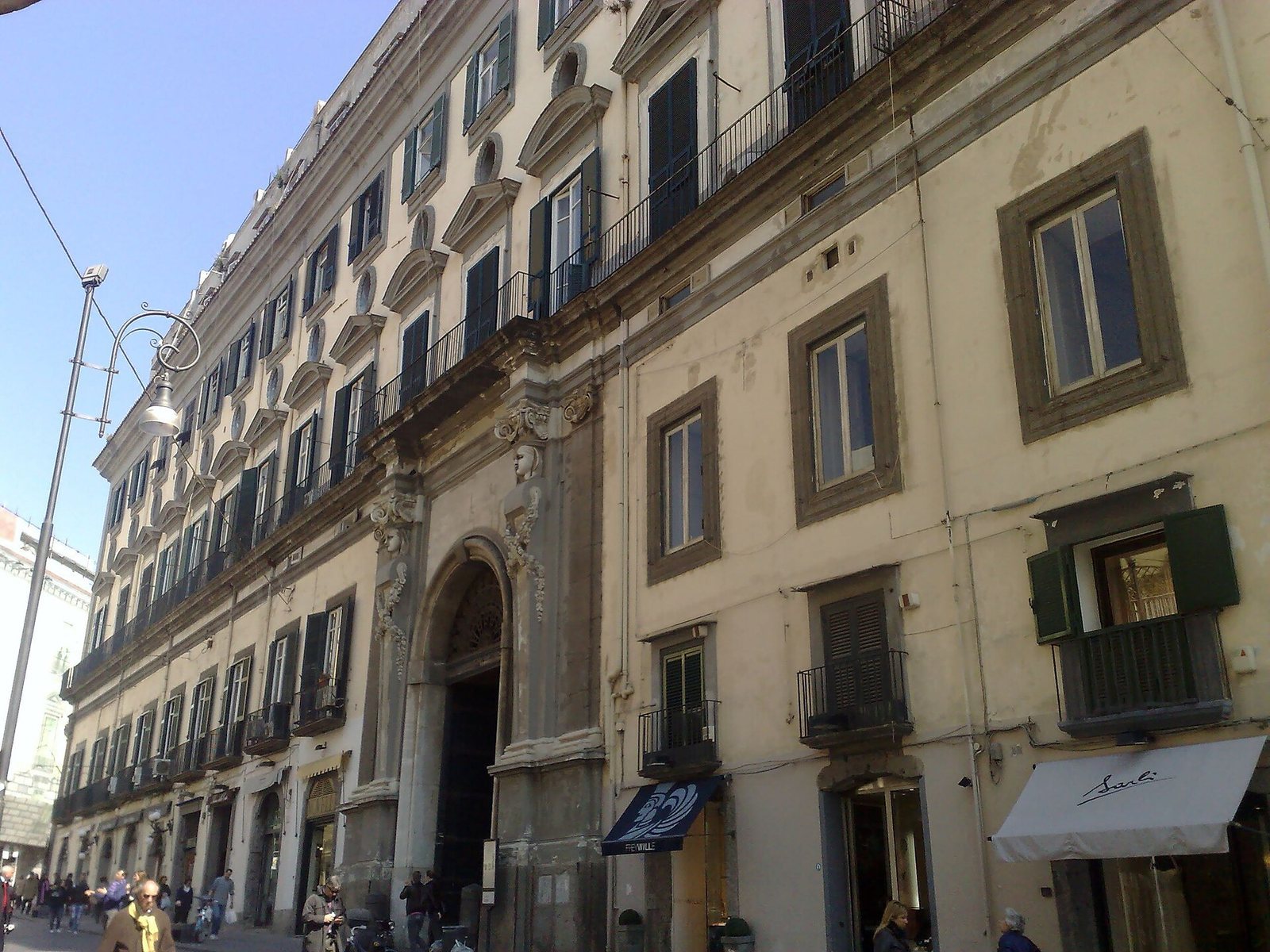
The palace stands at the corner of Via Calabritto and Piazza dei Martiri, in Naples’s San Ferdinando district, close to Santa Maria della Vittoria. A second entrance is at number 30 on the piazza.
Marble portal
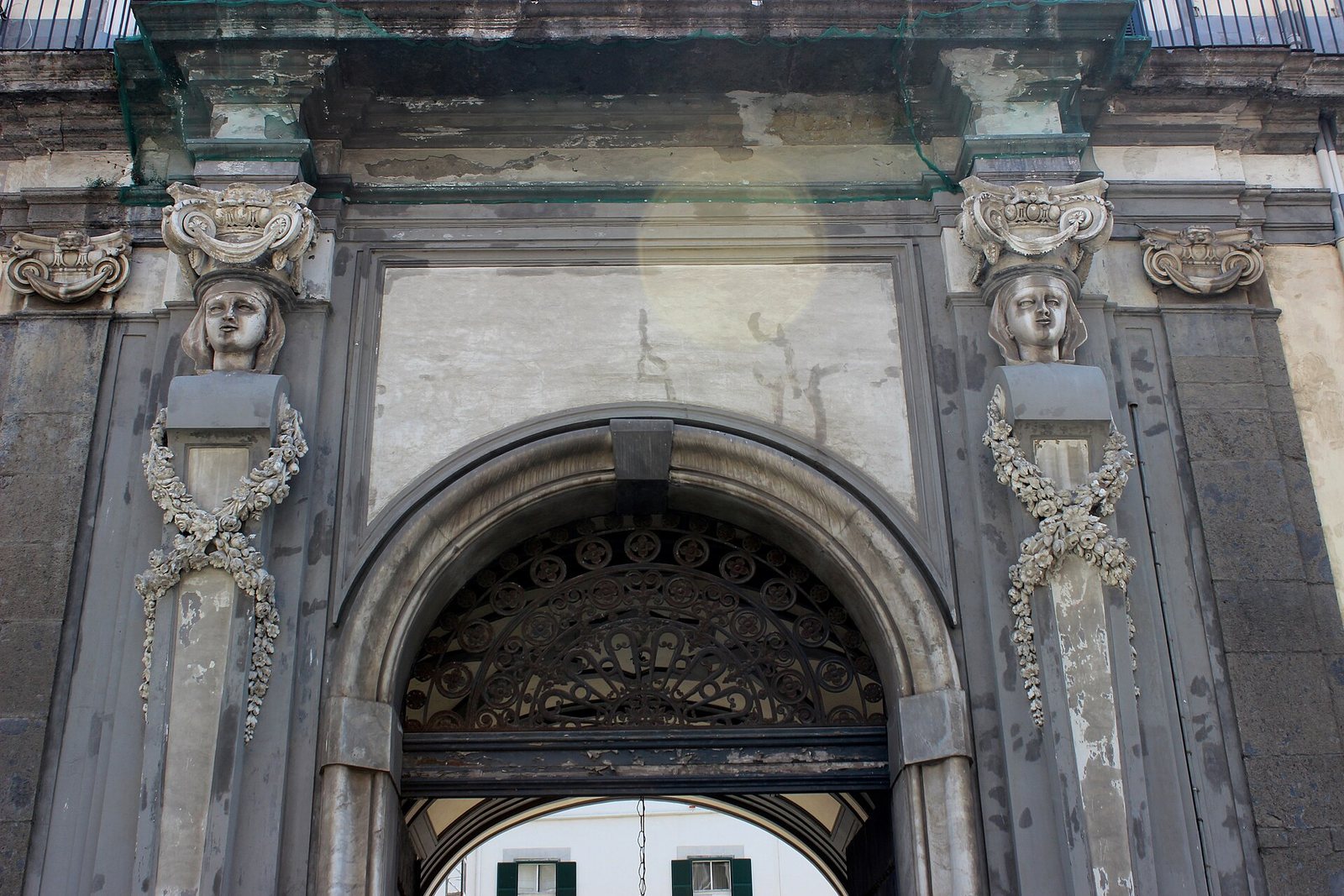
The entrance portal is made of marble and framed by Ionic caryatids, sculpted female figures used as supports in the Ionic architectural order.
Mezzanine frescoes
Frescoes survive on the vaulted ceilings of numerous rooms on the mezzanine, an intermediate floor within the building.