Palazzo Antonelli Castracani Augusti: A Cardinal’s Palace in Trecastelli, Italy
Site at a Glance
- Popularity
- Medium
- Country
- Italy
- Primary era
- Early Modern
- Eras represented
- Classical, Medieval, Early Modern
- Civilizations
- Papal States, Roman
- Site type
- Religious
- Remains
- Palace
On this page11 sections
History
Palazzo Antonelli Castracani Augusti is a palace in Brugnetto, a hamlet of Trecastelli near Senigallia, Italy. In 1750, Cardinal Niccolò Maria Antonelli, a senior Catholic cleric who advised the pope and helped elect a new pope, transformed a castle into the palace. Its architecture combines Baroque design, known for elaborate ornament, with Neoclassical forms based on classical models.
Roman villa and Franciscan convent
A Roman villa dated to 250–220 BC stood on the site. It had fallen into ruin by the 13th century, when a Franciscan convent was built there. The convent was later abandoned.
The Antonelli residence
In the late 17th century, the Antonelli counts built a castle over the earlier remains. To embellish the palace, Niccolò Maria Antonelli engaged artists from the National Academy of Saint Luke, an artists’ academy in Rome. They included painters Domenico Corvi, Pompeo Batoni, Felice Giani, and Franciszek Smuglewicz.
After Niccolò Maria’s death in 1767, his nephew Cardinal Leonardo Antonelli made the palace his summer residence. Leonardo had been a cardinal for 36 years and was known as the “Red Pope” and as the head of the “black cardinals.” These were descriptive labels, not formal church offices. Later, Cardinal Secretary of State Giacomo Antonelli received delegations from across Europe at the residence. The Secretary of State was a senior official in the papal government.
Later ownership and cultural use
The estate later passed to Laurentina Castracane degli Antelminelli, a direct descendant of Castruccio Castracani, a medieval Italian military leader and ruler. She married Count Augusto Augusti. The Augusti were an old Italian noble family whose members held countly titles in Bergamo and the Most Serene Republic of Venice. The family supplied two galleys, or oared warships, for the Battle of Lepanto in 1571.
Over the centuries, the palace hosted three popes and visitors including Voltaire, opera composer Puccini, British prime minister Churchill, military aviator Baracca, writer and poet Gabriele D’Annunzio, and American novelist Hemingway. In the 1990s, Giovanni Martines, Marquis of Villa Verde and the last of the Counts Augusti, established the Antonelli Study Center there for art and culture. From 2024, the site also includes the Gino Augusti 900 House Museum.
Remains
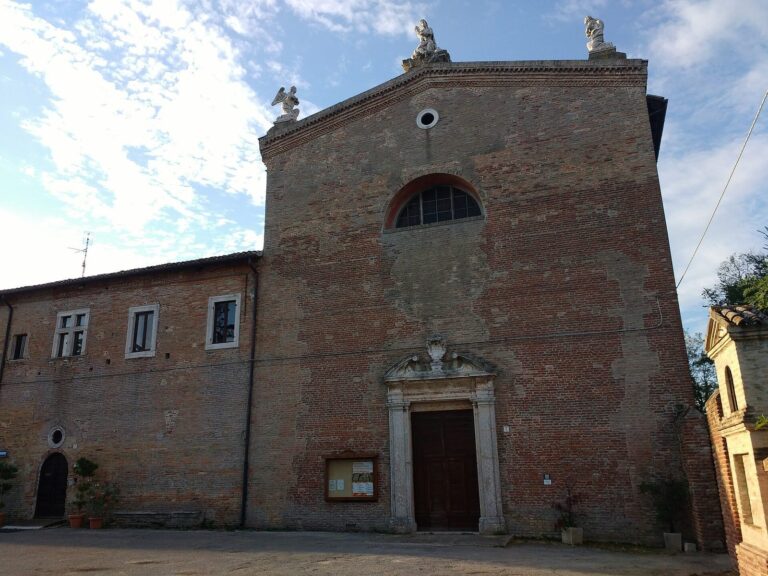
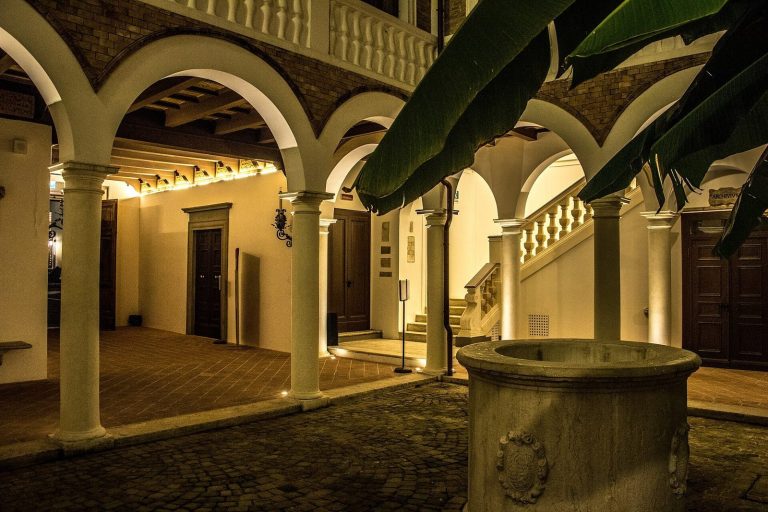
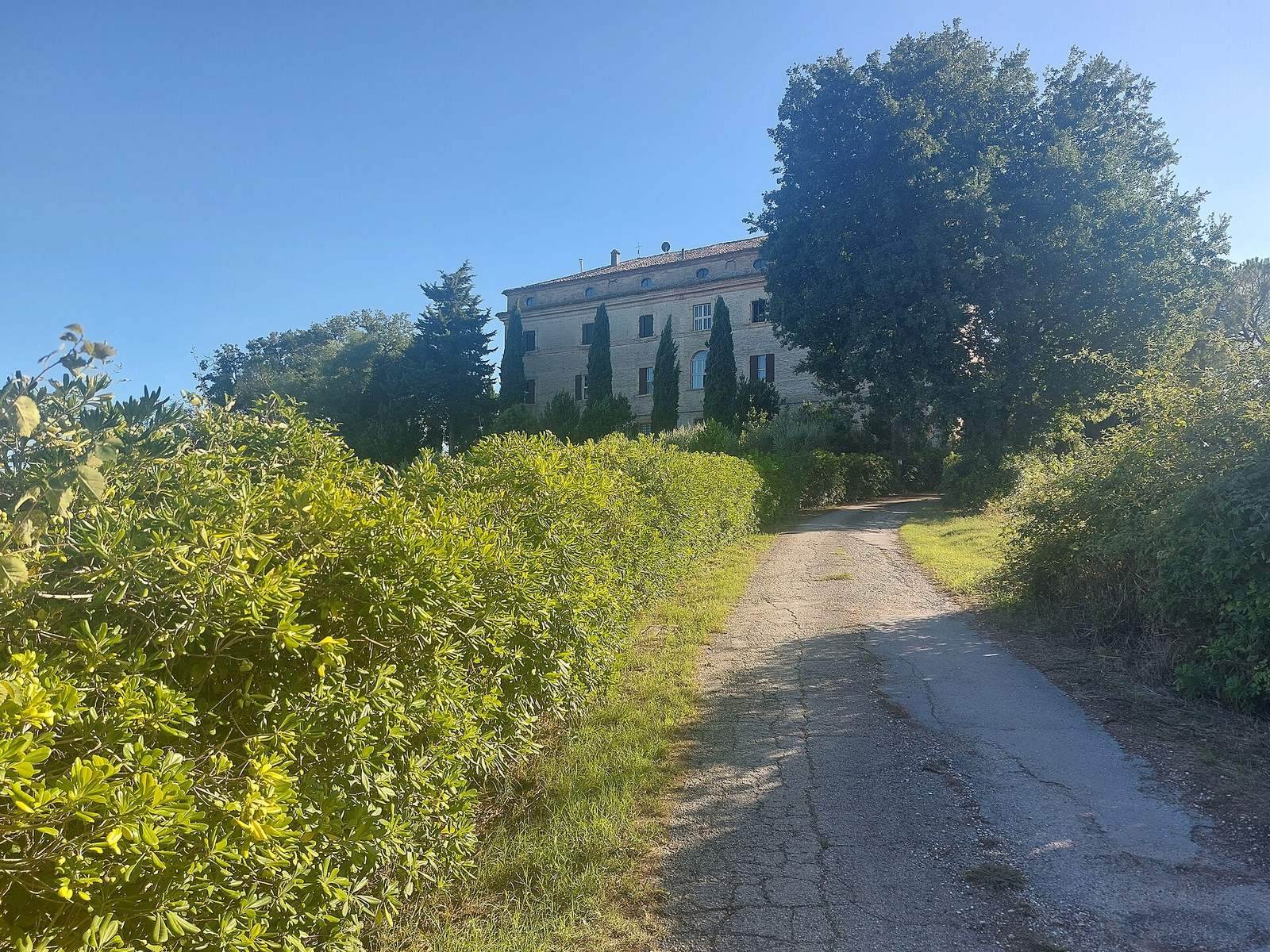
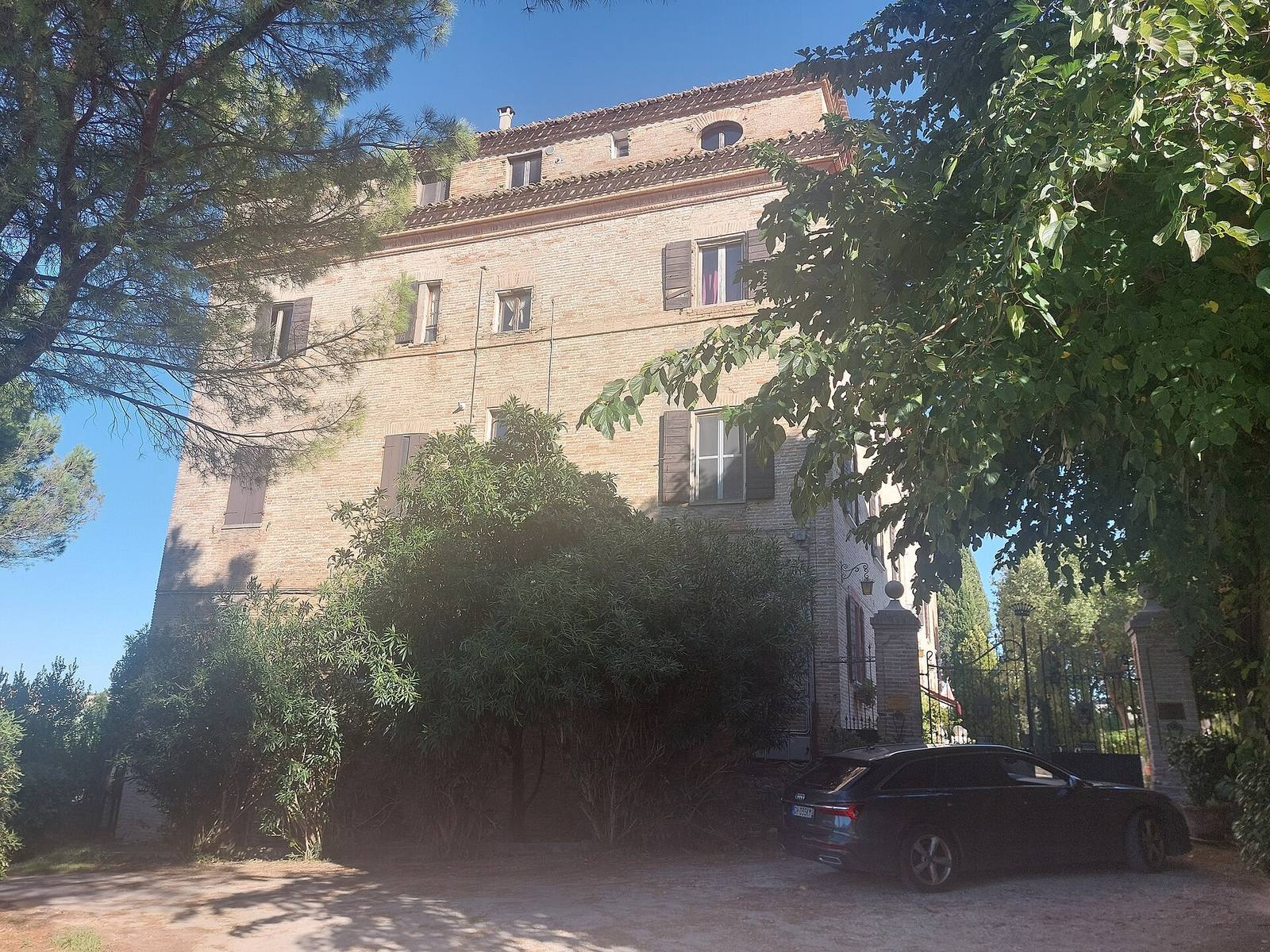
The palace stands on a hill and has five storeys. A large park surrounds it, and a church occupies the courtyard. The surviving complex includes the residence’s façade and staircase, decorated reception rooms, and the family crypt.
Exterior and grounds
Palace façade and staircase
Andrea Vici designed the main façade and grand staircase, following a project by Luigi Vanvitelli. The palace’s present form reflects the transformation begun in 1750.
Park
The grounds contain cypresses, laurels, pines, boxwoods, and centuries-old oaks.
Interior and courtyard church
Reception floor
The first floor, or piano nobile, is the principal reception floor of the palace. Its frescoes by Felice Giani draw inspiration from the decoration of Rome’s Domus Aurea, the palace complex built for the Roman emperor Nero.
Church and family crypt
The church in the courtyard serves as the family crypt. Dedicated to Saint Francis of Assisi and Saint Timotea, it was built in 1757 by Andrea Vici to a design by Luigi Vanvitelli.