Palazzina Reale: A Royal Residence in Rome
Site at a Glance
- Popularity
- High
- Country
- Italy
- Primary era
- Modern
- Eras represented
- Early Modern, Modern
- Civilizations
- Italian, Papal States
- Site type
- Domestic
- Remains
- Palace
On this page8 sections
History
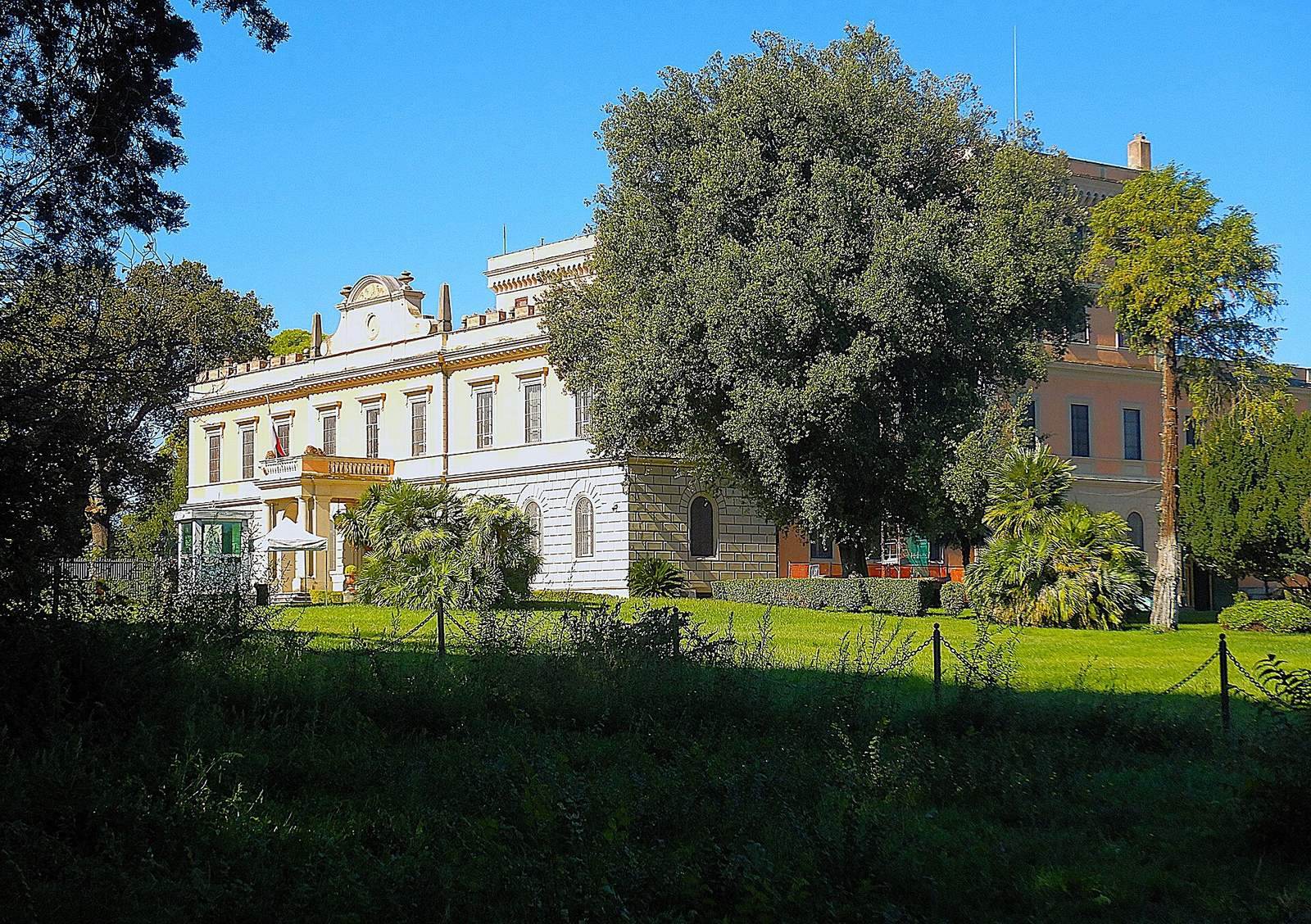
Palazzina Reale is a neoclassical residence in Villa Ada park in Rome, Italy, built in 1873–1875. Neoclassical architecture draws on ancient Greek and Roman forms. The residence later served the House of Savoy, the dynasty that ruled Italy from its unification as a kingdom until the monarchy ended in 1946.
The Pallavicini estate and royal acquisition
The estate’s history reaches back to the eighteenth century, when the Pallavicini, an Italian aristocratic family, acquired the property and began improving it. Their work included a coffee house called the Temple of Flora, named for the Roman goddess associated with flowers and spring.
In 1872, King Victor Emmanuel II acquired the estate. After the royal court moved to Rome, he enlarged it by purchasing neighboring vineyards. The Palazzina was built in 1873–1875, during his reign.
Villa Ada and the royal family
After Victor Emmanuel II died in 1878, his Roman villa was sold to Count Giuseppe Telfener, an Italian entrepreneur. Telfener named the property Villa Ada after his wife and owned it until 1901. In 1904, Victor Emmanuel III, Victor Emmanuel II’s grandson and king from 1900, bought Villa Ada back and gave it to his wife. The Palazzina became a royal family residence, also known as Villa Savoia, and served that purpose until the monarchy ended in 1946.
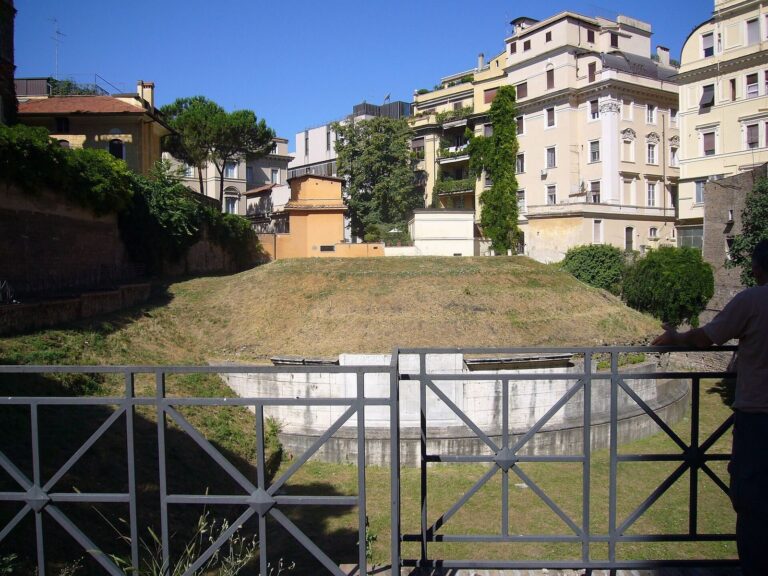
During the Second World War, a bunker was built in the park in 1941–1942 to shelter the royal family. In 1946, the Palazzina and Villa Ada park passed into Italian state ownership and opened to the public.
Egyptian ownership
In 1997, the property and adjoining area were sold to the Arab Republic of Egypt for 25 billion lire. The Palazzina was protected under Italy’s 1939 heritage law, and the Ministry of Cultural Heritage had a right of pre-emption, meaning it could buy the property before another purchaser. Neither the ministry nor the Municipality of Rome exercised that right. The property passed to the Egyptian state, and the Palazzina has housed Egypt’s embassy in Italy since then.
Remains
The estate combines the central residence with other buildings, landscaped grounds, ornamental structures, and a wartime shelter. Its features reflect both the Palazzina’s neoclassical design and later, eclectic additions.
The residence and entrance
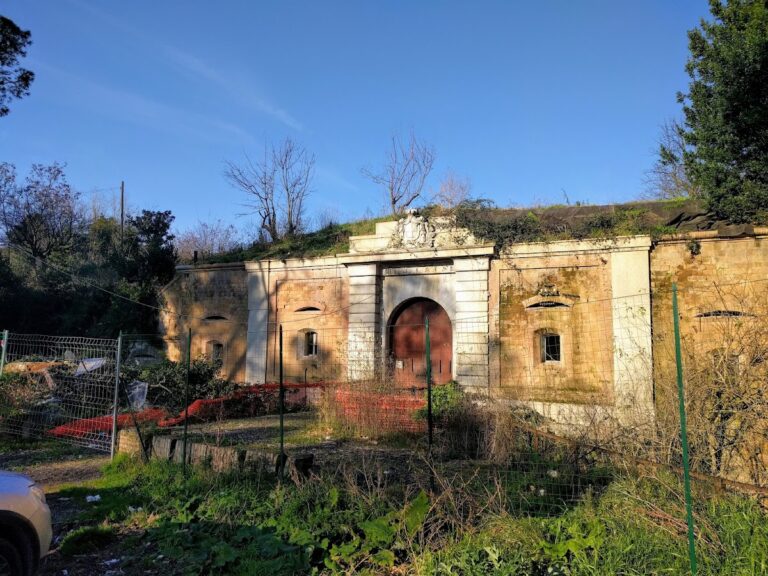
The Palazzina is in excellent condition, and its interiors contain valuable artworks and furnishings. A monumental portal and other additions were made in 1904. Their eclectic design combines classical, Baroque, an ornate European style, and neoclassical elements.
Estate buildings and garden
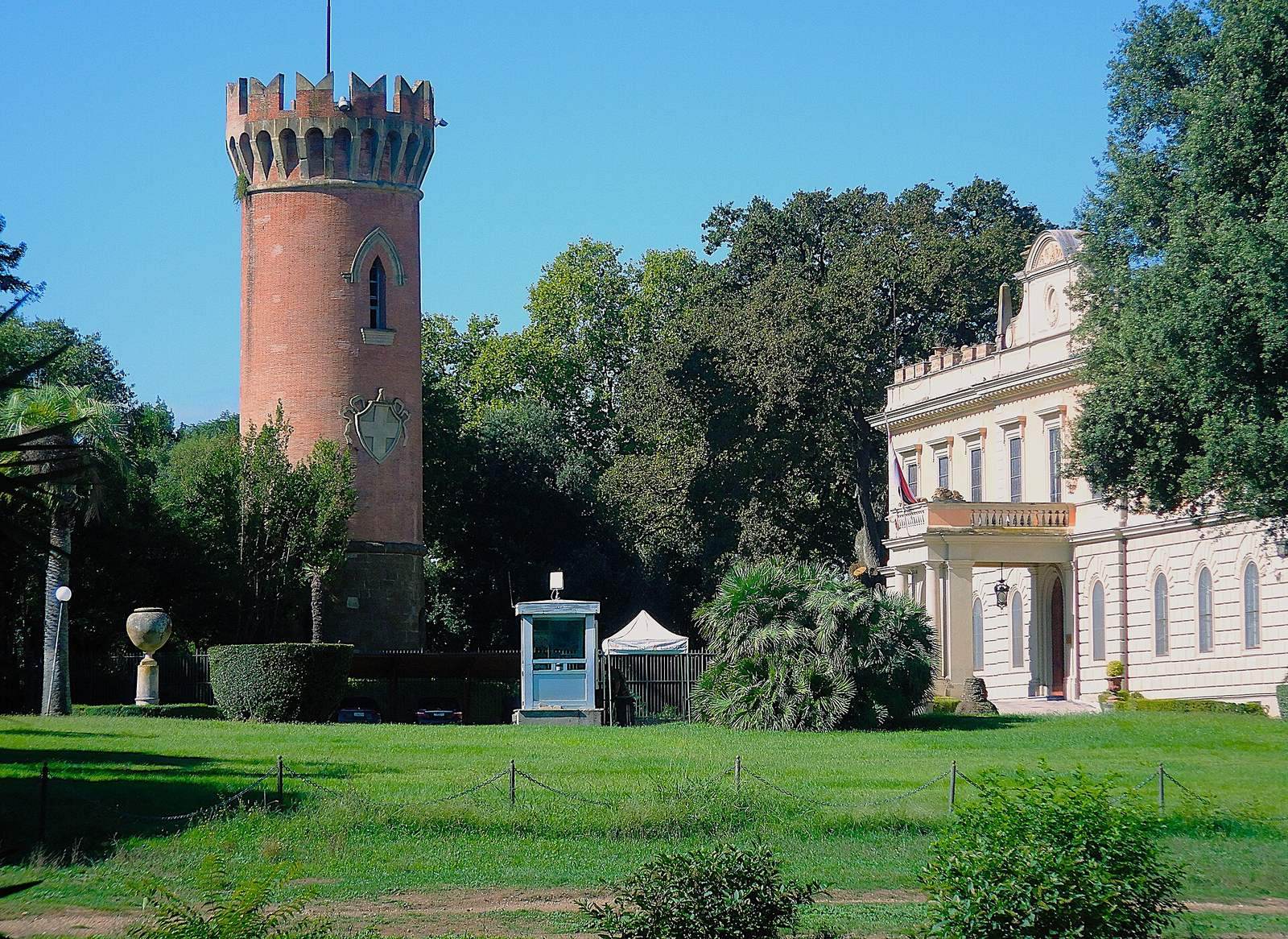
Other buildings on the estate include the Casino Nobile, a country house, residential buildings, and stables. The grounds were landscaped as an English-style park, designed to appear natural rather than formally geometric. Exotic plants grow among small structures that include a Swiss chalet and a Gothic tower. The eighteenth-century coffee house, known as the Temple of Flora, also formed part of the estate.
Wartime bunker
The bunker within the park has a circular plan. It was built as a shelter for the royal family during the Second World War.