Palace of Viceroy Laserna: A Neoclassical Residence in Jerez de la Frontera
Site at a Glance
- Popularity
- Medium
- Country
- Spain
- Primary era
- Early Modern
- Eras represented
- Medieval, Early Modern, Modern
- Civilizations
- Spanish
- Site type
- Domestic
- Remains
- Elite Residence
On this page7 sections
History
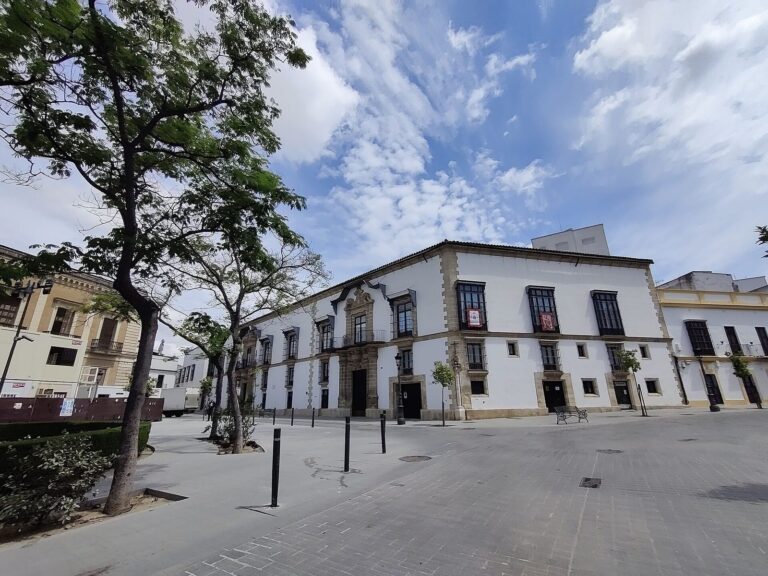
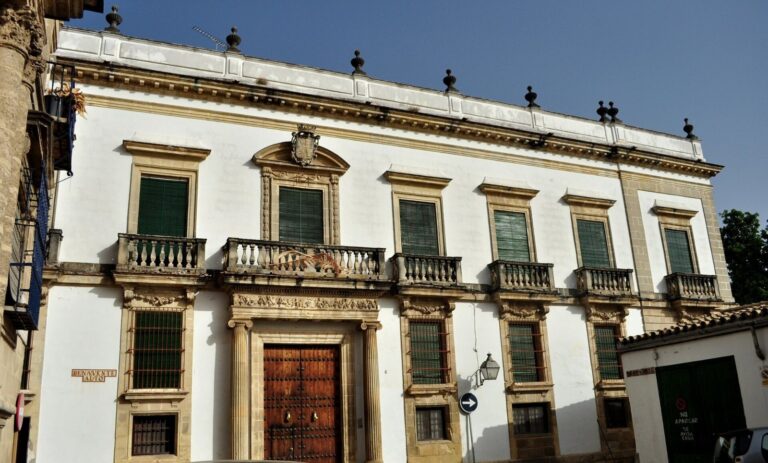
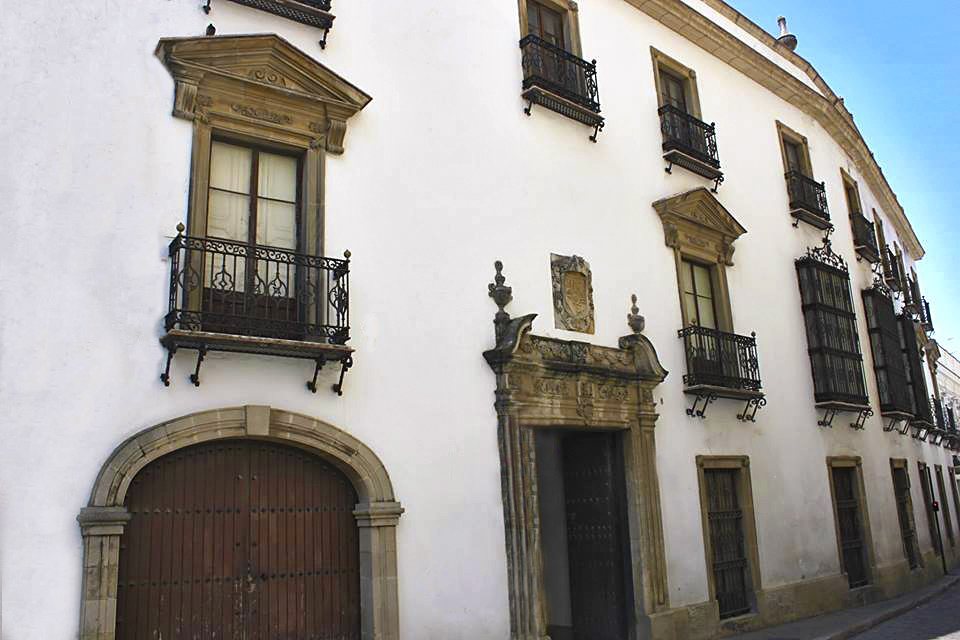
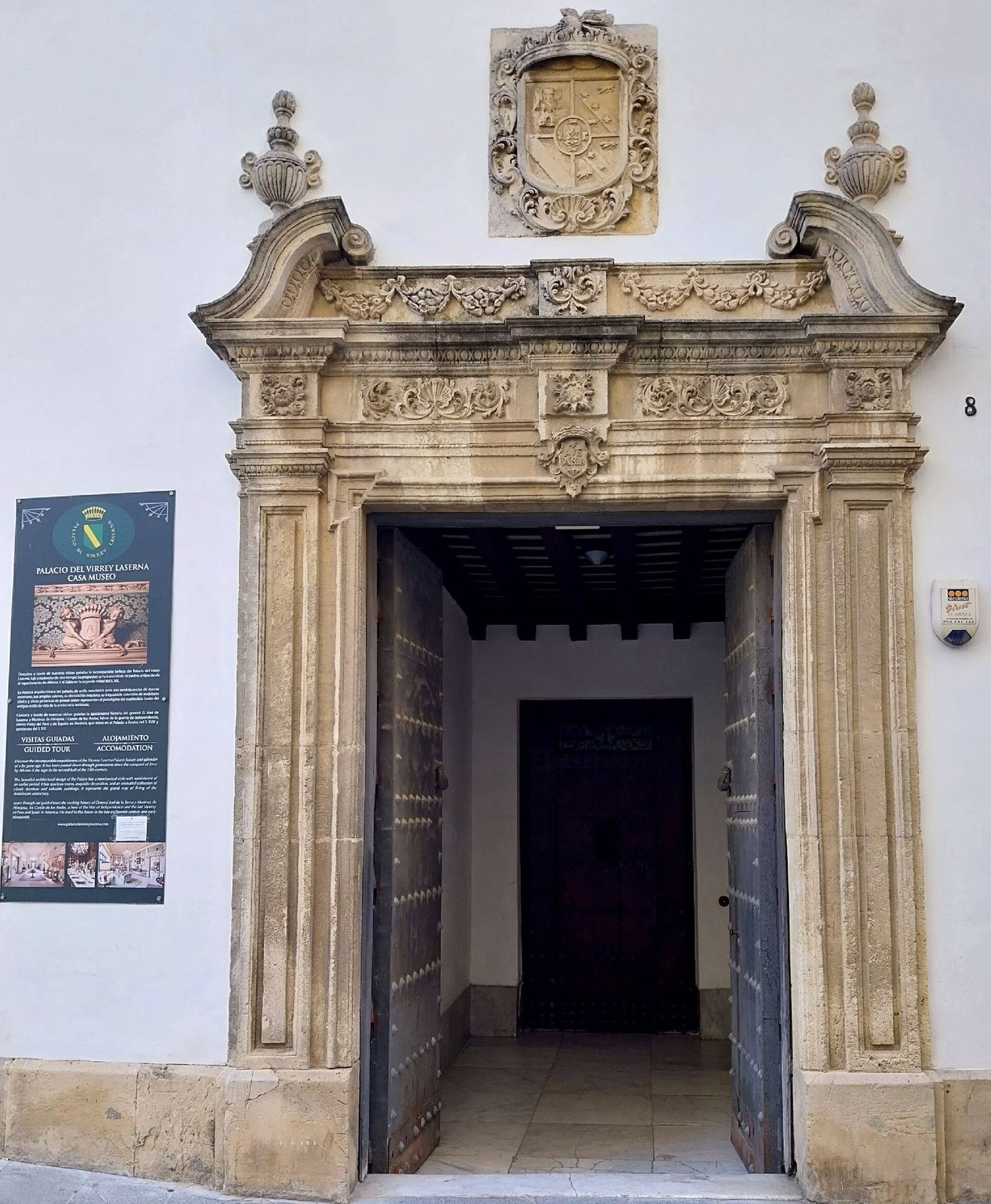
The Palace of Viceroy Laserna is a historic residence in Jerez de la Frontera, Spain. It has belonged to the same family since the 13th-century Christian conquest of Jerez from Muslim rule. Extensive refurbishment in the 18th century gave the palace its present neoclassical character, a style drawing on ancient Greek and Roman forms.
Family residence and the 18th-century refurbishment
José de la Serna y Martínez de Hinojosa, born at the palace in the 18th century, became the first Count of the Andes and the last viceroy of Peru. A viceroy governed a territory on behalf of a monarch; Peru was then part of the Spanish colonial empire. The palace was named in José’s honor and became the traditional residence of the Counts of the Andes, from whom it takes its alternative name, the Palace of the Counts of the Andes.
The 1925 adjoining building
In 1925, Francisco Moreno Zuleta, the sixth Count of the Andes, commissioned a building adjoining the palace to house government officials attending the canonical coronation in Jerez that April. This was a church-authorized ceremonial crowning of the image of Our Lady of Mount Carmel.
Remains
Palace and archaeological remains
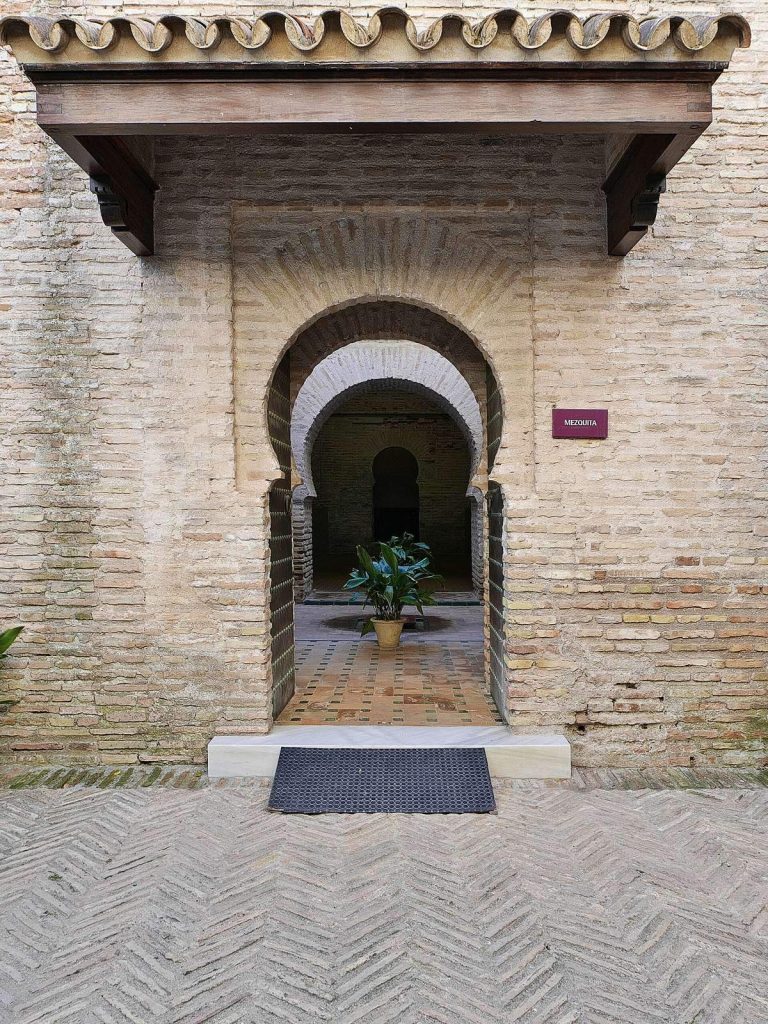
The complex covers 3,000 square metres. Its architecture is mainly neoclassical, with details from earlier periods, and it stands over foundations of buildings from the period of Muslim rule. Restoration work revealed ceramic tilework from the Nasrid period, when a Muslim dynasty ruled the Emirate of Granada. The tilework dates to the 13th century, and other archaeological evidence from earlier phases was also uncovered.
Garden and former theater
The palace garden occupies the site of a 17th-century public courtyard theater, a popular form associated with Spain’s Golden Age. The theater’s entrance was on Santa Isabel Street, at the corner of Comedias Street, which no longer exists.
Adjoining building and collection
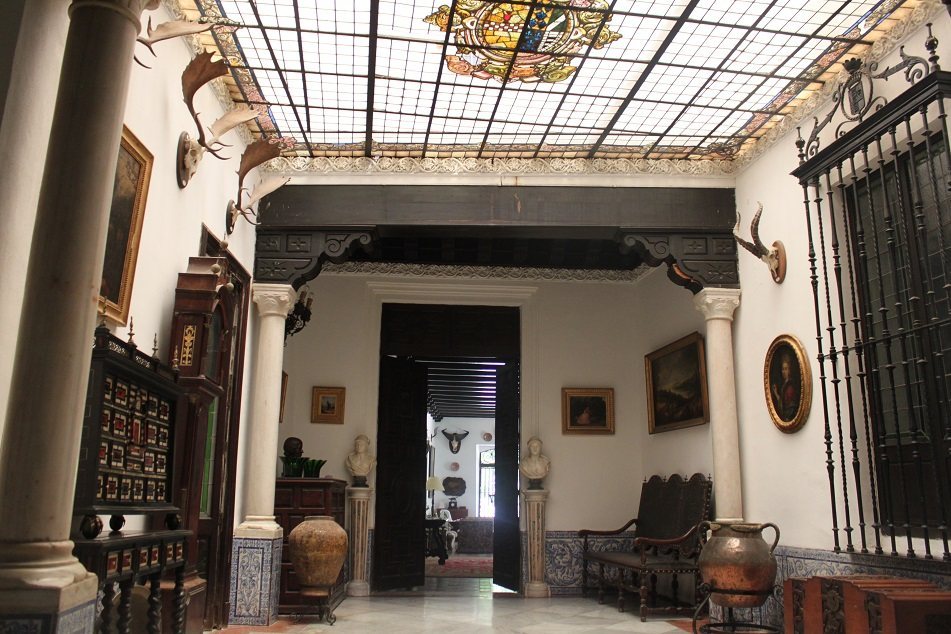
The building commissioned in 1925 is attached to the palace and now forms part of the complex; it contains a small hotel. The palace also houses an art collection that the Furniture History Society has described as among the finest in Andalusia. Its continued use as a traditional residence has helped preserve the building, which is in very good condition.