Palace of the Immacolatella: A Port-Health Building in Naples
Site at a Glance
- Rating
- 4.3
- Popularity
- Medium
- Country
- Italy
- Primary era
- Early Modern
- Eras represented
- Early Modern, Modern
- Civilizations
- Italian, Kingdom of Naples
- Site type
- Civic
- Remains
- Palace
On this page6 sections
History
Commissioning and port-health role
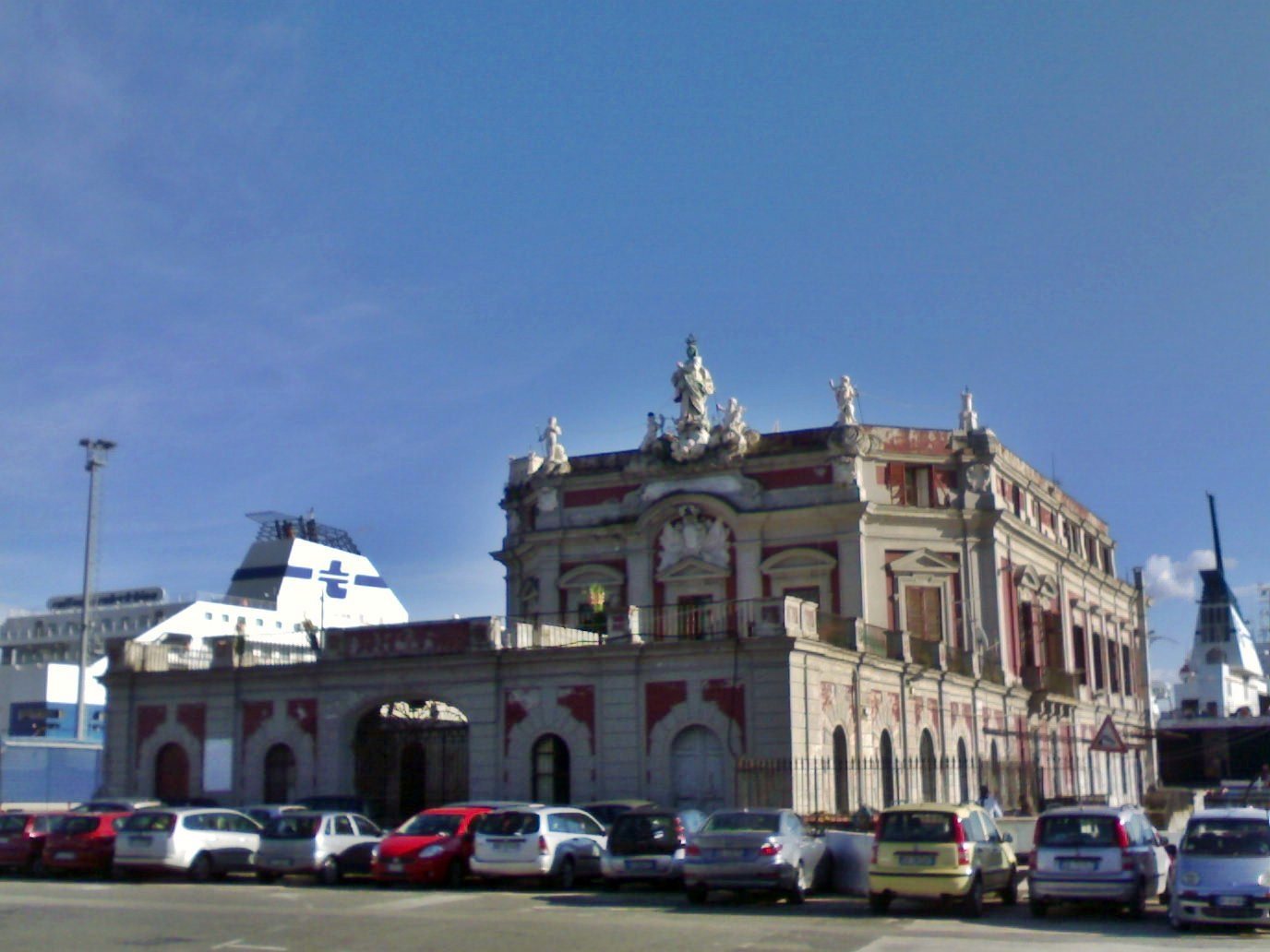
The Palace of the Immacolatella is a late Baroque harbour building in Naples, Italy, commissioned during the 1740s as part of a waterfront redevelopment. Charles of Bourbon, king of Naples and Sicily, included it in a harbour-development programme dated to 1740, covering the waterfront between the Great Pier and Castel del Carmine. Domenico Antonio Vaccaro designed the building to house the Deputation of Health, the authority responsible for port sanitation and quarantine. Its work included examining animals brought into the harbour and isolating them when necessary.
Harbour changes and emigration
During the nineteenth century, the palace accommodated other harbour services, including the offices of Naples’s harbour master. The Fountain of the Giant stood beside it for a time and was also known then as the Fountain of the Immacolatella. Designed by Michelangelo Naccherino, it was later moved to Via Nazario Sauro, near Castel dell’Ovo.
In the nineteenth and early twentieth centuries, the palace became associated with emigration. More than two million people from the Kingdom of the Two Sicilies and, later, southern Italy left for the Americas, passing by the building. Following Italian unification, the nineteenth-century process that joined the Italian states into one kingdom, an extension was added in front of the entrance. Later harbour expansion brought the palace into the reclaimed area of Calata Porta di Massa, and land to its north was filled in during the 1930s. The building underwent a radical restoration between 2019 and 2021.
Remains
Plan and original harbour position
The palace has an octagonal plan and stands between Calata del Piliero and Calata Porta di Massa. It originally occupied a projecting peninsula opposite a small, sheltered harbour basin called a mandracchio. Two bridges linked the peninsula to the mainland while enclosing the basin, and a connection to the mainland also ran through the church of Santa Maria del Portosalvo.
Entrance sculpture
A statue of the Virgin Mary crowns the building above its entrance. It represents the Immaculate Conception, the Catholic belief that Mary was preserved from original sin from the moment of her conception, and gave the palace its familiar name. Although traditionally credited to Vaccaro, the statue was sculpted by Francesco Pagano. Pagano also created the angel sculptures on the facade and symbolic sculptural elements at the summit.