Pałac Dernałowiczów: A Historic Palace and Park Complex in Poland


Site at a Glance
- Rating
- 4.7
- Popularity
- Low
- Country
- Poland
- Primary era
- Modern
- External website
- Open
- Eras represented
- Early Modern, Modern
- Civilizations
- Polish–Lithuanian Commonwealth, Russian
- Site type
- Domestic
- Remains
- Palace
On this page7 sections
History
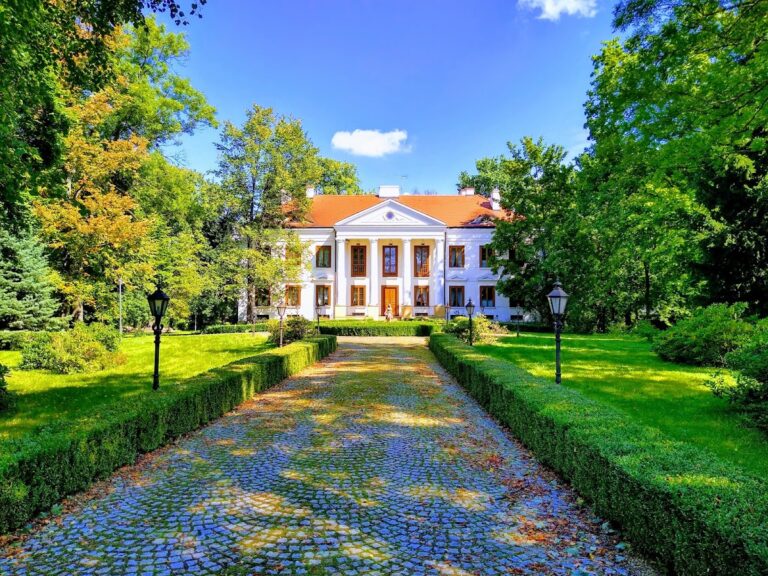
Pałac Dernałowiczów is a historic palace-and-park complex in Mińsk Mazowiecki, Poland, developed from a sixteenth-century brick manor and transformed through Baroque, Rococo, and Classicist phases. Its protected elements date from the seventeenth, nineteenth, and twentieth centuries, while the palace’s present name comes from the Dernałowicz family, its last owners.
From Manor to Baroque Palace
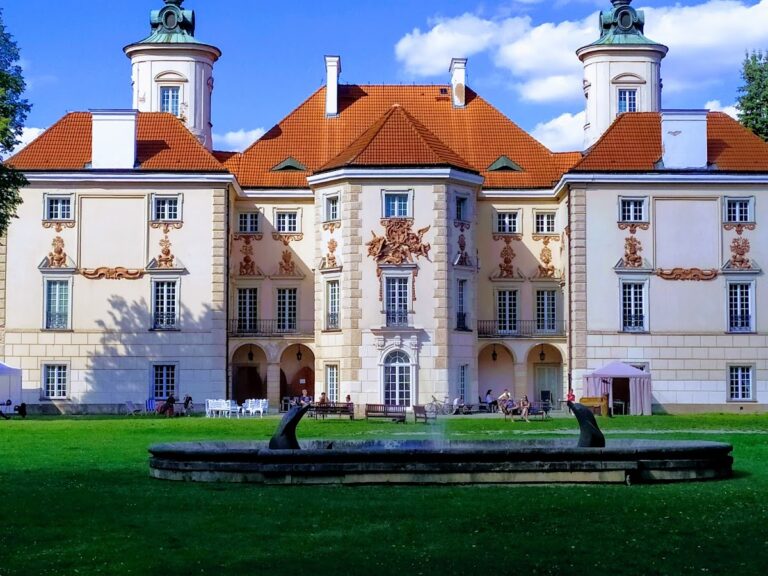
A brick manor was built in the sixteenth century near Sendomierz. After 1602, Mińsk became the property of Stanisław Warszycki, who later served as Voivode of Podlasie, a senior territorial governor in the Polish-Lithuanian Commonwealth, and as a castellan, a high-ranking official connected with the administration and defense of a castellany. Warszycki transformed the manor into a Baroque palace, using the dramatic forms and rich ornament associated with that period.
The ownership of the residence changed during the following centuries. Wojciech Leon Opaliński held it in the eighteenth century, the Borzęcki family owned it in 1781, and Stanisław Jezierski acquired it in 1807. A further rebuilding in the second half of the eighteenth century introduced Rococo features, a lighter decorative style characterized by refined ornament.
Classicist Reconstruction and the Dernałowicz Period
Between 1825 and 1828, Stanisław Jezierski rebuilt the palace in the Classicist style to a design by Henryk Marconi, an Italian-born architect active in Poland. Classicism drew on the symmetry and architectural vocabulary of ancient Greece and Rome. The Doria-Dernałowicz family owned the residence from 1870 to 1944, and the palace’s established name derives from this final period of private ownership.
A park was developed around the palace from 1867, with the Doria-Dernałowicz family associated with its creation. The palace also has a literary association. Henryk Sienkiewicz, a Polish novelist and Nobel Prize winner, described a grand and beautiful manor at Mińsk in Pan Wołodyjowski. That description appears to correspond more closely to the palace during its late nineteenth-century Dernałowicz period than to the novel’s setting in 1668 to 1673, when the town had declined after the Swedish Deluge.
Postwar Preservation
After the Second World War, the palace deteriorated. It was restored in 1980 and has since served as the seat of the Municipal Cultural Centre. The Municipal Public Library was also formerly housed in the building. The complex is entered in the heritage register under number 65, with registrations dated 12 February 1957 and 11 May 2001.
Remains
The Palace Fabric
The present palace incorporates substantial remains of the sixteenth-century brick manor. The earlier building had an elongated rectangular plan, an upper storey, and a basement covered by barrel vaults. The vaulted basement survives, and the manor’s width corresponds to that of the current palace. Significant portions of its Gothic brickwork remain within the later structure.
The former manor may have had four cylindrical corner towers. Remains of one tower were found beneath the northeastern corner annex of the present palace. During Stanisław Warszycki’s seventeenth-century reconstruction, corner annexes replaced the earlier towers. In the eighteenth-century rebuilding, ground-level loggias, covered open-sided galleries or arcades, were added between the corner annexes and the gable walls. A Rococo sandstone fireplace from this phase survives in the entrance hall.
The Palace Park
The palace stands within a park developed from 1867. Its features include an area described as an amphitheatre. The park has also been used for dirt jumping and as a skatepark, adding later recreational uses to the grounds associated with the Doria-Dernałowicz period.