Our Lady of the Scapular Church in Łabunie: A Roman Catholic Parish Church
Site at a Glance
- Popularity
- Very Low
- Country
- Poland
- Primary era
- Early Modern
- Eras represented
- Early Modern, Modern
- Civilizations
- Polish–Lithuanian Commonwealth
- Site type
- Religious
- Remains
- Church
On this page10 sections
History
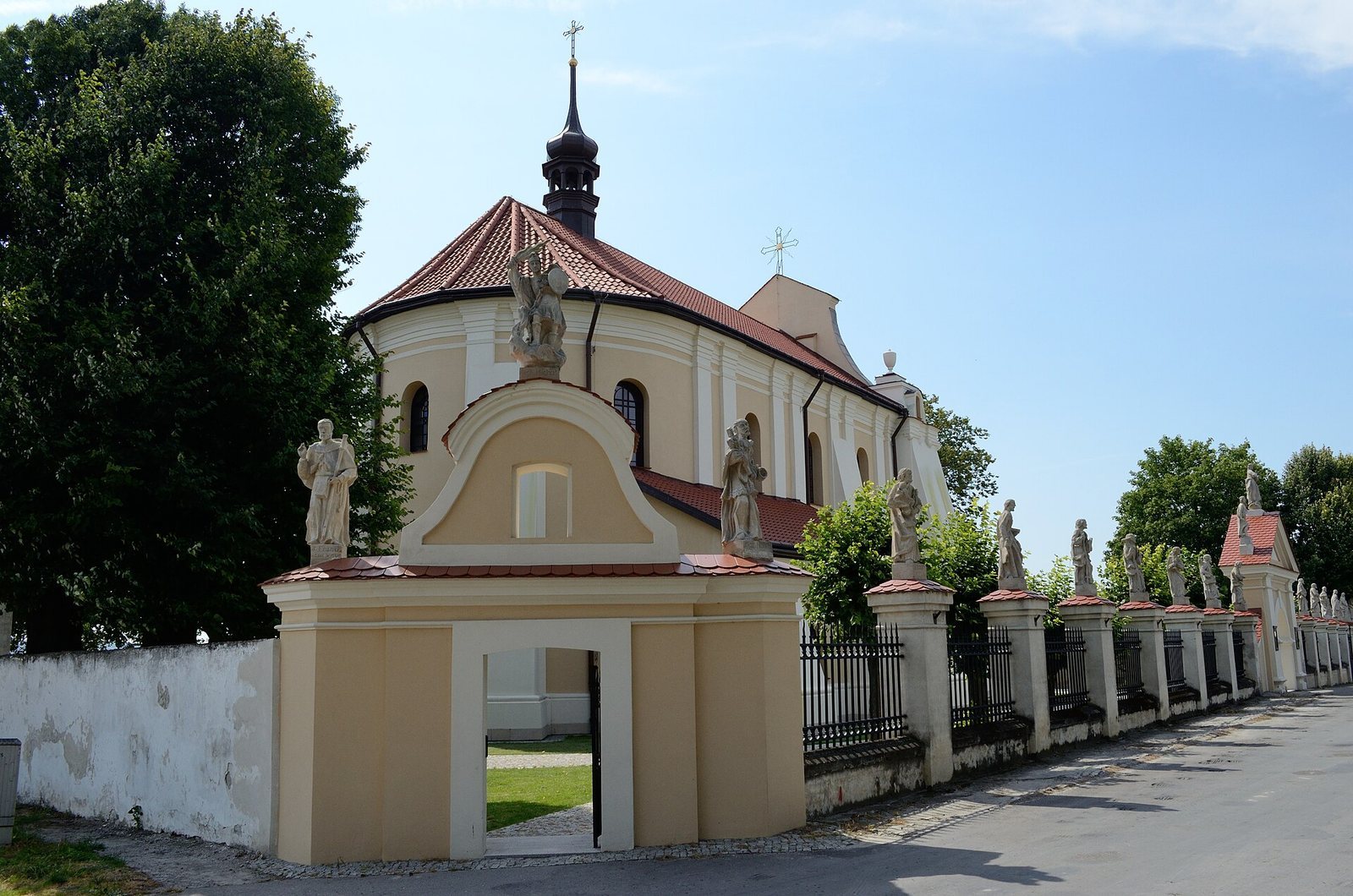
Our Lady of the Scapular church in Łabunie is a Roman Catholic parish church in Poland, rebuilt in the early seventeenth century in the Lublin Renaissance style, a regional style associated with the Lublin area. Polish Catholic bishop Jerzy Zamoyski consecrated it in 1605. Its dedication refers to a Catholic devotion to Mary associated with wearing a scapular, a devotional garment.
Patronage and later alterations
The Zamoyski family, a prominent Polish noble family, acted as patrons over the centuries. Repeated repairs and alterations changed the church’s original architectural character.
Nineteenth-century changes
Major repairs took place in 1855. In 1866, an altar and a painting of Saint Anthony were brought from Radecznica. Antonina Tarnowska funded the addition of a chapel after 1870, and the chapel became the burial place of members of the Tarnowski family.
The roof was repaired in 1871, and the interior was renovated in 1879. In 1896 the altar brought from Radecznica burned, damaging the painting of Saint Anthony but leaving it intact.
War and twentieth-century work
The interior was painted in 1935. During the Second World War, the church served as a grain storehouse from 1942 to 1944. Roof repairs followed in 1948–1950, and the altars and sculptures were restored in 1997–1999.
The church belongs to the parish of Our Lady of the Scapular and Saint Dominic, within the Krasnobród deanery, an administrative grouping of parishes, in the Diocese of Zamość-Lubaczów. Its liturgical commemorations are observed on the Sundays after July 16 and August 4.
Remains
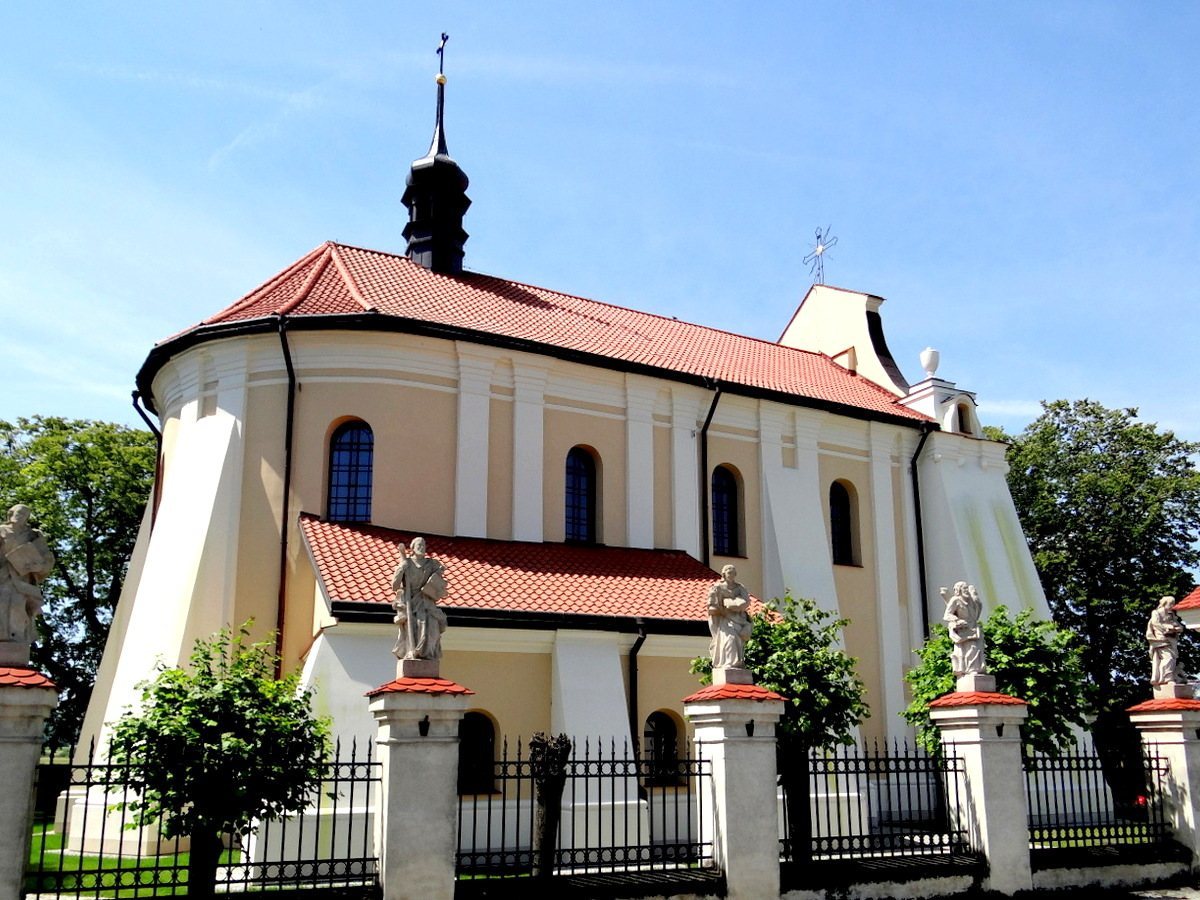
The church is a single-nave building made of stone and brick. Later alterations changed its original Lublin Renaissance character: a large porch was added at the front, and the roof was lowered. A sacristy, a room for preparing services and keeping liturgical objects, stands beside the chancel, the area around the altar reserved for clergy. The chapel occupies the south side, and a small bell turret rises above the nave.
Interior furnishings
Surfaces and seating
Inside, the walls have plain painted surfaces, and the floor is terracotta. Benches and confessionals date from after 1946.
Main altar
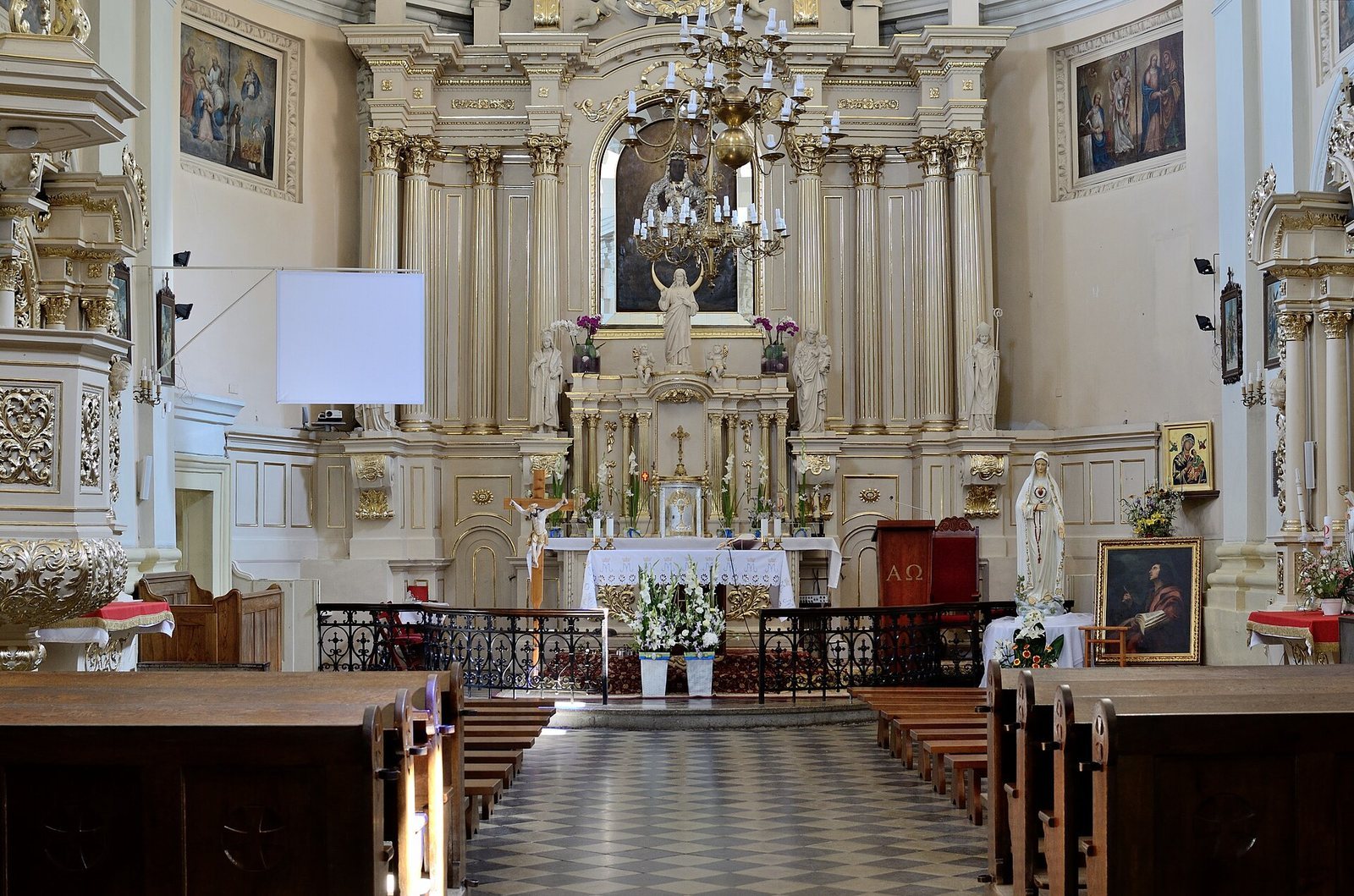
The late-nineteenth-century main altar is made of pine and linden wood. It holds three paintings, depicting Saint Anthony, another image of Saint Anthony, and Our Lady of the Scapular.
Side altars
Five wooden side altars stand along the two sides of the church. The three on the right include one with images of Saint Thérèse of the Child Jesus, Saint Stanislaus Kostka, and the crucified Jesus; another with Saint Nicholas and Saint John of Nepomuk; and a third with a damaged image of the Virgin and Child alongside Saint Dominic. The two on the left depict Saint Isidore, Saint Valentine, and the Merciful Jesus on one altar, and Our Lady of Sorrows and Saint Francis on the other.
Paintings and organ
Canvas paintings depicting the mysteries of the Rosary hang on the walls. The choir loft holds an organ bought in 1896. Its ten stops each control a set of pipes that produces a particular tone; the instrument has undergone repairs, including work in 1974.