Oude Jeroenskerk: A Late-Gothic Church and Pilgrimage Site in Noordwijk
Site at a Glance
- Rating
- 4.2
- Popularity
- Low
- Country
- Netherlands
- Primary era
- Medieval
- Eras represented
- Medieval, Early Modern, Modern
- Civilizations
- Duchy of Burgundy, Dutch, Holy Roman Empire
- Site type
- Religious
- Remains
- Church
On this page14 sections
History
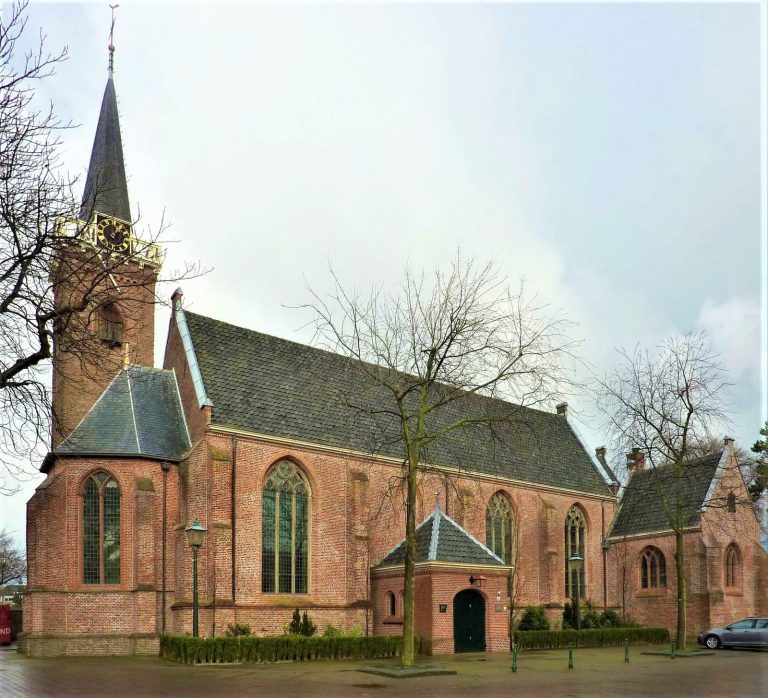
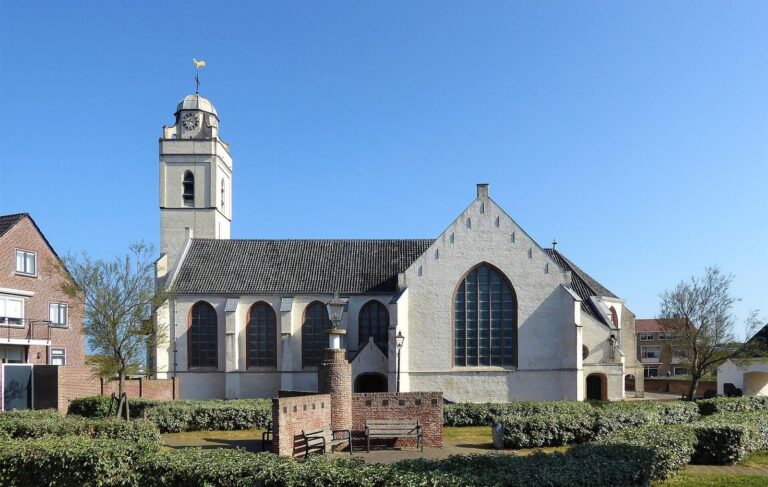
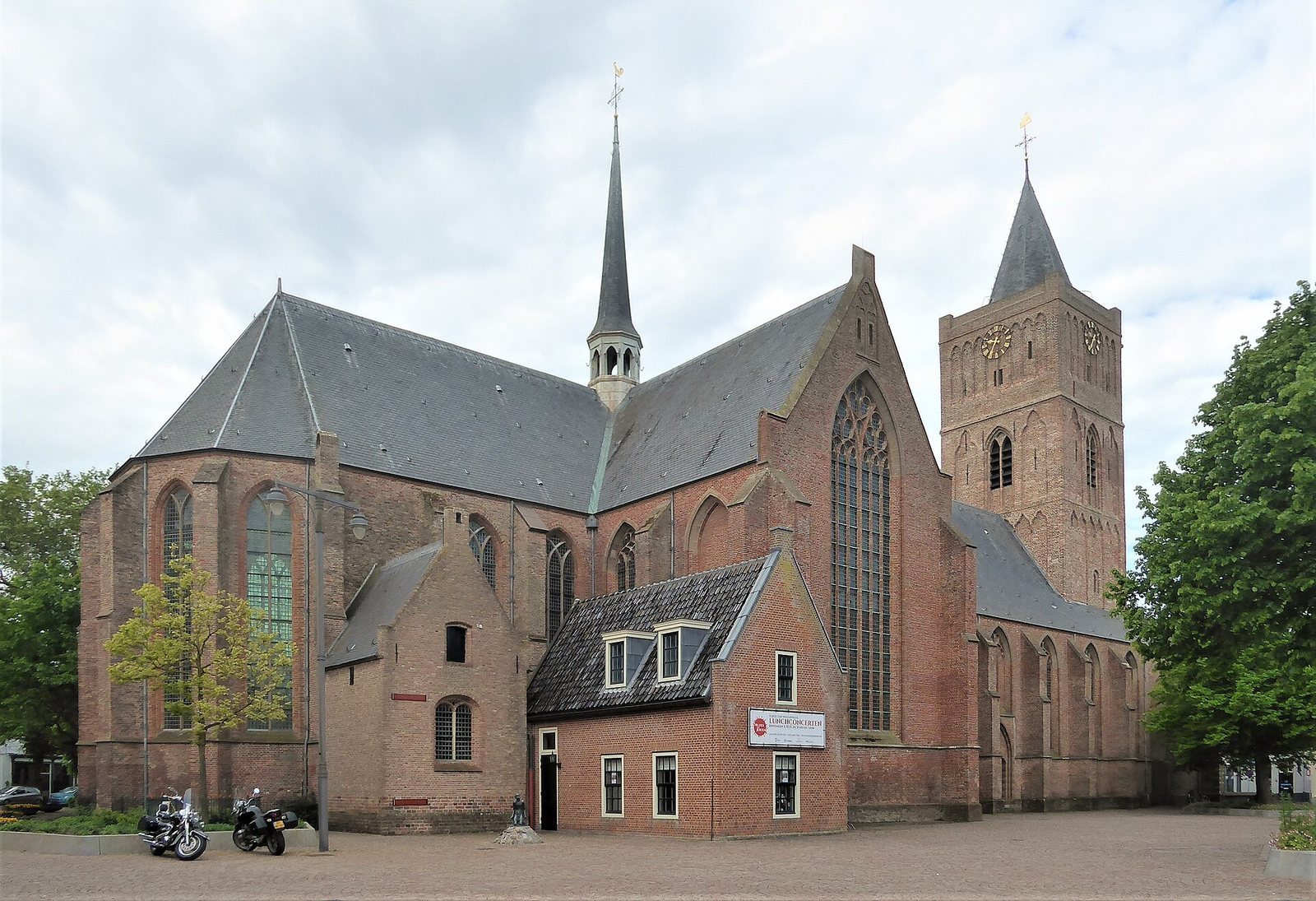
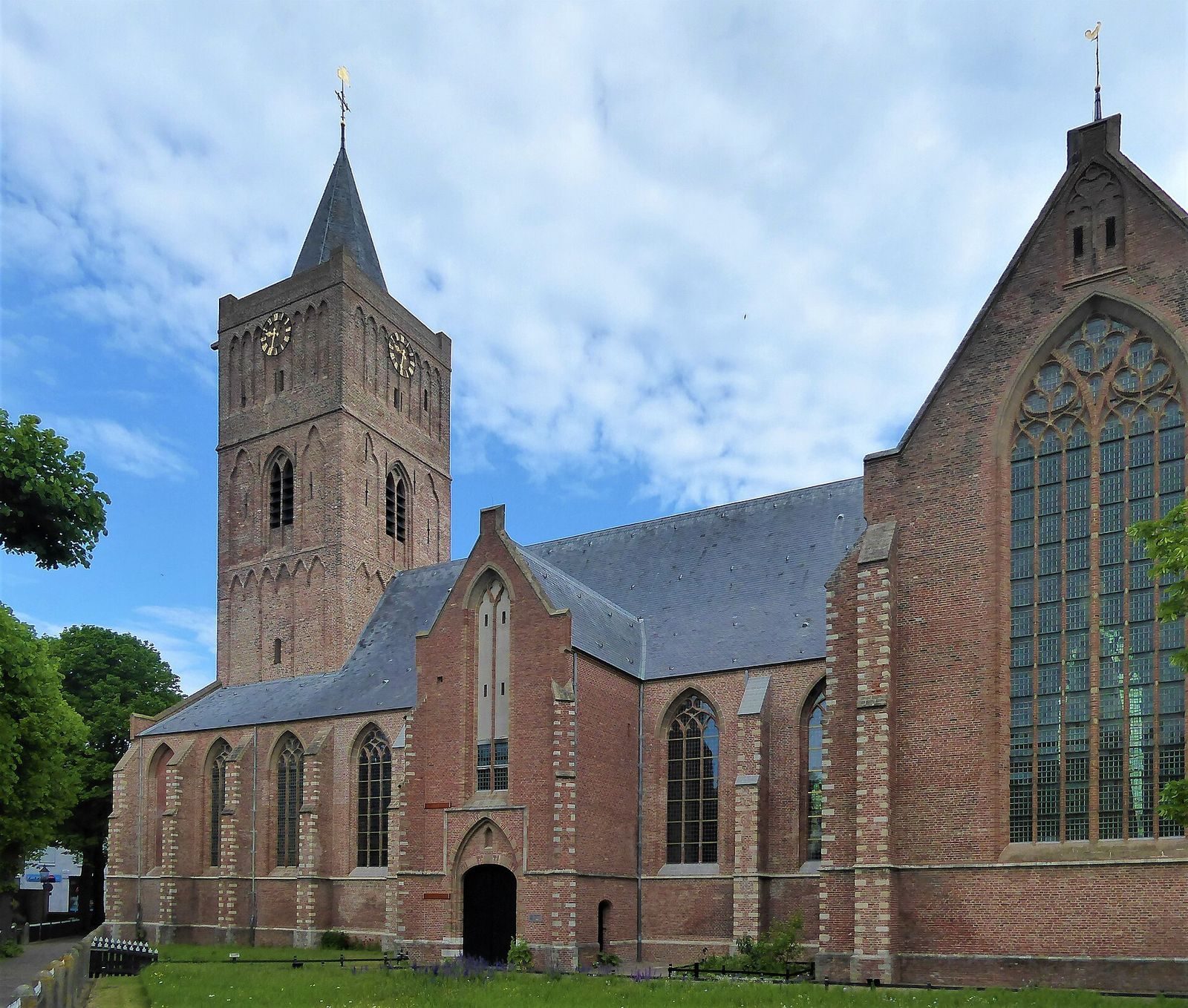
The Oude Jeroenskerk is a late-Gothic church in Noordwijk-Binnen, the Netherlands, dedicated to Jeroen of Noordwijk and now used by the Protestant Congregation of Noordwijk. A wooden church stood on the site before 988; the present brick church took its large cruciform form after a fire around 1450. The church became a pilgrimage destination, and its tower, which survived the fire, is regarded as Noordwijk’s oldest monument.
Foundation and the tradition of Jeroen
Jeroen, remembered as a Christian missionary and martyr, was beheaded by Norsemen on 17 August 856 after refusing to renounce his faith. According to tradition, he later appeared to Nothbodo, a farmer, and told him to find his remains and take them to the medieval Abbey of Egmond. The apparition is dated to either 955 or 976 in different versions of the tradition. Nothbodo initially refused. After his horses were stolen, Jeroen appeared again; the horses were returned, and Nothbodo found Jeroen’s burial place.
A wooden church was built here after Jeroen’s death and before the church of Noordwijk was donated to the Abbey of Egmond, an event that took place before 988. A stone church probably followed in the early 12th century.
Expansion and pilgrimage
A tower was added in the 13th century and enlarged after 1303. The nave was later extended and joined to it. Loans in 1415 and 1444 helped pay for alterations to the church. A major fire around 1450 led to the rebuilding of the church on a larger, cruciform plan. Income from pilgrims helped finance this work, while the tower survived the blaze.
A skull found in the church shortly after 1311 was believed to be Jeroen’s. Tradition connected it with reports that the church bells rang without human action and that a man was miraculously healed, events that drew pilgrims to Noordwijk. In 1429, the Bishop of Utrecht granted the church pilgrimage-site status. A skull excavated in the choir in 1983 belonged to a young man and therefore could not have been Jeroen’s.
Religious and civic changes
During the Spanish occupation, the church authorities paid a levy to prevent the church’s destruction. In 1573, the building passed from Catholic to Reformed use during the Reformation, the 16th-century movement that established Protestant churches separate from the Roman Catholic Church. In 1798, during the French occupation, the tower became municipal property. The occupiers used church towers to communicate, and the tower’s two prison cells remained in use until Noordwijk built a house of detention in 1860.
In 1894, the neighboring Roman Catholic church of Sint-Jeroen adopted the medieval dedication to Saint Jeroen. The older church came to be called the Oude, or Old, Jeroenskerk to distinguish it from its neighbor.
Restoration and continuing use
The church was restored in 1901–04 under Dutch architect H. J. Jesse. Repairs in 1970–75 reinstated the south portal and returned windows altered during the earlier restoration to their original form. A further restoration took place in 2014. In 1967, the church and tower received Dutch national historic-monument protection.
A silent procession has been held since 1997 on the Sunday near 17 August, Jeroen’s feast day and the anniversary of his death. It first set out from the Catholic Sint-Jeroenskerk. Since 2012, it has also begun at the Oude Jeroenskerk and passed through Noordwijk-Binnen.
Remains
The church is a three-aisled building on a cruciform plan, with a five-sided choir, the part around the altar. Its walls are brick. The earlier church was a single-aisled building of tuff, a porous stone formed from volcanic ash, and probably had a rectangular choir. Inside, a wooden barrel vault, a continuous curved ceiling, covers the church. A small roof turret above the nave dates to 1764.
The tower
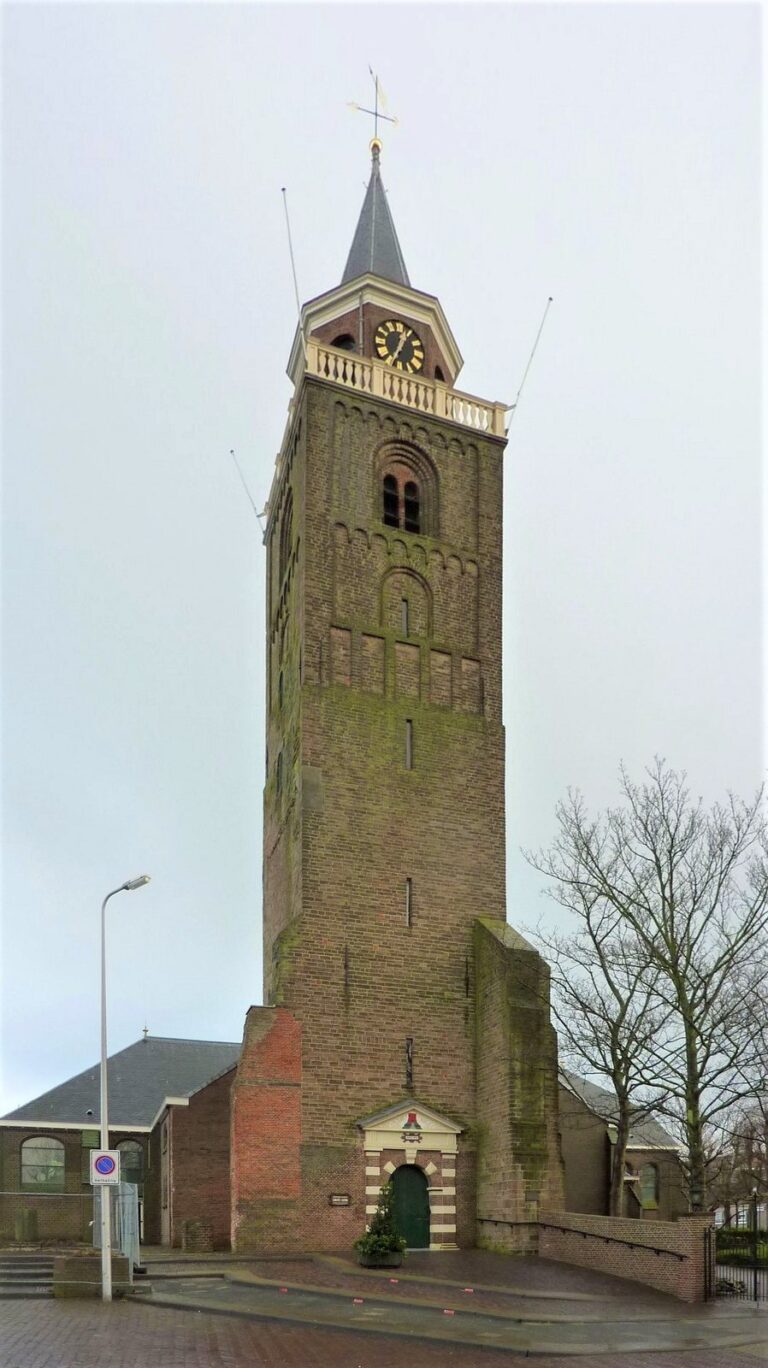
Originally freestanding, the tower was later incorporated into the church. It is about 9 metres wide and reaches 40 metres high, including its spire. Pilasters, shallow vertical strips resembling columns, and friezes decorate its lower levels; higher up are three-lobed niches and bands of three arches. These details combine Romanesque and Gothic forms. A spiral stair has 110 steep steps, and two prison cells are located in the tower.
Two bells are used for sounding. The larger weighs 820 kilograms and was cast by Petrus Hemony in 1677; the smaller was made by the Eijsbouts foundry around 1952. Two further Eijsbouts bells of about the same date are also noted in the tower. A small bell made by Johannes Ouderogge in 1690 is disconnected.
Interior furnishings and memorials
Baptismal font
A bluestone baptismal font, dated to around 1500, is decorated with four sculpted heads.
Choir seating and inscriptions
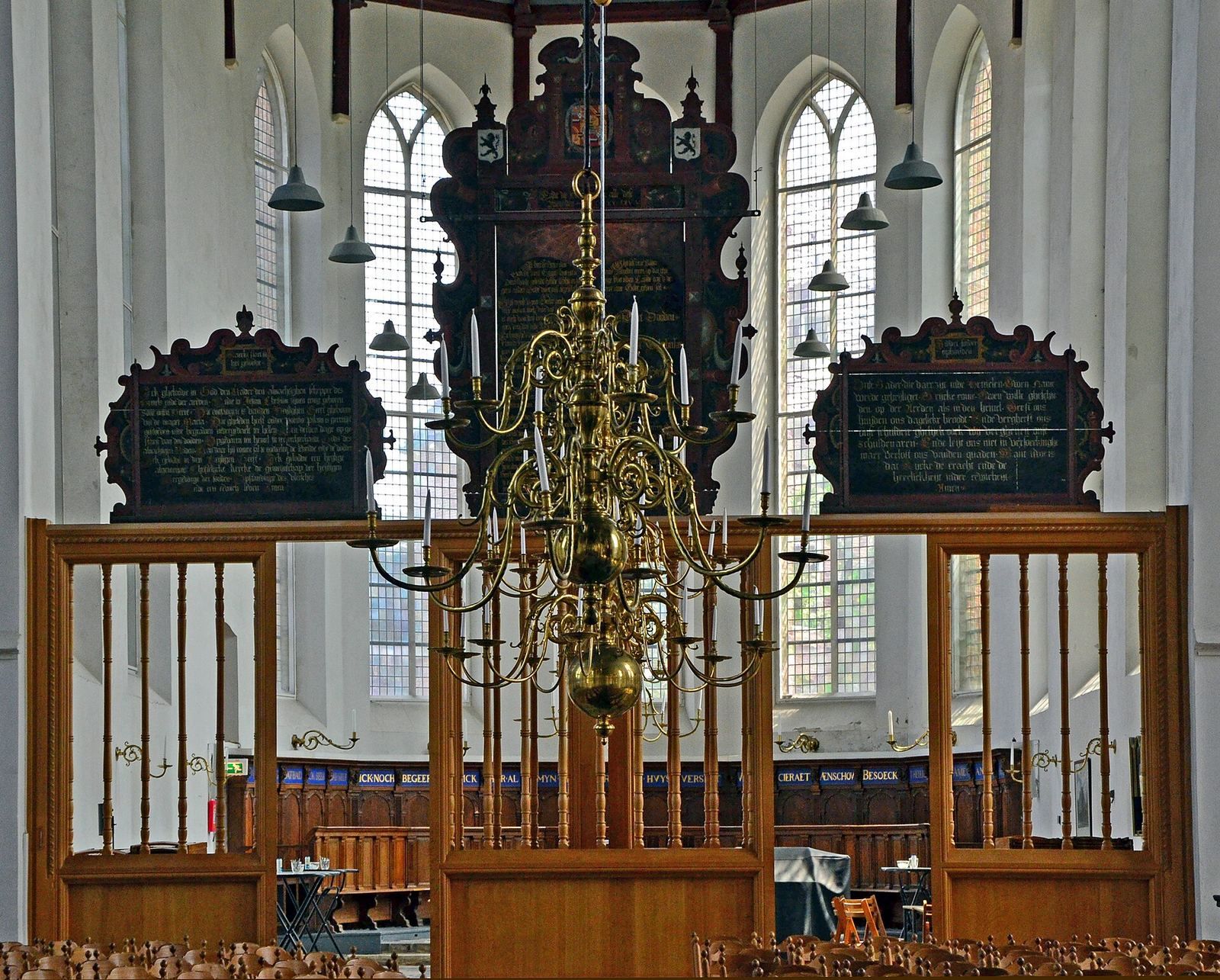
Benches run around the end of the choir, and their frieze carries an inscription dated 1636. A large wall panel dates to 1638. Panels on the choir screen, made in 1650, bear the Creed, the Ten Commandments and the Lord’s Prayer. Other text panels date to 1625 and 1638, while panels displaying psalms date to 1682 and 1771.
Pulpit and family pew
The pulpit dates to around 1650 and was restored in 1904. A canopied family pew made in 1751 is in the Louis XV style, a French decorative style associated with the reign of Louis XV. Francis Maas carved its ornament. A combined coat of arms, carved in 1904, appears on the canopy.
Tombs and memorials
A marble monument from 1792 commemorates the Van der Does, Dousa or Douza family and includes a portrait of Janus Dousa, a Dutch statesman, historian and poet. Two late-Gothic tomb slabs, dated to about 1479 and 1509, commemorate Jan van der Boeckhorst, who died in 1450, Florys van der Boeckhorst, who died in 1509, and their wives. An epitaph remembers Johan van der Wijck, who died in 1679. A 12th-century sandstone sarcophagus stands on the tower’s south side.
Organ
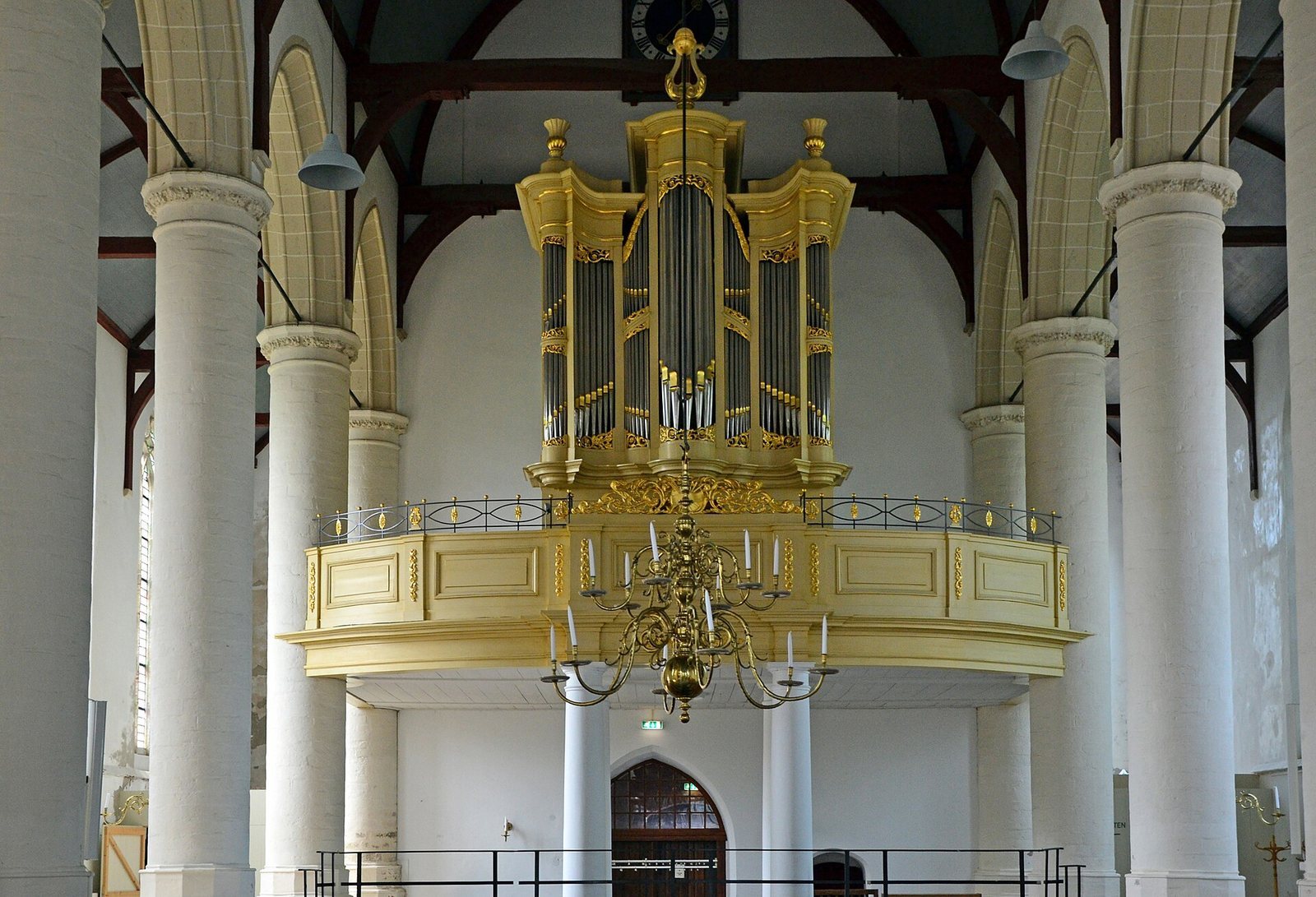
Hermanus Knipscheer II built the organ in 1840. Retired Noordwijk minister Gerrit Kuiper and his wife, Anna Cornelia Pennewart, gave it to the church and established a fund for its annual maintenance. The instrument has 22 stops, which select sets of pipes, two hand keyboards and a foot pedal. Its mechanical slider chests distribute wind to the pipes; couplers link its sections, and a tremulant varies the airflow to produce a wavering sound.
The organ’s Bourdon pipe set is divided between D and E-flat, with a further division between C and C-sharp. The principal pipes in the Great division are doubled in the treble. The instrument is tuned to A=442 Hz and uses equal temperament, which divides the octave into twelve equal semitones. Restorations took place in 1903–04, 1949–50, 1971–74 and 1999–2000. During the 1971–74 church renovation, the organ was removed and later reinstalled. In 1999–2000 it was shifted slightly forward and given a new case; the pedal was extended with a 16-foot bassoon stop, and some missing Knipscheer stops were reconstructed. Flentrop Orgelbouw carried out that restoration.
Associated sculptures
A statue of Job is identified beside the church. The sculpture titled Running Nude with a Hind is also associated with a view of the church.