Old Town Hall, George Street, Stranraer: A Neoclassical Municipal Building
Site at a Glance
- Rating
- 4.6
- Popularity
- Very Low
- Country
- United Kingdom
- Primary era
- Early Modern
- External website
- Open
- Eras represented
- Early Modern, Modern
- Civilizations
- British
- Site type
- Civic
- Remains
- Town Hall
On this page8 sections
History
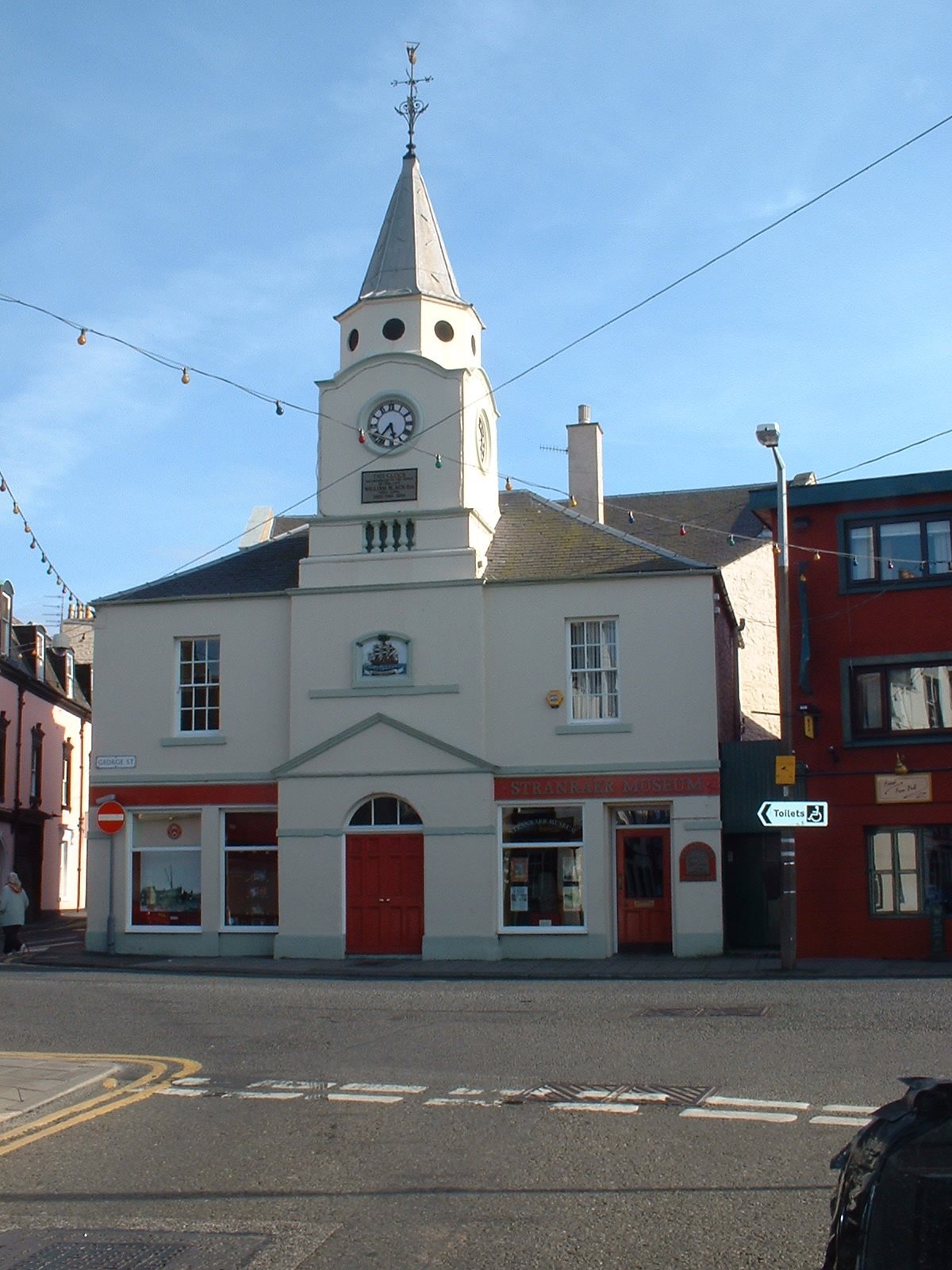
Old Town Hall, George Street, Stranraer, is a municipal building in the United Kingdom, completed in June 1776 in the Neoclassical style. It replaced a late-seventeenth-century tolbooth, a Scottish burgh building used for civic administration, imprisonment, and toll duties, which had become very dilapidated by the 1770s.
The Tolbooth and Its Replacement
The earlier tolbooth stood on part of the local parish churchyard. In 1699, it served as a prison for an Irish pirate named Mccairty, who had been captured off the coast of Kirkcudbrightshire. By the 1770s, burgh leaders decided to demolish the deteriorated structure and build a new town hall on the same site.
Edward Wallace and Thomas Hall designed and built the replacement. Its original ground floor contained a guardhouse and a lock-up, a small jail for temporary detention. The first floor held a debtors’ prison, where people unable to pay their debts were confined, and this room was later converted into a council chamber.
Nineteenth- and Twentieth-Century Uses
A rear extension was added in 1855 to accommodate a corn exchange, a place for trading grain, and a courtroom. When the council moved to new premises in Lewis Street in 1874, the former town hall was briefly used as a drill hall and armoury by the 2nd Wigtownshire Rifle Volunteer Corps. It later housed the Athenaeum Club before being taken over by the fire service in 1879.
A clock presented to the town by former town clerk William Black was installed in the tower in 1936. The fire service moved to a purpose-built station in Lewis Street in 1960. The building later became home to Stranraer Museum, which developed a substantial collection of axes and other archaeological exhibits, as well as an eighteenth-century plough and material associated with the polar explorers Sir John Ross and his nephew James Clark Ross.
Old Town Hall is a Category A listed building, the highest level of statutory protection for buildings of special architectural or historic interest in Scotland. It received this designation on 20 July 1972 under the official name “Old Town Hall, George Street, Stranraer.”
Remains
George Street Frontage and Tower
The building is formed in rubble masonry with a stucco finish and has a balanced three-bay frontage facing George Street. The slightly projecting central bay contains a doorway with a fanlight and pediment. Above it, a panel displays the burgh coat of arms, showing a three-sailed ship and the motto “Tutissima Statio,” meaning “The safest station.” Sash windows occupy the first floor of the outer bays.
A tower rises above the central bay. Its first stage has a parapet and balustrade, while the second contains an octagonal belfry. The tower ends in a spire topped by a weather vane, and houses the clock installed in 1936 as William Black’s gift to the town.
Former Civic and Commercial Rooms
The ground floor retains the former guardhouse and lock-up, while the first floor contains the former debtors’ prison, subsequently used as the council chamber. These spaces reflect the building’s original combination of municipal administration and detention.
Rear Extension
The 1855 rear extension contains the former corn exchange and courtroom. Its rooms represent the later expansion of the town hall beyond its original civic and custodial functions.
Museum Collections and Artworks
Objects housed in the building include axes and other archaeological exhibits, an eighteenth-century plough, and material relating to Sir John Ross and James Clark Ross, British naval officers and polar explorers. The collections also include Henry John Dobson’s painting of an old lady spinning, George Pirie’s painting of a boy with a terrier and pups, and landscape paintings by Alexander Brownlie Docharty, George Houston, and Archibald David Reid.