Old Sheldon Church Ruins: An Eighteenth-Century Parish Church in South Carolina
Site at a Glance
- Rating
- 4.8
- Popularity
- Medium
- Country
- United States
- Primary era
- Early Modern
- Eras represented
- Early Modern
- Civilizations
- British
- Site type
- Religious
- Remains
- Church
History
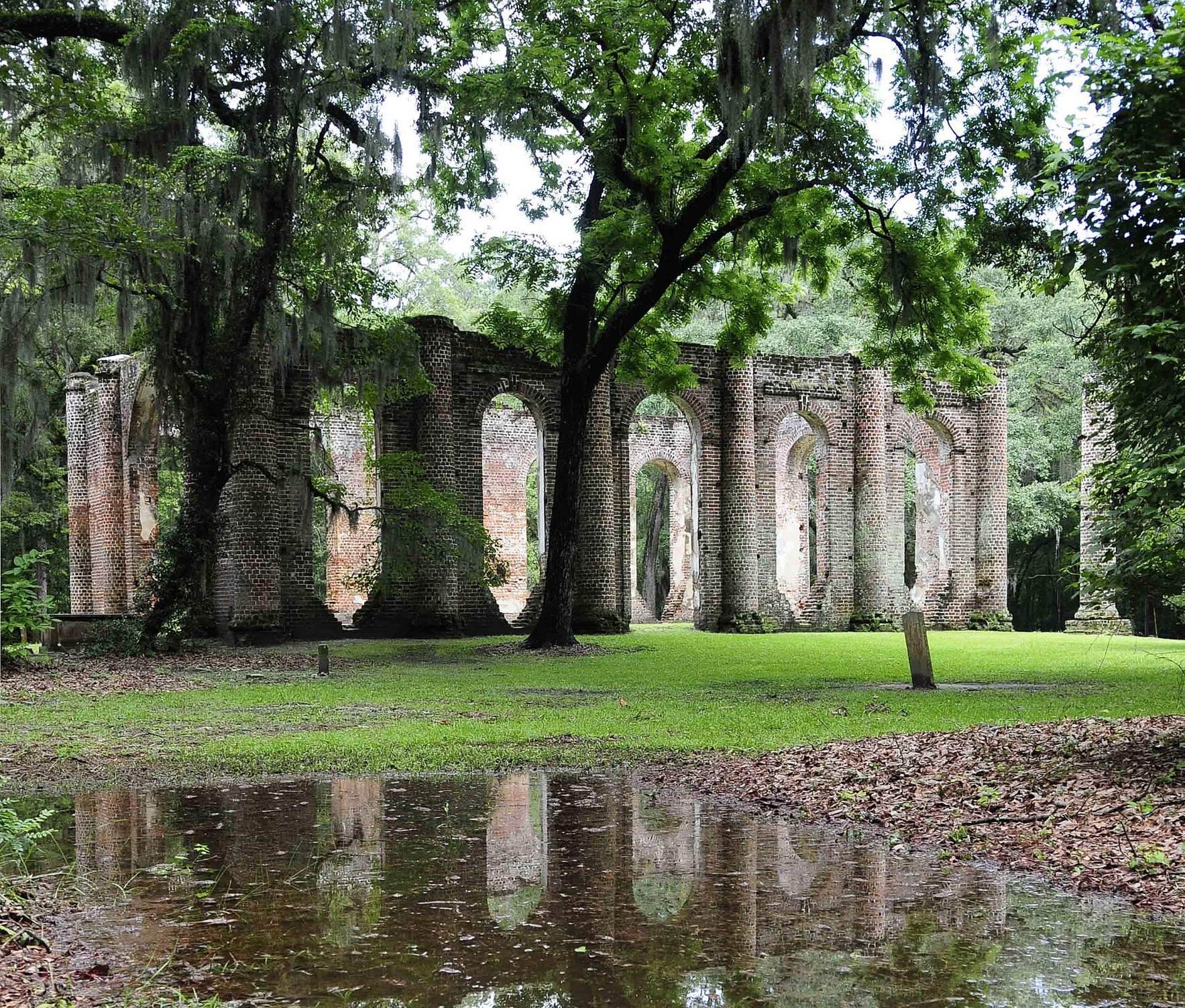
Old Sheldon Church Ruins are the remains of a church in Yemassee, South Carolina, United States, constructed between 1745 and 1753 in the English Georgian style. Originally known as Prince William’s Parish Church, it served as a chapel of ease, a subsidiary church for parishioners who lived too far from the principal parish church.
Tradition holds that British forces burned the church in 1779 during the American Revolutionary War, when General Augustine Prevost marched from Savannah into South Carolina. The church was rebuilt in 1826. A second traditional account states that Federal troops under General William T. Sherman burned the rebuilt church in February 1865 during the American Civil War. A letter written by Milton Leverett in 1866 offers a different explanation, saying that the building was gutted internally and that its materials were reused to rebuild homes destroyed by Sherman’s army.
The ruins have been listed on the U.S. National Register of Historic Places since October 22, 1970. Since 1925, clergy from the Parish Church of St. Helena in Beaufort have held an annual service at the ruins on the second Sunday after Easter.
Remains
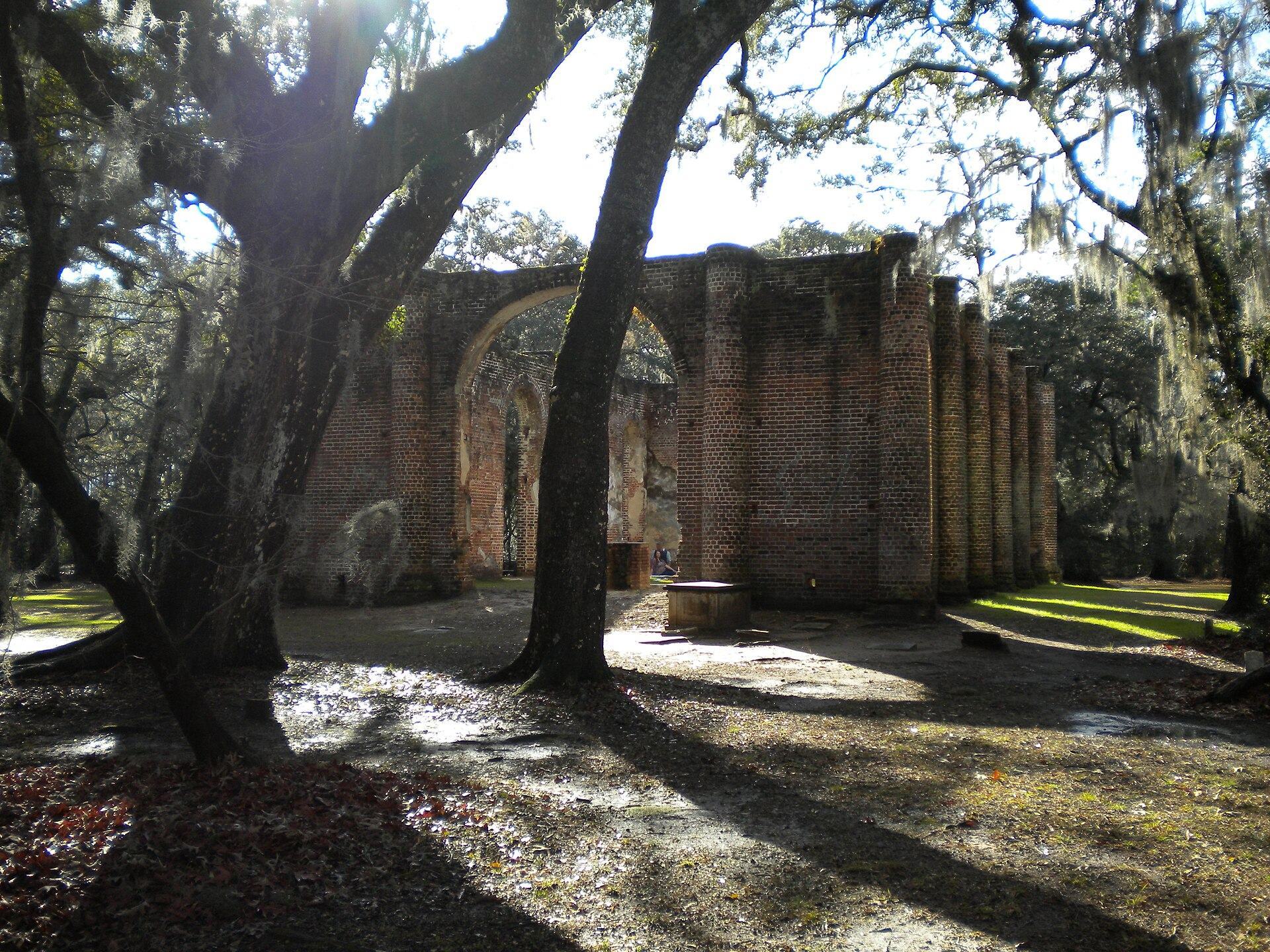
The site covers approximately 4.5 acres, or 1.8 hectares, with the church ruins set among large oak trees and scattered graves. The building followed the English Georgian style, whose ordered classical proportions were characteristic of eighteenth-century British architecture, and used the Roman Tuscan or Doric orders, architectural systems recognized for relatively plain columns and entablatures.
Massive surviving walls form the principal remains. In the traditional account, they endured the destruction associated with both the 1779 and 1865 events. The remains of Governor William Bull lie inside the ruins. Bull assisted General James Oglethorpe, the founder of the Georgia colony, in establishing the physical layout of Savannah and surveyed its land in 1733 for the basic grid of streets and squares.