Old Sarum Cathedral: A Norman Episcopal Seat
Site at a Glance
- Popularity
- High
- Country
- United Kingdom
- Primary era
- Medieval
- Eras represented
- Medieval
- Civilizations
- English
- Site type
- Religious
- Remains
- Cathedral
On this page10 sections
History
Old Sarum Cathedral was a Catholic cathedral in the United Kingdom, begun shortly after 1075 in the Norman architectural tradition. Norman architecture was the building tradition of the Normans, a people from northern France whose conquest of England began in 1066. The hill had earlier been used by Romans, who called it Sorviodunum, and later by Anglo-Saxons. After the conquest, William I used its fortified position as a base for military operations.
Foundation and completion
In 1075, the Council of London transferred Bishop Herman to Old Sarum. The new see, a bishop’s official seat and the church district governed from it, joined the former dioceses of Sherborne and Ramsbury. Its territory covered Dorset, Wiltshire, and Berkshire. Herman had first tried to establish his seat at Malmesbury, but local monks and Earl Godwin opposed the plan.
Construction of the cathedral began soon after the transfer and continued after Herman’s death in 1078. His successor, Osmund, brought the work to completion. The building was consecrated on 5 April 1092, with John of Tours, bishop of Bath, present. A tradition places severe storm damage five days later, soon after the ceremony.
Bishops, royal power, and a changing see
Following a four-year vacancy, Roger of Salisbury succeeded Osmund. A dispute between Henry I and Archbishop Anselm delayed Roger’s consecration for five years. Roger later rebuilt and enlarged parts of the cathedral, completing the work around 1120. He served as Henry I’s viceroy when the king was in Normandy and was closely connected with King Stephen. Between 1130 and 1139, Roger built a royal palace at Old Sarum.
In 1139, Stephen demanded that Roger’s family surrender its castles, including Old Sarum Castle. Roger was arrested and his lands confiscated. He died before Matilda, a claimant to the English throne during the conflict with Stephen, arrived, and before Stephen was deposed. A dispute between Stephen and Henry, bishop of Winchester and a papal legate, a representative authorized to act for the pope, then left the see vacant for three years. Josceline de Bohon was consecrated after this interval.
Around 1150, Josceline received permission to move the Feast of the Relics to 17 September. The additional celebration offered pilgrims a 40-day indulgence, a remission of religious punishment under specified conditions. In 1170, Archbishop Thomas Becket excommunicated Josceline, ostensibly because he had helped with the coronation of Henry II’s son, Henry the Young King. Rome took no action until after Becket’s assassination. Josceline was pardoned in 1172 and remained bishop until resigning in 1184 to enter the Cistercian order, a Catholic monastic order following the Benedictine tradition.
After another five-year vacancy, Hubert Walter was consecrated at Richard I’s insistence. Henry II had kept the see unfilled to retain its revenues. The cathedral chapter, the body of clergy associated with a cathedral, had elected Hubert at York; Richard appointed him to Sarum so that he could make his half-brother Geoffrey an archbishop.
Herbert Poore was elected and consecrated bishop in 1194, and in 1197 appointed his brother Richard dean of the cathedral chapter. Before the end of the century, the brothers obtained Richard I’s permission to move the cathedral. The exposed hilltop and inadequate water supply were among their reasons. Peter of Blois described the old church site as barren, dry, isolated, and wind-exposed, and compared the cathedral to a captive on the hill.
Herbert’s conflict with Walter, then archbishop, led to the loss of his lands and exile to Normandy in 1198. He returned after paying a fine. During the interdict against King John, a church sanction restricting religious rites, Herbert fled to Scotland in 1209. He regained his diocese’s lands and revenues in 1213 and died in 1217, after which Richard succeeded him.
Transfer to Salisbury and later history
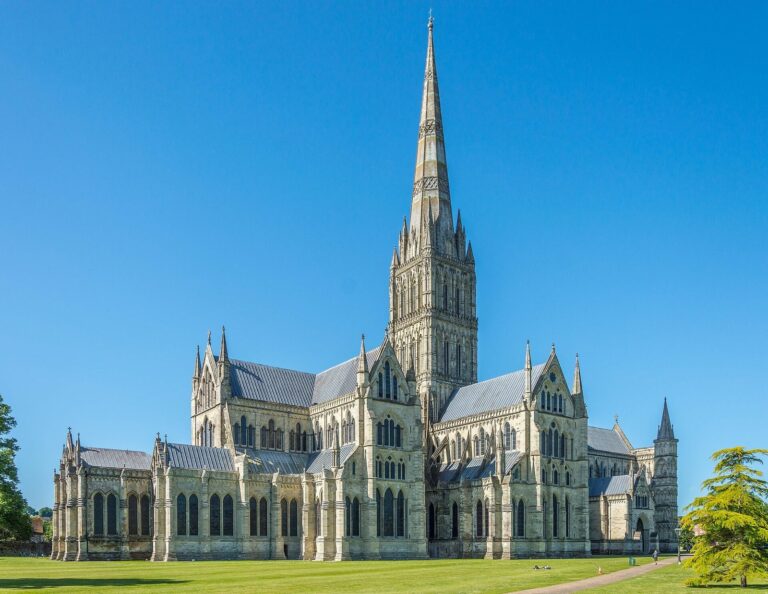
Conflict between Bishop Richard and Old Sarum’s military garrison led to royal permission to move the episcopal seat to Richard’s estate at Merryfield on Salisbury Plain. The transfer began in 1219, to a site on the plain beside the River Avon. Old Sarum Cathedral was gradually dismantled, and its stone was reused at the new site. Salisbury Cathedral was consecrated in 1220 while still unfinished and completed in 1258 in the Early English style, an early form of English Gothic architecture characterized by pointed arches and related forms. A licence issued in 1327 allowed stone from Old Sarum to be used for Salisbury’s enclosing wall, completed in 1331.
The old cathedral’s remains were initially left undisturbed. In 1457, the relics of Saint Osmund were transferred to Salisbury Cathedral in the year of his canonization, the Catholic Church’s formal recognition of him as a saint. In 1972, the cathedral ruins and the site’s ruined 12th- and 13th-century fortifications received Grade I listing, England’s category for buildings of exceptional architectural or historic interest. The site is also a scheduled monument, a nationally protected archaeological site.
The Society of Antiquaries of London excavated the cathedral from 1909 to 1915, when the work was interrupted by the First World War. The project’s director, William Henry St John Hope, died in 1919 without formally publishing its findings. Many of the recovered objects became part of The Salisbury Museum’s collections.
Remains
The cathedral and its setting
Plan and structure
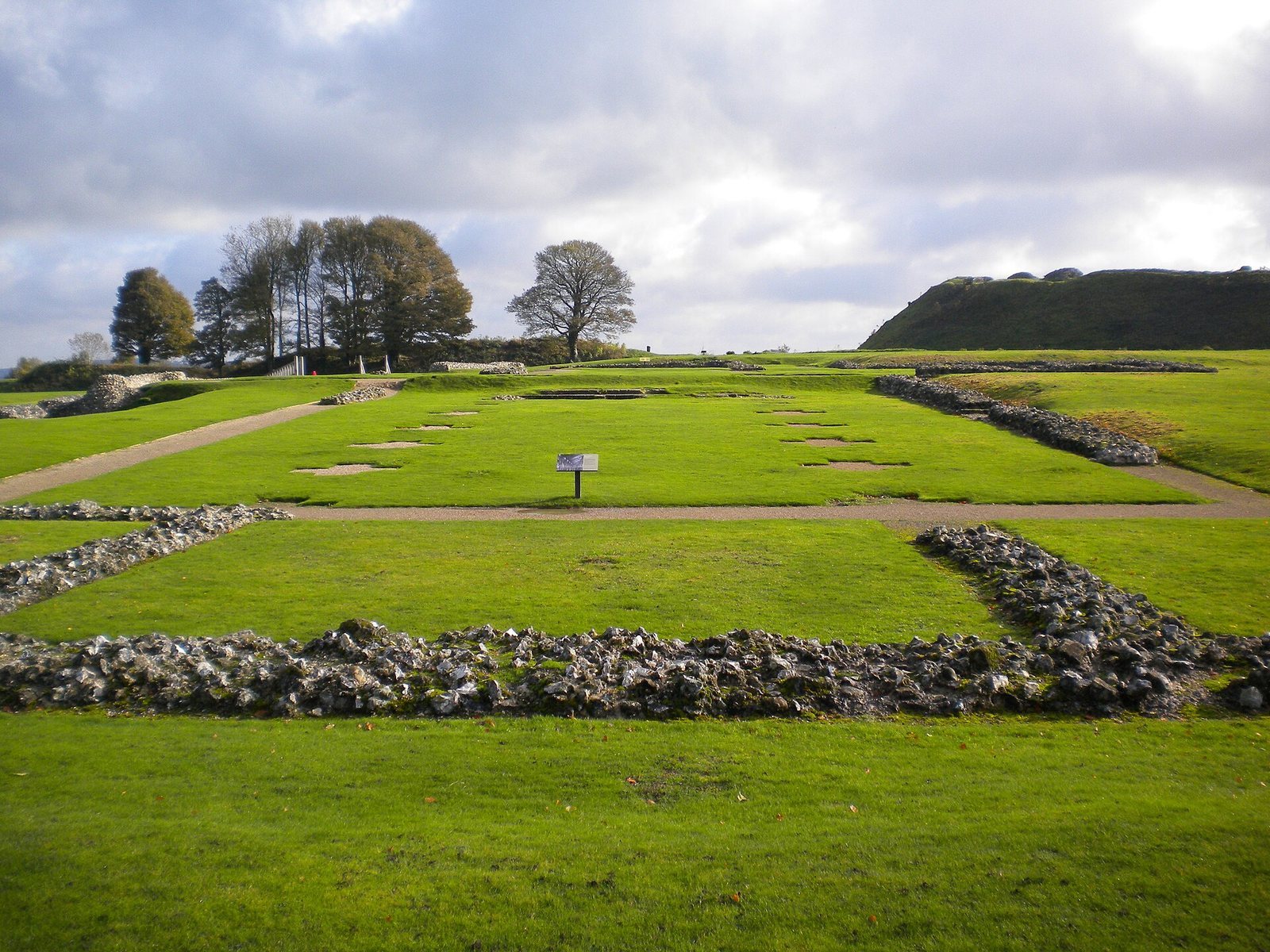
At its largest, the Norman cathedral measured 185 feet (56 metres) from end to end. Its cruciform plan, shaped like a cross, had a seven-bay nave, the main body of the church divided into repeated structural sections. Cross-shaped piers supported the structure. At the meeting point of the nave and the cross’s arms stood a central crossing tower. The eastern end included an apse, a rounded recess, and several chapels around the outer parts of the church.
Altars and chapels
The cathedral had six altars. The high altar stood in the presbytery, the area surrounding it. Three chapels along the eastern wall held altars dedicated to St Martin, St Nicholas, and All Saints. In the nave, the Holy Cross altar served the parish, while the altar of St Stephen stood against the western side of the choir screen, which separated the choir from the nave.
Alterations and floors
Around 1150, the central apse was turned into a single-storey chapel. The altar and its reliquary, a container for relics, were moved into the chancel, the part of the church containing the choir and altar. In much of the cathedral’s newer sections, the floor was laid in patterns of green and white stone.
Foundations and surrounding fortifications
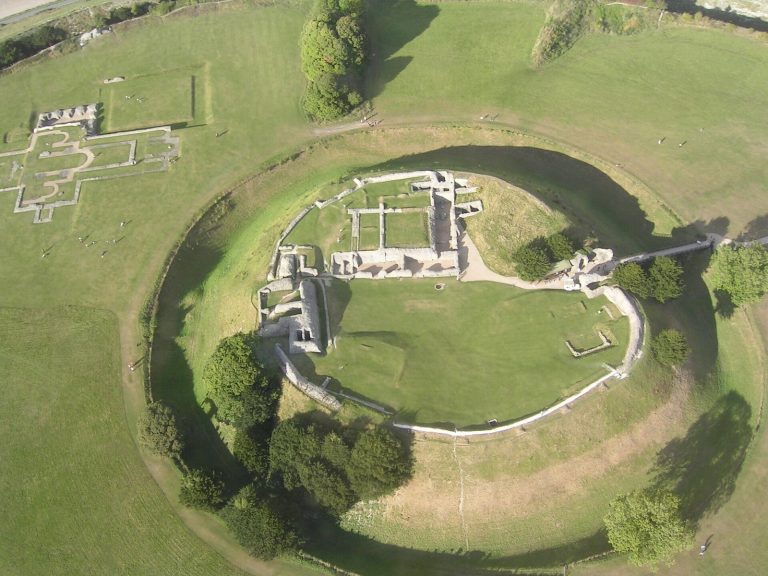
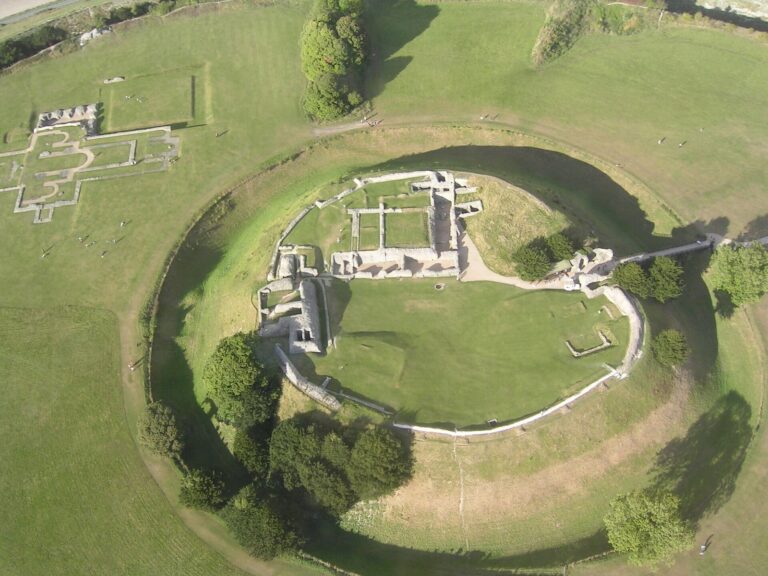
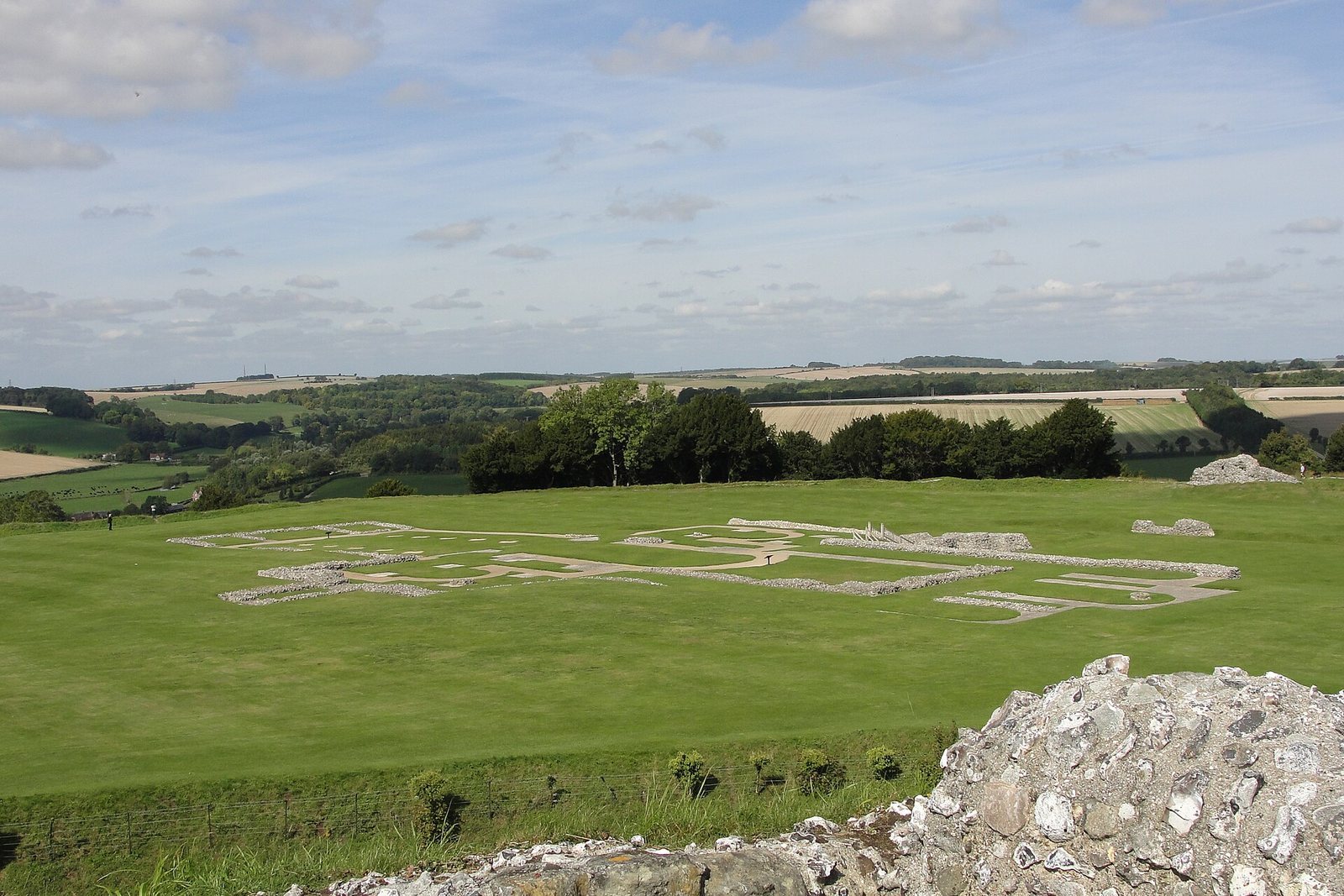
The cathedral’s surviving fabric consists of foundations in the north-west quadrant of Old Sarum’s circular outer bailey, the enclosed outer area of a castle. They lie about 2 miles (3.2 kilometres) north of Salisbury Cathedral. The wider site also contains ruined 12th- and 13th-century fortifications.