Ōji Inari-jinja: A Historic Inari Shrine in Tokyo


Site at a Glance
- Rating
- 4.2
- Popularity
- Medium
- Country
- Japan
- Primary era
- Unclassified
- External website
- Open
- Eras represented
- Unclassified
- Civilizations
- Unclassified
- Site type
- Religious
- Remains
- Sanctuary
On this page9 sections
History
Ōji Inari-jinja is a Shinto shrine in Tokyo, Japan, traditionally founded before the Heian period and associated with the worship of Inari, a religious tradition connected with rice, agriculture, food, prosperity, and fox symbolism. Its principal deities are Ukanomitama, Ukemochi, and Wakumusubi. The shrine stands in Kishimachi, in the area historically known as northern Edo, and was formerly called Kishi Inari because it once stood beside the broad Arakawa River.
Early traditions and medieval associations
Several traditions connect Ōji Inari with the Minamoto family. In 1180, Minamoto no Yoritomo, founder of the Kamakura shogunate and its first shogun, is said to have made an offering at the shrine. Another tradition holds that Minamoto no Yoshiie, an earlier Minamoto military leader known for campaigns in northern Japan, revered the shrine during his campaign against Ōshū. He is also said to have honored it as the chief Inari shrine of the Kantō region.
The shrine was traditionally regarded as the chief Inari shrine of thirty-three eastern provinces. This designation was later represented as leadership over the eight provinces of the Kantō region. The meaning of the number thirty-three remains uncertain. It may have referred to an idealized half of the sixty-six provinces, to three provinces abolished by the Heian period, or to three regions collectively associated with Ezo.
Tokugawa administration and Edo prominence
Ōji Inari gained further prominence during the Tokugawa period. Tokugawa Ieyasu, who founded the Tokugawa shogunate in 1603, invited a high-ranking Buddhist cleric closely associated with him to Kinrinji. The temple served as the administrative temple for both Ōji Inari and Ōji Gongen, a local shrine whose kami was understood under the former religious system as a manifestation of a Buddha or bodhisattva. This arrangement helped strengthen the shrine’s position in northern Edo.
Until the middle of the Edo period, banners and an inscribed plaque identifying Ōji Inari with the thirty-three eastern provinces were displayed within the sacred precinct. During the late eighteenth-century Kansei Reforms, measures through which the Tokugawa government pursued administrative regulation and social discipline, the shogunate interfered with this representation. Afterward, the shrine became known principally as the leader of the Kantō Inari shrines. It was formerly classified as an unranked shrine, meaning that it had no formal place in the state-established shrine-ranking system.
Foxfire, festivals, and Edo imagery
During the Edo period, Ōji Inari was famous for foxfire, a folkloric phenomenon understood as ghostly or supernatural light associated with foxes. Foxfire was believed to indicate the agricultural prospects of local fields. A related tradition held that foxes from across the country gathered near an old hackberry tree east of the shrine on New Year’s Eve to change their attire.
Monthly festivals were held on the day of the Horse, with particularly busy observances on the First, Second, and Third Horse days of the second month. The shrine’s principal festival remains associated with the First Horse day of the second month. The Edo-period kite market also developed a fire-prevention association. Kites were believed to cut through winds that worsened Edo’s frequent fires, and they consequently came to represent protection from fire, good health, and commercial prosperity.
Ōji Inari became an Edo-period landmark in art. Utagawa Hiroshige included it in One Hundred Famous Views of Edo. A triptych, a three-panel work of art, published between 1848 and 1852 and attributed to Utagawa Kunisada was titled as a view of the shrine’s First Horse festival. Its buildings, however, indicate that the image actually showed Zenkōji in Kōfu, in present-day Yamanashi Prefecture, and had been retitled from an image of that temple’s festival.
Modern religious connections
During the Meiji period, Ōji Inari was particularly revered by General Nogi Maresuke and his wife. In 1962, a branch shrine was established at Nogi-jinja in Akasaka under the name Akasaka Ōji Inari-jinja. Ōji Inari has no designated parishioner district of its own, and its location lies within the parishioner district of Ōji-jinja.
The New Year’s Eve fox procession continues the older foxfire tradition as depicted by Hiroshige. The procession runs from New Year’s Eve into the early hours of New Year’s Day, beginning at Shōzoku Inari-jinja and proceeding to Ōji Inari-jinja. Local volunteers began the modern procession in 1993.
Remains
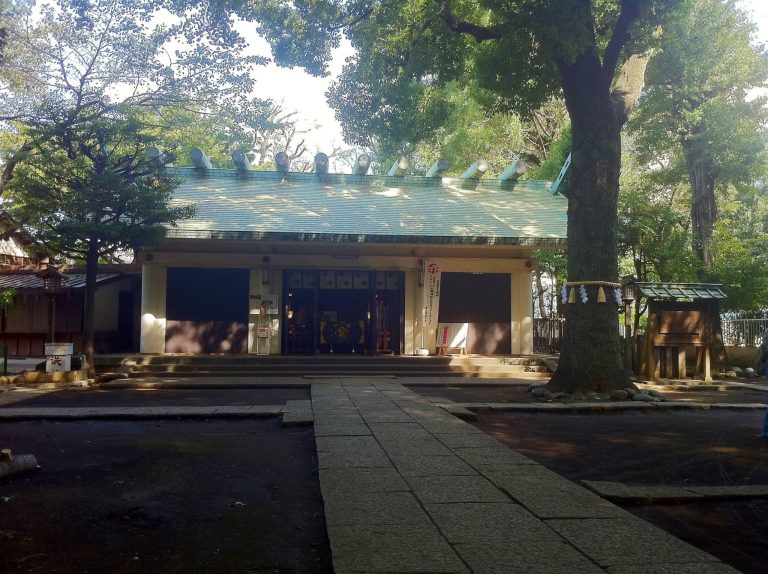
The surviving site includes a worship hall and the associated Shōzoku Inari-jinja. Its physical and remembered landscape preserves the connection between the main shrine, the former riverbank setting, and the hackberry tree associated with the New Year’s Eve fox tradition.
Shrine buildings and associated site
Worship hall
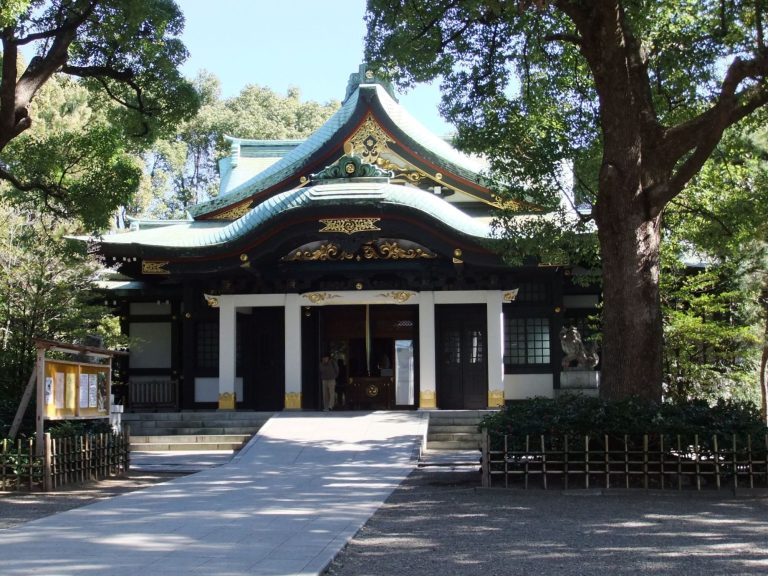
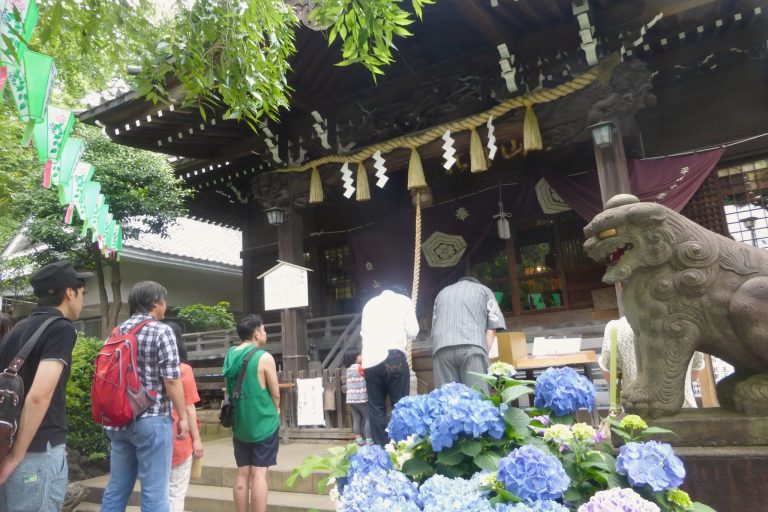
The worship hall is part of the Ōji Inari-jinja precinct. It serves the shrine’s continuing Shinto worship of Inari deities, whose traditions connect food, fertility, agriculture, prosperity, and fox messengers. The shrine’s earlier setting beside the broad Arakawa River is preserved in the former name Kishi Inari, which referred to its position on the riverbank.
Shōzoku Inari-jinja
Shōzoku Inari-jinja occupies the former site of the Shōzoku hackberry tree, which stood east of Ōji Inari. Foxes were traditionally believed to gather there on New Year’s Eve before changing their attire. The tree was felled during road widening in 1929, and the subsidiary shrine was established at the former tree site. The modern fox procession begins at Shōzoku Inari-jinja before continuing to Ōji Inari-jinja, linking the two locations through the ritual remembrance of the foxfire tradition.