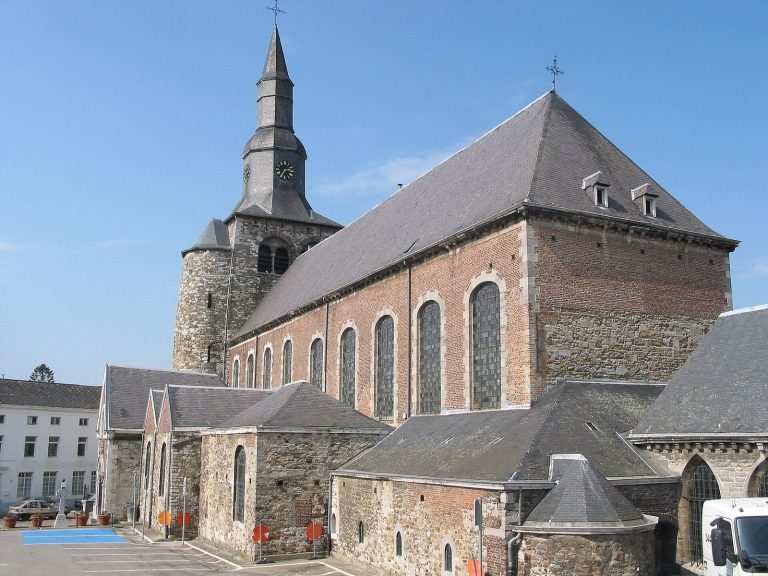
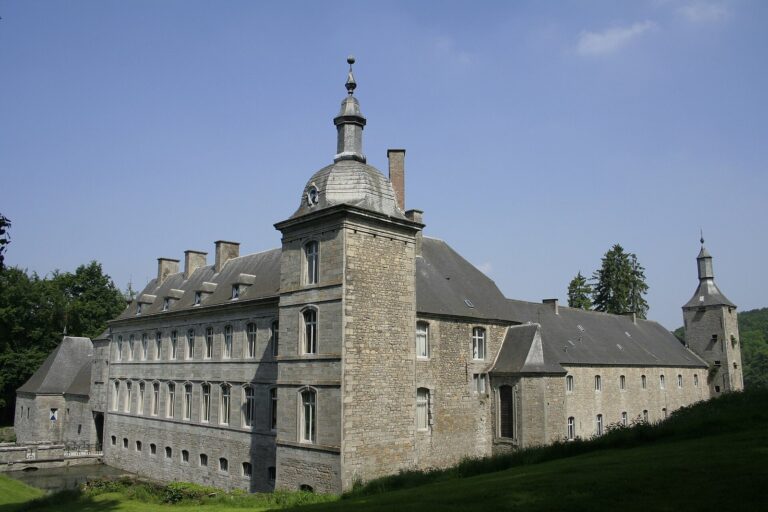
Oignies Abbey: A Former Augustinian Priory in Belgium
Site at a Glance
- Popularity
- Medium
- Country
- Belgium
- Primary era
- Early Modern
- Eras represented
- Early Modern
- Civilizations
- Habsburg, Habsburg Spain, Spanish
- Site type
- Religious
- Remains
- Monastery
On this page7 sections
History
Oignies Abbey, the customary name for a former Augustinian priory at Oignies in Belgium, began when four brothers and their widowed mother settled beside an older chapel in 1187. The community developed into a religious house that followed the Rule of St Augustine, a guide to communal religious life. In 1192, the Canons Regular of St Augustine, clergy living together under a religious rule, formally recognized the Priory of St Nicholas d’Oignies. Gilles, one of the three priestly brothers, became its first prior, or head, and served for 41 years. Their brother Hugo was a layman who became a renowned goldsmith.
Foundation and religious community
The brothers’ mother led a nearby community of Beguines, women who lived in religious communities without taking the formal vows of a monastic order. Marie of Nivelles joined them in 1207, seeking a quiet religious life, and became known as Marie of Oignies. Her reputation as a mystic drew visitors, including the cleric Jacques de Vitry. At her request, he entered the priory as a novice; after becoming a priest, he wrote about her life. Marie died at Oignies in 1213. Devotion to her grew, and her relics attracted pilgrims. The Beguine community came to an end in the fourteenth century.
Growth and rebuilding
The priory became a flourishing Augustinian monastery, housing about 12 to 20 men. Its canons served nearby parishes, including Moignelée. Fires and passing troops damaged the site repeatedly between the thirteenth and sixteenth centuries, amid wars in the southern Netherlands, the southern Low Countries region broadly corresponding to present-day Belgium and nearby areas. In 1559, the priory church passed from the Diocese of Liège to the newly established Diocese of Namur. A diocese is a church district under a bishop’s authority.
The priory reached its height in the seventeenth century, when some buildings were rebuilt in the neoclassical style, which draws on ancient Greek and Roman architecture. Hugo’s work as a goldsmith also became associated with medieval Gothic metalwork.
Suppression and later reuse
In 1794, the last prior, Jean François Pierlot, known in religious life as Brother Gregory, arranged for Hugo of Oignies’s treasure to be hidden inside a farmhouse belonging to the Moussiaux family in Falisolle, to prevent its confiscation. After the farmer died, the treasure was recovered in 1817 and returned to Pierlot. He gave it to the Sisters of Notre Dame at Namur the following year.
In 1796, during the French Revolution, the priory was suppressed and its canons expelled. Its lands were divided and sold as public property, although some members of the community remained at the convent until 1808. In 1836, the church and cloister were demolished, and their furnishings dispersed. Some went to churches in Charleroi and Ragnies, and to Saint John the Baptist in Cockayne Hatley, England.
A glassworks opened on the site in the late 1830s, in an installation associated with Belgian senator François Houtart-Cossée. It employed about 1,000 people and continued operating into the twentieth century. Priory buildings were adapted for industrial use and workers’ housing. After the glassworks closed, its industrial buildings were demolished, while other buildings became social housing for a neighboring coal company. A fire caused further damage in 1973, and the site was classified as Walloon heritage in 1975.
Private buyers acquired the remains in 1987 and formed the Friends of Oignies Abbey association. Its name helped establish the familiar label “abbey,” although Oignies had been a priory. Restoration work began in 2020 on buildings with protected façades.
Remains
Layout and surviving architecture
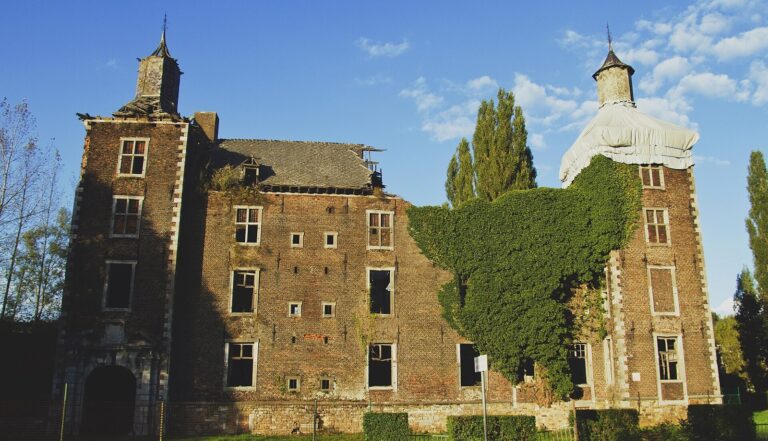
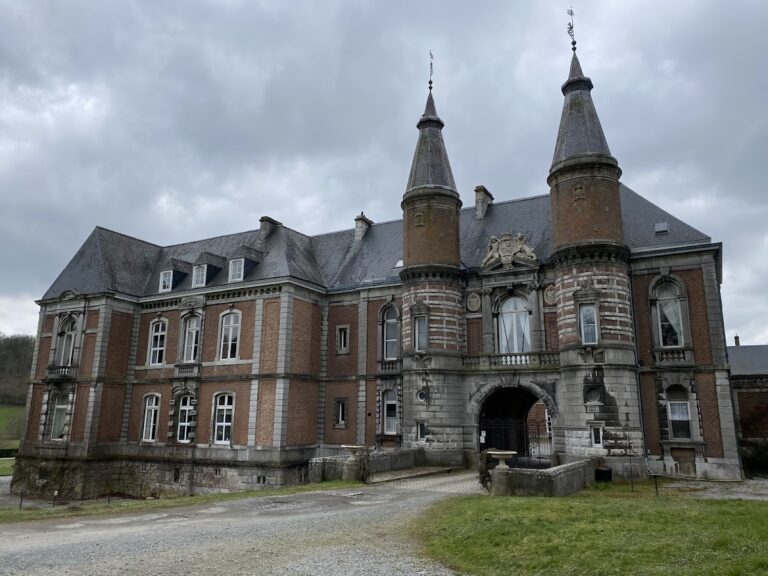
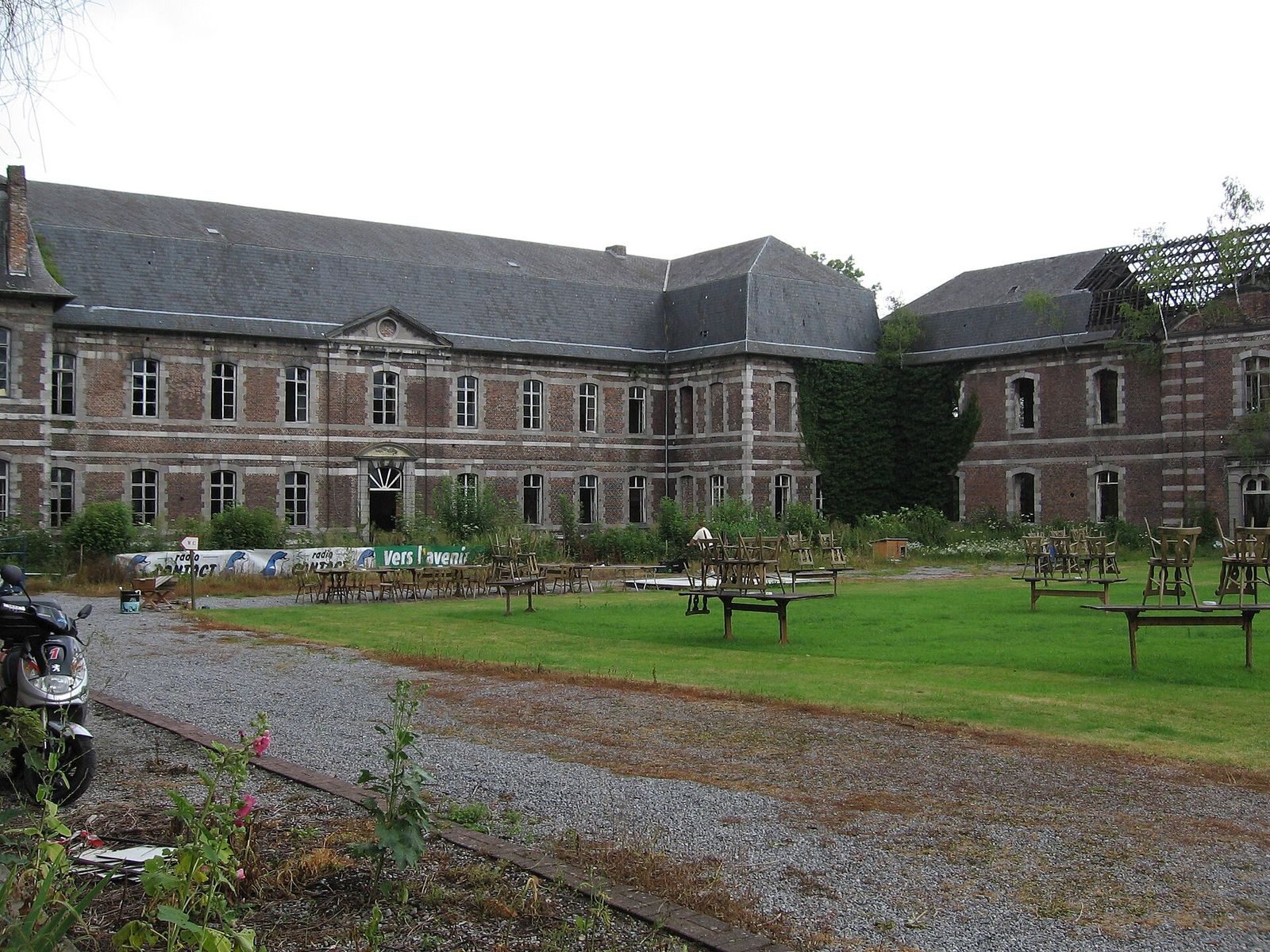
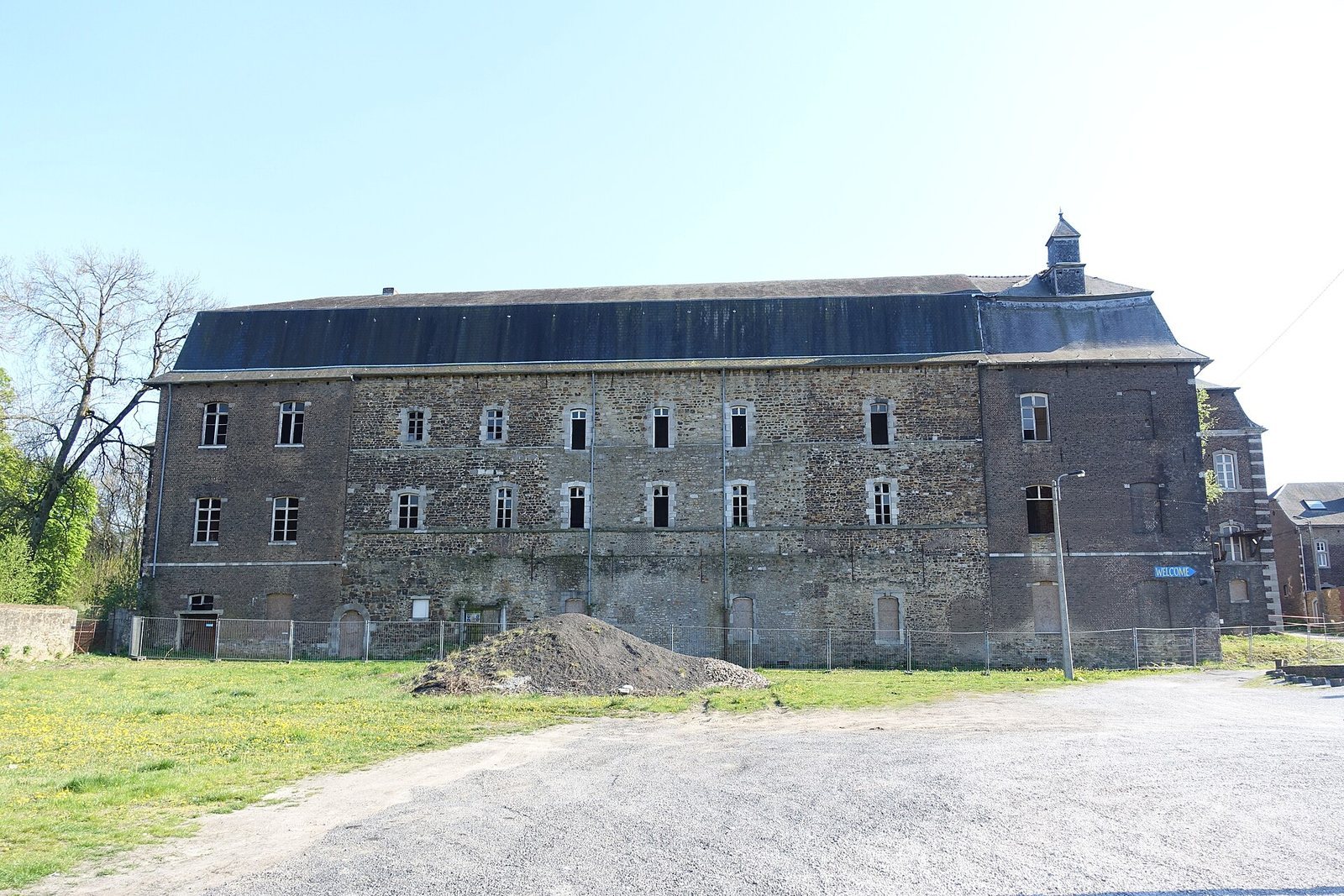
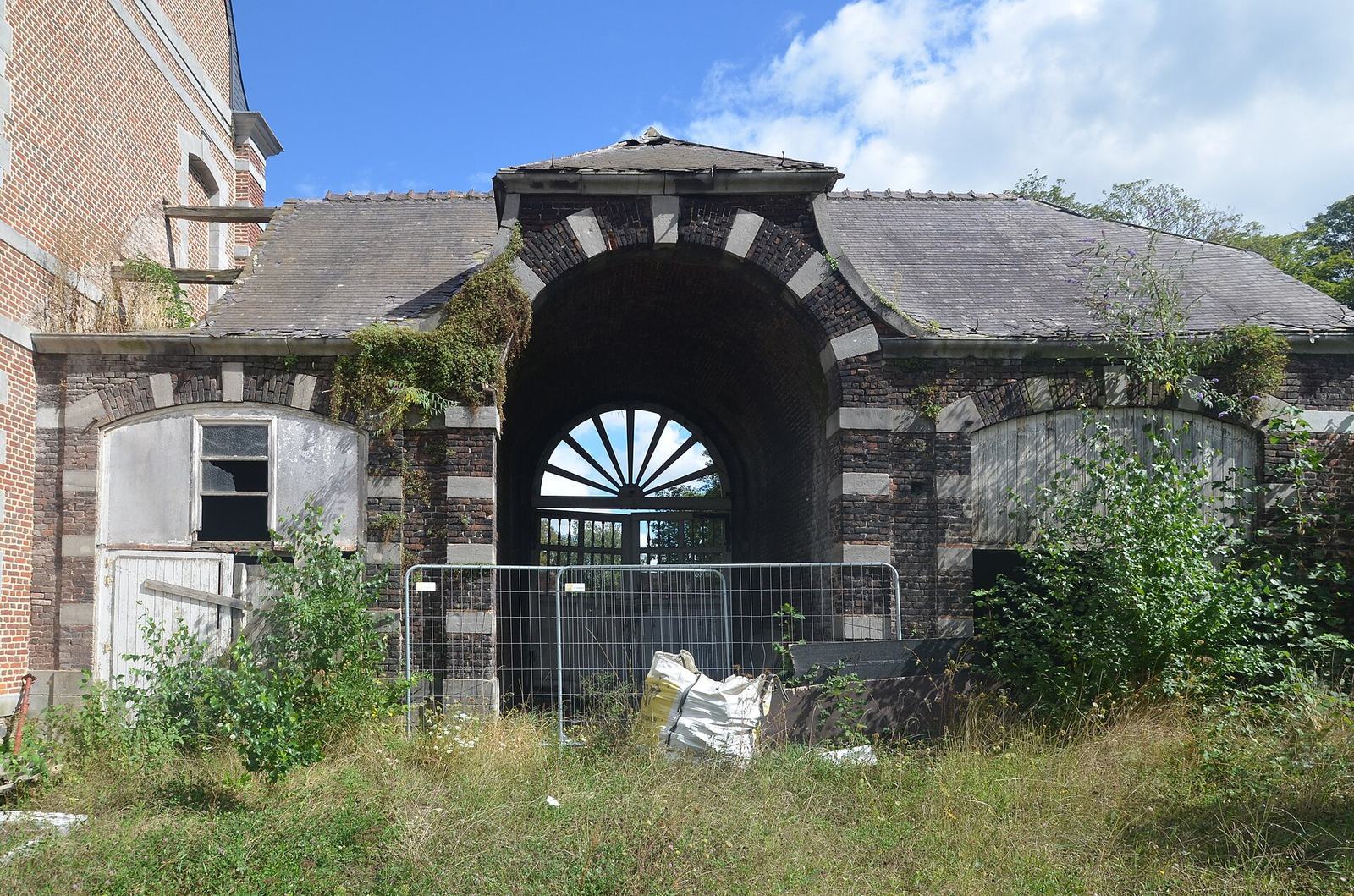
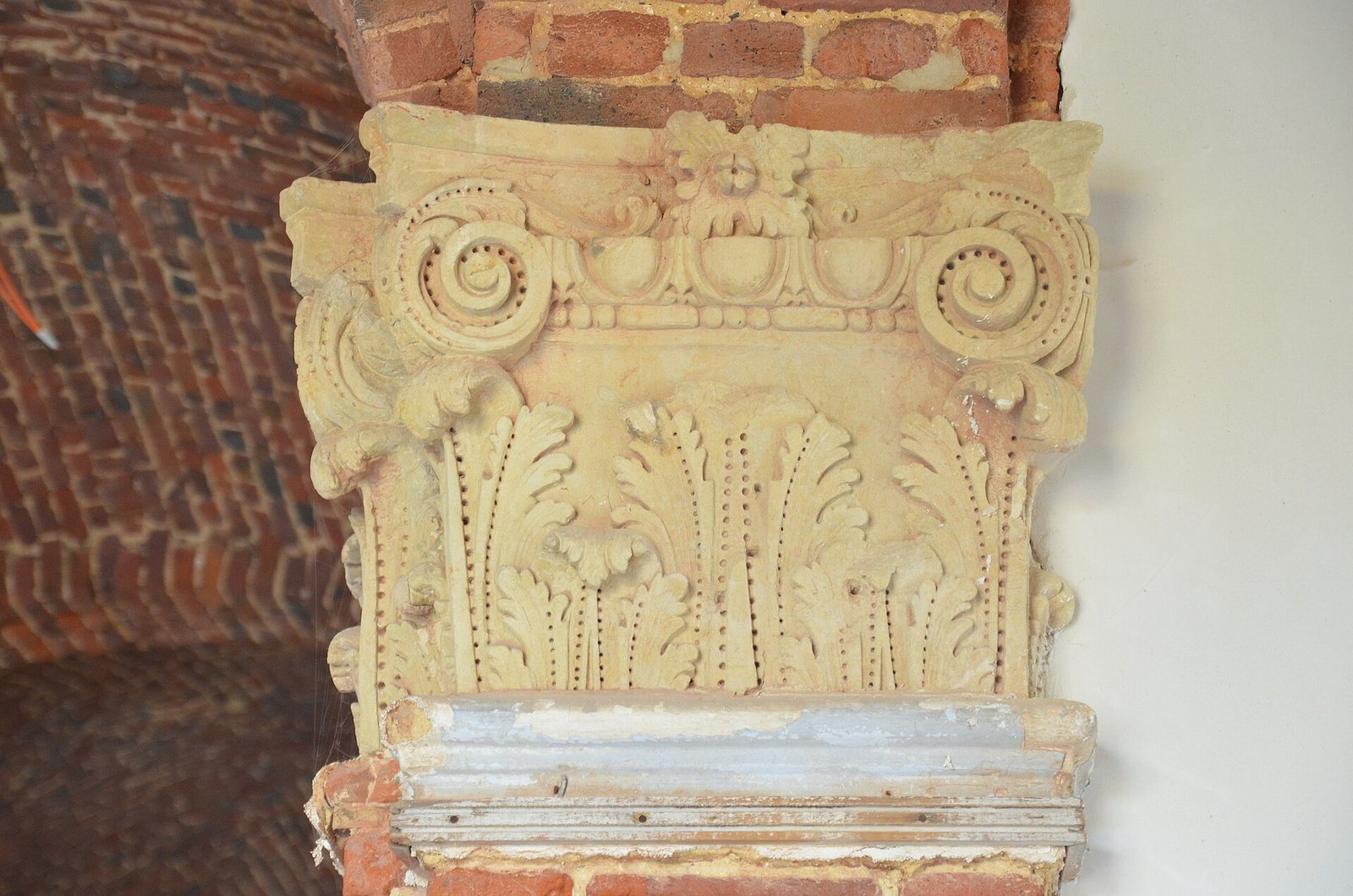
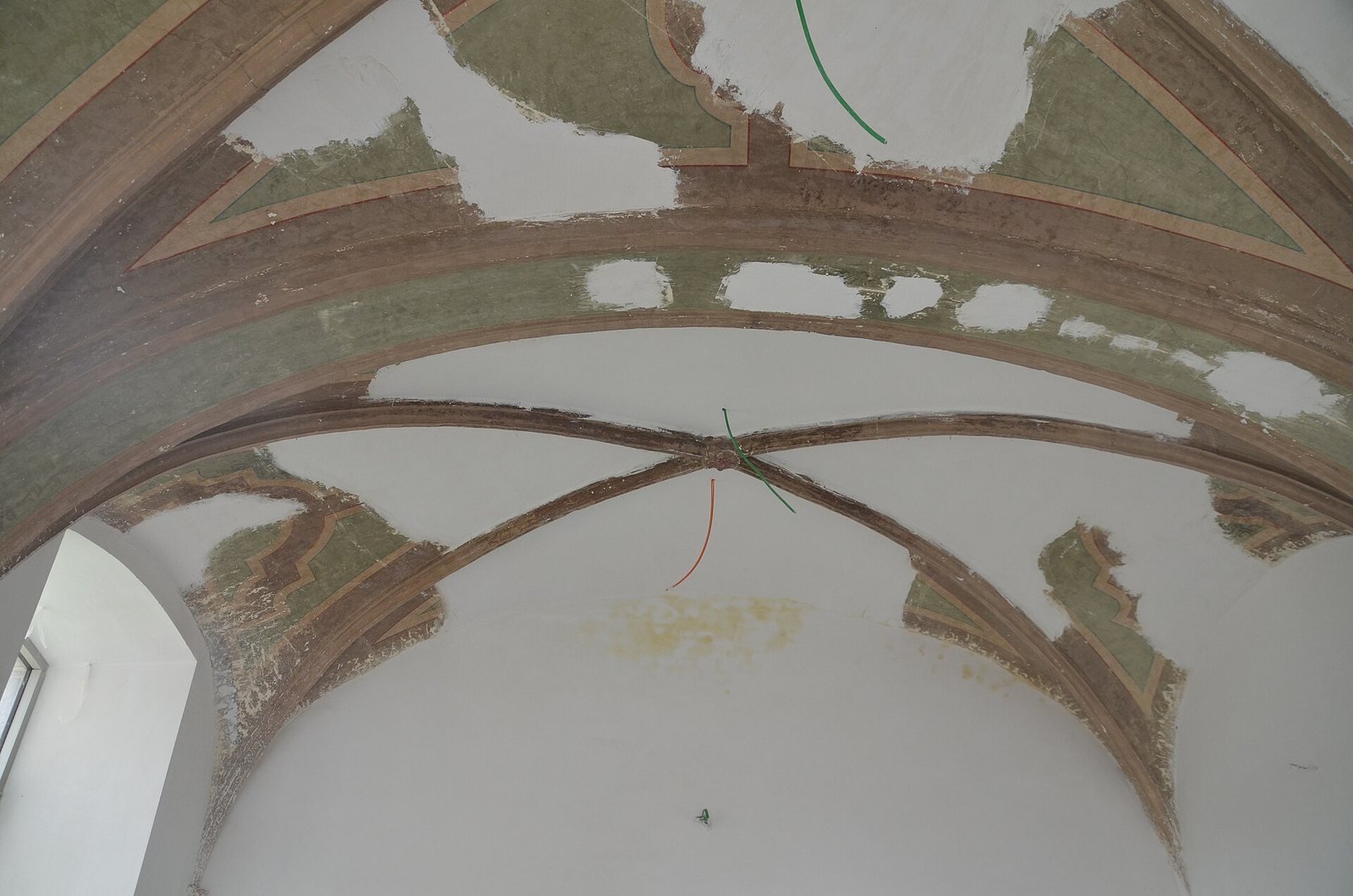
The site covers about three hectares beside the Sambre River in a park-like setting. An older chapel dedicated to St Nicholas stood near the place where the brothers settled; the Beguines’ huts lay between the men’s priory and the river. Among the surviving architectural features are the main entrance and the southern gallery of the cloister. Neoclassical pilasters, shallow rectangular wall features resembling columns, and their capitals remain, including a capital made from soft limestone from Lincent. Decorative plasterwork and painted surfaces also survive.
Objects and artistic remains
A manuscript with silver covers presented to the monastery by Hugo around 1230 includes a cover depicting him as a layman alongside St Nicholas, the priory’s patron saint. A medieval statue of the Virgin seated with the Christ Child, representing Mary as a throne for the child, was removed from Oignies and is now in the Metropolitan Museum of Art in New York.