Nymphaeum Traiani (Ephesus): A Roman Monumental Fountain
Site at a Glance
- Popularity
- Low
- Country
- Turkey
- Primary era
- Classical
- Eras represented
- Classical, Modern
- Civilizations
- Roman
- Site type
- Civic
- Remains
- Fountain
On this page7 sections
History
The Nymphaeum Traiani (Ephesus) is a Roman monumental fountain in present-day Selçuk, Türkiye, built between AD 102 and 114 during the later years of Emperor Trajan’s reign.
Construction and Roman use
Tiberius Claudius Aristion and his wife, Iulia Lydia Laterane, provided the fountain as a dedication to Trajan and Artemis of Ephesus, the local form of the Greek goddess. It stood at the end of a water conduit extending about 39 kilometres.
Damage and rediscovery
An earthquake, possibly in AD 362, damaged the fountain, which was later repaired. Excavations along Curetes Street uncovered it in 1957. The ruins are part of the Ephesus archaeological site, inscribed as a UNESCO World Heritage property in 2015.
Remains
Plan and reconstructed form
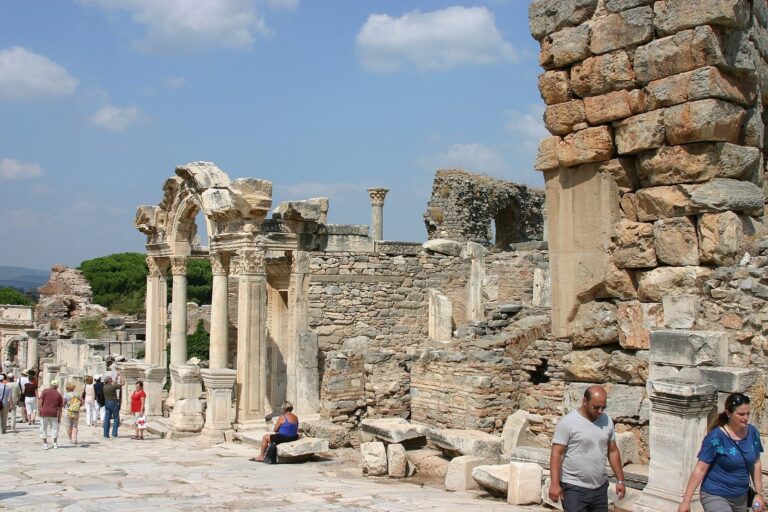
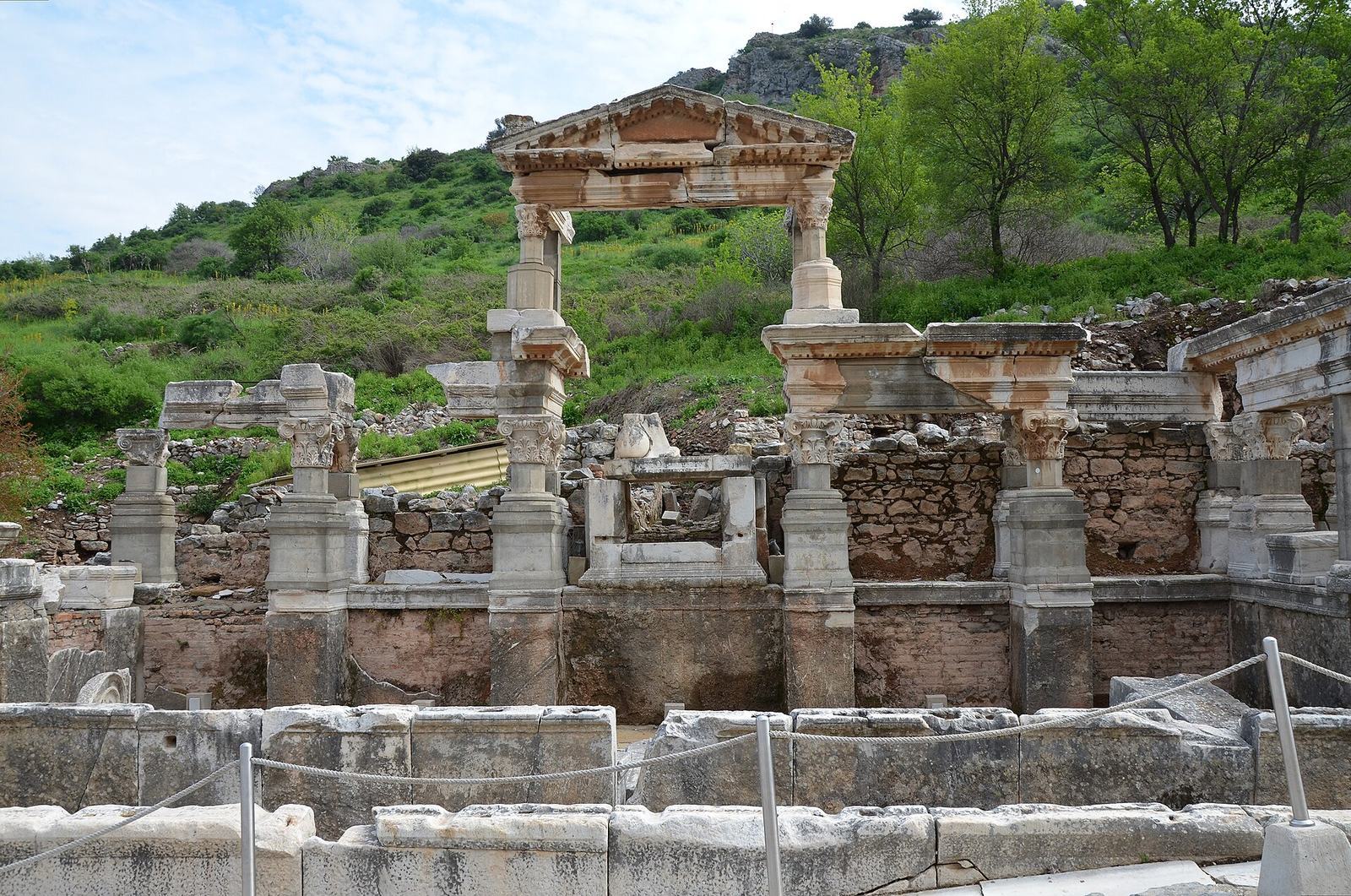
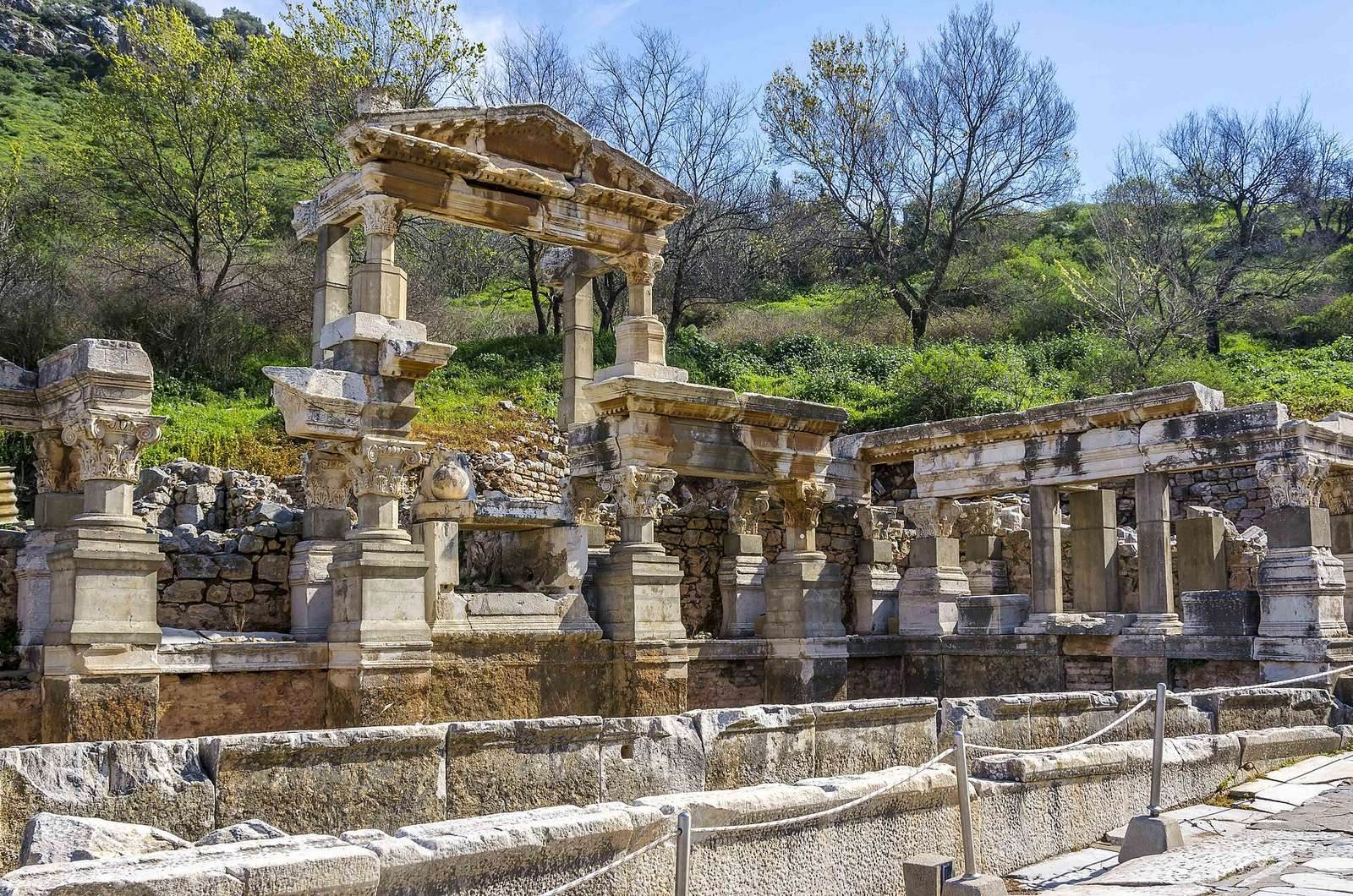
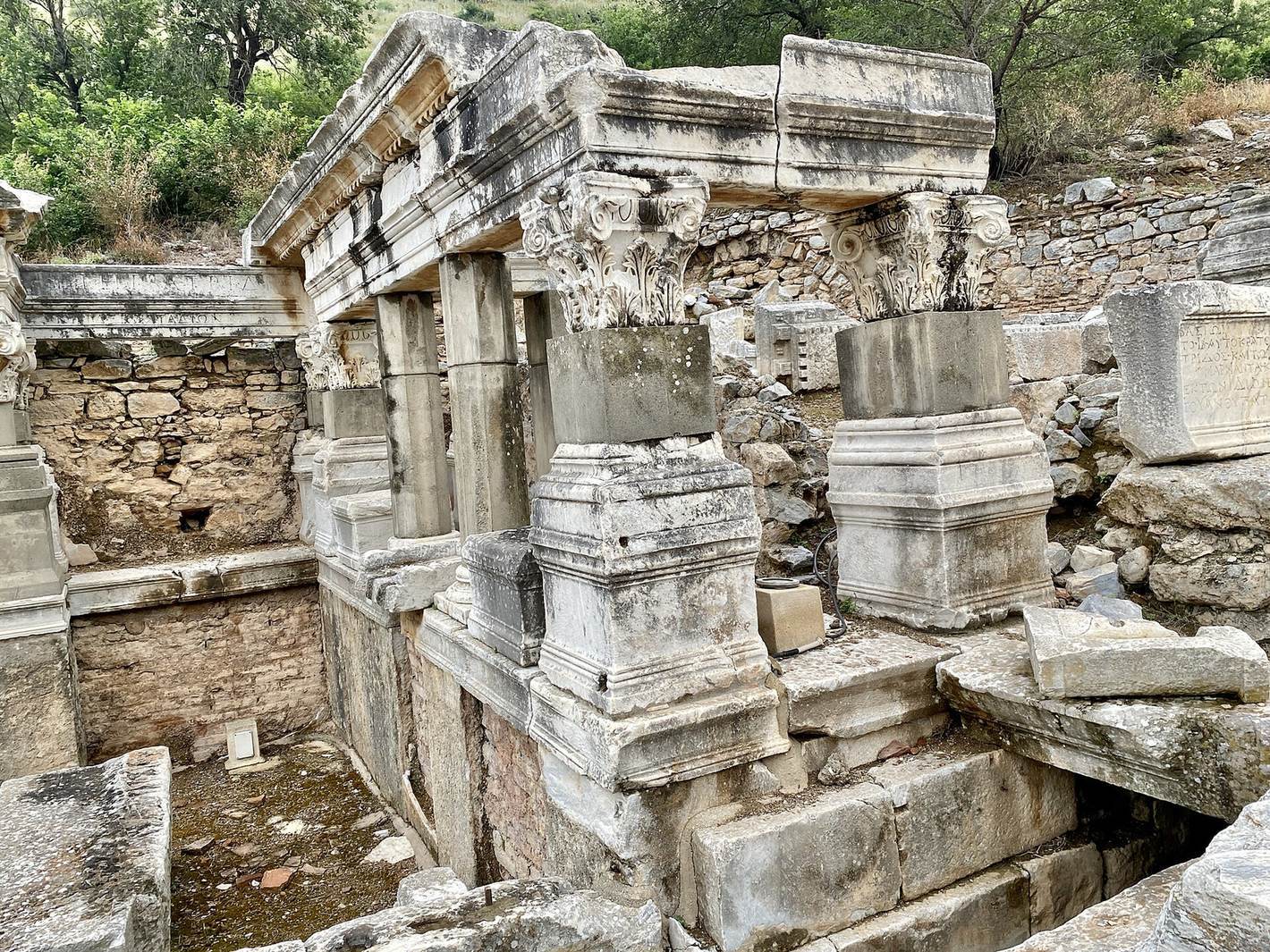
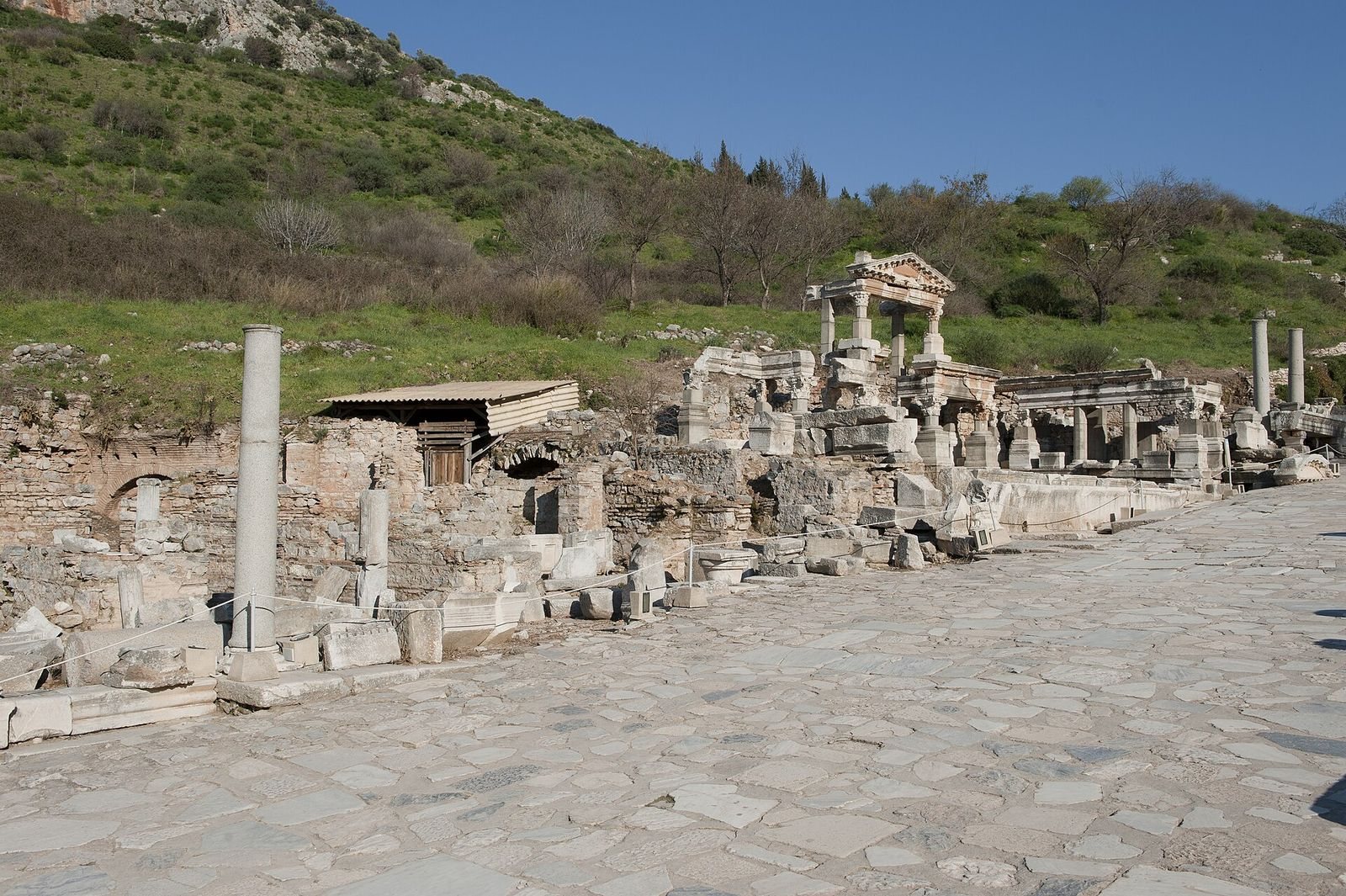
The fountain stood on the north side of Curetes Street, facing the street. Its rectangular main basin measured 11.90 by 5.40 metres, with a two-storey façade framing it on three sides. The arrangement imitated the elaborate backdrop behind the stage in a Roman theatre.
Two-storey façade
The façade originally rose about 9.50 metres. Columns with Composite capitals, which combine scroll-like forms and foliage, decorated the lower level; the upper level had Corinthian capitals with elaborate foliage, including acanthus leaves. Horizontal beams on the lower level ran straight along the sides, while the rear façade had a stepped upper structure. On the upper level, the beams were arranged in an interlocking pattern that formed a large central niche.
A sample reconstruction of the architecture was installed in 1962 and gives the monument its present appearance. The fountain has also been restored.
Basins and sculpture
Water flowed beneath a life-size statue of Trajan in the central niche and into the main basin. A narrower basin in front, facing the street, provided a place to draw water. Statues also stood between the façade’s columns. They included members of the imperial family, among them Nerva, Trajan’s predecessor as emperor, as well as Dionysus, associated with wine and theatre, Aphrodite, associated with love, and satyrs, male nature spirits in Greek mythology.
The lower level’s horizontal beam bears the two-line dedication naming the donors and the recipients of the fountain.