Tetragonos Agora: Ephesus’s Hellenistic and Roman Commercial Center
Site at a Glance
- Popularity
- Low
- Country
- Turkey
- Primary era
- Classical
- Eras represented
- Iron Age, Classical, Medieval
- Civilizations
- Ancient Greek, Byzantine, Roman
- Site type
- Civic
- Remains
- Forum
On this page16 sections
History
The Tetragonos Agora was the commercial center and civic gathering place of Ephesus, in present-day Turkey. Established in the third century BC during the Hellenistic period, a phase of ancient Greek history, it continued to serve the city under Roman rule. Trade guilds met there, and political gatherings took place alongside commerce. Its name means “quadrangular,” and the site was distinct from Ephesus’s administrative agora.
Earlier occupation and foundation
During the Archaic period, an early phase of ancient Greek history, a settlement called Smyrna occupied the area around 700–500 BC. It was separate from the better-known city of Smyrna and was apparently abandoned as sea levels changed. Craft activity later took place here around 400–300 BC. When Ephesus was refounded, the agora was established in the third century BC, after earlier buildings on the site had been cleared.
Hellenistic and Roman periods
The agora was rebuilt in the first century BC and reconstructed again in the early Roman imperial period after the earthquake of AD 23. Under Theodosius I, it was rebuilt once more around AD 379–395, using large quantities of stone from earlier buildings, including temples. The complex remained in use into the early Byzantine period, the first centuries of the Eastern Roman Empire.
Excavation and conservation
Excavations at the agora took place mainly from 1901 to 1907. Buildings in the area were restored during the 1960s, and the South Gate was restored between 1979 and 1988. The remains form part of the archaeological site of Ephesus, inscribed on the UNESCO World Heritage List in 2015.
Remains
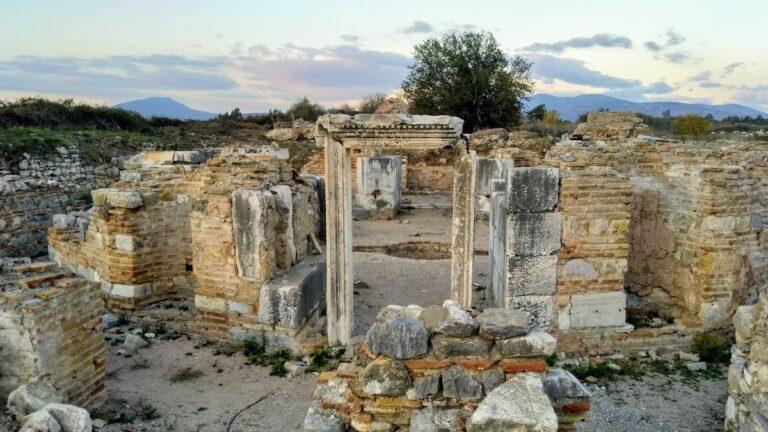
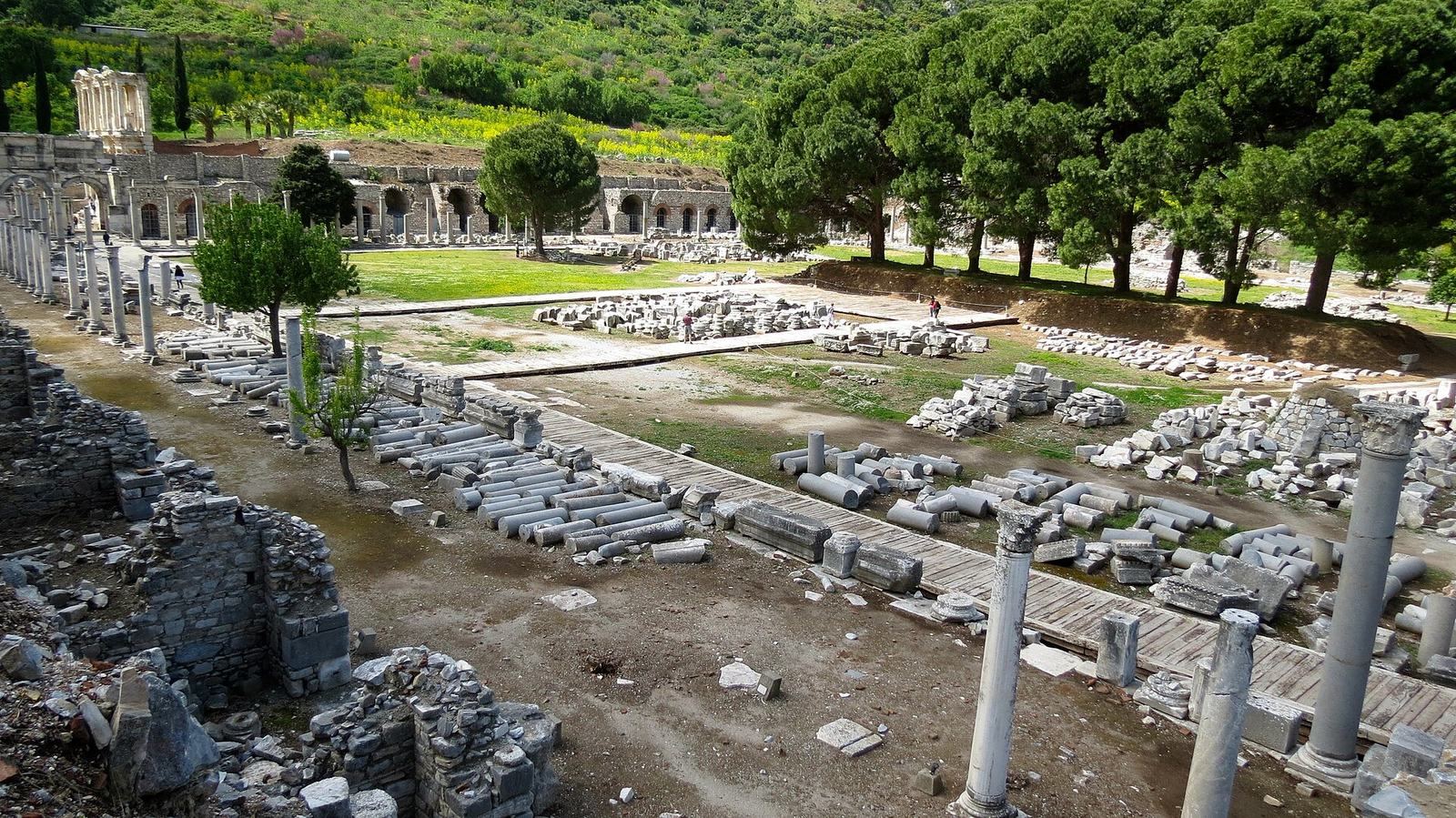
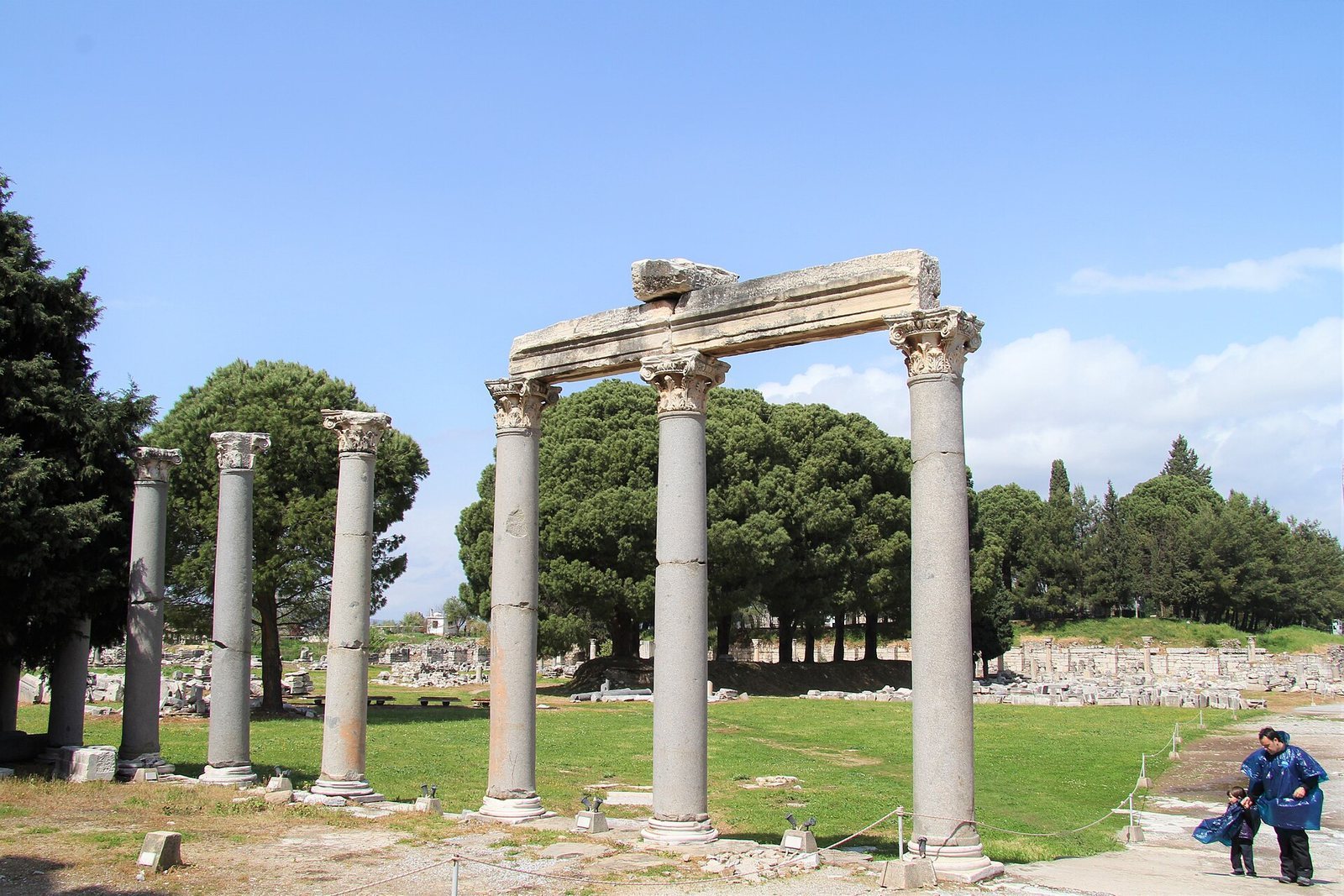
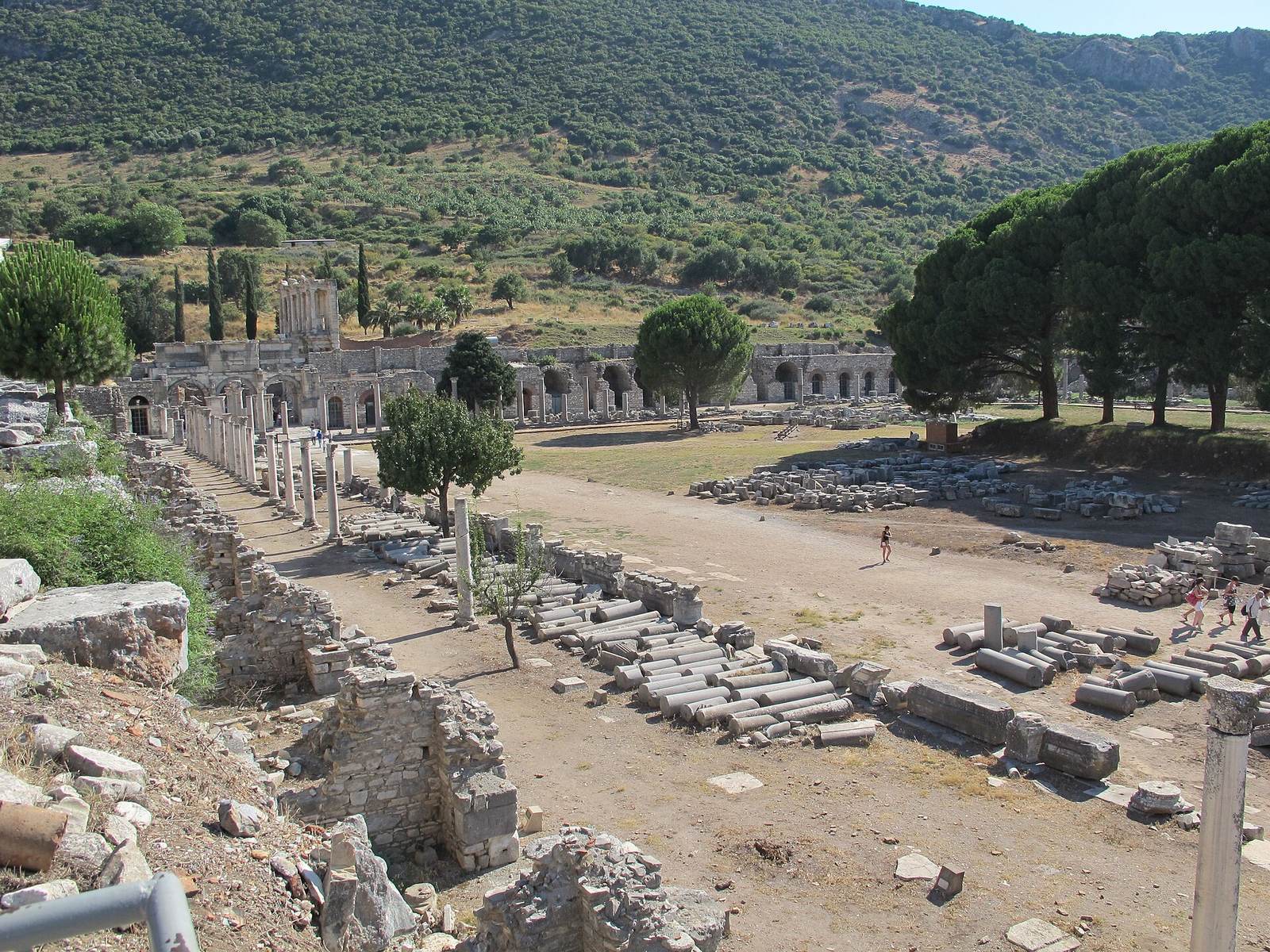
The Roman-period agora had a square plan, about 112 m on each side, with two-storey, two-aisled roofed colonnades (stoas) containing shops along all four sides. It stood on a plain west of Marble Street and Mount Peion, now called Panayır Dağ.
Earlier levels and central monuments
Hellenistic Agora and Earlier Occupation
The earlier Hellenistic agora measured about 100 by 110 m and lay roughly 3 m below the Roman-period level. Its surviving features include a storage building and traces of the colonnades that bordered it. Remains of houses from the earlier Smyrna settlement and of the later craft area have also been found at the site.
Central Timekeeping Monument
A timekeeping structure at the center combined a water clock and a sundial. It stood on a pedestal measuring about 10 by 5.9 m. The agora also contained numerous statues and monuments dedicated as offerings.
Gates and West Street
South Gate
Built under Augustus in 3 BC, the South Gate, also called the Gate of Mazeus and Mithridates, connected the agora with the square in front of the Library of Celsus. Its three openings gave it the ancient name Triodos. The inscription credits Mazeus and Mithridates, freedmen of Agrippa (formerly enslaved men who had gained their freedom), with building the gate. It dedicates the structure to Augustus and Livia, Agrippa, and Agrippa’s daughter Julia the Younger. Statues of the imperial family adorned the gate, and the buildings beside it apparently contained the donors’ tombs.
West Gate
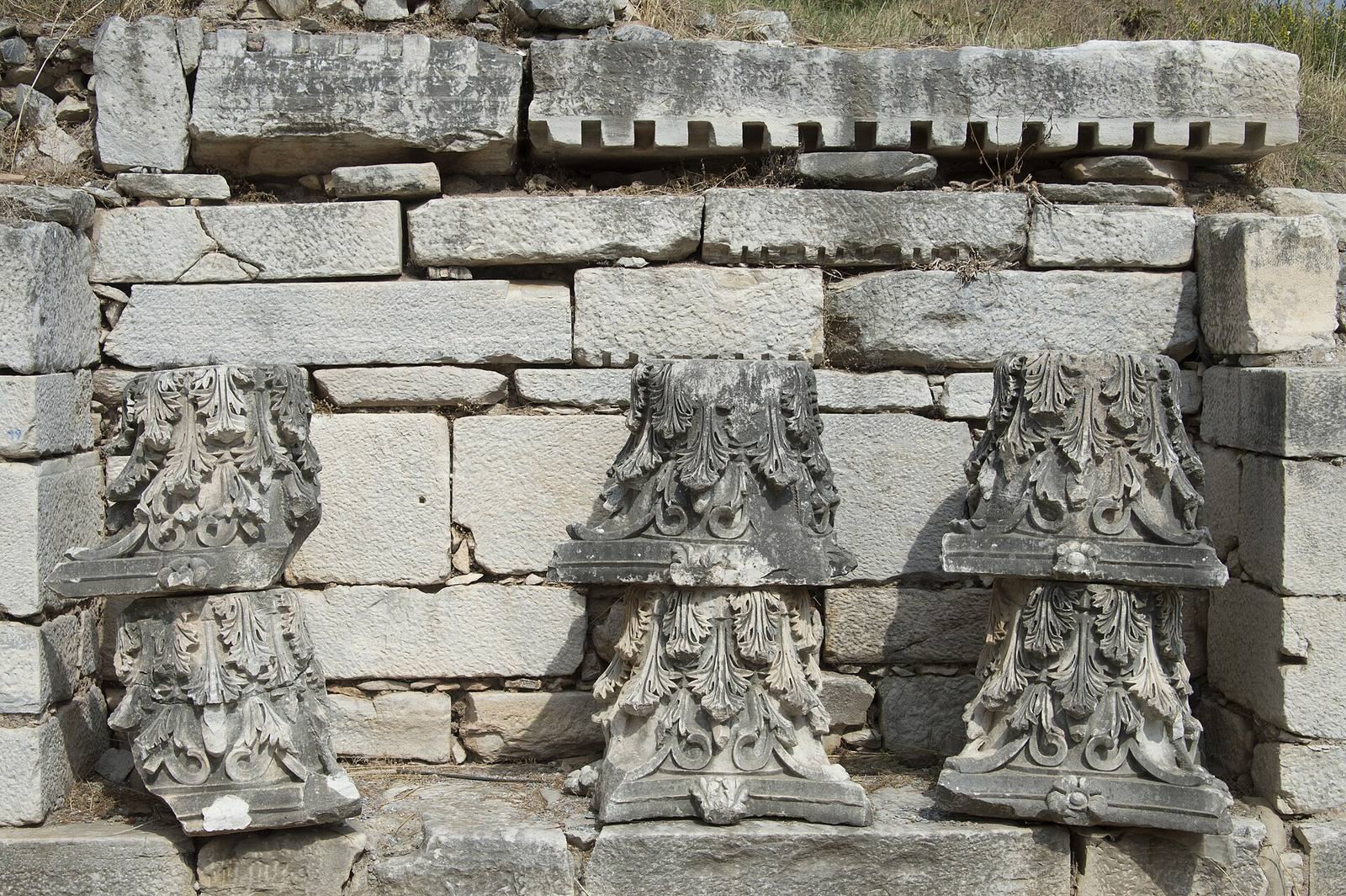
Built sometime after AD 23, the West Gate served as the agora’s principal entrance. A ten-step staircase connected it to West Street, while ramps for carts were added later. Its columns were in the Ionic style, one form of classical column. At the eastern end of West Street, the gate provided access to the agora.
North Gate
The North Gate connected the agora with the square in front of the theater.
West Street and Medusa Gate
West Street ran east–west along the agora’s western side and measured about 160 m long and 24 m wide. A 6 m-wide colonnade lined each side, with columns in the Doric style, another classical column form. The southern colonnade gave access to the Serapeum, a sanctuary associated with the deity Serapis. At the street’s eastern end stood the agora’s West Gate; the western end had the three-opening Medusa Gate, whose reliefs included the head of Medusa, a Gorgon from Greek mythology.
Eastern Hall and Associated Buildings
Nero’s Hall
Behind the colonnade on the agora’s eastern side stood Nero’s Hall, built during the emperor’s reign. This two-aisled basilica, a large public building with an elongated interior, measured about 150 m long and had Doric columns. Its inscription dedicated the building to Artemis of Ephesus, the local form of the Greek goddess, as well as to Nero, his mother Agrippina, and the Ephesians.
Other Associated Structures
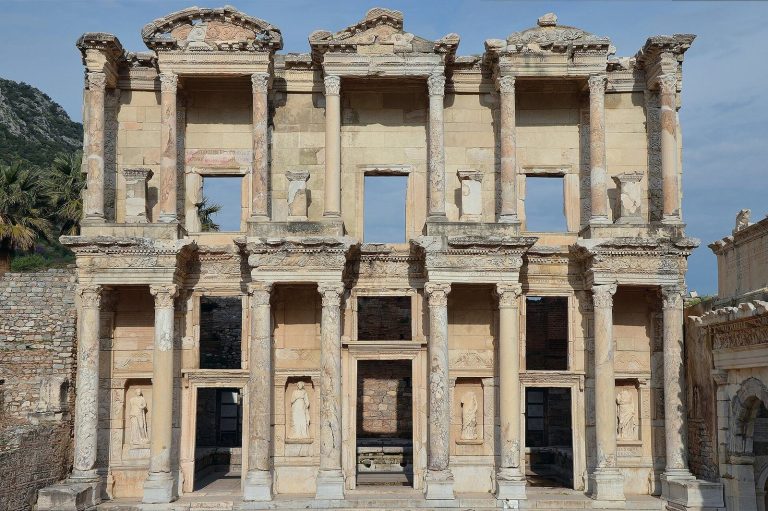
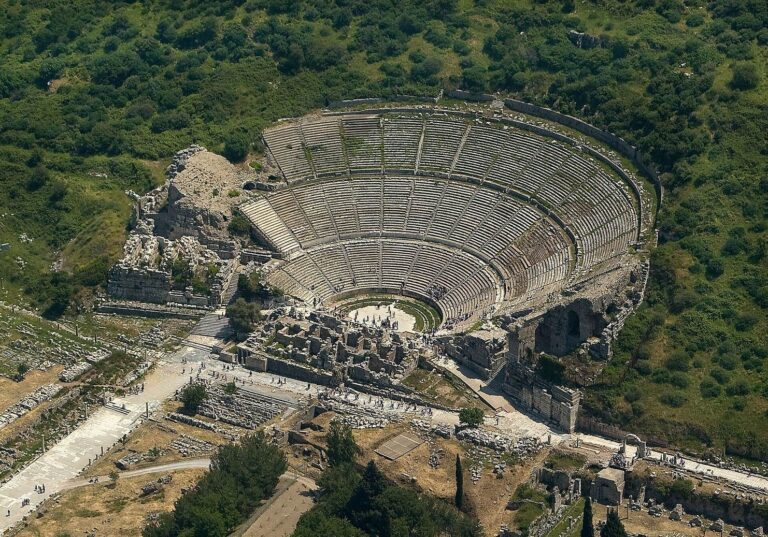
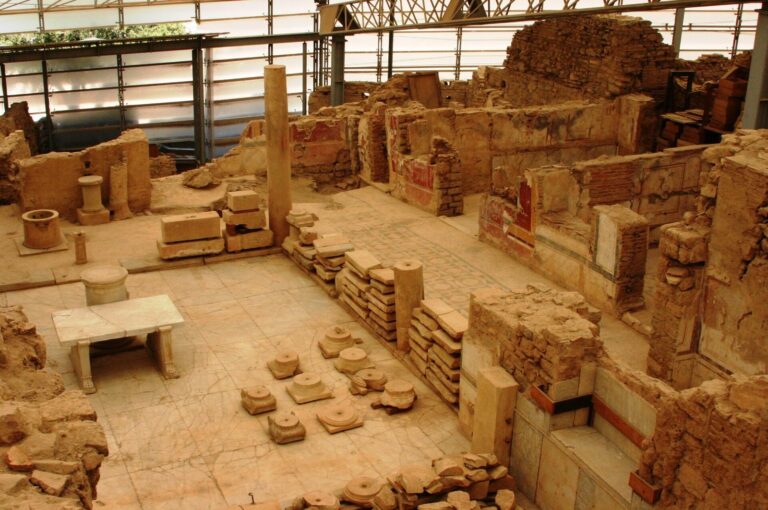
Other structures associated with the agora and its surroundings include Terrace Houses 1 and 2, an altar, a Hellenistic house arranged around a columned courtyard, and a bridge-culvert gate. The Library of Celsus, named for a Roman senator and provincial governor, and the Tomb of Dionysius the Rhetorician, a teacher of persuasive speaking and writing, are also identified. Further features include a brick vault called the Embaton, a circular monument beside a fountain well, the Serapeum, and the theater.