Ninestane Rig: A Prehistoric Stone Circle in the Scottish Borders
Site at a Glance
- Popularity
- Medium
- Country
- United Kingdom
- Primary era
- Bronze Age
- Eras represented
- Stone Age, Bronze Age
- Civilizations
- Unclassified
- Site type
- Religious
- Remains
- Sanctuary
On this page6 sections
History
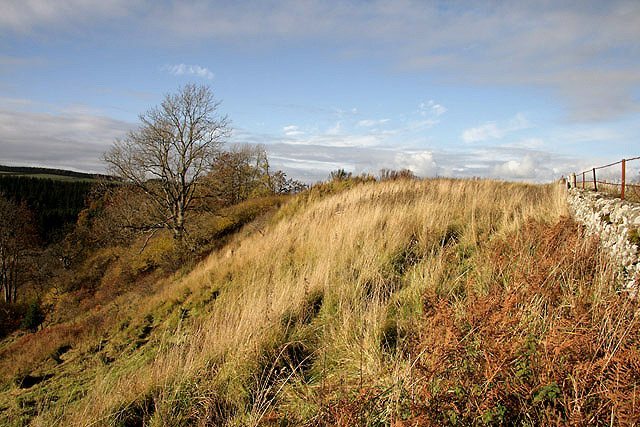
Ninestane Rig is a prehistoric stone circle on a low hill in the Scottish Borders, United Kingdom, near the English border. It was probably built between 2000 and 1250 BC, during the Late Neolithic or Early Bronze Age, and is counted among the Borders’ 16 stone circles.
Prehistoric setting
Bronze Age technology reached the Borders around 1750 BC. Settlements seem to have grown near earlier ritual places such as the circle in late prehistory, and perhaps before then.
Legend and historical record
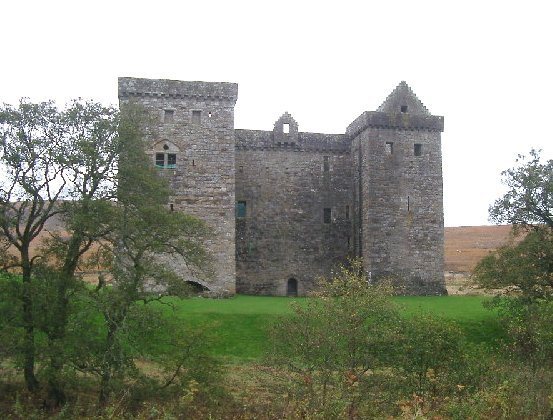
Local tradition says William II de Soules, lord of Hermitage Castle, was seized by his tenants and boiled alive at the circle in 1320 for his cruelty as a landlord. He was also accused of conspiring against Robert the Bruce, king of Scots. Walter Scott, a Scottish writer and antiquarian, noted that people locally regarded William as a sorcerer.
John Leyden’s ballad Lord Soulis expanded the story. It attributed William’s magic to a redcap, a supernatural figure in Scottish folklore, and to Michael Scot, a medieval scholar later linked with tales of magic. In the ballad, True Thomas, a figure of Scottish legend, could not restrain William with ropes of sand, so William was enclosed in lead and boiled. The poem said local people still pointed out the supposed cauldron and that vegetation would not grow at the spot. Scott identified the kettle as a relic of the 1715 rising, when supporters of James Francis Edward Stuart, known as the Old Pretender, rebelled. He also remarked that similar tales of death by boiling appeared elsewhere in Scottish history.
William did not die at the circle. He died in prison at Dumbarton Castle, probably before 20 April 1321. An earlier family member, Ranulf II de Soules, was believed to have been killed by his servants in 1207 or 1208, while still a teenager, because of his supposed wickedness. It is uncertain whether his story became entangled with William’s in local tradition. The circle became a scheduled monument, a nationally important archaeological site protected by law, in 1958, under the name “Nine Stones stone circle.”
Remains
The remains include a slightly oval stone ring and traces of other prehistoric features in the surrounding area. The site occupies Ninestane Rig, a hill that rises to about 285 metres and extends roughly 4 miles in length and 1 mile across.
The stone circle
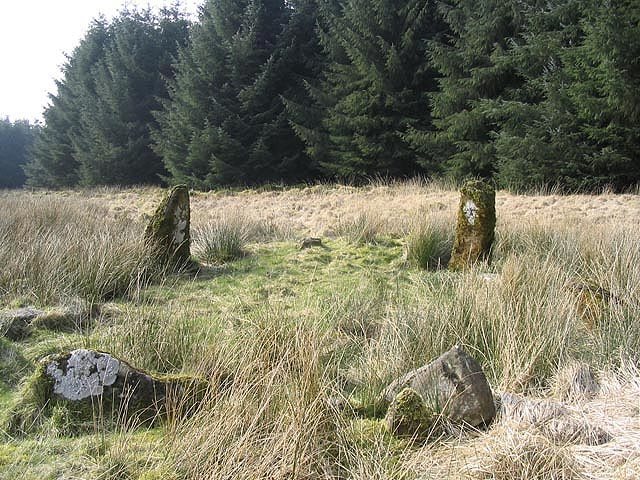
Eight stones remain upright in the ground, while a ninth has toppled inward and lies flat. Six of the upright stones are short stumps, each no more than about 0.6 metres high. Of the two larger stones, one is a regular block just under 2.1 metres tall, while the other has a pointed shape and stands a little over 1.2 metres.
Nearby prehistoric features
The circle belongs to a group that also includes the Buck Stone and a standing stone at Greystone Hill. In the immediate area, central hollows and ground marks show where stones once formed several similar circles. A line of round pits, each about 2.4 to 3 metres deep, lies nearby. They may have provided shelter for the people who built the circles, although that interpretation is uncertain.