Nilus of Sora Hermitage: A Russian Orthodox Monastery in Vologda Oblast
Site at a Glance
- Popularity
- Medium
- Country
- Russia
- Primary era
- Unclassified
- Eras represented
- Unclassified
- Civilizations
- Unclassified
- Site type
- Religious
- Remains
- Monastery
On this page10 sections
History
Origins in the late 15th century
The Nilus of Sora Hermitage is a Russian Orthodox monastery at Pustyn in Vologda Oblast, Russia, originating in the late 15th century. Its precise founding date is unknown. Nilus, a monk at Kirillo-Belozersky Monastery, left because he believed life there did not follow God’s law and the traditions of the Church Fathers.
With another monk, Nilus made a pilgrimage to the Holy Land, Constantinople, and Mount Athos. After returning, he lived in a cell near the monastery, then moved to the Sora River to pursue greater solitude and his monastic ideals. The community that gathered around him followed a skete rule, a more solitary form of monastic life, and was initially called a skete.
Changes in monastic status
In 1764, the hermitage was placed under the authority of Kirillo-Belozersky Monastery. Its independence was restored in the mid-19th century.
Closure and non-monastic use
In 1918, a special commission inventoried the monastery’s property and valuables, which were declared public property. In April 1919, the brotherhood and residents of nearby villages reached an agreement with a local council. The Kirillov Executive Committee registered the community that September, temporarily preserving its monastic organization and governing structure.
The agreement was ended in 1924, and a correctional colony was established at the monastery. Concerned that church valuables might be stolen, local officials sought to remove them for safekeeping. In 1927, the Cherepovets provincial executive committee closed the monastery and reassigned its buildings for public cultural purposes. Some monks stayed for a time at St John the Baptist Skete, while the rest of the community gradually dispersed.
The correctional colony operated until 1930, when a home for people with disabilities took its place. The principal church also closed that year. A psychoneurological institution occupied the monastery grounds from 1961 until it closed on 3 December 2018.
Revival from 2018
On the day the institution closed, Hieromonk Euthymius (Ershov), a monk who was also a priest, became superior of a bishop’s metochion, a monastic establishment linked to a bishop’s see. He began arranging the transfer of the former monastery property, then owned by the region, to the revived community. On 10 December, Metropolitan Ignatius (Deputatov), a senior bishop, appealed to clergy in the Vologda Diocese to help restore the monastery. Clergy donated liturgical vessels, vestments, books, and icons.
The Church of the Tikhvin Icon of the Mother of God, then used as a dining room and club, was prepared for worship. On 7 January 2019, Euthymius celebrated the first Divine Liturgy there in 89 years. The Divine Liturgy is the Orthodox Church’s central Eucharistic service. On 17 February, Ignatius celebrated the first such service there by a bishop in more than a century.
On 30 May 2019, the Holy Synod of the Russian Orthodox Church formally reopened the monastery and appointed Euthymius as its hegumen, or superior. Full monastic life had not yet been restored.
Remains
Site and surviving buildings
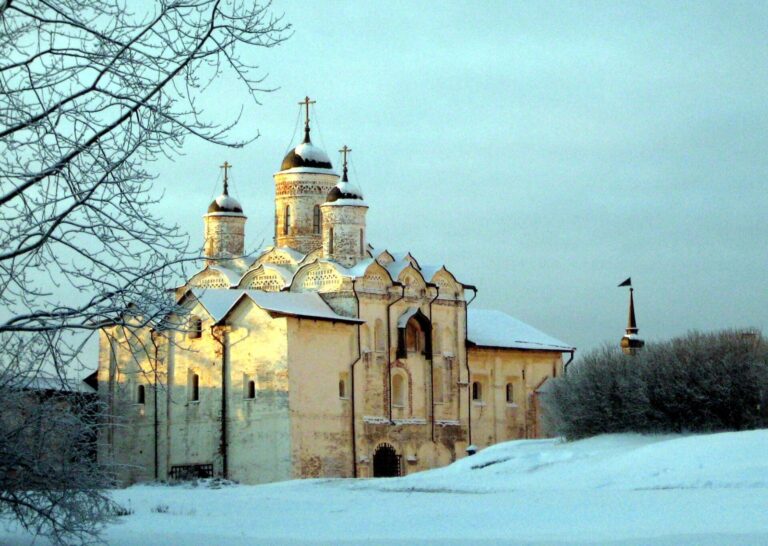
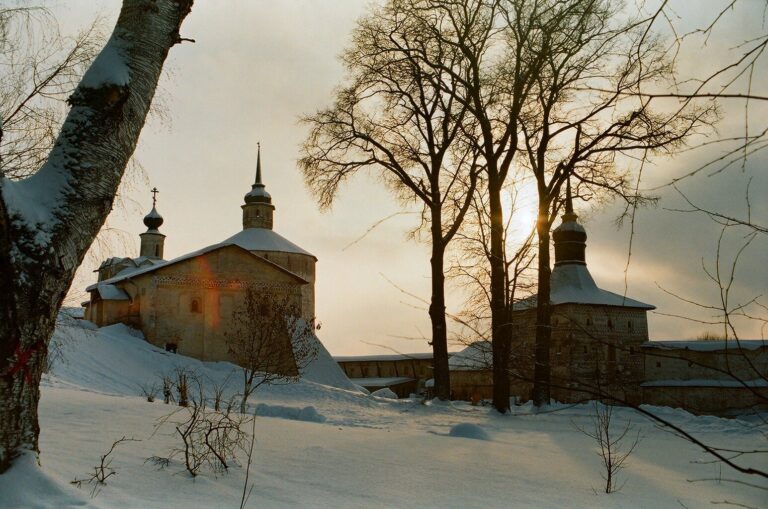
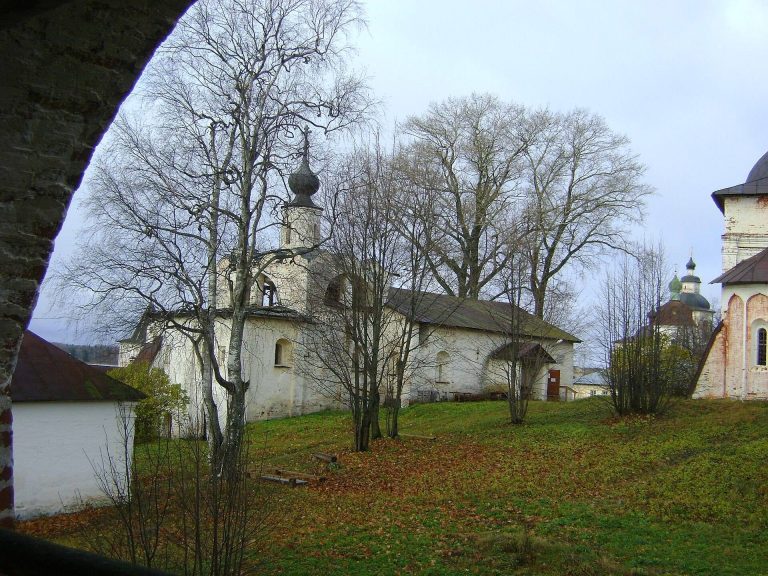
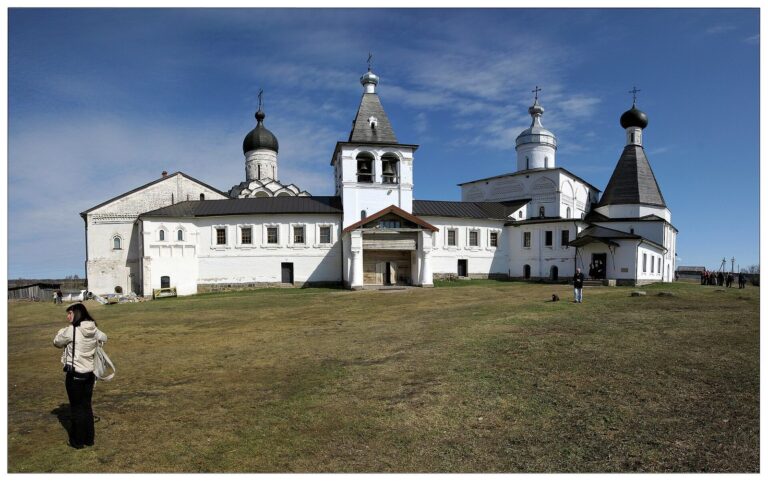
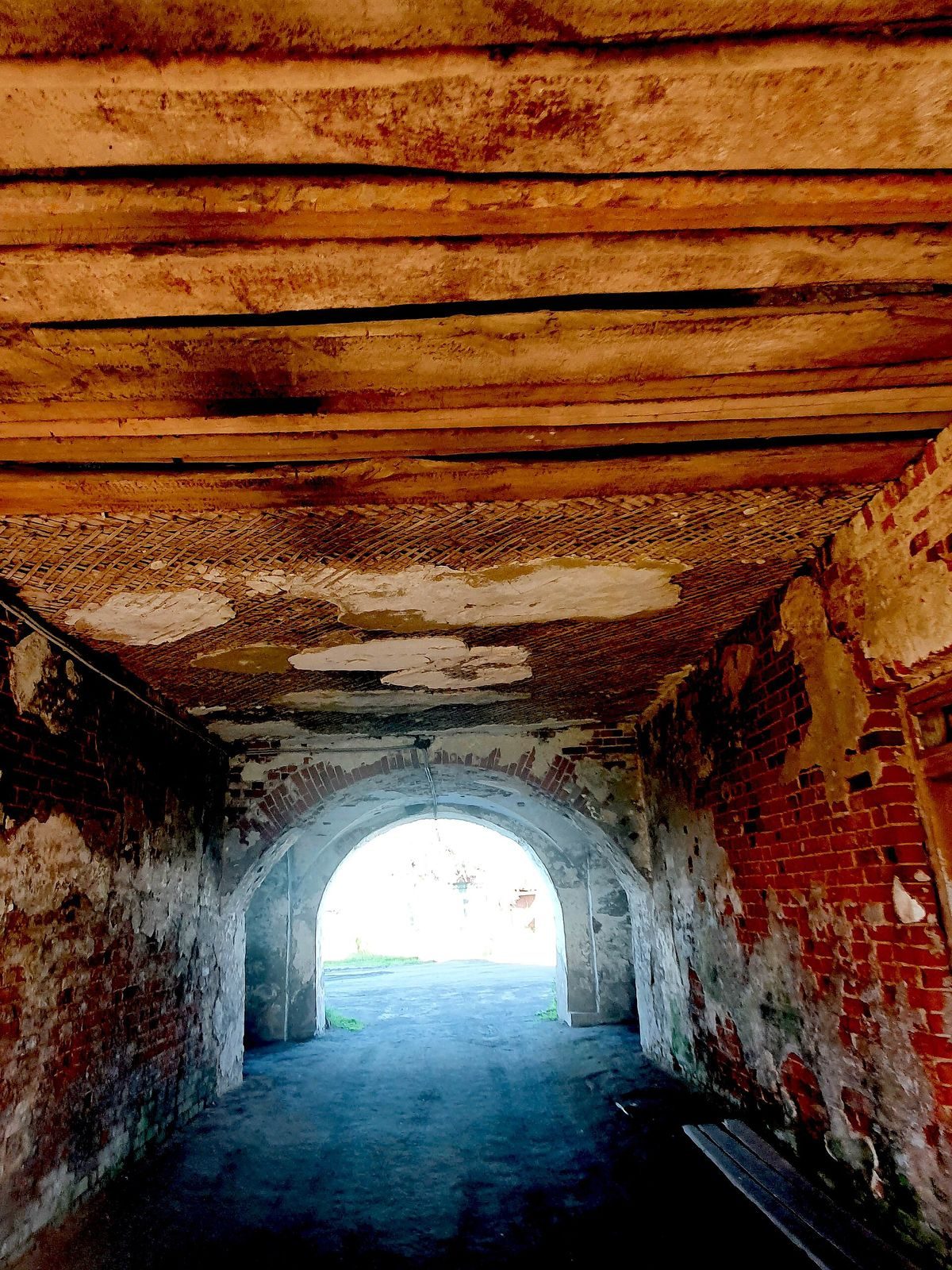
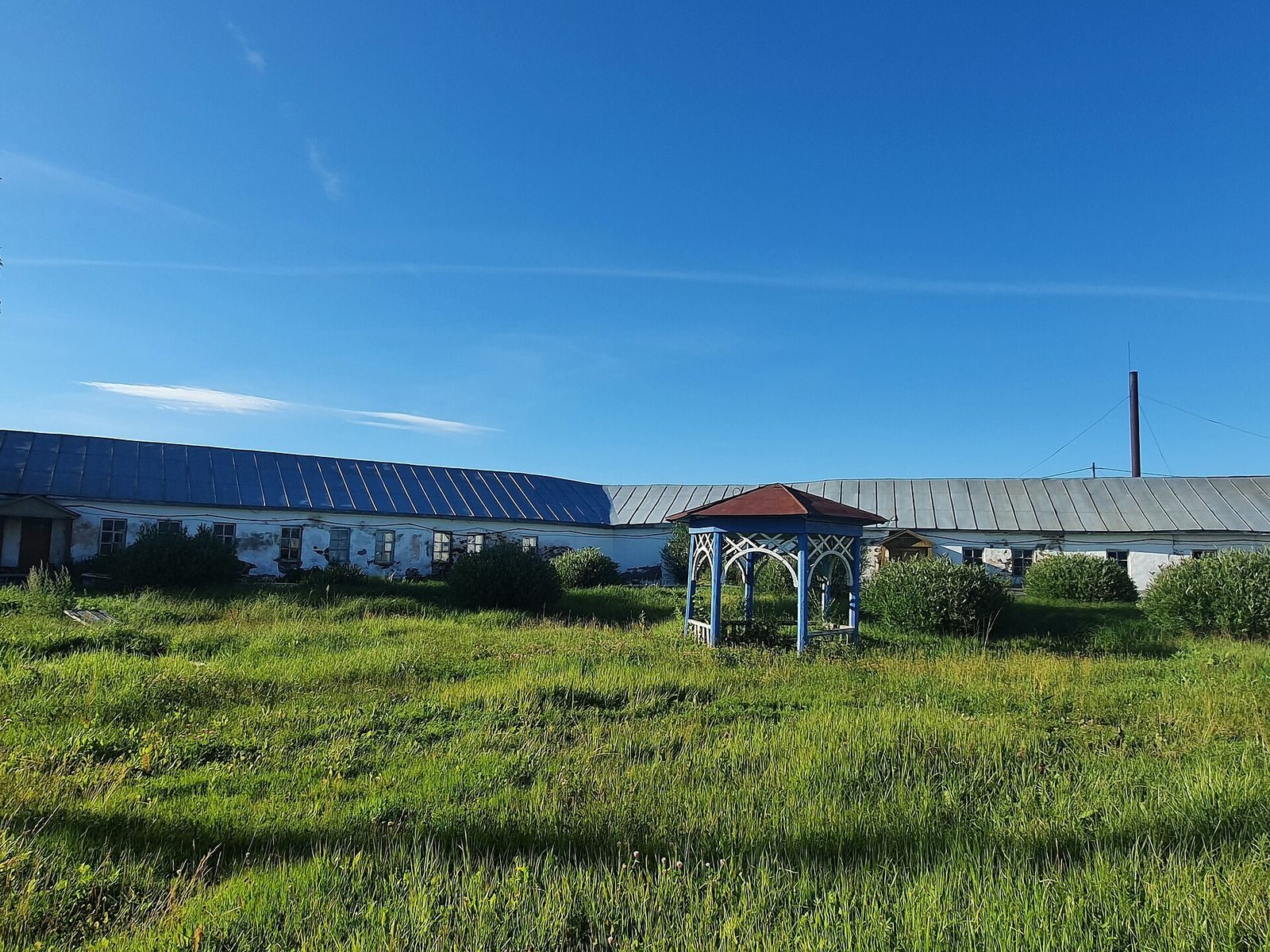
The hermitage stands beside the Sora River in remote, forested, marshy terrain. Its surviving buildings include a remodeled cathedral, a church at the entrance, the abbot’s building, and monks’ cells incorporated into the enclosing wall.
Churches
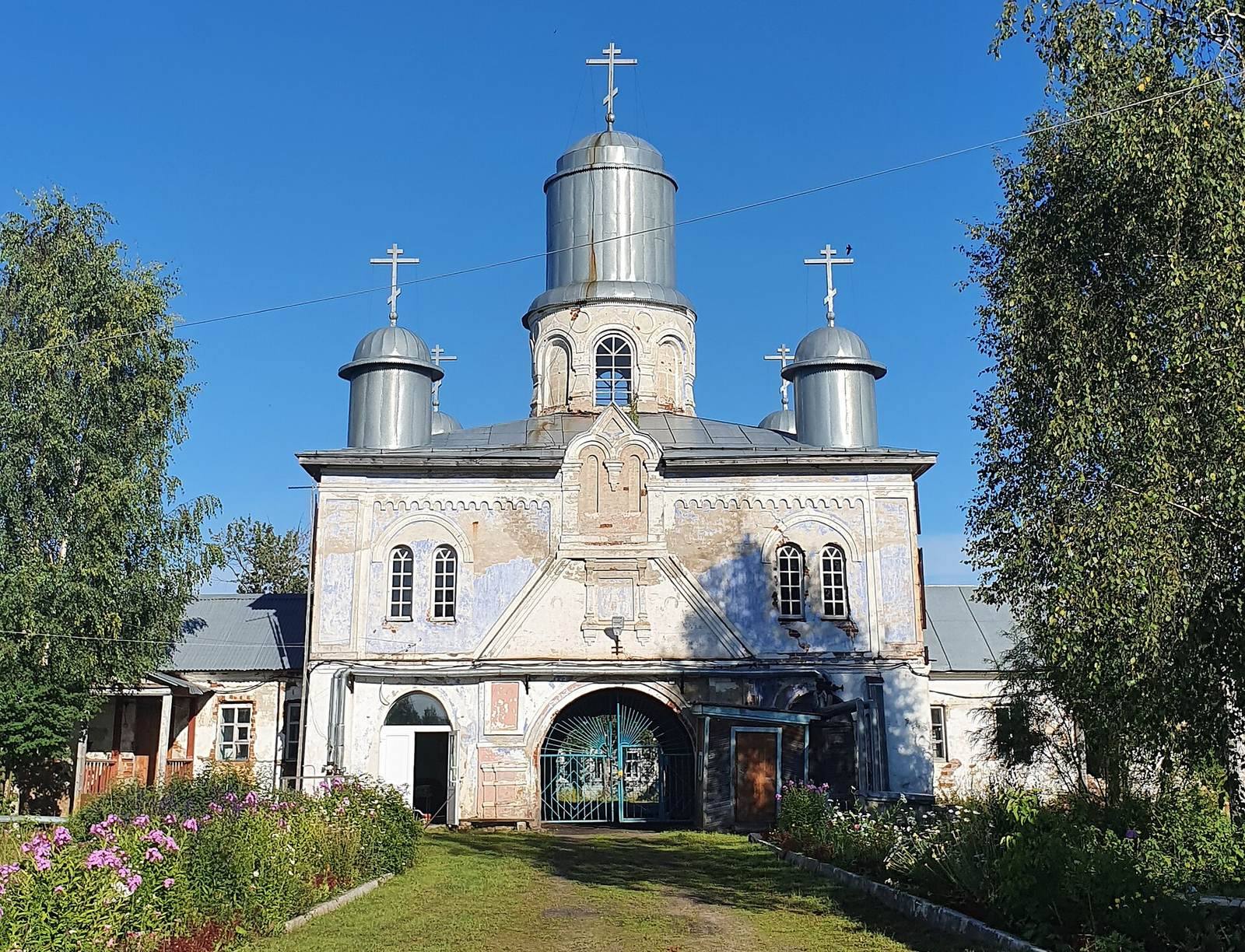
The remodeled Cathedral of the Tikhvin Icon of the Mother of God is one of the surviving buildings. The gate church, a church built into the monastery entrance, is dedicated to the Protection of the Mother of God.
Cells and abbot’s building
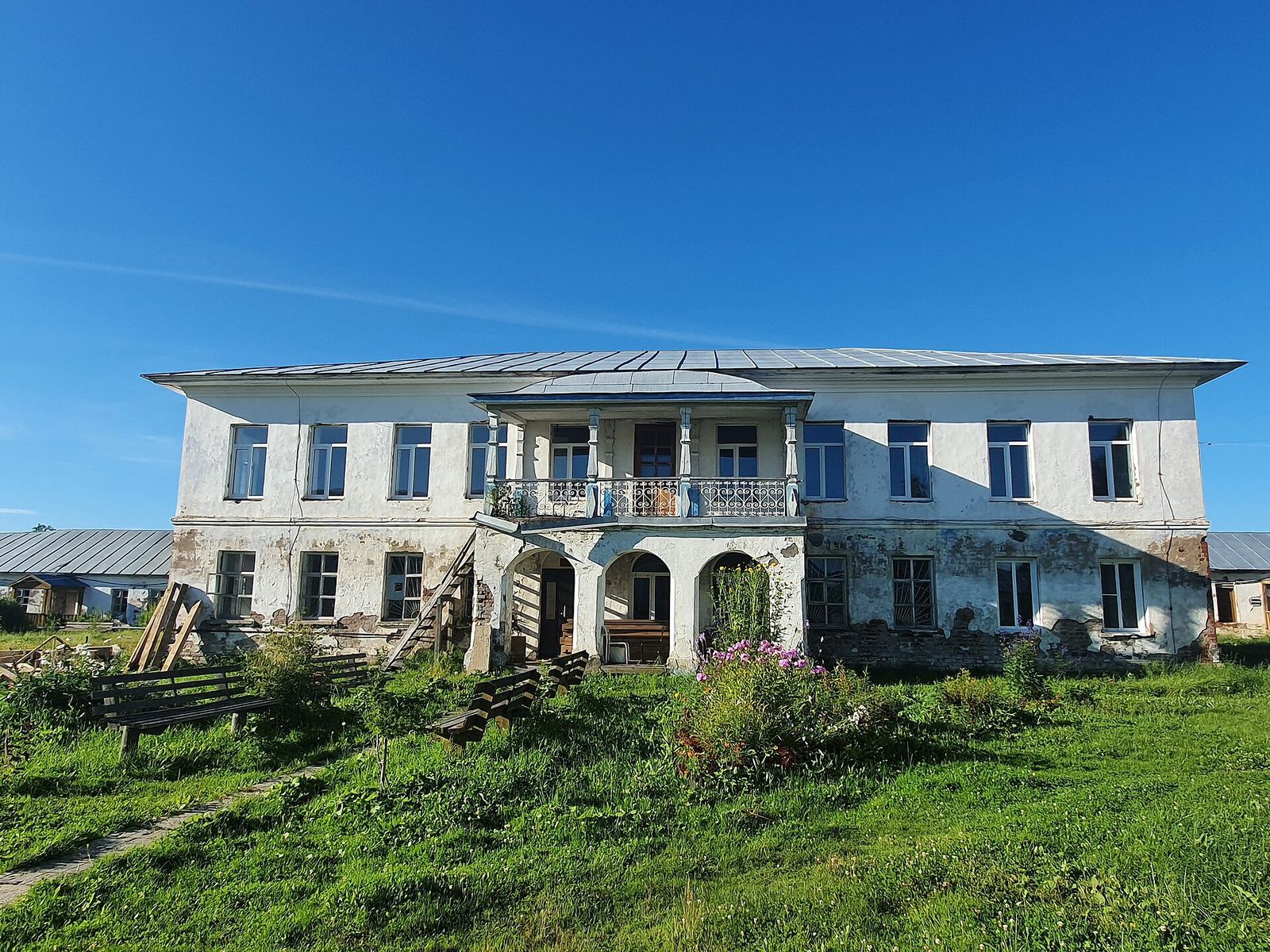
The monks’ cell buildings form part of the enclosing wall. They run along it and open toward the monastery’s inner side. The abbot’s building also survives within the complex.
Nilus’s tomb shrine
A tomb shrine was made over Nilus’s grave in 1862 by Fyodor Verkhovtsev, a 19th-century Russian maker of church metalwork.