Nikolo-Prozorovo: An Abandoned Estate in Russia
Site at a Glance
- Popularity
- Medium
- Country
- Russia
- Primary era
- Modern
- Eras represented
- Early Modern, Modern
- Civilizations
- Russian
- Site type
- Domestic
- Remains
- Manor House
On this page8 sections
History
Nikolo-Prozorovo is an abandoned estate near Marfino in Mytishchi District, Moscow Oblast, Russia. It took shape in the late eighteenth century from the settlements of Shipilovo and Nikolo-Prozorovo, and later became the setting for the public reading of the 1861 regulations emancipating the peasants.
Early settlements and changing ownership
Shipilovo is recorded in 1548. By 1623, the settlement was also called Nikolskoye, a name associated with a wooden church dedicated to Saint Nicholas. In the first half of the sixteenth century, the land belonged to Prince Vasily Semyonovich Serebryany; his family line ended with his son. It later passed to Nikita Yuryev, a boyar, or high-ranking noble, who built the wooden church.
In the early seventeenth century, the property passed to Princes Semyon and Matvey Vasilyevich Prozorovsky, members of a Russian princely family. The estate was later divided among branches of the family. During the reign of Peter the Great, from 1682 to 1725, one part passed to B. A. Golitsyn. By 1747, the whole estate belonged to Prince Ivan Prozorovsky.
The estate’s names changed over time. A plan from 1784 calls the settlement Nikolskoye. By 1862, names incorporating the owners’ surname had appeared, including Nikolskoye-Prozorovskoye and Prozorovo. Shipilovo fell out of use by the early twentieth century. Later forms included Nikolskoye-Prozorovo in 1912 and Nikolo-Prozorovskoye in 1926, before the name Nikolo-Prozorovo became established.
Church, manor, and nineteenth-century changes
In 1792, Major-General Andrei Ivanovich Prozorovsky built the existing St Nicholas Church, where he was later buried. After the death of Field Marshal A. A. Prozorovsky, who had inherited the estate and died without male heirs, it passed to his second cousin I. I. Prozorovsky, Andrei Ivanovich’s brother and one of the family’s last members.
In the mid-nineteenth century, I. I. Prozorovsky’s granddaughter, Princess Varvara Yuryevna Trubetskaya, built the manor house and two wings. In 1861, an official overseeing the peasant emancipation read the regulations implementing it from the manor-house steps.
After the emancipation reforms, the estate belonged to Franz Andreyevich Rabeneck, who founded the cotton-dyeing factory at Bolshevo. The merchant V. G. Sychev owned it from 1890 to 1892. Kuznetsov acquired it in the early twentieth century, and V. P. Ryabushinsky was its last owner before 1917.
Decline and later intervention
The manor house deteriorated in the 1930s and was restored in the 1950s, when its floors were replaced. A sanatorium project begun on the estate grounds in the 1980s was never completed; its unfinished buildings were separate from the manor complex. The estate later fell into neglect. The church was fully restored by 2008, and work on the manor house was attempted but halted after it was fenced off. The estate is designated a cultural heritage property of federal significance in Russia.
Remains
The estate ensemble was fully formed by the mid-nineteenth century. Its plan follows two crossing axes. One runs through the center of the residential complex, the pond, and the park’s main avenue; the other follows the approach road and divides the grounds into two areas with different layouts.
Park and estate grounds
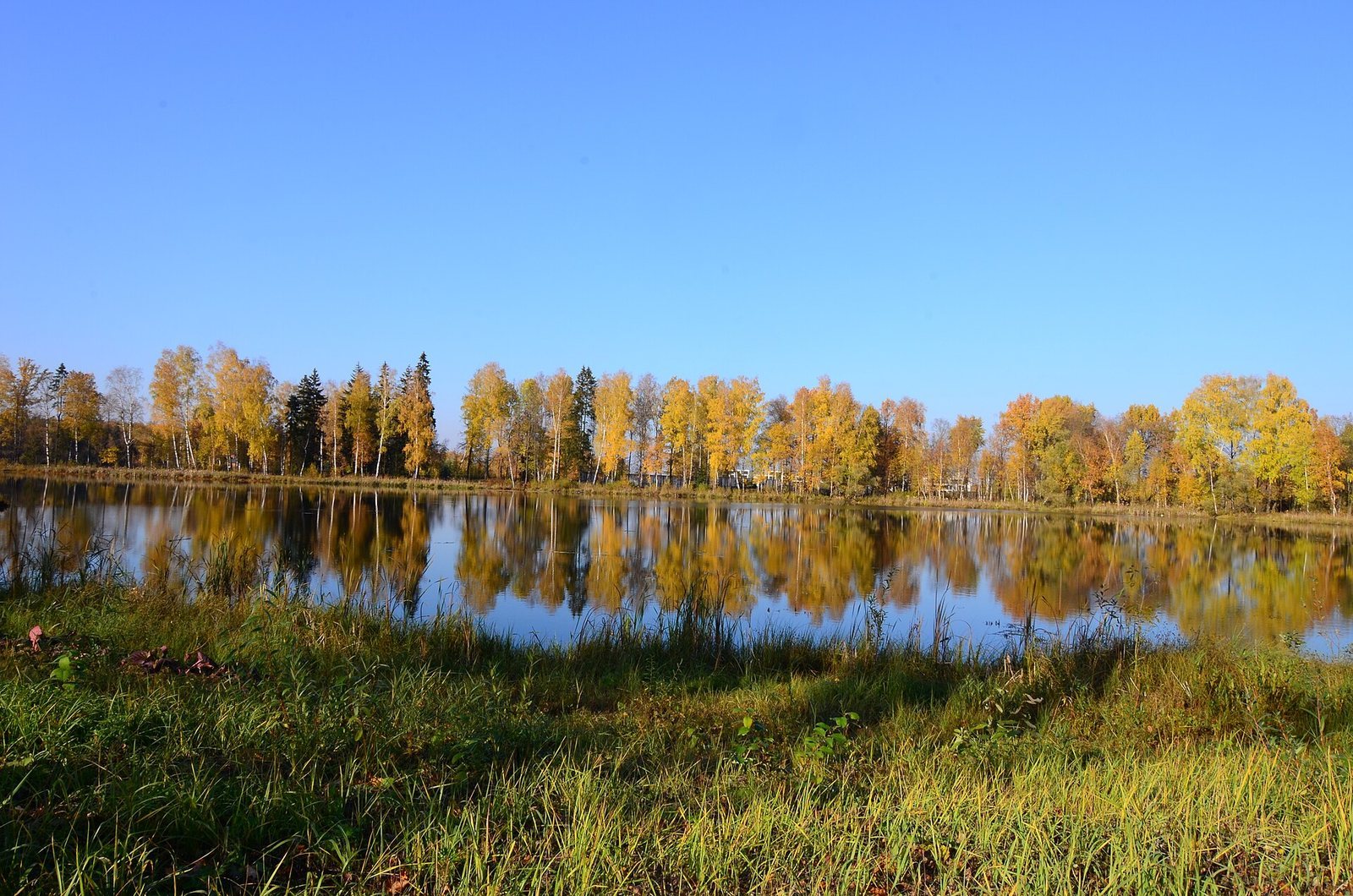
Part of the landscape park survives, with a pond, grottoes, a Gothic tower, and ruins and remains of the greenhouses. A summer house, greenhouses, and a grotto are among the estate’s late-eighteenth-century components.
Manor house and wings
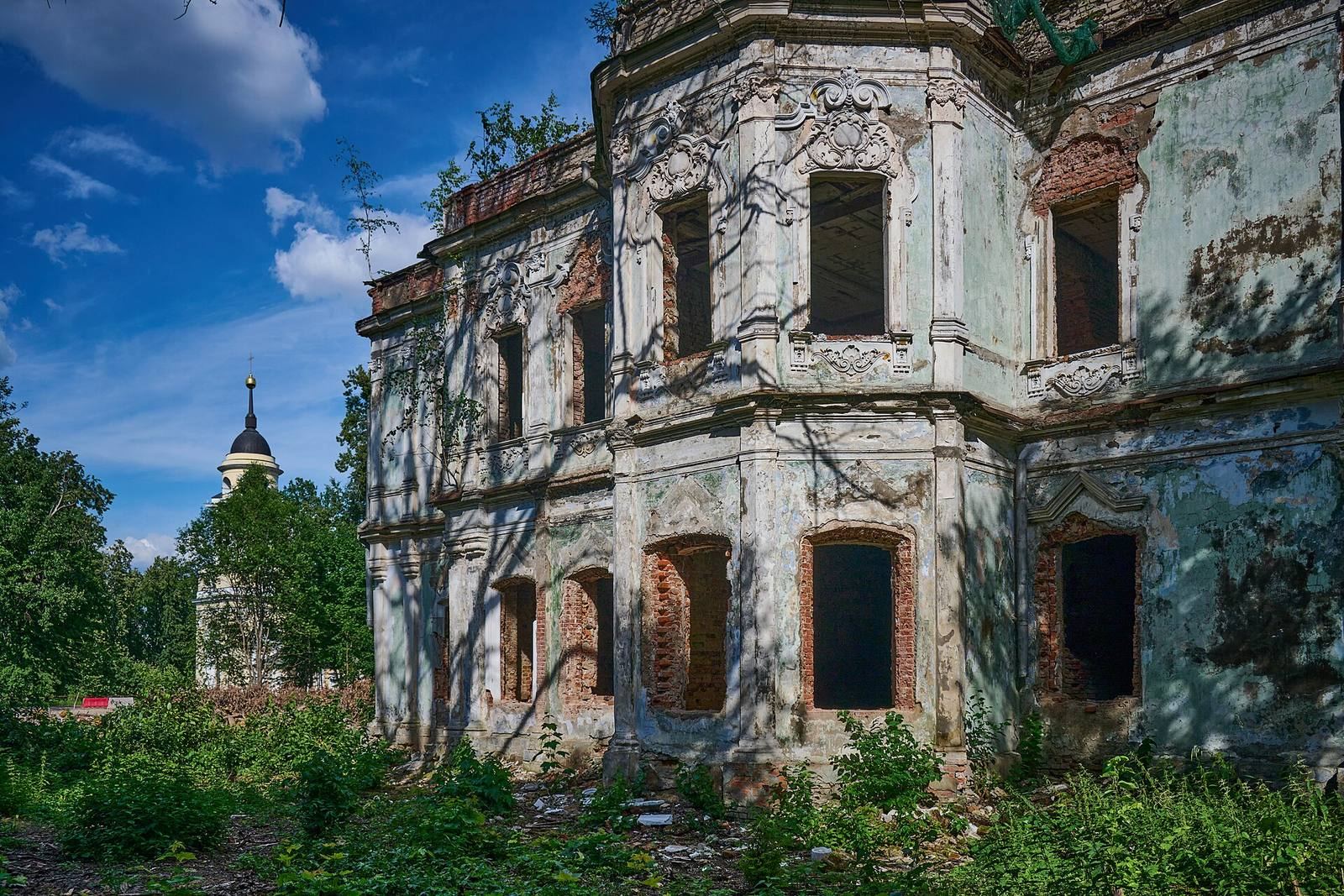
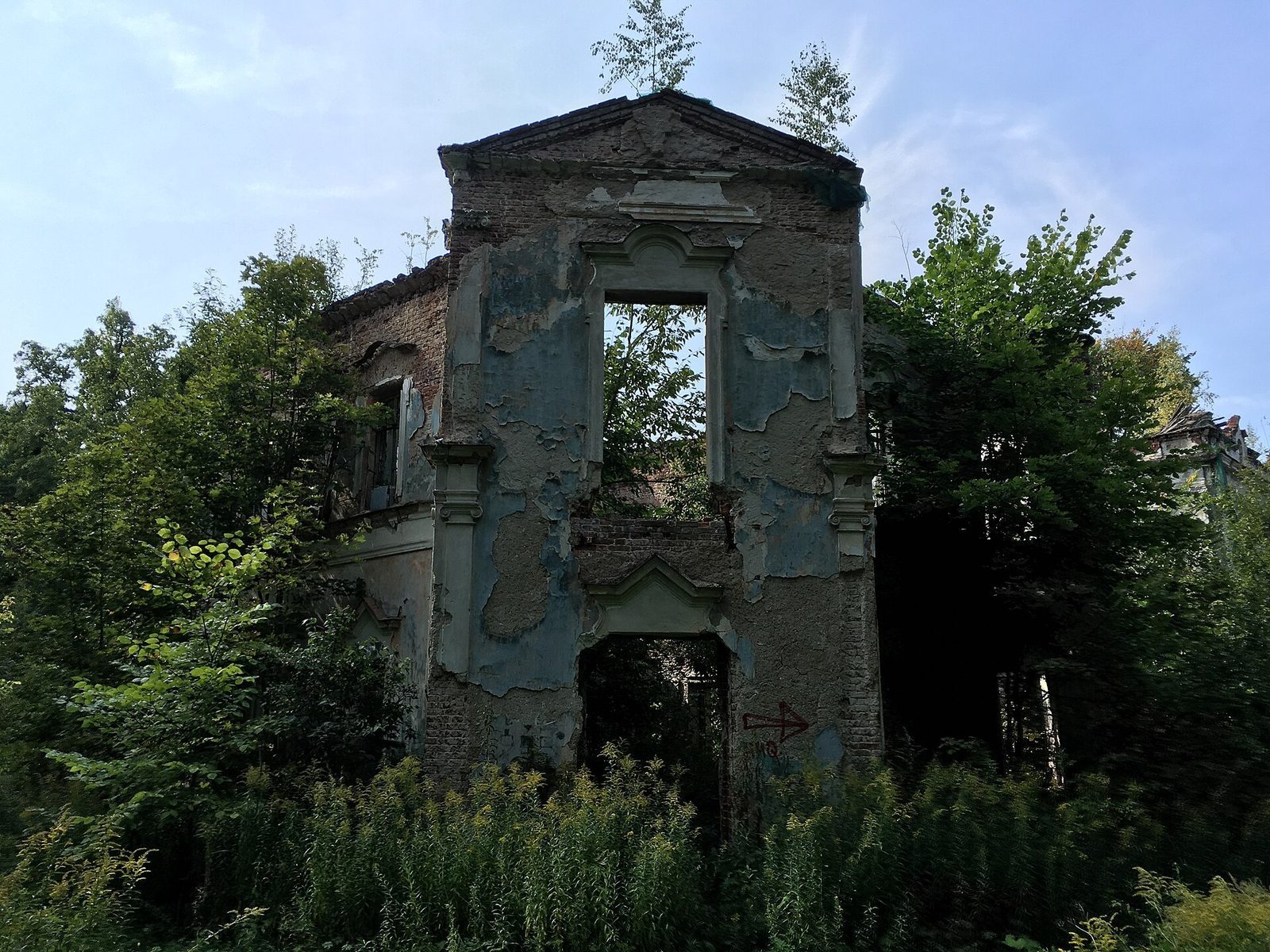
The large, two-storey manor house has brick walls finished with plaster and onion-shaped pediments. Its design imitates Rastrellian Baroque, a style associated with the architect Bartolomeo Rastrelli. The building now stands in ruins. Two wings date to the mid-nineteenth century.
St Nicholas Church
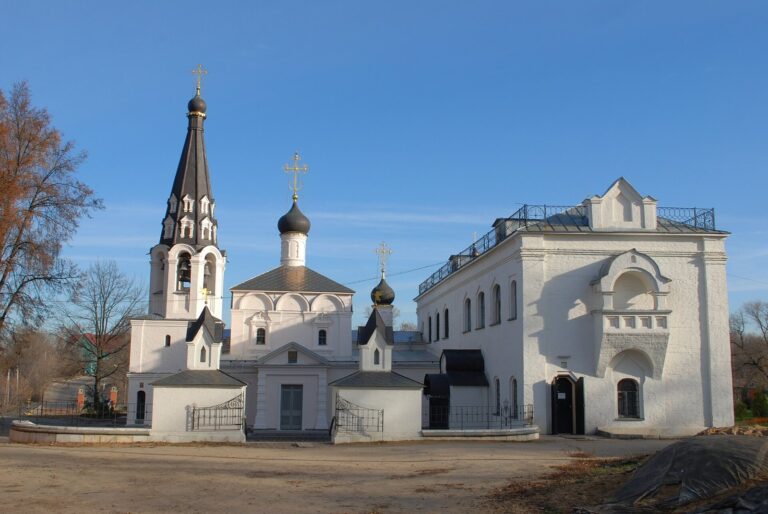
The church has a detached bell tower and was built by a master from the circle of Matvey Fyodorovich Kazakov, a prominent Russian architect associated with Classicism. Its original three-tier bell tower was dismantled and later reconstructed. During restoration, many details of the original interior decoration were replaced with contemporary-style replicas.