Neue Residenz in Passau: Residence of the Prince-Bishops
Site at a Glance
- Rating
- 4.5
- Popularity
- Medium
- Country
- Germany
- Primary era
- Early Modern
- Eras represented
- Early Modern
- Civilizations
- Holy Roman Empire
- Site type
- Religious
- Remains
- Palace
On this page4 sections
History
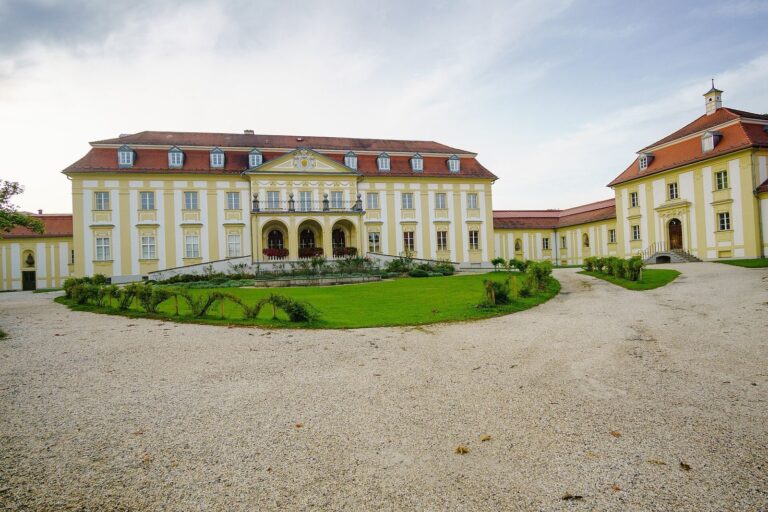
The Neue Residenz in Passau is a palace in Germany, built from 1712 to 1730 in the late-Baroque tradition associated with Vienna. It served as the residence of Passau’s prince-bishops, who held both a bishop’s church office and territorial authority. The builders were probably the Italian Domenico d’Angeli and the Viennese Antonio Beduzzi.
In the 1760s and early 1770s, Cardinal Prince-Bishop Leopold Ernst von Firmian, a senior Catholic Church official, oversaw remodelling of the building. Melchior Hefele was responsible for work on the façade. Today, the palace houses the Bishop’s Ordinariate, the administrative office of a diocese, and an entrance to the Cathedral Treasury Museum.
Remains
Palace exterior and connection
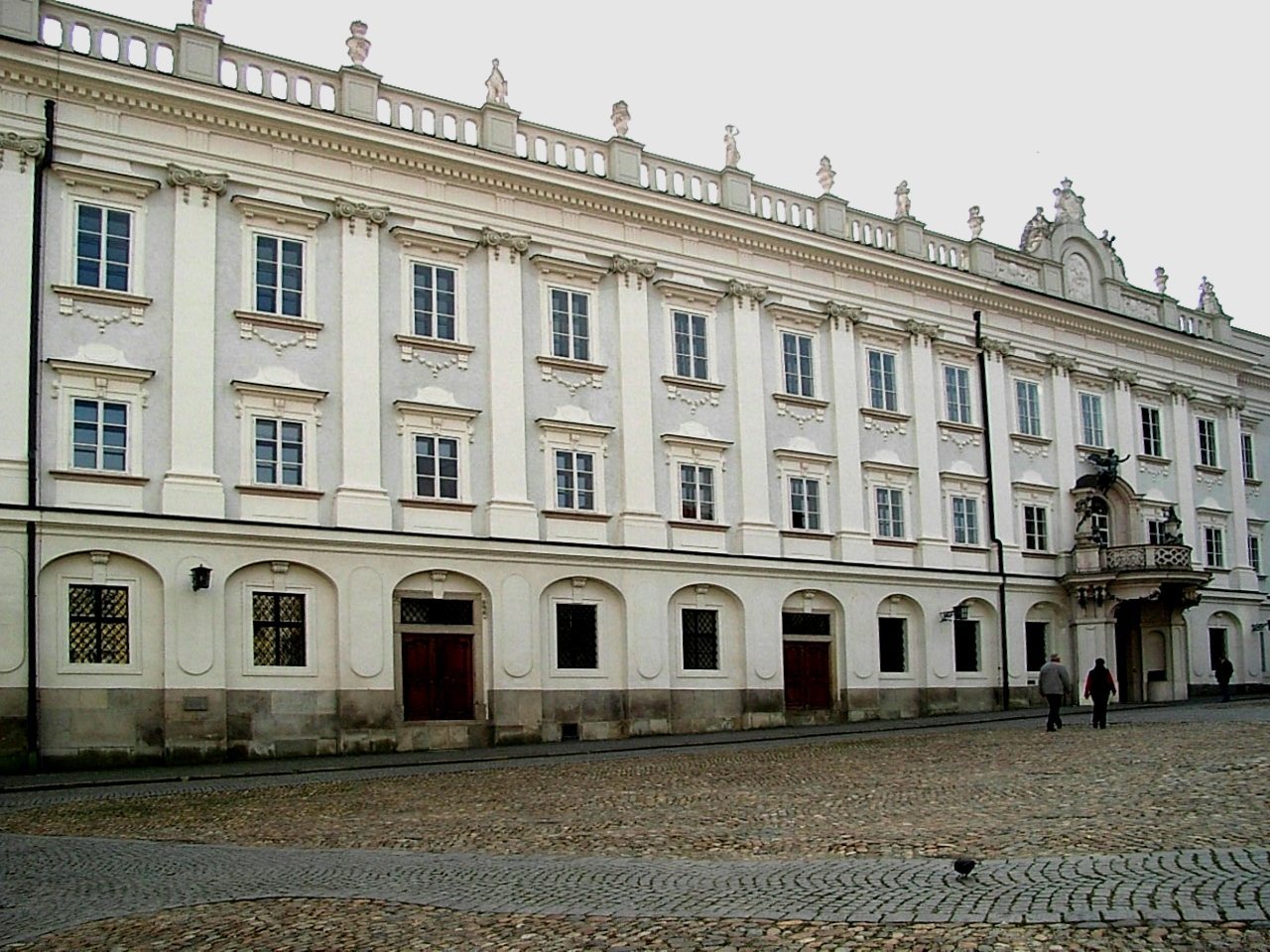
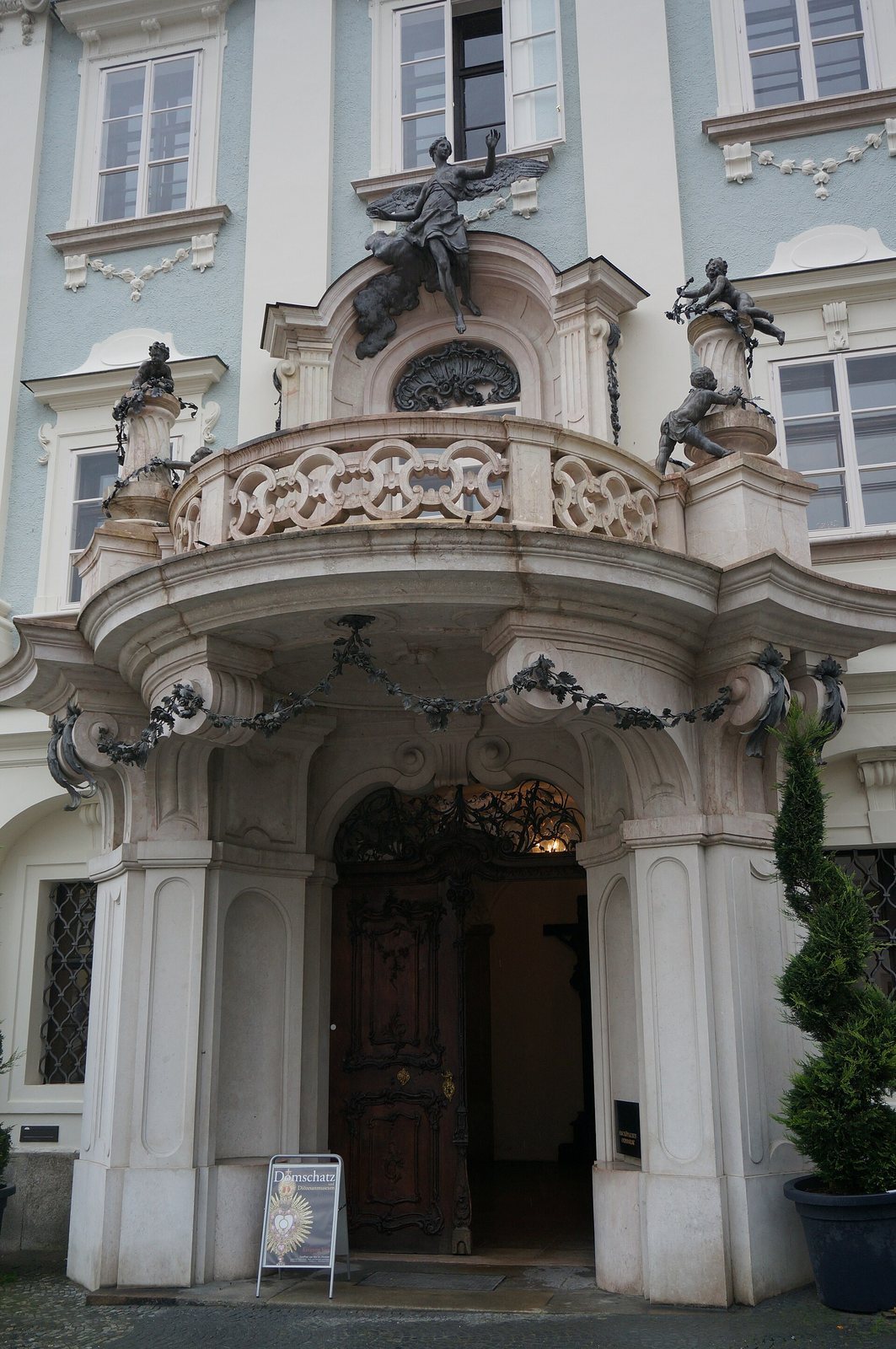
The palace’s late-Baroque exterior stands on Residenzplatz, opposite Passau Cathedral. It connects to the Alte Residenz through a structure known as the hall building. The façade has two portals and a balustrade along the roof, while two projecting balconies bear the dates 1770 and 1771.
Rococo staircase
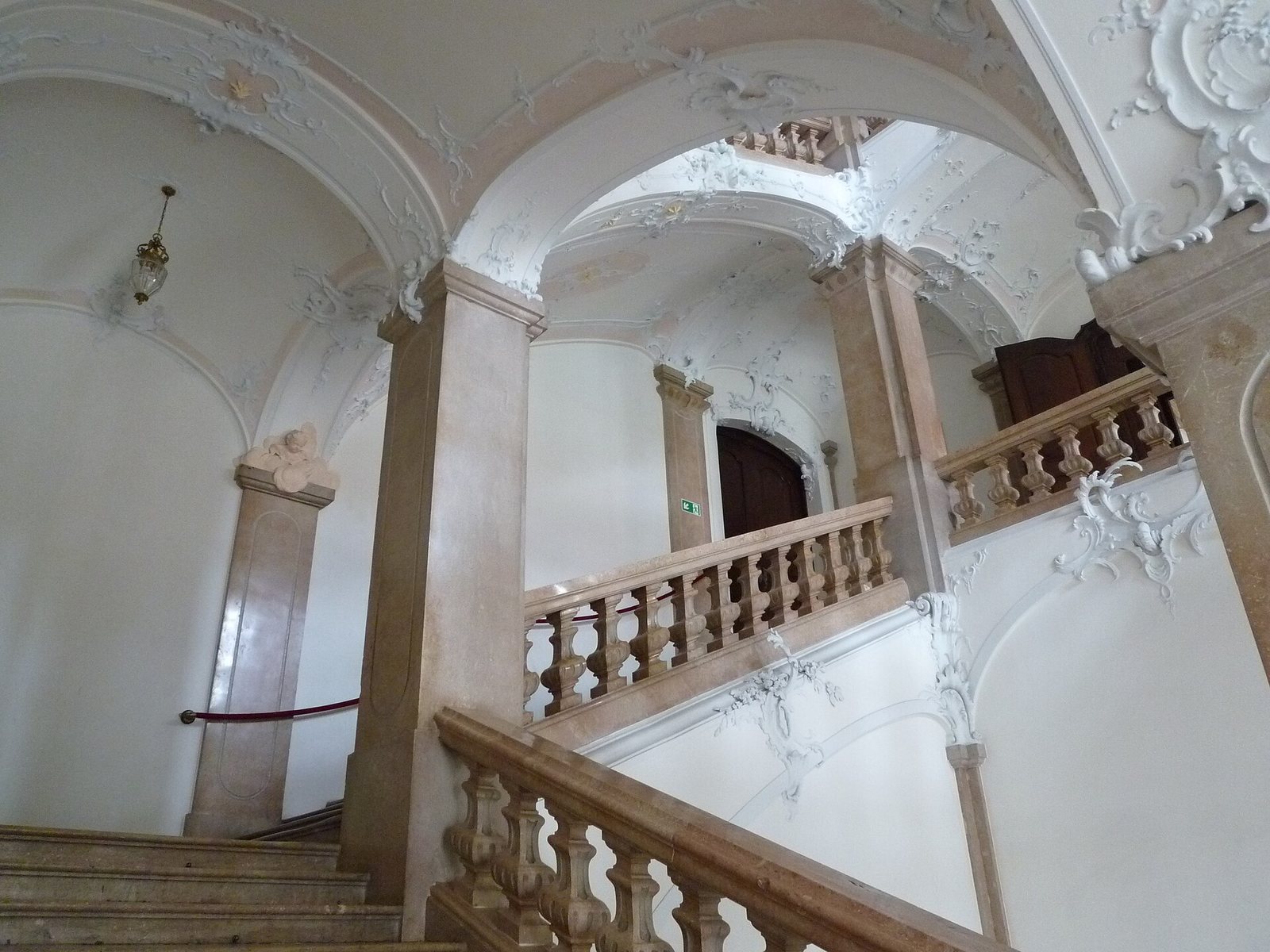
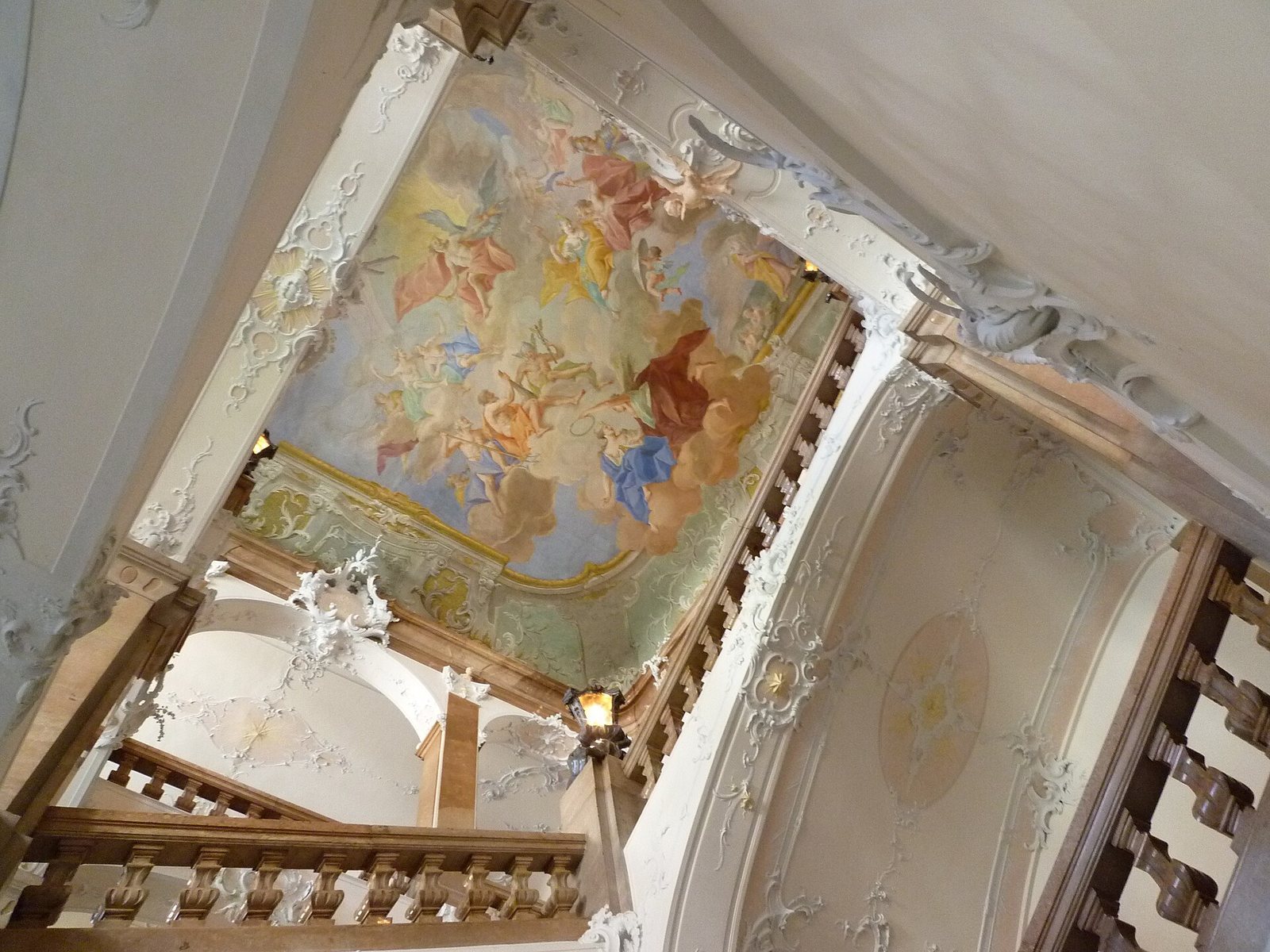
Created around 1768, the large staircase is decorated in the Rococo style, an eighteenth-century fashion known for elaborate, often curving ornament. Johann Baptist Modler created its stucco work, and a ceiling fresco by Johann Georg Unruhe depicts the gods of Olympus, deities from classical Greek mythology. Childlike decorative figures, known as putti, sit on the stair railings; they were made by Passau sculptor Joseph Bergler the Elder.