Arteara Necropolis: An Indigenous Cemetery on Gran Canaria
Site at a Glance
- Rating
- 4.1
- Popularity
- Medium
- Country
- Spain
- Primary era
- Classical
- Eras represented
- Classical, Medieval, Early Modern
- Civilizations
- Unclassified
- Site type
- Burial
- Remains
- Necropolis
On this page7 sections
History
The Arteara Necropolis is the largest cemetery of Gran Canaria’s indigenous Canarii, near Arteara on the island of Gran Canaria, Spain. It was used from the fifth century BC into the eighteenth century, making it a burial ground with a long history that continued through the Castilian conquest.
Use from antiquity to the eighteenth century
The cemetery remained in use after the Castilian conquest, the fifteenth-century process by which the Crown of Castile brought the Canary Islands under its rule. People in the Fataga Valley have long known the area as the “Cemetery of the Canarians.”
Exploration and protection
The first scientific explorations took place in 1886, when Víctor Grau-Bassas y Mas investigated the site, and around 1887, when René Verneau did so. Both worked on behalf of Museo Canario, a museum and research institution on the island. Excavations followed in 1941, 1948, 1979 and 1985. Archaeologists associated with the site include Sebastián Jiménez Sánchez, Bernardo Sáenz Martín and Rosa Schlueter Caballero.
Arteara was declared a National Historic-Artistic Monument in 1973. In 1985 it was protected as an archaeological zone under Spain’s Asset of Cultural Interest designation, and the protected surroundings were delimited in 1986. The necropolis is one of Gran Canaria’s archaeological parks.
Remains
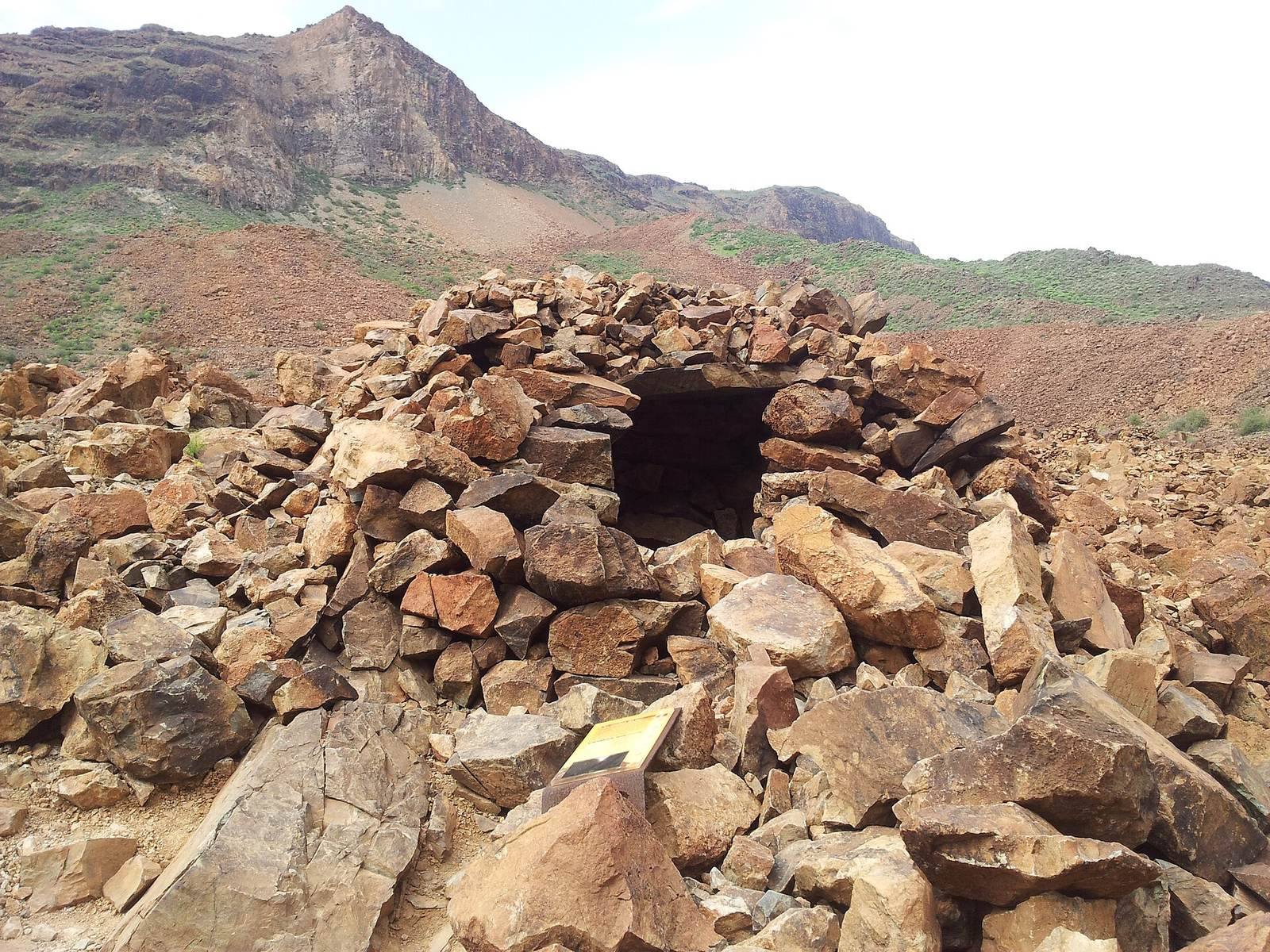
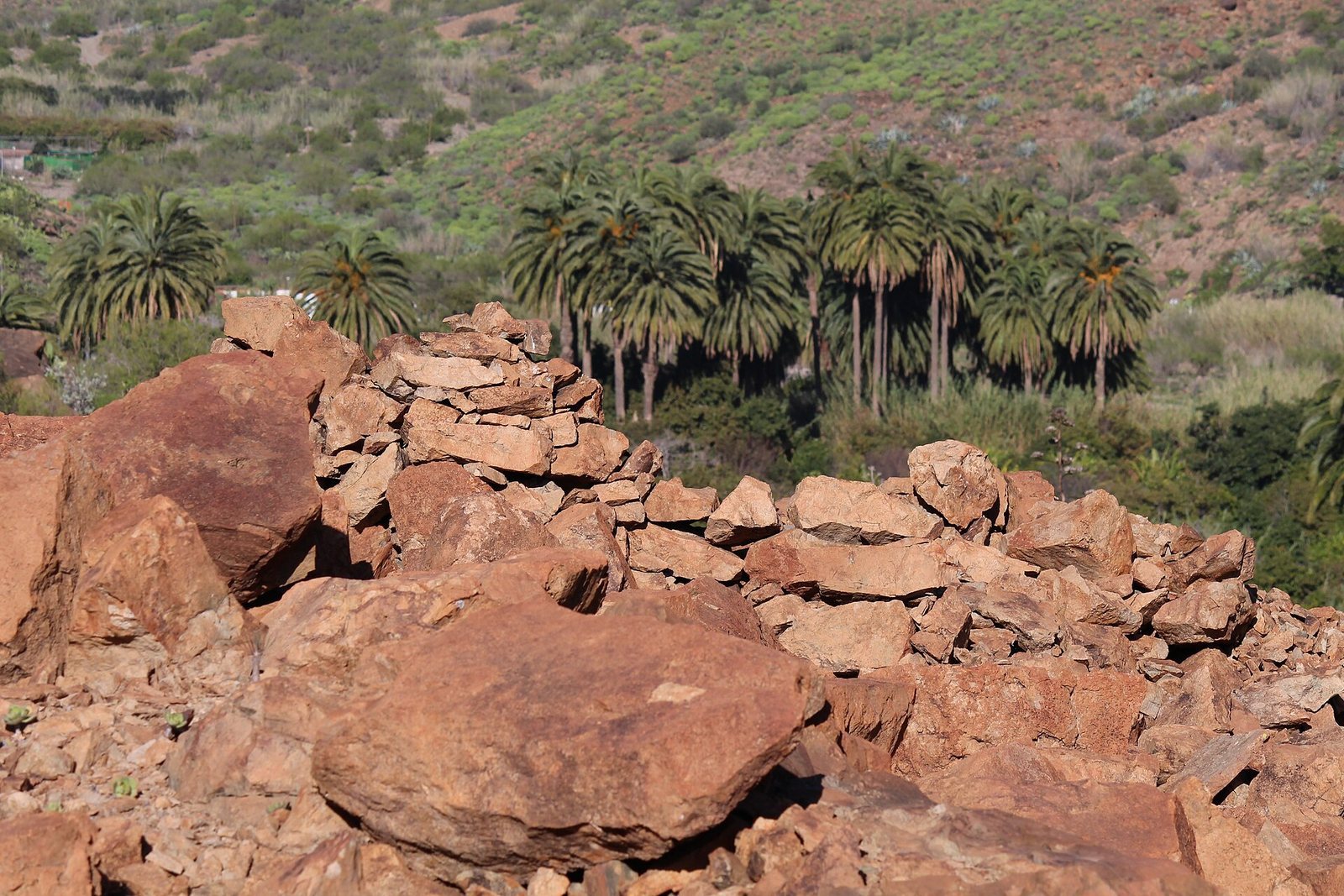
The cemetery covers about 137,500 square metres and measures approximately 515 metres long by 430 metres wide. More than 809 burial mounds are spread across rough volcanic terrain. A dry-stone construction method, in which stones are laid without mortar, was used for both the tombs and the cemetery’s enclosing wall.
Enclosure and terrain
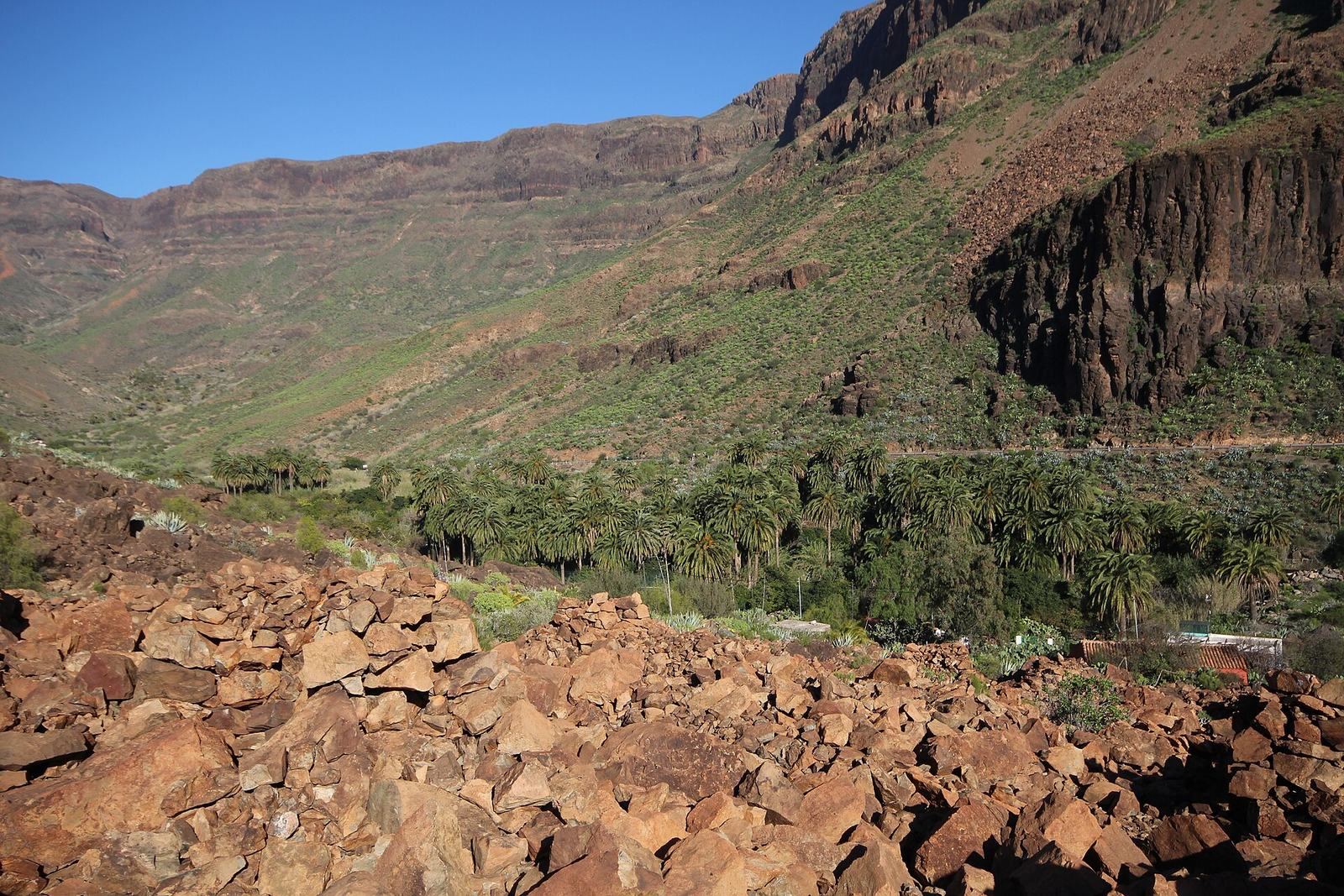
The necropolis lies on the right bank of the Fataga ravine, near Arteara in the municipality of San Bartolomé de Tirajana. Its original boundary wall stood almost a metre high; traces remain visible along parts of the perimeter. Stones deposited by a major landslide from a neighboring mountain provided material for the burial structures.
Burial mounds
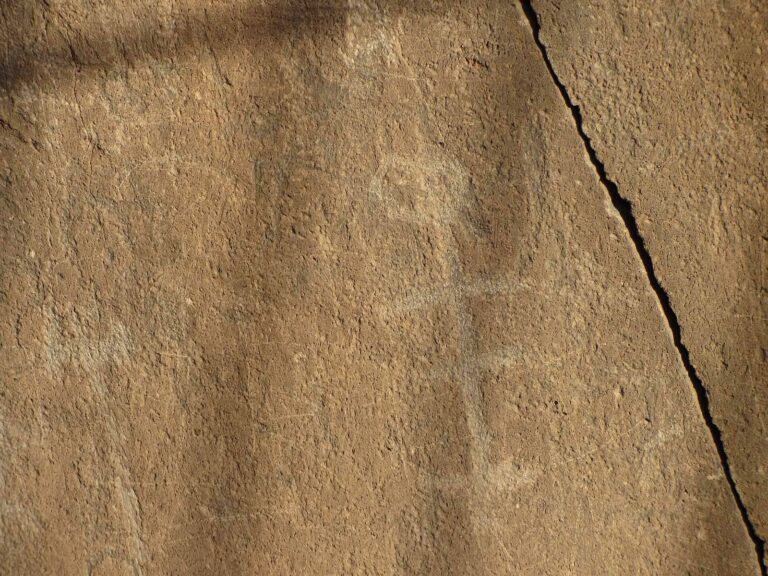
Each tomb is a stone mound containing a cist, a box-like chamber for the body, with a tower-like structure above it. The mounds include truncated-conical, pyramidal, circular and rectangular forms. They are distributed across the uneven ground without an apparent pattern. Finds associated with the cemetery include rock engravings and human, animal and plant remains.
Equinox light effects
At the spring equinox, when day and night are approximately equal in length, dawn sunlight passes through a depression in the Amurga massif and illuminates the mound known as the King’s Tumulus, while the rest of the cemetery remains in shadow. At the autumn equinox, the sun’s ascent creates a double sunrise at the same location as rocks briefly obscure it.