Nabratein Synagogue: A Jewish Place of Worship in Israel
Site at a Glance
- Popularity
- Medium
- Country
- Israel
- Primary era
- Medieval
- Eras represented
- Iron Age, Medieval
- Civilizations
- Byzantine
- Site type
- Religious
- Remains
- Synagogue
On this page8 sections
History
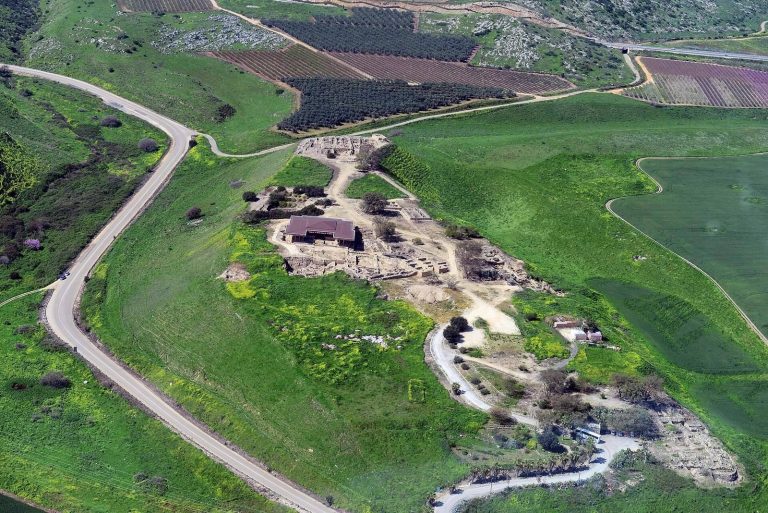
Nabratein synagogue was a Jewish place of worship at Naburiya on Mount Birya in Israel, rebuilt as a much larger building in the late sixth century. Its history is connected to a settlement whose remains span several periods of Jewish and regional history.
Naburiya and its traditions
Naburiya has remains from the Iron Age and the First Temple period, before the Babylonians destroyed Jerusalem’s First Temple. The settlement flourished during the Second Temple period, which ended when Rome destroyed the Temple in AD 70, and continued into the Byzantine period, the eastern continuation of the Roman Empire. It was abandoned in the Early Islamic period, after Muslim rule was established in the region. The Arabic place-name preserved the sound of the settlement’s ancient name.
Naburiya is identified with Kfar Neburaya, associated with Rabbi Yehuda of Kfar Neburaya, one of the fourth-generation Amoraim, Jewish teachers who interpreted the Mishnah, an early compilation of Jewish oral law. Rabbi Eleazar of Modi’im, a sage of the Mishnaic period, was traditionally believed to be buried at Naburiya. Jacob of Kfar Neburaya was also believed to be buried there. He taught in Tyre and Caesarea in defiance of rulings on halakha, Jewish law and religious practice, and was flogged and reprimanded by rabbis. He is also identified as a compiler of the Haggadah, the text recited at the Passover seder.
Synagogue phases
Excavators proposed an early synagogue phase dated to AD 135–250, followed by rebuilding in AD 250–306 and AD 306–350/363. The earliest date has been questioned. Archaeologist Jodi Magness has argued instead that there was one synagogue, built no earlier than the second half of the fourth century. The building was enlarged during the third century, possibly as the settlement grew, and was destroyed in the Galilee earthquake of AD 363. A much larger synagogue followed in the late sixth century, using stones from the earlier building. An inscription dates its construction to AD 564. It stood until about AD 640.
Excavation and reconstruction
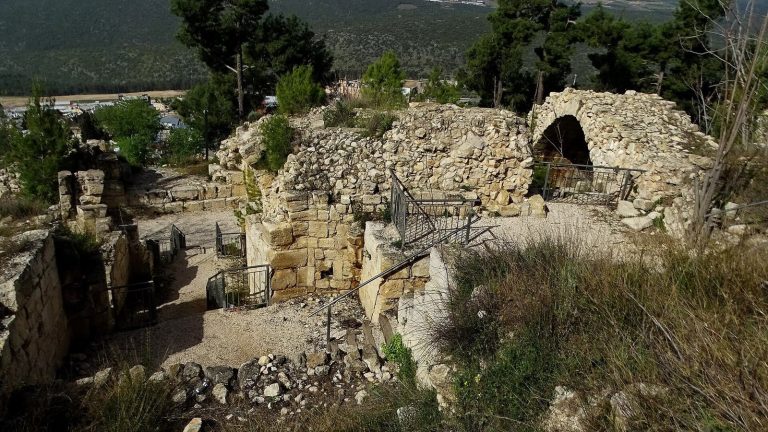
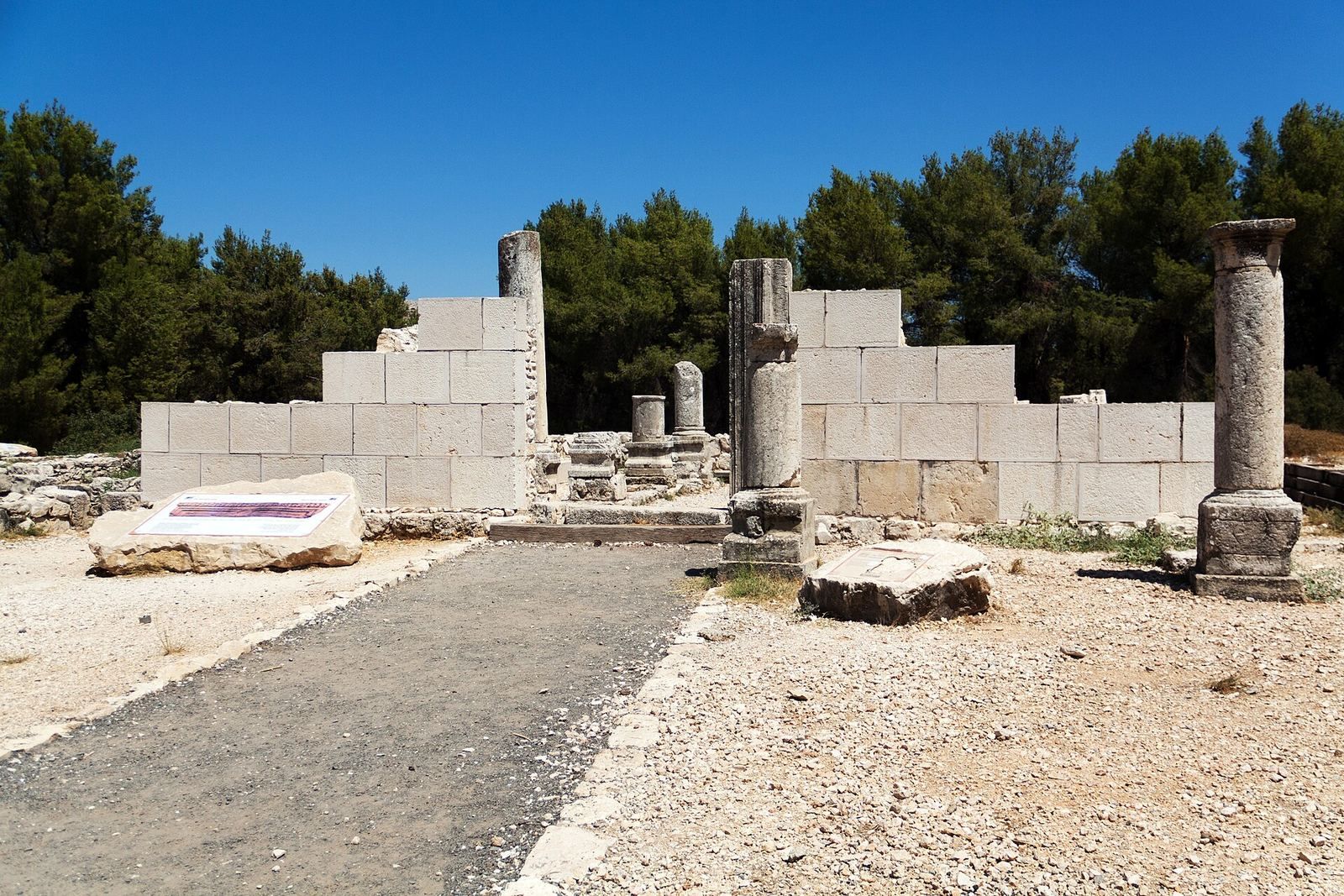
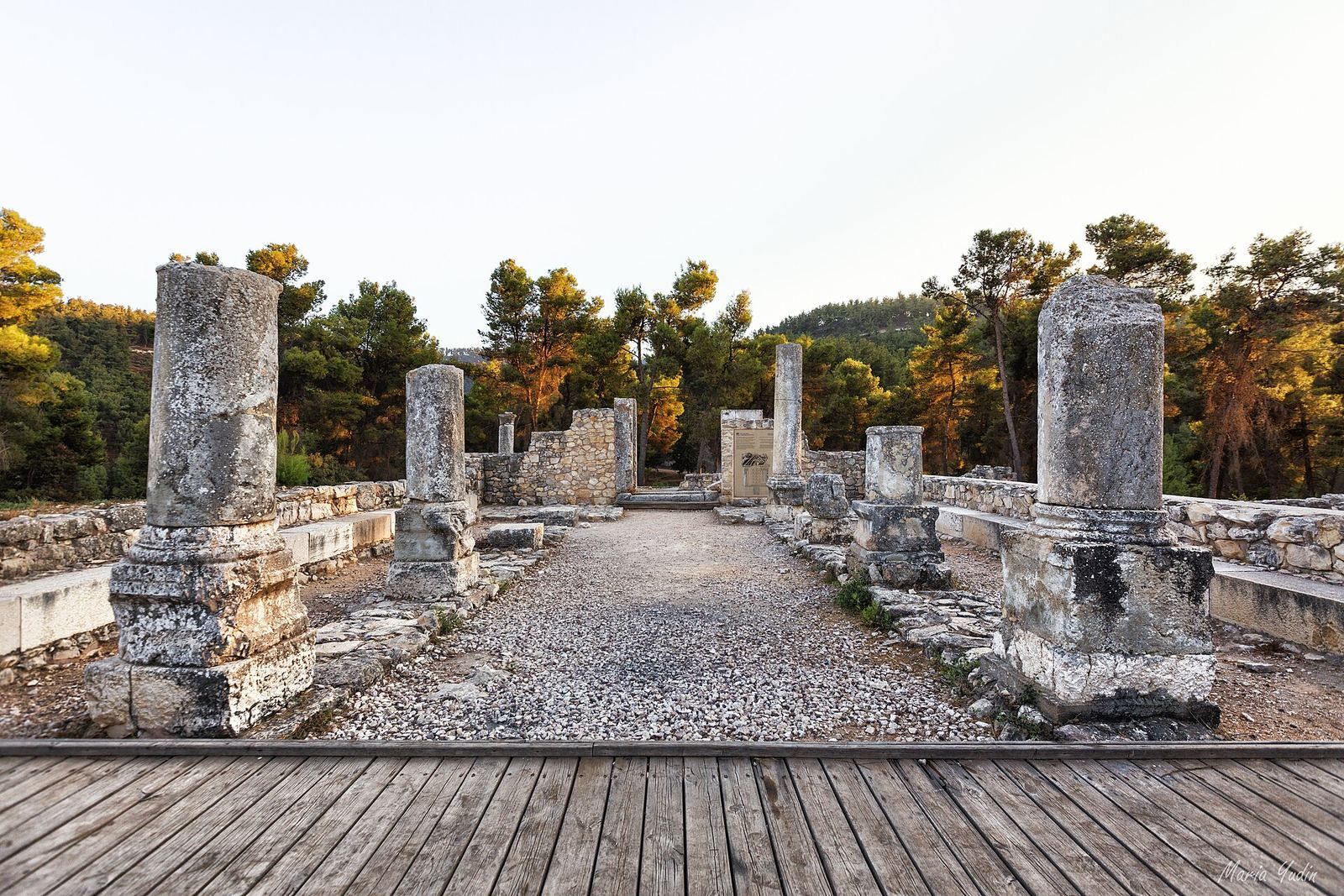
In 1877, Lieutenant Kitchener found the synagogue remains levelled, with its columns and main-entry lintel fallen. Heinrich Kohl and Carl Watzinger excavated the site in 1905 during a survey of Galilean synagogues. Eric and Carol Meyers led further excavations in 1980–1981. The synagogue façade was partly reconstructed by the Jewish National Fund and the Israel Antiquities Authority.
Remains
Synagogue building
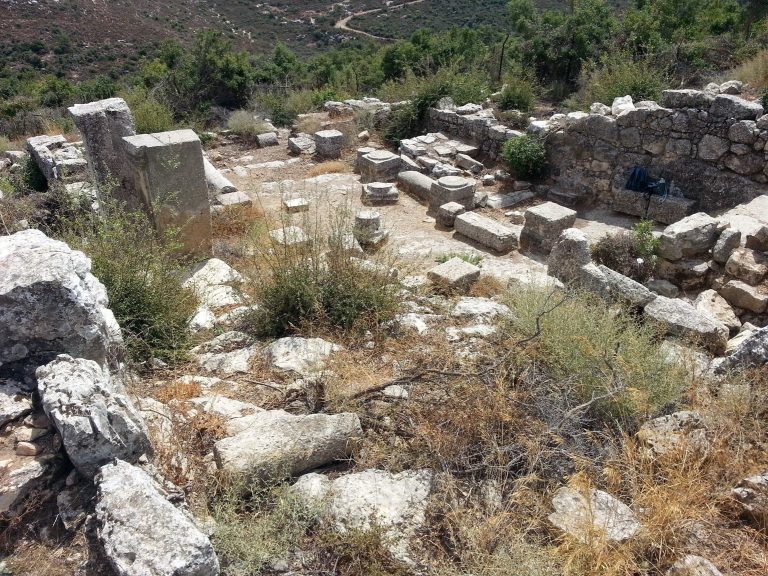
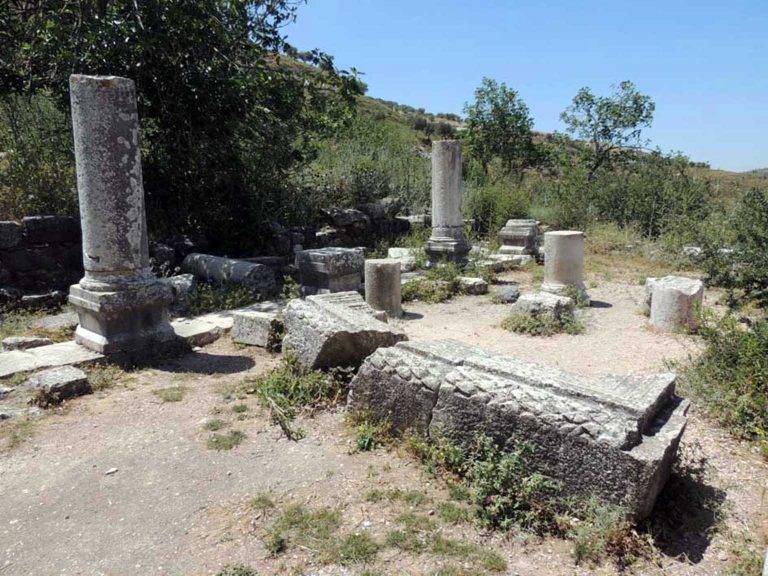
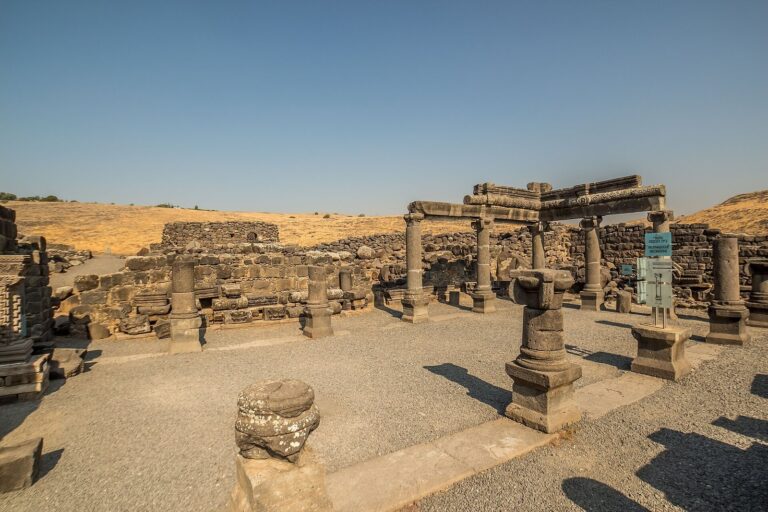
The stone synagogue measured about 11.5 by 16 metres, with a central prayer hall roofed on two rows of columns and two parallel rows of stone benches. The limestone columns are broken. A carved stone bears a cup among grapevine branches, while a seven-branched menorah, a Jewish ritual lamp, framed by a wreath appeared above the doorway. This design was copied above the entrance of the Henry S. Frank Memorial Synagogue in Philadelphia. Carvings and inscriptions from the site date to around AD 563. The main entrance lintel, a horizontal beam spanning a doorway, carries an inscription reckoning the building’s date as 494 years after the Temple’s destruction. It names Hanina son of Lizar and Luliana son of Yudan as serving in public office when the building was constructed. The lintel is now displayed at the Israel Museum.
Settlement remains
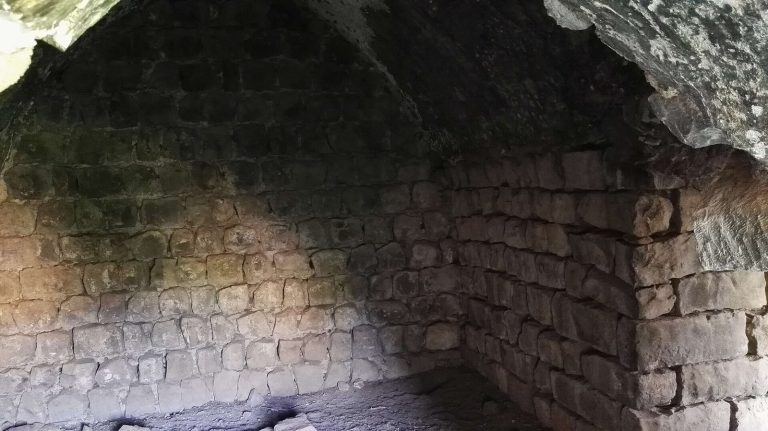
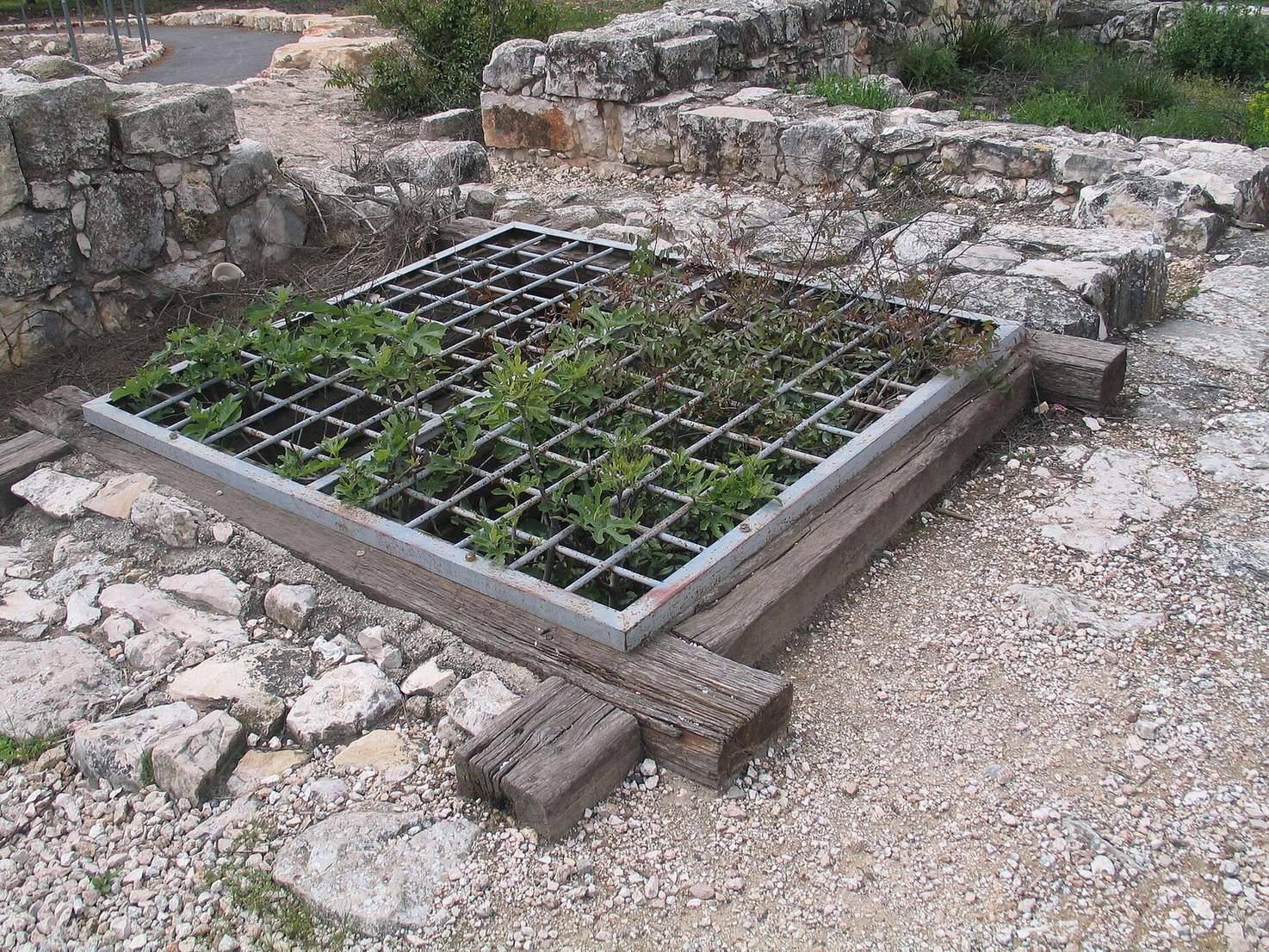
Excavations revealed residential rooms, craft installations, and evidence of an underground hiding system. Finds included pottery and vessels of stone and glass characteristic of the eras when the Mishnah and the Talmud, which develops and discusses Jewish oral law, took shape. Ancient graves lie at the western edge of the hill.
Ein Naburiya spring
The spring associated with the settlement emerges from a small cave in a broad surface of white chalk rock. Troughs cut into the rock served to water flocks and for washing. Hollows and depressions in the surrounding stone hold pools where aquatic plants grow and young salamanders may be seen. Later landscaping established terraces and orchard trees around the spring.