Myrmekion: An Ancient Greek Settlement in Ukraine
Site at a Glance
- Popularity
- High
- Country
- Ukraine
- Primary era
- Classical
- Eras represented
- Iron Age, Classical, Medieval
- Civilizations
- Ancient Greek, Bosporan Kingdom, Genoese, Roman
- Site type
- City
On this page20 sections
History
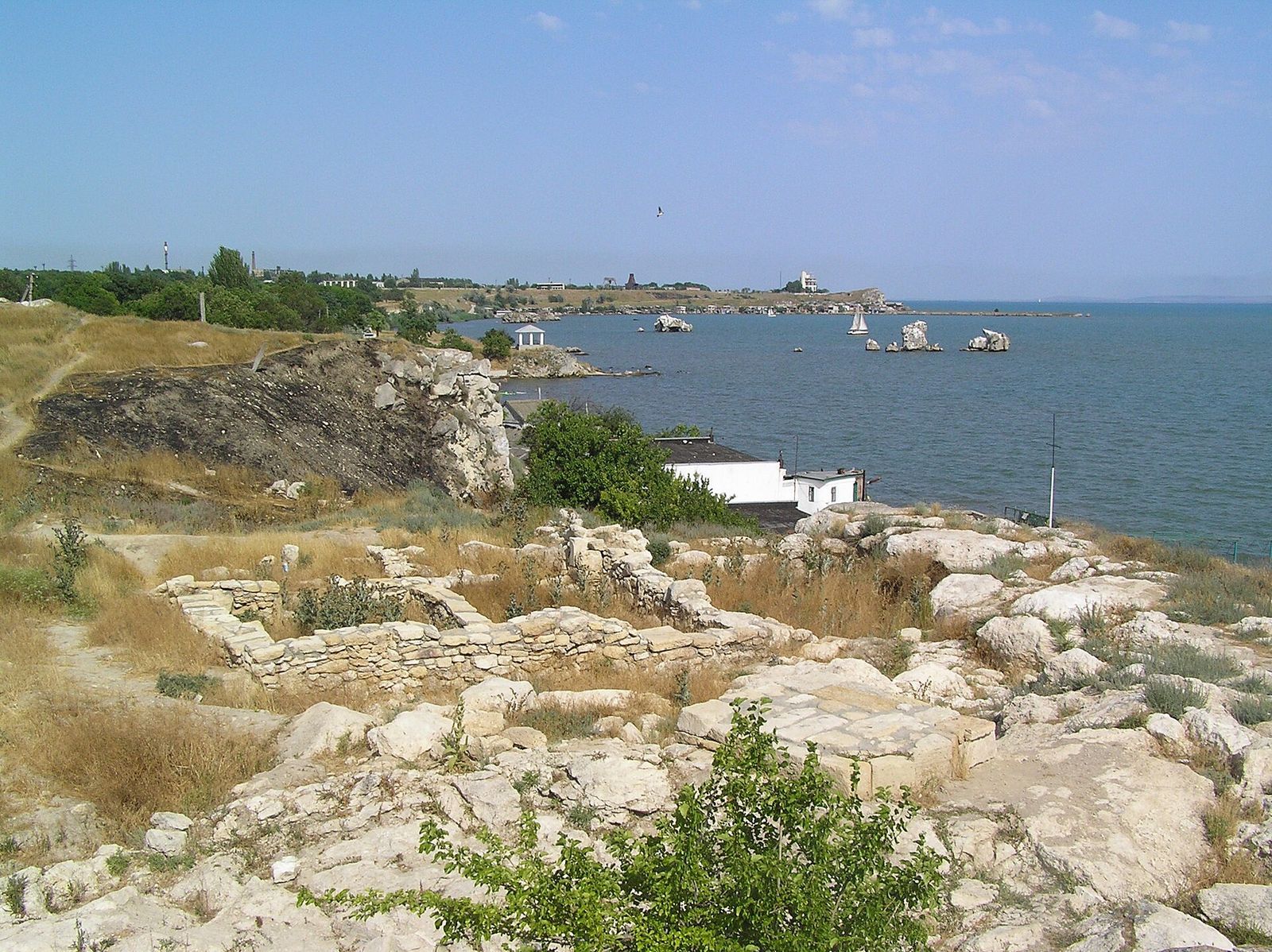
Myrmekion was an ancient Greek settlement on Cape Quarantine beside Kerch Bay in Ukraine, founded by Ionian Greeks around the boundary between the first and second quarters of the 6th century BC. It became one of the earliest Greek colonies in the northern Black Sea region and later belonged to the Bosporan Kingdom, an ancient state centered on the Cimmerian Bosporus and the northern Black Sea coast. Its capital was Panticapaeum, which lay to the west. The mother city that founded Myrmekion is unknown, although Miletus has been proposed.
Ancient geographical descriptions place Myrmekion 20 stadia from Panticapaeum and 40 from Parthenium, opposite Achilleum. A stadion was an ancient distance unit whose length varied by place and period. A 4th-century-BC Greek geographical account attributed to Pseudo-Scylax lists Myrmekion among the region’s important cities. The geographer Strabo refers to it in different passages as both a town and a village. The settlement’s name has been linked either to the Greek word for “ant” or to a word meaning an underwater reef. Historian S. O. Zhebelev associated it with the city’s founder, while archaeologist Yu. O. Vinogradov connected it with rocks projecting into the nearby strait.
A major fire damaged the settlement in the middle of the 6th century BC, after which a defensive wall was built around its fortified central area. By the start of the 5th century BC, Myrmekion covered 6–7 hectares and included large above-ground houses. It was destroyed again by the end of the first third of that century, probably in a Scythian attack, and its occupied area shrank by more than four times. Settlement revived after the middle of the century, reaching a high point in the first half of the 4th century BC, but another fire destroyed buildings around mid-century.
From the 4th century BC, the city came under the Bosporan kings and gradually lost its independent importance as Panticapaeum grew dominant. It may have provided a home for a member of the royal family. Myrmekion was a center of wine production from the Hellenistic period, the era following Alexander the Great’s campaigns, and winemaking was already a specialty in the 5th century BC. Coins bearing an ant image were once assigned to Myrmekion, but are now considered issues of Panticapaeum instead.
Roman period and late antiquity
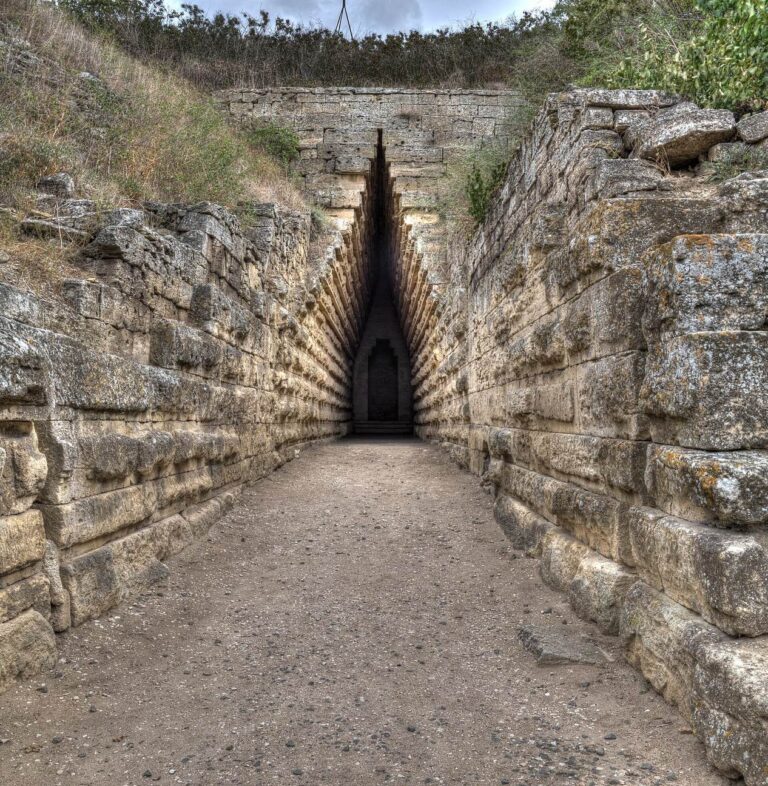
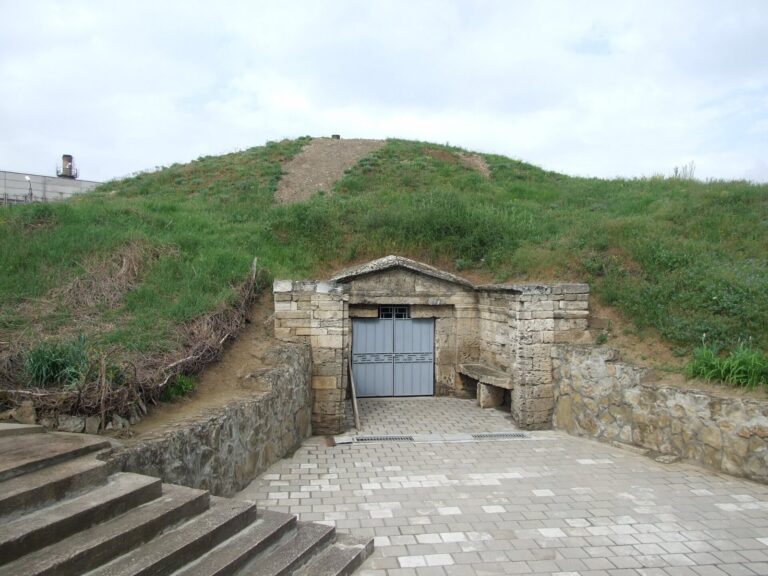
In the middle of the 1st century BC, civil conflict in the Bosporan Kingdom after the death of Mithridates VI Eupator, king of Pontus, brought another destruction at Myrmekion. Life returned in the first half of the 1st century AD, when several large estates occupied the settlement. Around the middle of the 2nd century AD, those estates were destroyed and a royal tomb was built on the cape, possibly for the Bosporan king Tiberius Julius Eupator. Estates were later established there again.
Goths entered the Bosporan Kingdom in the middle of the 3rd century, and Myrmekion’s occupation became scattered among separate estates, some fortified. At the beginning of the 4th century, residents left for the protection of Panticapaeum. The Bosporan Kingdom fell to the Huns in the 380s.
Medieval settlement
A settlement associated with the Saltovo-Mayaki culture, an early medieval culture of the Pontic steppe and neighboring regions, occupied the site during the 8th and 9th centuries and ended in the 10th. Following the Mongol conquest of Crimea, the peninsula became part of the Golden Horde, the Mongol successor state that controlled it for part of the medieval period. Small communities returned to the site in the 13th and 14th centuries as nearby settlements became transit points on the Silk Road, a network of routes linking East Asia with western Asia and Europe.
During Khan Uzbeg’s rule, the emir of Solkhat transferred Bosporus, a locality at the Kerch Strait, to the Venetians in exchange for a trade duty. After the Venetian-Genoese War of 1350–1356, a conflict between the two maritime powers, the Genoese took control of Bosporus. A settlement called Pondico then arose at Myrmekion.
Excavation and modern status
Paul Du Brux made a plan of the site in 1820. In 1834, sailors serving with the quarantine guard found tombs cut into the acropolis rock and two marble sarcophagi. Later investigations included work by O. Yu. Lutsenko in 1863, F. I. Gross in 1883 and 1885–1889, and V. V. Shkorpil in 1903 and 1906. Systematic excavation began in 1934. The Bosporan Expedition, led by V. F. Gaidukevich, worked in 1934–1938, 1946–1950 and 1956–1966; a Soviet-Polish expedition also worked at the site in 1956–1958. Yu. O. Vinogradov directed excavations from 1982 to 1994, a joint Russian research institute and State Hermitage team worked there in 1999, and the Hermitage’s Myrmekion Expedition has conducted work since 2000 under O. M. Butyagin.
After Russia’s occupation of Crimea in 2014, Russian teams continued excavating at Myrmekion, a practice Ukraine regards as contrary to Ukrainian law. Ukraine designates the site an immovable monument of national significance; in October 2015, the Russian government added the archaeological complex to its federal cultural heritage register. In 2025, Butyagin was arrested in Poland after a Ukrainian prosecutor accused him of organizing unlawful excavations and causing damages valued at 200 million hryvnias. A Polish court approved his extradition to Ukraine in March 2026, and he was released in April 2026.
Remains
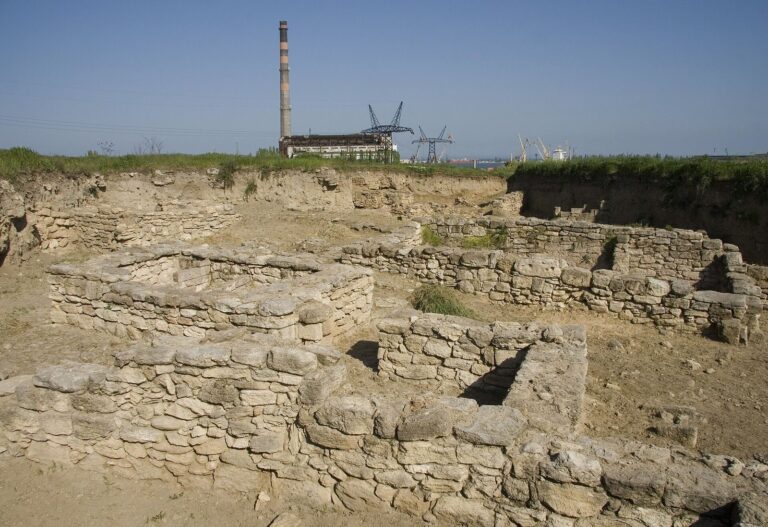
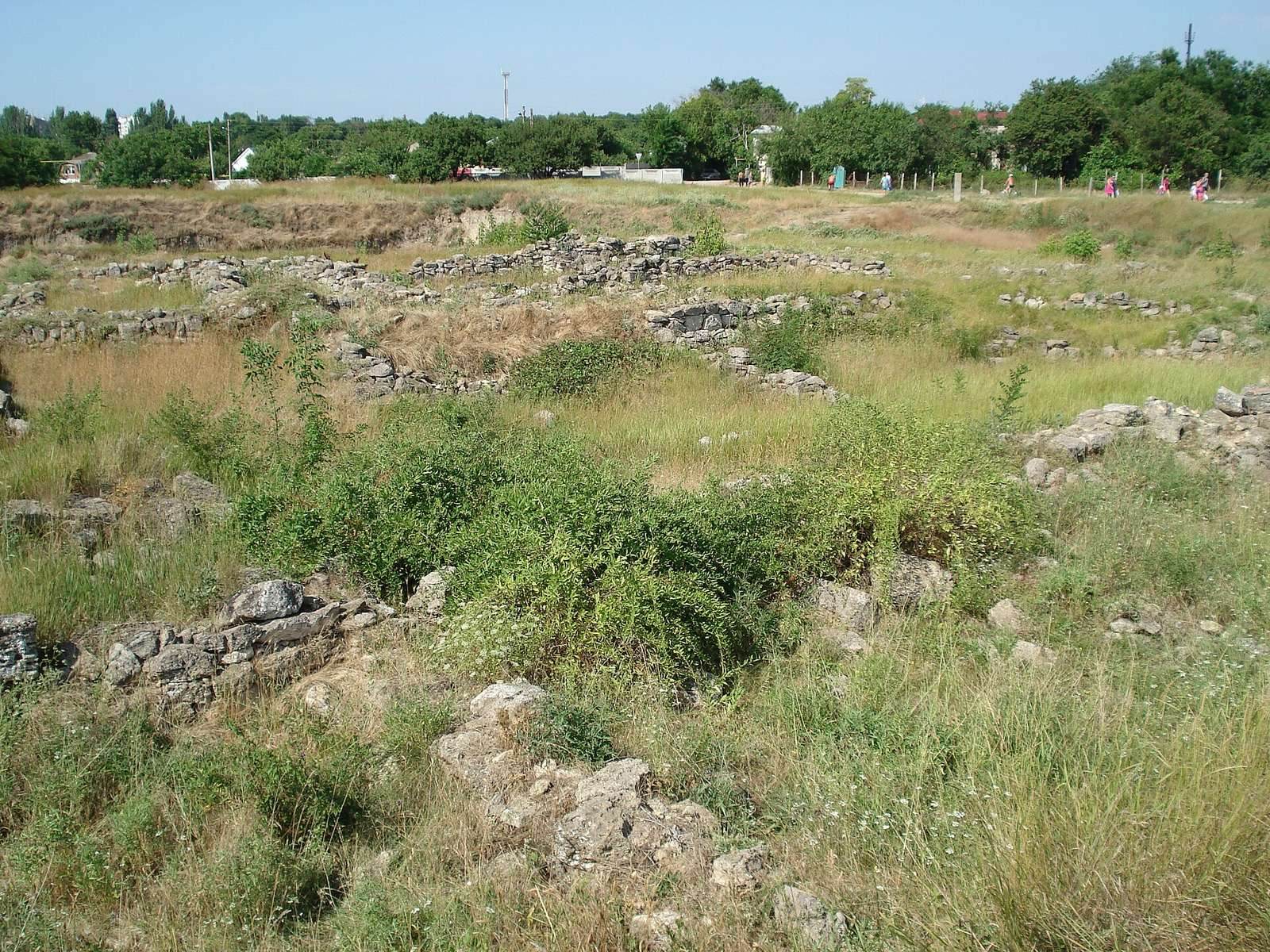
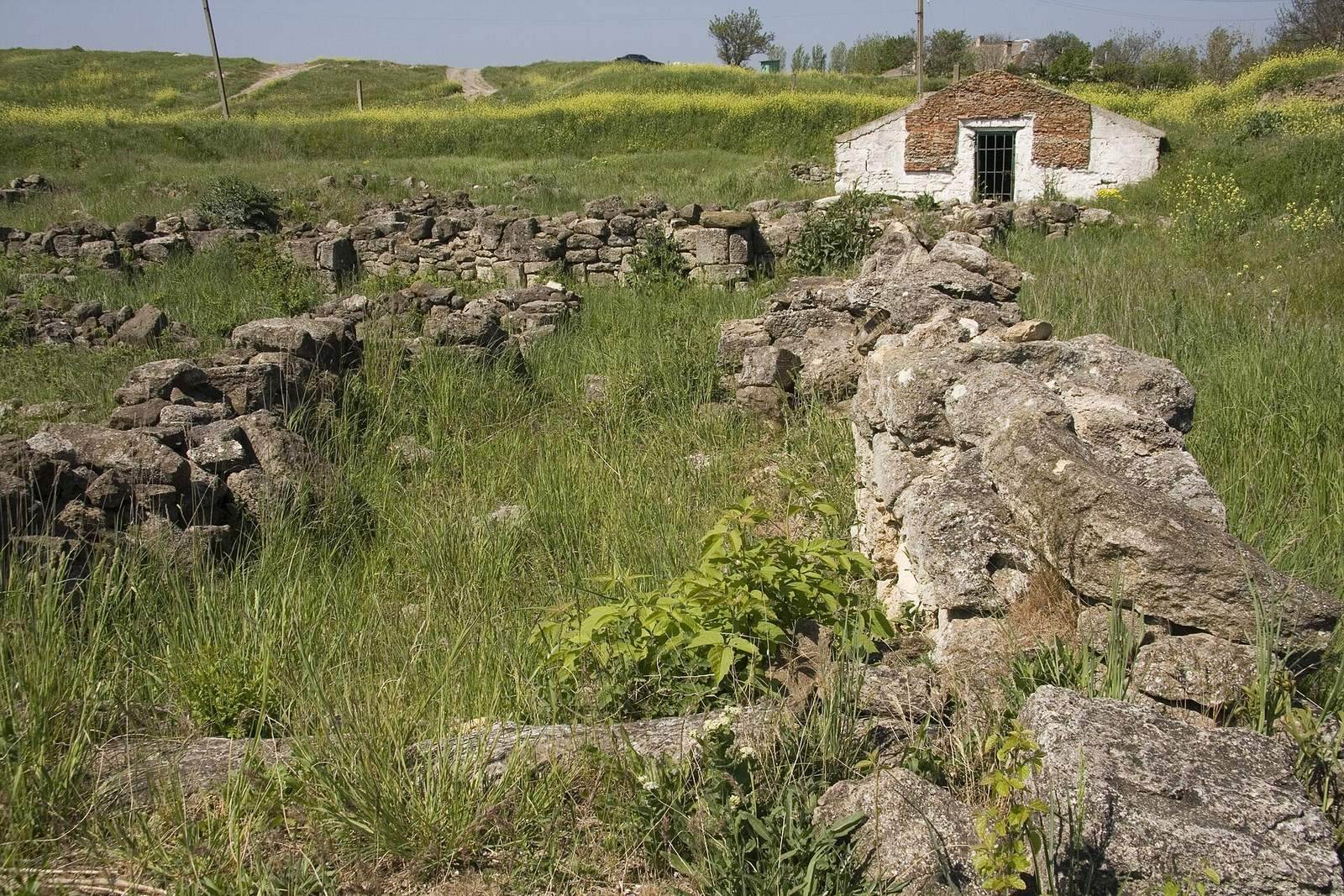
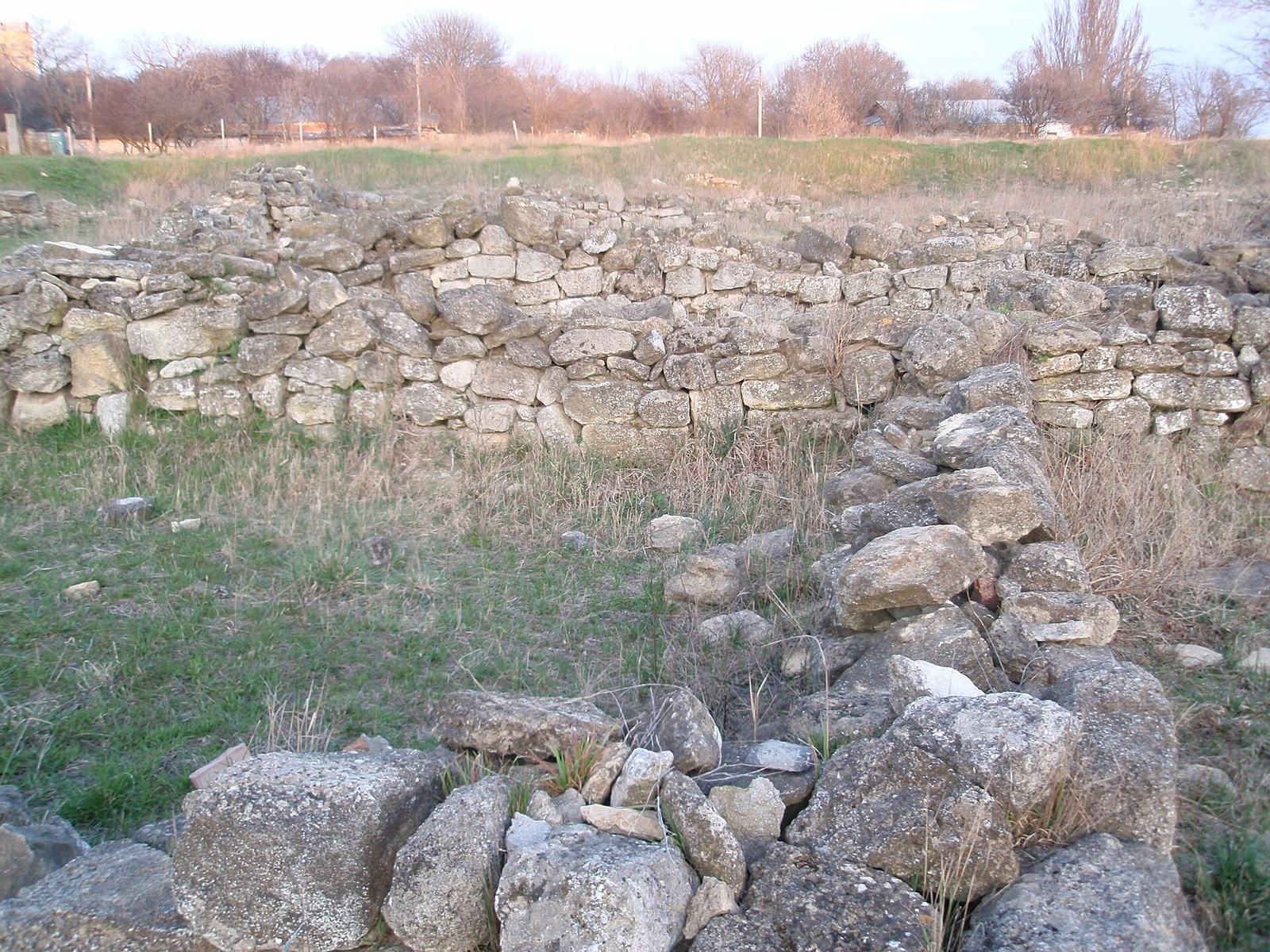
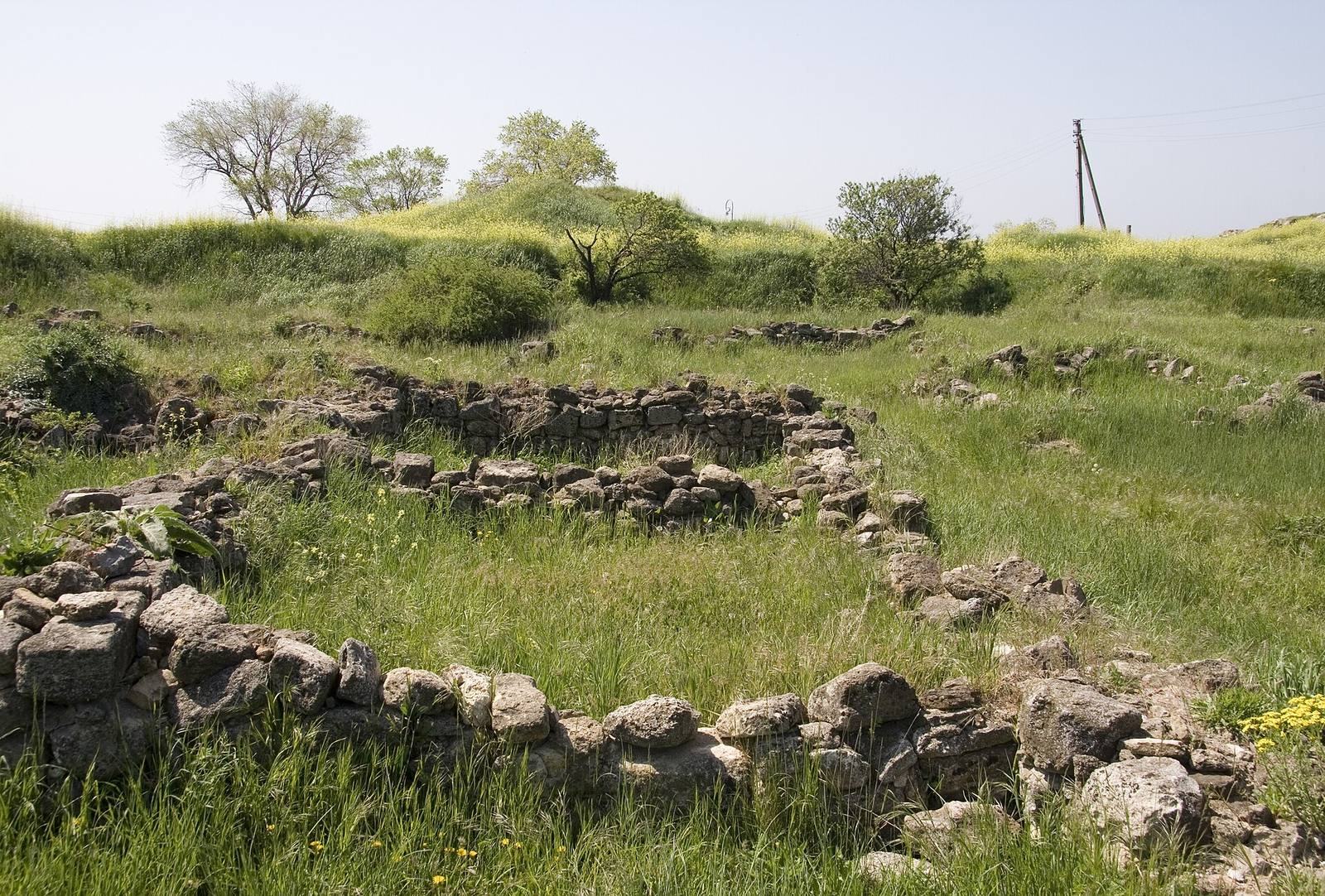
The archaeological remains occupy rocky Cape Quarantine and extend along the bay shore to its west. The ancient settlement covered more than six hectares, reaching 7–8 hectares at its greatest extent. Its surviving evidence includes successive dwellings and defenses, production areas, ritual features, burials and movable finds.
Domestic and defensive architecture
Dwellings and city walls
The earliest inhabitants lived in small semi-dugout homes, partly sunk into the ground and roofed with dried seaweed. Later housing included large buildings above ground. A defensive wall was built over earlier residential quarters after the settlement’s destruction in the 5th century BC; arrowheads were found in the wall. A later wall enclosed the city.
Fortress on Cape Quarantine
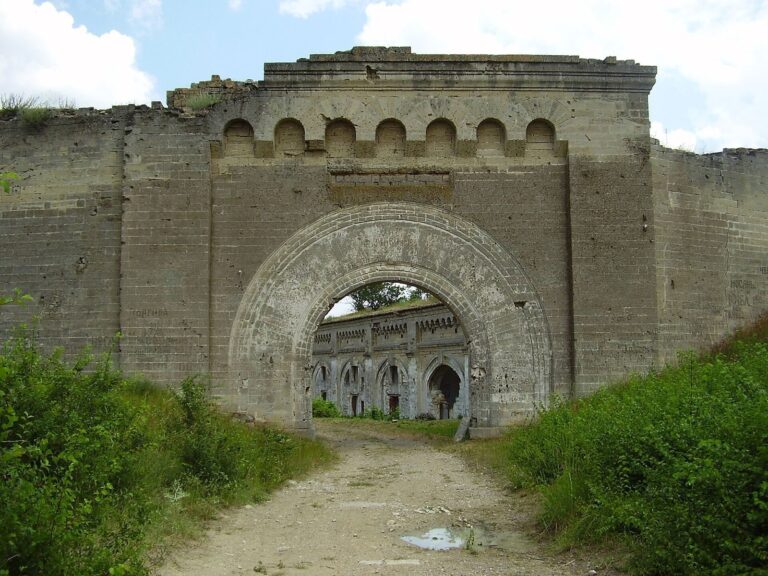
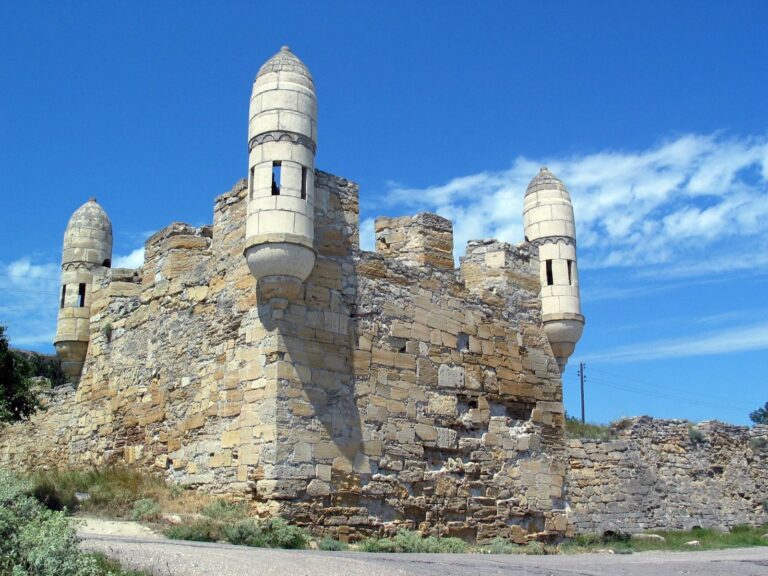
A small fortress stood at the edge of the cape in the 14th–15th centuries. Its wall was 2.6 metres thick, and a ditch strengthened its defenses. Residential and work rooms lined the inner side of the wall. A fire burned these buildings.
Public and productive spaces
Ritual area
A temple and public buildings probably stood in the city during its revival in the 5th and 4th centuries BC. In the 3rd and 2nd centuries BC, a mound of ash more than three metres high occupied part of the settlement. It was probably connected with a nearby sanctuary. Finds from the mound include terracottas, or fired-clay objects, coins and dedications to deities.
Wine-making installations
Hellenistic wineries had rooms with two platforms, and occasionally three. Workers trod grapes on one platform, then pressed the remaining pulp with a stone press. Juice of different qualities flowed into separate compartments of storage tanks, or cisterns, with capacities of up to 7,000–8,000 litres.
Fish-salting vats
Vats used for salting fish date to the Roman period and were found during excavation.
Tombs, inscriptions and burials
Marble sarcophagus
Two marble sarcophagi came from tombs cut into the rock of the acropolis. One was a large, richly decorated coffin with reliefs showing episodes from the life of Achilles, the hero of Greek mythology. It was probably made in an Athenian workshop in the 2nd century AD. Now in the Hermitage collection, it survives in fragments that include parts of its sides, lower section and lid.
Limestone inscription
A limestone slab measuring 49 by 25 by 20 centimetres was found north of the cape’s rock in August 2015. Its multi-line inscription, dated approximately from the late 1st century BC to the early 1st century AD, is the most extensive found at Myrmekion. The slab had been reused in masonry with the writing turned inward. It is now held in the stonework collection of the East Crimean Historical and Cultural Museum-Reserve in Kerch.
Lead business letter
A small rounded rectangular lead plate, 10.8 centimetres long and between 2.8 and 3.8 centimetres wide, was found in 2017 beneath the south wall of a Roman-period estate. The undisturbed layer around it dates to the second half of the 4th century BC, while the two private business letters on the plate belong to the last quarter of that century. Written on both sides for different recipients, they reflect a shift from Ionic Greek to Koine, a widely used common form of ancient Greek. The sender may have traded high-quality clothing in transit.
Necropolis and stone tomb
A new necropolis, or ancient cemetery, was discovered at Myrmekion in 2017. In 2019, investigators identified a burial from the second half of the 6th century BC, dating to the first wave of Greek colonization in Crimea. The small tomb, about 70 by 40 centimetres, was carved from a single block of stone. It may have served as a symbolic burial or held ashes.
Sculpture and coin deposits
Sculptural finds
A statue recovered in 2018 from the collapsed remains of a destroyed 2nd-century-AD estate represents Asclepius, the Greek god of medicine and healing. It is 1.15 metres tall and weighs nearly 110 kilograms; it was transferred to the East Crimean Historical and Cultural Museum-Reserve. Other finds include a bone figurine of Mercury, the Roman god associated with commerce and travel, a fragment of sculptural relief and numerous bronze coins.
Coin hoards
A hoard discovered in 2002 is among the major coin finds associated with the Bosporan Kingdom’s monetary crisis in the 3rd century BC. A 2003 hoard of electrum, a natural alloy of gold and silver, from Kyzikos was the largest such find in the northern Black Sea region and the second largest worldwide. On 20 August 2022, archaeologists uncovered 30 gold staters, an ancient coin denomination, from the early Hellenistic period and the era of Alexander the Great. It is the largest gold-coin hoard from the Bosporan Kingdom.