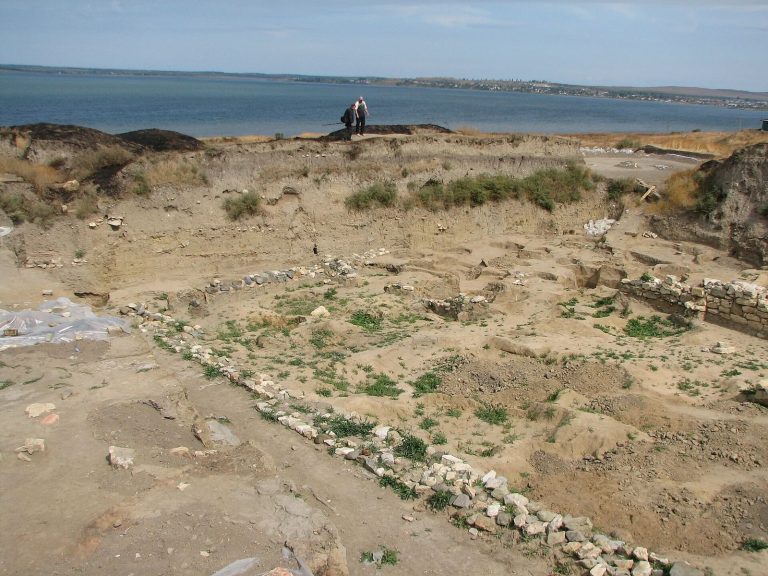
Tsar’s Kurgan: An Ancient Greek Royal Tomb in Russia
Site at a Glance
- Popularity
- Very High
- Country
- Russia
- Primary era
- Classical
- Eras represented
- Classical
- Civilizations
- Bosporan Kingdom, Roman
- Site type
- Burial
- Remains
- Burial Mound
On this page13 sections
History
Tsar’s Kurgan is an ancient Greek burial mound near Adzhimushkay, northeast of Kerch, Russia. Built by the Greeks in the second half of the fourth century BCE, it served as a tomb for a ruler of the Bosporan Kingdom and is among the largest surviving funerary monuments of the ancient Greek city-states.
A tomb for a Bosporan ruler
The Bosporan Kingdom was an ancient state formed around Greek colonies by the northern Black Sea and Sea of Azov. Its ruling Spartocid dynasty governed from 438 to 109 BCE. The identity of the ruler intended for the tomb remains uncertain. It may have been built for Perisades I during his lifetime, though Leukon I has also been proposed.
The tomb was completely looted in antiquity. Its original burial contents were therefore largely lost before modern excavations began.
Christian use
Christians used the kurgan as a place of worship during the third and fourth centuries CE. Carved Christian symbols have also been taken to indicate that the burial chambers may have served as a refuge as well as a place of worship.
Excavation and later recognition
Excavations opened the tomb between 1833 and 1837, and archaeologist Anton Ashik investigated it in 1837. Swiss artist Carlo Bossoli depicted the monument in a painting titled Tomb of Mithridates. A lithograph based on the painting appeared in the London album Landscapes and Sights of Crimea in 1856.
The kurgan is part of the East Crimean Historical and Cultural Museum-Reserve. Since October 2015, it has held federal-level cultural heritage status in Russia; it is also recognized as a national-level architectural monument in Ukraine.
Remains
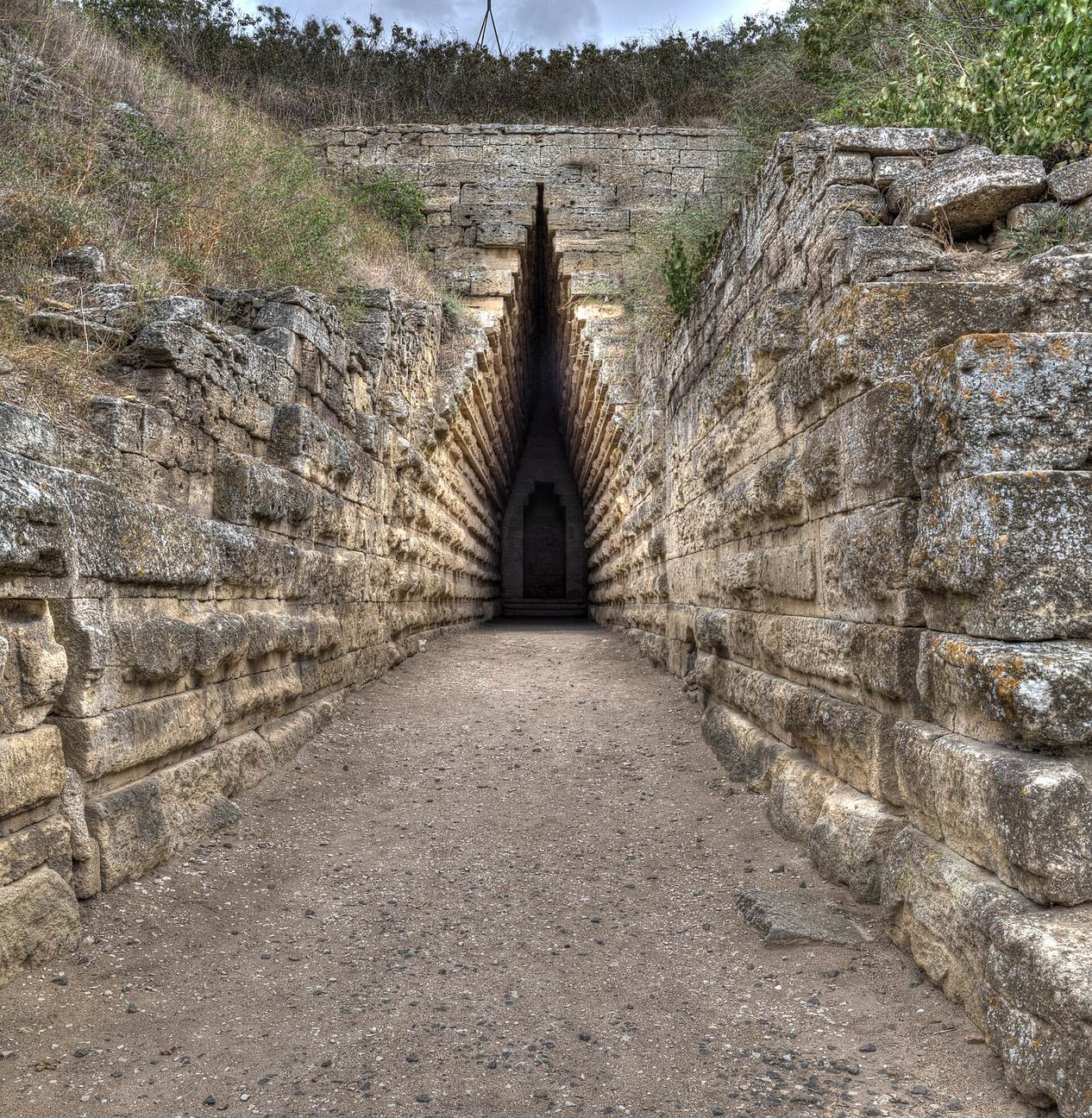
The mound covers a stone tomb organized around a long entrance passage leading to a nearly square burial chamber. It rises about 17 metres and measures roughly 250 metres around its base. The tomb survives in satisfactory condition.
The mound and tomb
Mound
Layers of sea grass and rubble lie within the mound, whose surface is faced with rubble stone. Builders used stone quarried nearby and raised it up the outside of the mound during construction.
Entrance passage
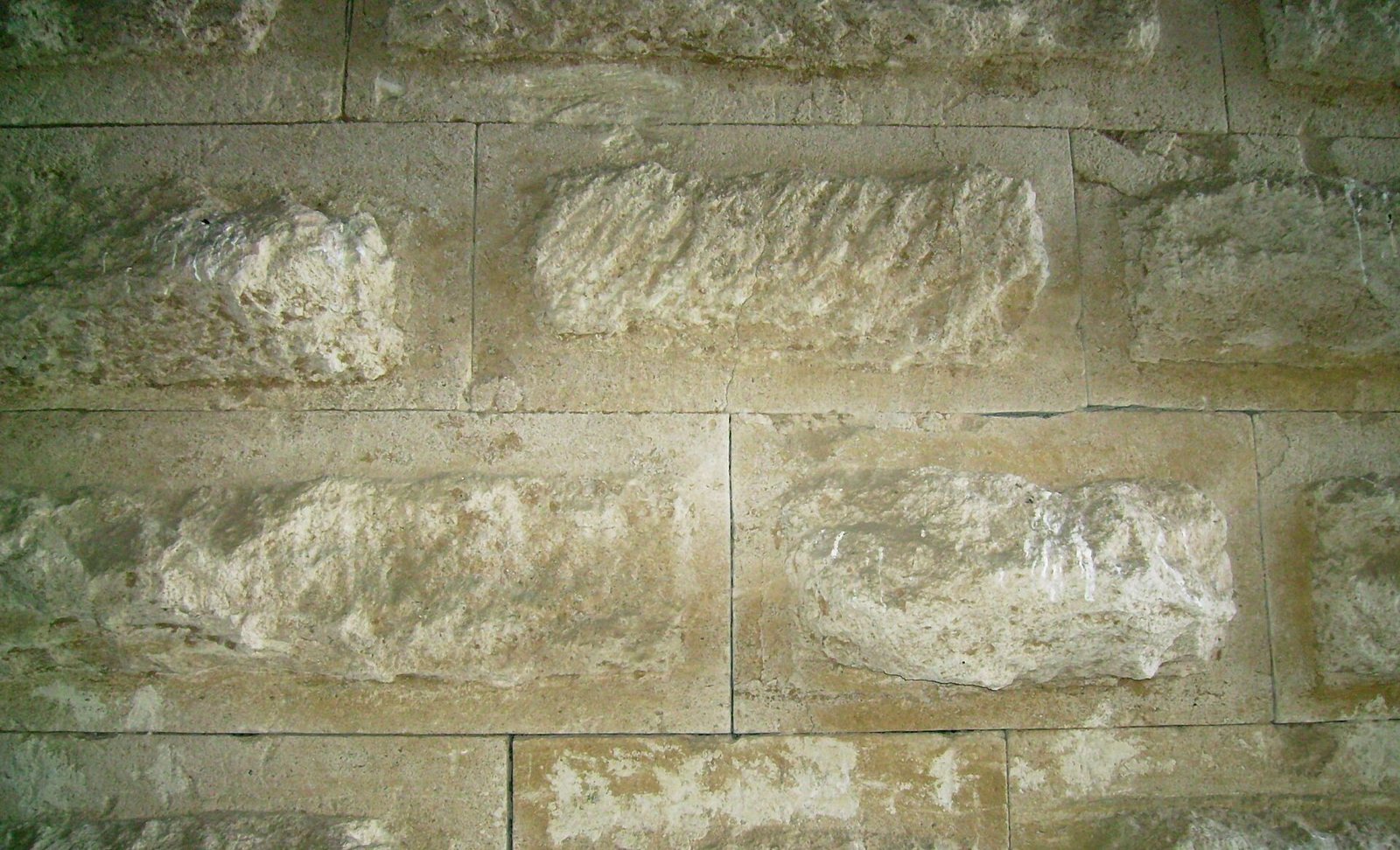
The passage measures about 36 to 37 metres long, 2.8 metres wide and 7.14 metres high. It is built from rough-faced limestone blocks and has a false stepped vault, made from courses of stone that project inward. Its walls are irregular and vary in height. In places they have a base course; the visible block faces were shaped to fit closely, while the less visible sides were roughly worked. The floor is unpaved.
The passage walls are not parallel, producing an optical effect: the stretch from the chamber to the exit appears longer than it is, while the stretch from the entrance to the chamber seems shorter.
Burial chamber
The nearly square chamber measures about 4.4 by 4.3 metres and stands approximately 8.5 metres high. Its walls are made from carefully fitted blocks of shell limestone from the Adzhimushkay deposit. The northern base is cut into bedrock, while the southern side rests on a layered foundation. Stone slabs pave the floor.
Stepped corner supports bridge the square room to the dome. The dome is formed from 12 rings of stone that decrease in diameter toward a capstone. Their inward-projecting courses create a false stepped vault rather than a true arch.
Construction traces
Holes in the walls of both the passage and chamber held beams for scaffolding. Slots in the passage walls accommodated braces, which builders removed after construction was complete.
Carvings and finds
Christian carvings and inscription
Christian symbols were carved into the chamber walls, the stepped corner supports and the passage walls. The upper right wall of the passage bears the tomb’s only inscription.
Sarcophagus remains and stone antiquities
Excavators recovered remnants of a wooden sarcophagus. Within the mound’s enclosure, a small museum displays ancient finds including pedestals, grave stelae and sarcophagi.