Muwaylih Castle: An Ottoman Fortress on the Coastal Pilgrimage Route
Site at a Glance
- Rating
- 4.2
- Popularity
- Very Low
- Country
- Saudi Arabia
- Primary era
- Early Modern
- Eras represented
- Medieval, Early Modern
- Civilizations
- Mamluk, Ottoman
- Site type
- Military
- Remains
- Castle
On this page8 sections
History
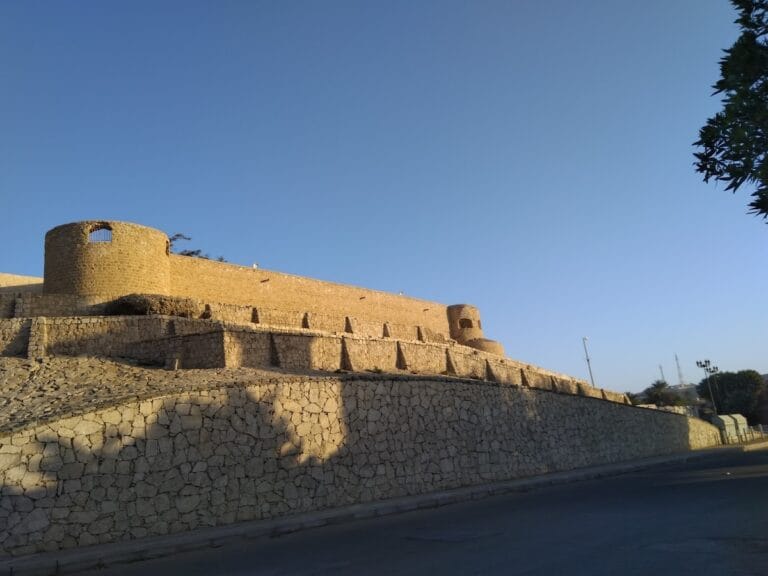
Muwaylih Castle is a large historic fortress in Saudi Arabia, built under Ottoman rule on the coastal pilgrimage route through the Hijaz. Its recognizable form dates to 1560, or possibly 1561, during the reign of Sultan Suleiman the Magnificent, after an earlier Mamluk phase represented by towers. The fortress served as a principal station for pilgrims, especially those arriving from Egypt, and as one of the northern gateways of the late Islamic period.
Mamluk and Ottoman Foundation
The site began in the Mamluk period, when it consisted of towers. The Ottoman fortress was established while Suleiman the Magnificent ruled from 1520 to 1566, a period of major Ottoman expansion and state construction. The castle was administered by the Egyptian province of the Ottoman Empire from its foundation. Its construction was associated with an order from Ali Agha, the pasha of Egypt, for a large fortress to protect merchants and residents and suppress disorder. The work was assigned to Emir Qit ibn Abd Allah al-Dawudi, while the Muwaylih family supervised the castle.
Administration and Restoration
Muwaylih remained connected to the changing administration of the Hijaz forts after Egypt separated from the Ottoman Empire. Responsibility shifted between Egyptian and Ottoman authorities. Egypt’s Ministry of War took control of the castle in 1885, and the Ottoman state assumed control in 1889. During the reign of Abbas Hilmi II, the last khedive of Egypt, the Hijaz forts were separated from Egyptian administration and attached to the Ottoman state. The Muwaylih family nevertheless retained authority over the castle with support from regional allies.
The fortress underwent three restorations before Ottoman administration ended. The first was carried out by the castle’s representative from the Muwaylih family. The second was undertaken by the khedival government under another representative of the family, and the third took place during the reign of Khedive Ismail under a further Muwaylih representative.
Wartime Damage and Transfer
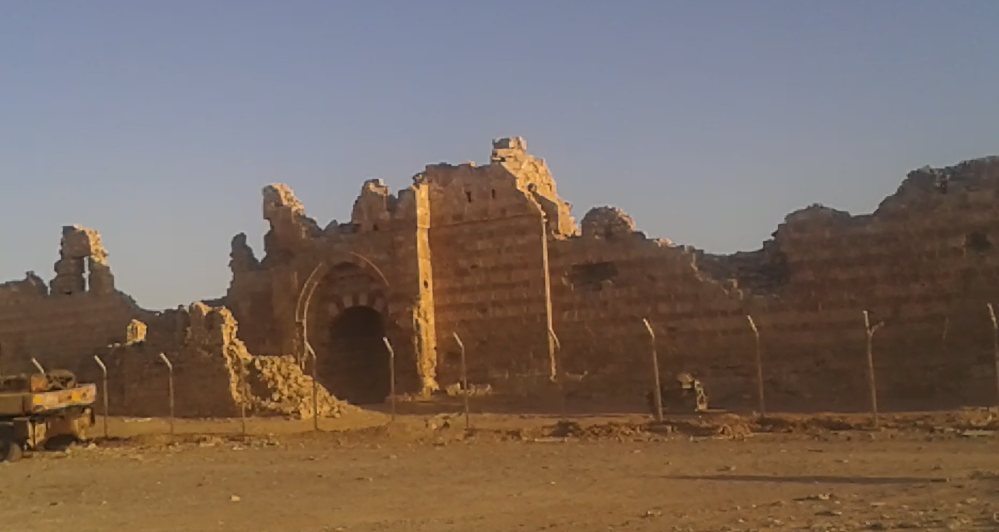
During World War I, in AH 1331, a British vessel bombarded Muwaylih Castle because it contained a Turkish garrison. The attack damaged the northern and western facades. On 17 December 1925, the castle was transferred to the Saudi state under the agreement handing over the Hijaz between King Abdulaziz Al Saud, founder and first king of the modern Saudi state, and Sharif Ali ibn Hussein, a Hashemite ruler of the Hijaz during the region’s political transition.
Remains
Fortress Layout and Construction
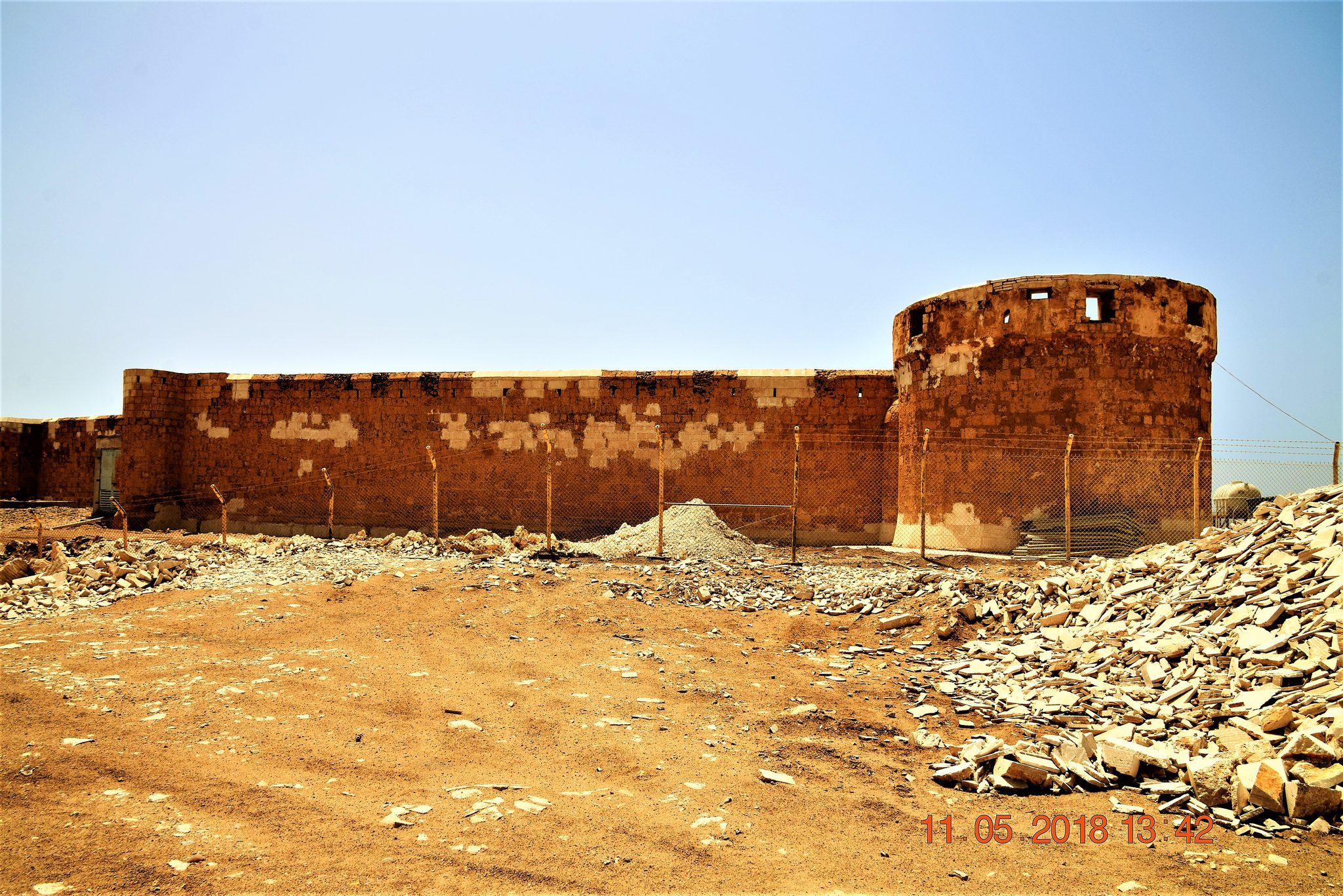
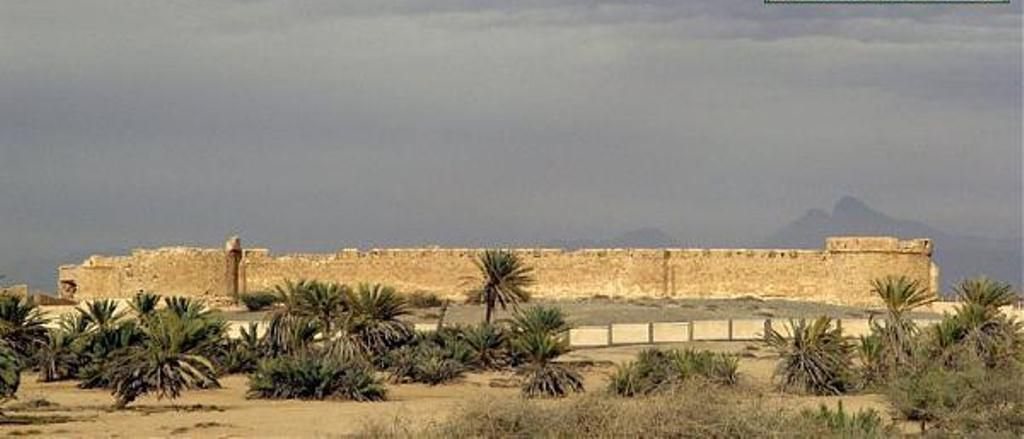
Muwaylih Castle stands on elevated ground beside the eastern coast of the Red Sea, near Muwaylih village north of Duba, in an area with many palm trees. Its raised position allowed observation in all directions. The fortress was built as a substantial defensive enclosure, with corner towers, thick walls, cannon positions, rifle openings, and an organized interior centered on a courtyard.
Corner Towers and Walls
Four towers mark the corners of the fortress, each approximately 5 metres in radius. The upper level of every tower contains seven openings for cannons, while small rifle loopholes run along the walls at intervals of about 1 metre. The fortress had 47 cannons. The northern and western facades retain the physical effects of the bombardment carried out during World War I.
Rooms, Mosque, and Wells
The interior contains approximately 70 rooms, a mosque, a well, storage facilities, and a central courtyard. Service units for pilgrims surround the courtyard on all sides. Five wells are associated with the castle and its earlier setting. Several were endowed as waqf, religious endowments whose property or income was assigned permanently to a charitable, religious, or public purpose, including wells associated with the Ottoman sultan and the commander stationed at the fortress. Two other wells were built by the Al-Malik family before the fortress existed.
An establishment inscription formerly stood above the main entrance. It named Sultan Suleiman, son of Sultan Selim and grandson of Sultan Bayezid, of the Ottoman dynasty, as the ruler who commissioned the castle.