Museum Pachten: A Museum of Gallo-Roman History in Germany


Site at a Glance
- Rating
- 4.4
- Popularity
- Very Low
- Country
- Germany
- Primary era
- Classical
- External website
- Open
- Eras represented
- Stone Age, Bronze Age, Iron Age, Classical, Medieval
- Civilizations
- Celtic, Roman
- Site type
- Museum
On this page6 sections
History
Museum Pachten is a museum of prehistory and early history in Germany, in the city of Dillingen, presenting the Gallo-Roman heritage of Pachten and the earlier cultures of the surrounding area. Its central subject is Contiomagus, a vicus, or small Roman settlement, that developed as an important trading centre where two major Roman roads met, one linking Metz with Mainz and another connecting Trier with Strasbourg.
From prehistoric settlement to Roman Contiomagus
Pachten’s history reaches back through the Stone Age, Bronze Age, Iron Age, and Celtic periods. Its Roman origins have been known since approximately the seventeenth century. The museum focuses especially on the Gallo-Roman period, when Roman institutions and material culture developed alongside local Celtic traditions. It also presents evidence for a later Roman fort in the area of present-day Pachten, as well as Roman and Frankish burials.
Establishment and administration
The museum was established in 1990 by the Förderverein Museum Pachten e.V. Much of its collection comes from the local Roman cremation cemetery, a burial ground where cremated remains were placed in graves or containers. The cemetery is described as one of the largest burial fields in southwestern Germany. Since March 2022, the city of Dillingen has operated the museum, with Dr Jürgen von Ahn becoming its manager in January of that year.
Remains
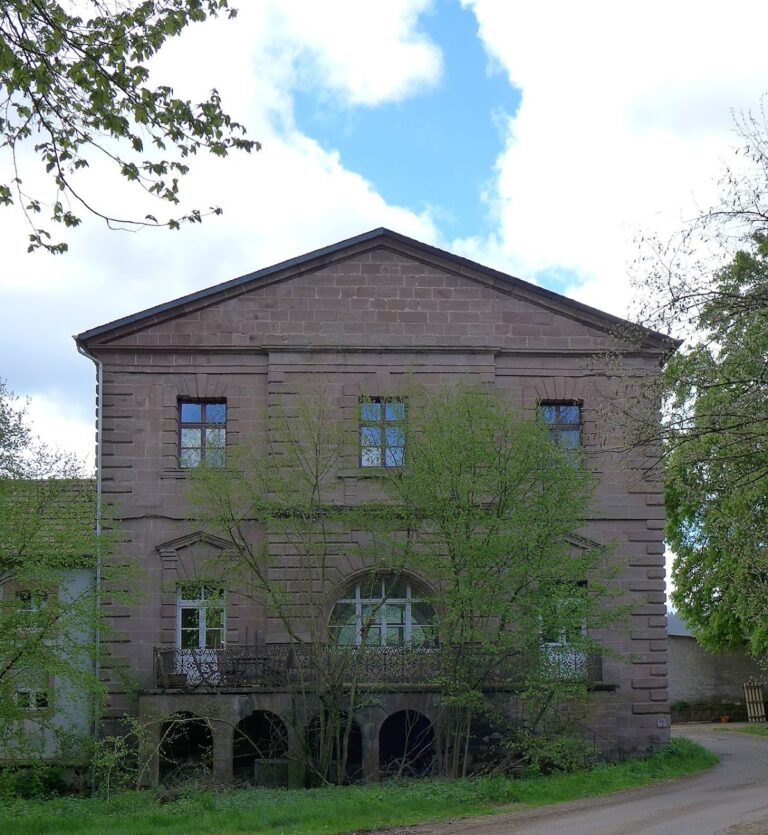
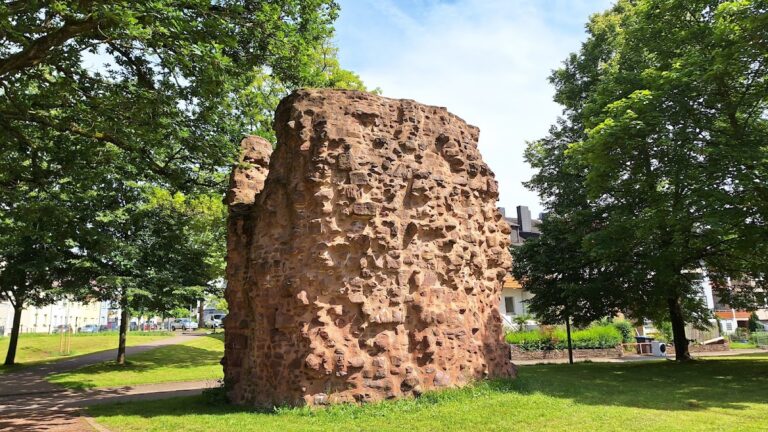
The museum occupies a farmhouse built in the early twentieth century on Fischerstraße, one of Pachten’s oldest streets. Its displays incorporate the building’s original bedroom and domestic objects, linking the archaeological collections with the more recent history of the structure. The former barn accommodates temporary exhibitions, while a gallery is used for changing displays. Nearby, a Roman park includes a reconstructed tower from a Roman fort.
Burials and archaeological collections
Two darkened rooms contain visible burial pits with Roman and Frankish burials. Other displays include a geological collection of fossils and minerals from the surrounding area and a lead Roman vessel used for distributing water. Together with the cremation-cemetery material, these objects illustrate the range of evidence assembled at Museum Pachten.
Inscriptions from Roman Pachten
Several inscriptions connect the museum’s objects with the people and religious practices of Contiomagus. A funerary inscription commemorates Bucculia Primula. It says that her father, Priscus, commissioned the work and that Aeninus Auclus executed it, while invoking the divine Manes, the spirits of deceased ancestors. A stone dedicated to Mercury states that the coloni, agricultural settlers or tenant farmers, of Crutisio erected the dedication voluntarily through Dannus.
A funerary stone for Ursus says that he rests in peace and records that he lived for three years and forty-six days. Another inscription from Contiomagus dedicates an offering for the welfare of the settlement’s inhabitants to Pritona, or to another deity whose name is incompletely preserved. The surviving text also names Tertinius Modestus.
Nearby sites