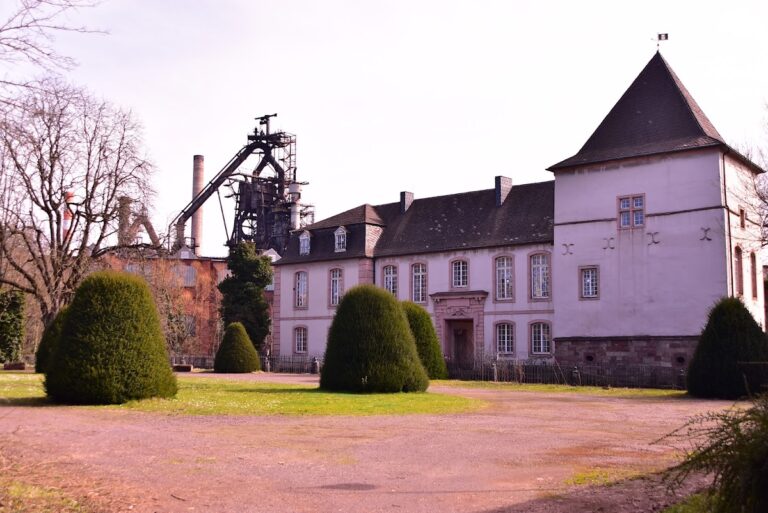
Hexenturm: Prison Tower and Remnant of Burg Püttlingen in Germany


Site at a Glance
- Rating
- 4.5
- Popularity
- Very Low
- Country
- Germany
- Primary era
- Medieval
- External website
- Open
- Eras represented
- Medieval
- Civilizations
- Duchy of Lorraine, Holy Roman Empire
- Site type
- Military
- Remains
- Castle
On this page8 sections
History
The water castle and its medieval role
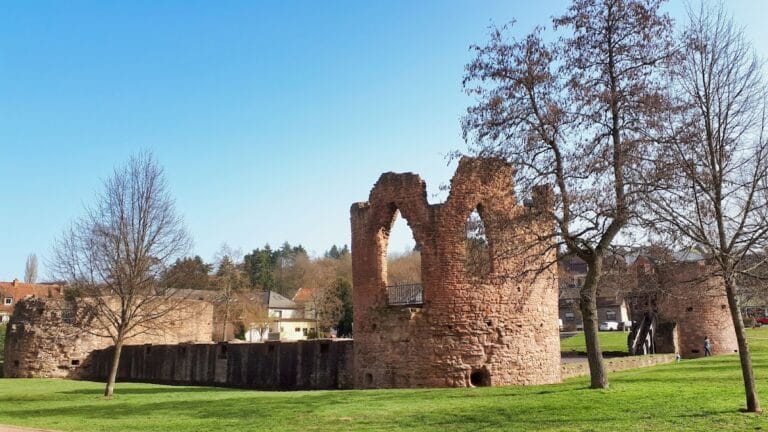
Hexenturm is a surviving prison tower in Püttlingen, Germany, and the last visible remnant of Burg Püttlingen, a water castle built between 1341 and 1354. Johann von Forbach oversaw its construction. After completion, the castle was made available to Balduin of Luxembourg, Elector and Archbishop of Trier, during his disputes with Jakob von Montclair. An elector was a prince entitled to participate in choosing the German king.
During the fourteenth century, the lordship of Püttlingen and its castle belonged to the Lords of Kriechingen. The complex therefore formed part of the territorial and political landscape shaped by local noble families and the wider authority of Trier.
Destruction and later territorial change
Swedish and French troops destroyed Burg Püttlingen in 1635 during the Thirty Years’ War, a European conflict fought from 1618 to 1648 amid religious, dynastic, and territorial struggles. After Püttlingen itself was destroyed by fire, the remains of the castle were quarried for the town’s rebuilding.
Following the annexation of Lorraine in 1766, France transferred feudal sovereignty over Kriechingen and Püttlingen to Nassau-Saarbrücken. The von Rollingen fief remained with France, preserving a separate element of the earlier feudal arrangements.
Prison use and archaeological clarification
The Hexenturm had been built as a prison tower no later than the sixteenth century. In the late sixteenth century, Püttlingen bailiff Thomas Königsdorfer imprisoned 14 women there after accusing them of witchcraft, then had them executed by burning. An Amtmann, or territorial bailiff, held local administrative and judicial responsibilities, while burning was a judicial punishment associated with early-modern witch trials.
Excavations in 2002 uncovered partly built-over foundations belonging to the fourteenth-century main castle. They also established that the Hexenturm was not the former southern tower, as it had previously been identified. A square and an information board mark the location of the main castle. Hexenturm is designated as an architectural heritage monument.
Remains
Castle complex and surviving structures
Burg Püttlingen occupied a roughly square area measuring about 20 by 20 metres. It was a water-castle complex, meaning a fortified residence or stronghold surrounded or partly protected by water. The layout consisted of a main castle, the principal fortified enclosure, and an outer bailey, a subsidiary enclosure for additional buildings and functions.
Main castle foundations
Excavation has brought the foundations of the fourteenth-century main castle to light, although parts of them have been built over. These foundations are the surviving physical evidence of the principal enclosure and help define the former castle’s layout. The rest of the castle survives at foundation level, apart from the standing prison tower.
Hexenturm
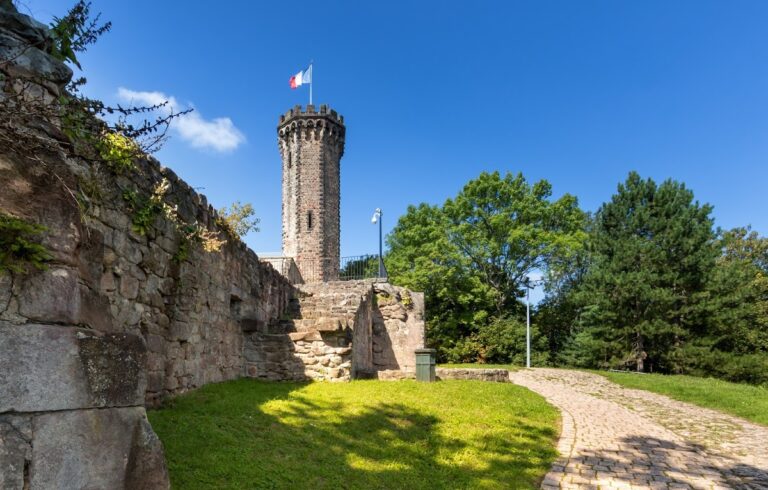
The Hexenturm is the last visible structural relic of the castle complex. Its original function was that of a prison tower, and its surviving fabric represents a separate element of the former water castle rather than the southern tower once attributed to it. Together with the excavated foundations, the tower preserves the distinction between the castle’s remaining standing structure and its buried archaeological remains.