Muradiye Complex: An Ottoman Mosque and Dynastic Burial Ground
Site at a Glance
- Country
- Turkey
- Primary era
- Medieval
- Eras represented
- Medieval, Early Modern, Modern
- Civilizations
- Ottoman
- Site type
- Religious
- Remains
- Mosque
On this page17 sections
History
Foundation and Murad II’s burial
The Muradiye Complex is an Ottoman mosque-centered foundation and dynastic burial ground in Bursa, Turkey. Sultan Murad II commissioned it in 1425–1426, partly to encourage the city’s growth. Work began after the Yeşil Mosque was completed in eastern Bursa. The Muradiye Mosque, the complex’s first building, was finished in 1426. The foundation also included a madrasa, an Islamic educational institution, and gave its name to the surrounding neighborhood.
An open tomb traditionally linked to Ebe (Gülbahar) Hatun is thought to have been built in the 1420s for Mehmed II’s midwife. Her precise identity is uncertain, although the association with the midwife became established. The Hatuniye tomb was built in 1449 for Hüma Hatun, Mehmed II’s mother; the identity of the person in its second stone burial container is unknown.
Murad II died in Edirne in 1451, and his body was brought to Bursa for burial near his elder son Alaaddin, who had died in 1442. His tomb may have been built before his death or commissioned afterward by his son Mehmed II, in keeping with Murad’s wishes. Murad requested burial directly in the earth, without a coffin or stone container. He also asked for an open tomb so rain could reach the grave, a surrounding gallery for recitation of the Quran, and no burial beside his own.
Growth of the dynastic cemetery
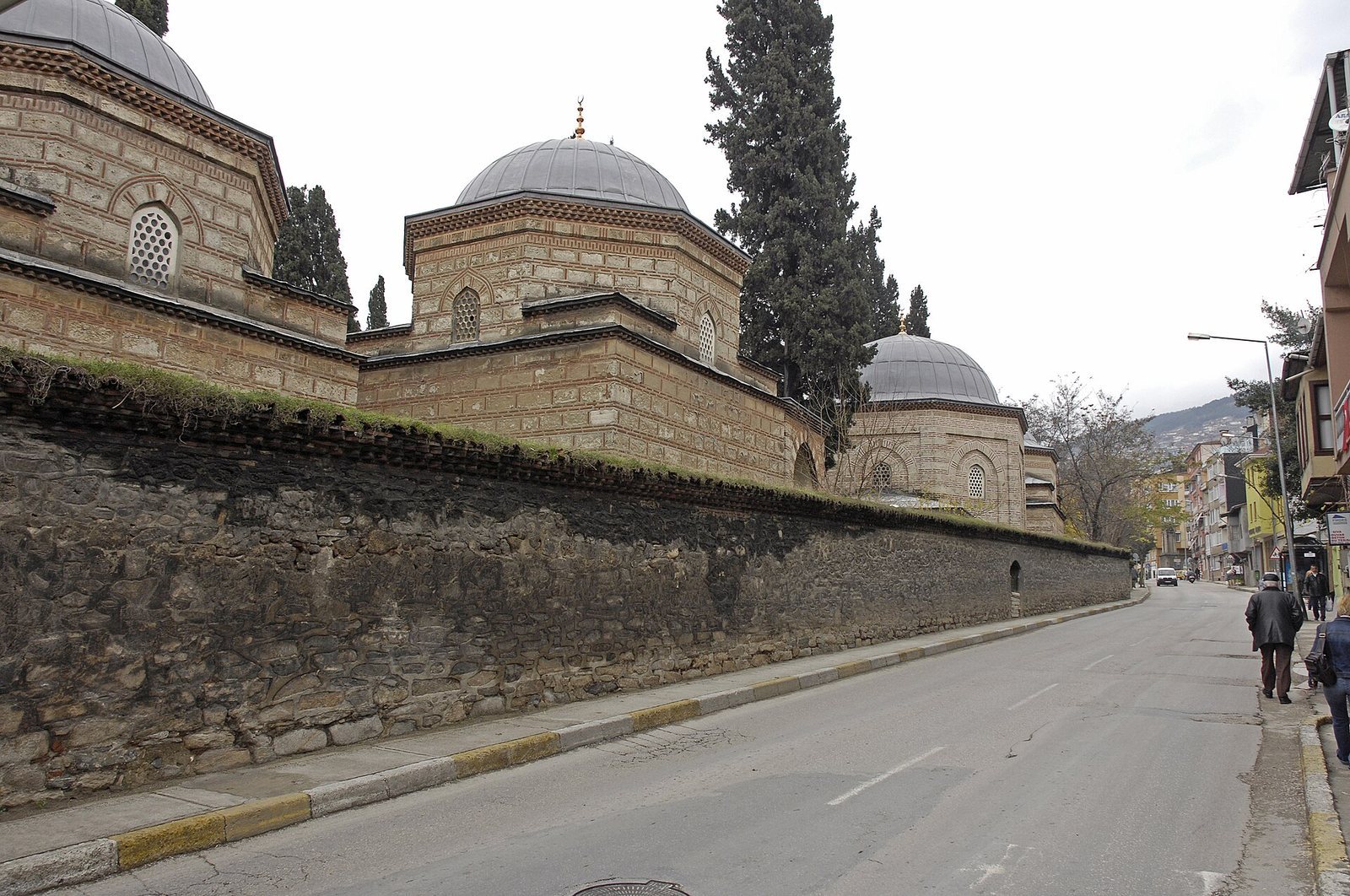
As further burials accumulated, the complex became a royal cemetery. After Istanbul, it has the Ottoman burial ground with the second-largest concentration of palace burials. Its graves include eight princes, seven sons of princes, five daughters of princes, two sultan consorts, and one sultan’s daughter. The two open tombs also served palace personnel who were not members of the dynasty.
The Ottoman title Şehzade means prince. A tomb built in 1479 for Şehzade Mustafa, son of Mehmed II and governor of Karaman, later became known as Cem Sultan’s tomb. Cem, another son of Mehmed II, was buried there in 1499, after which the building became more closely associated with his name. Gülşah Hatun’s tomb was built in the 1480s for one of Mehmed II’s wives. Its second burial container bears the name Şehzade Ali, said to have been a son of Bayezid II, though that identification is uncertain. Şirin Hatun’s tomb dates to the late fifteenth century. Gülruh Hatun’s tomb also holds the remains of her daughter Kamer Hatun and Kamer’s son Osman.
Bülbül Hatun commissioned a tomb for her son Şehzade Mahmud, who died in 1506. Mahmud’s sons Orhan and Musa were strangled after Selim I took the throne in 1512, and Bülbül Hatun was later buried in the tomb as well. In 1513, Selim ordered a tomb for Şehzade Ahmed. Its burials include Ahmed and his brother Korkut, both executed after Selim’s accession; Şehzade Şehenşah, who died during his father’s reign; Şehenşah’s son Mehmed; and Bülbül Hatun, mother of Şehenşah and Ahmed. Another burial may be that of Ahmed’s daughter Kamer Sultan. Mükrime Hatun, Şehenşah’s wife and the mother of Mehmed Çelebi, was buried in a separate tomb; she died in 1517.
Şehzade Mustafa was strangled in 1553 on the orders of his father, Sultan Suleiman I. After an initial burial elsewhere in Bursa, his body was moved in 1573 to a tomb commissioned for him by Selim II. Mahidevran Sultan, Mustafa’s mother, was buried there, as were Şehzade Mehmet and Şehzade Murat, the three-year-old son of Şehzade Bayezid who was also strangled. The open Saraylılar tomb is thought to have been made for two sisters of Mahidevran Sultan.
Gravestones and inscriptions removed from other Bursa sites during expropriations were brought to the mosque’s burial ground, adding to its memorial landscape.
Later use and conservation
The bath was repaired in 1523, 1634, and 1742. After years as a storehouse, it became a center for people with disabilities. The mosque was damaged by a fire in the early eighteenth century. The madrasa was restored in 1951 and served for a long period as a tuberculosis clinic.
The 1855 Bursa earthquake damaged several buildings. The mosque suffered slight damage, and one minaret split. The dome of Murad II’s tomb separated, while the madrasa’s classroom and walls were also affected. Repairs to the complex were completed in the late nineteenth century. The mosque’s western minaret was rebuilt in 1904.
A restoration campaign carried out from 2012 to 2015 replaced the lead coverings on the exterior domes of the twelve tombs and included surveys, reconstruction, and restoration work across the complex. Workers also began removing plaster to uncover wall paintings and calligraphic inscriptions. The work revealed late Baroque and Tulip-period motifs in Murad II’s tomb; the Tulip period was an early eighteenth-century phase of Ottoman cultural history. In 2014, the complex became part of the UNESCO World Heritage property “Bursa and Cumalıkızık: the Birth of the Ottoman Empire,” under cultural criteria (i), (ii), (iv), and (vi).
Remains
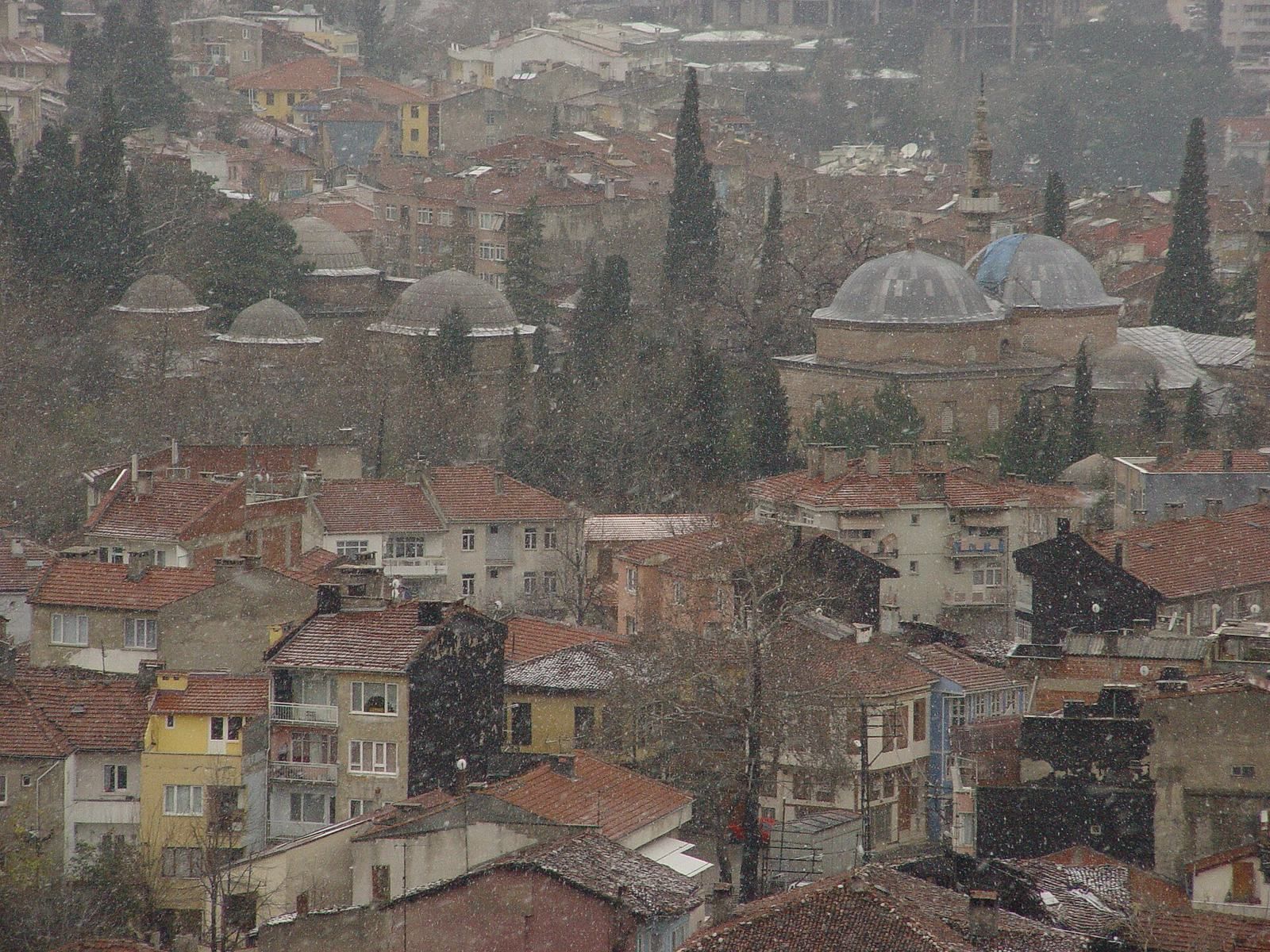
The complex includes a mosque, madrasa, bath, imaret, fountain, inscriptions, and tombs, all within an Islamic and Ottoman architectural tradition. The madrasa stands west of the mosque, while the imaret is about 20 metres northeast. The tombs other than Murad II’s lie south of the mosque and madrasa.
The mosque
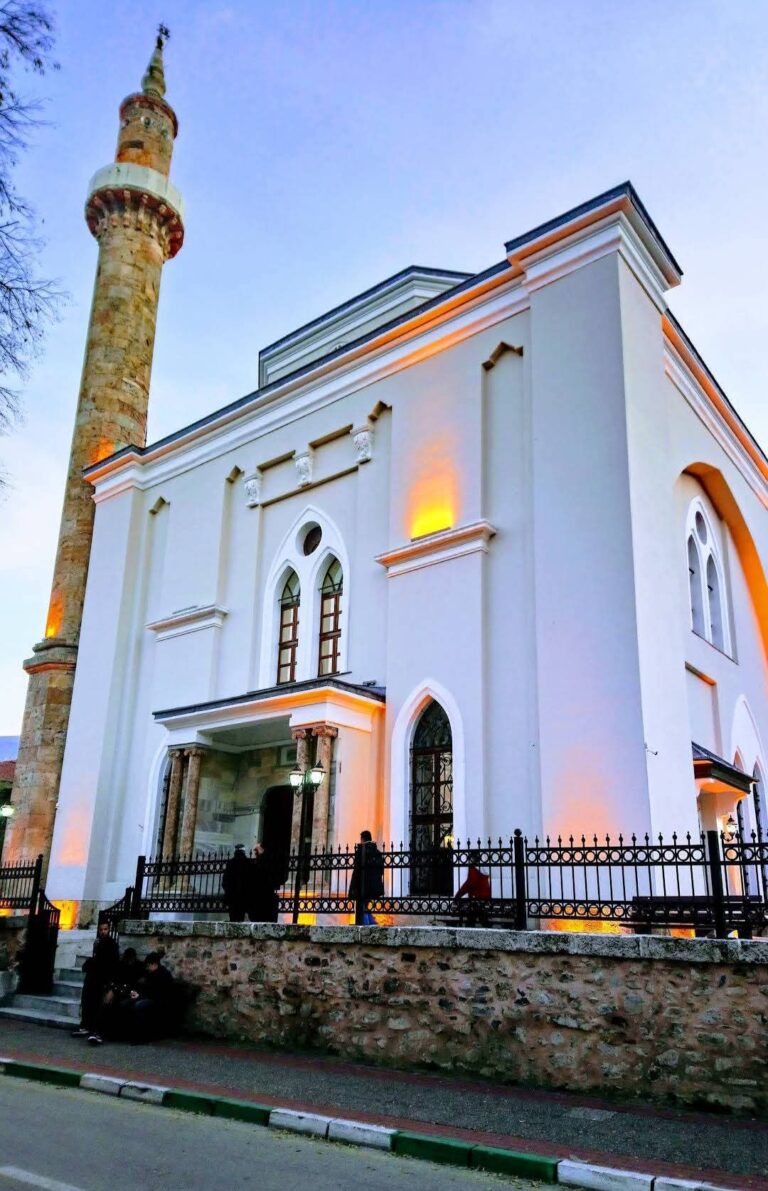
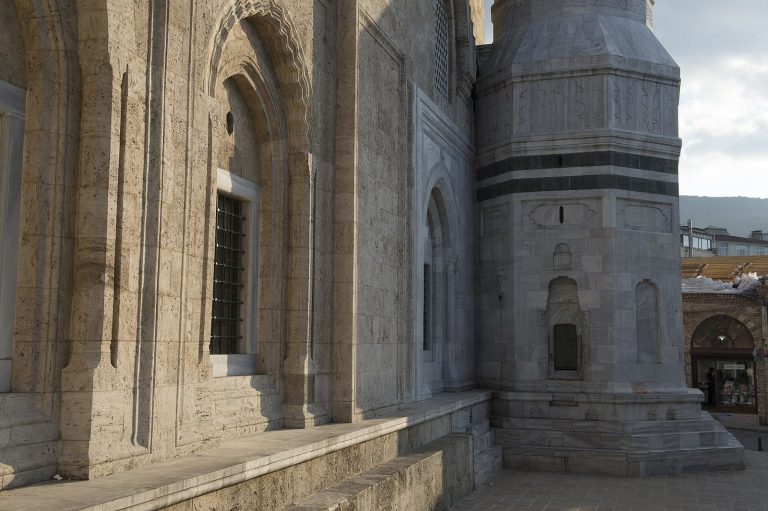
The mosque has a simplified inverted-T layout, with a central axis and spaces extending to either side. A domed entrance porch leads to a building with four major domes, constructed in brick, and two minarets.
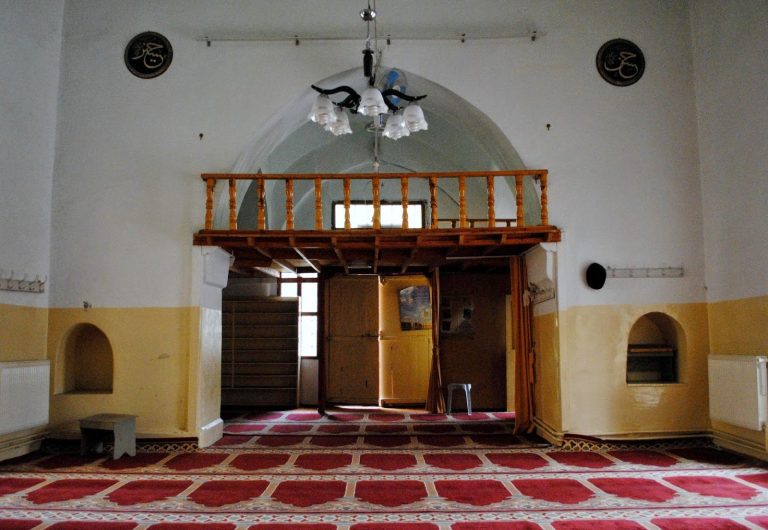
Turquoise and dark-blue hexagonal tiles decorate the interior. The plaster mihrab, the niche that indicates the direction of prayer, has Rococo decoration, an ornate style that developed in eighteenth-century Europe. After repairs following the 1855 earthquake, the mosque received a wooden platform for the muezzin, the official who calls worshippers to prayer, and a wooden ceiling centerpiece patterned with geometric designs based on 24-pointed stars.
Teaching and service buildings
Madrasa
The madrasa’s central courtyard is surrounded by sixteen student cells, with a domed classroom at the rear. Brick and stone form the exterior; dark-blue and turquoise tiles decorate the interior, and brickwork embellishes the outer entrance. An inscription on the mosque states that Murad II also built the madrasa in 1426.
Imaret
The imaret was an Ottoman charitable institution commonly associated with providing food or other services. This building is made of rubble stone and has a roof covered with grooved tiles. It now serves as a restaurant.
Bath
The bath is divided into a cold room, a warm room, two private bathing chambers, and a furnace room.
Tomb buildings
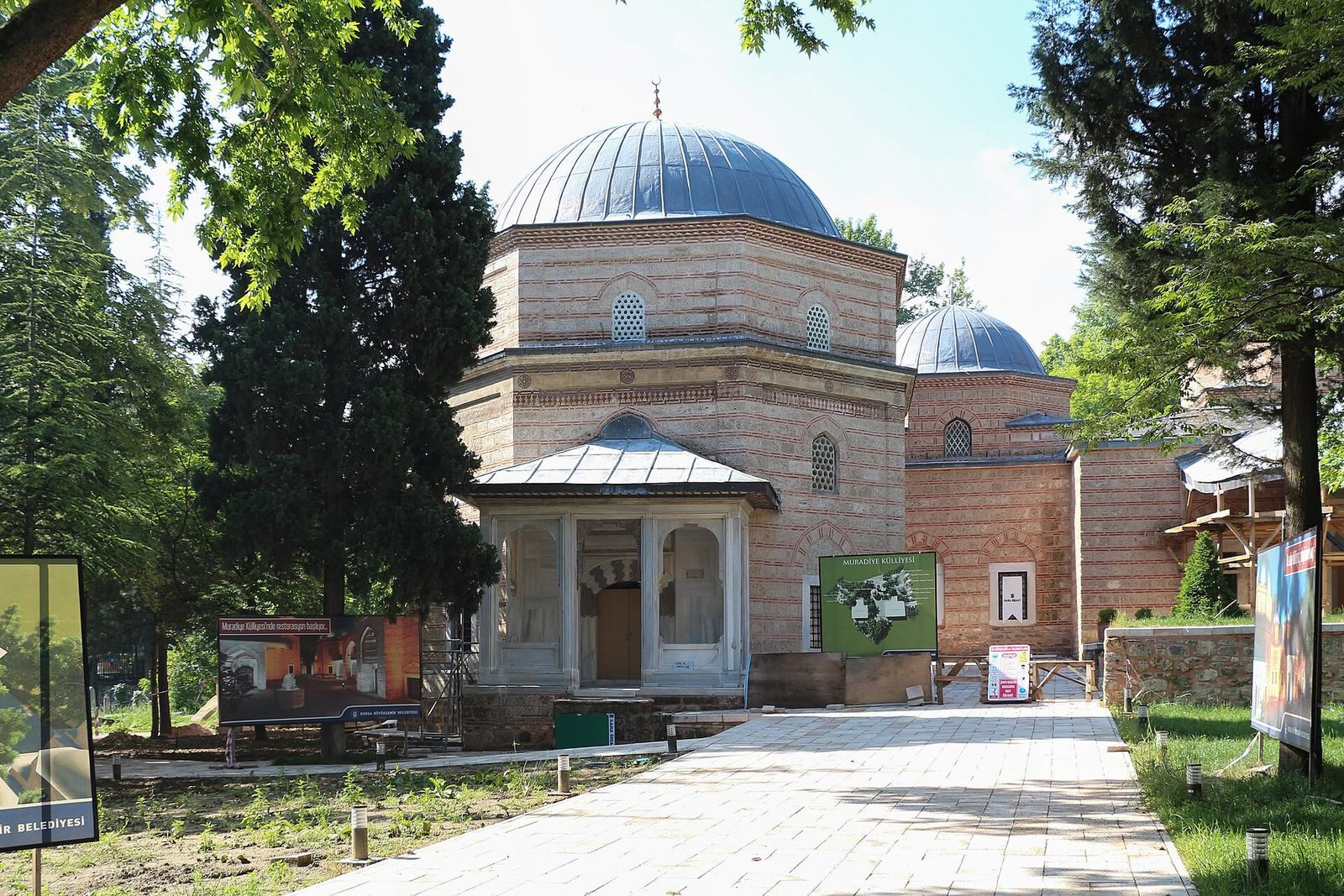
The complex contains twelve tomb buildings. Most are decorated with glazed tiles in varied colors, predominantly blue, and most have a mihrab niche in the south wall. The tombs of Şehzade Mustafa and Mahidevran Hatun instead feature sixteenth-century painted Iznik tiles, ceramics associated with the Ottoman tile-making center of Iznik.
Murad II’s tomb
The largest tomb in the complex has a square plan and brick-and-stone walls. Its dome is open at the top, with a vaulted gallery encircling it. The gallery rests on columns topped by capitals, the uppermost parts of columns, shaped in forms associated with the Byzantine Empire. A wooden canopy above the entrance is carved in relief with star patterns, and an annex contains additional tombs.
Cem Sultan’s tomb
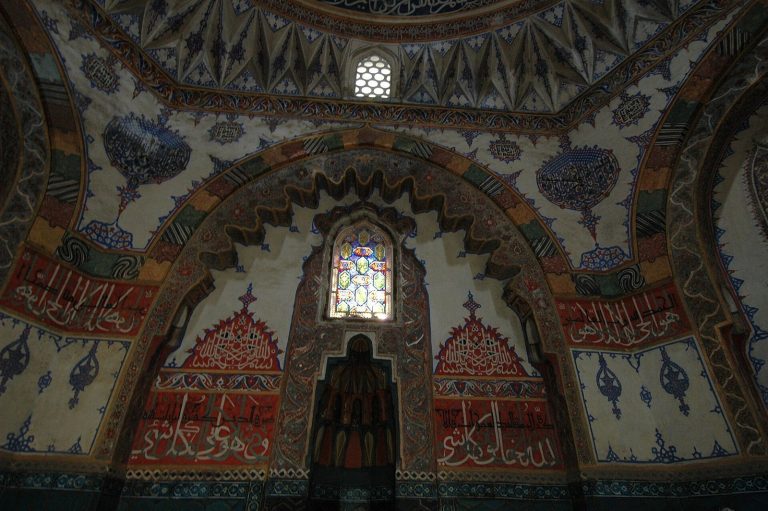
The tomb now associated with Cem Sultan has the complex’s richest decoration. Turquoise and dark-blue hexagonal tiles cover its walls to a height of 2.35 metres and are edged with gilded borders. Painted designs cover the arches, the panels enclosed by them, the supporting structure beneath the dome, and the dome itself. Cypress patterns appear in decorative plasterwork.
Gülşah Hatun’s tomb
Gülşah Hatun’s tomb is a small, plain building. Its painted decoration has worn away.
Şehzade Mahmud’s tomb
Şehzade Mahmud’s tomb is among the complex’s most richly tiled buildings.
Şehzade Mustafa and Mahidevran Hatun’s tomb
The tombs of Şehzade Mustafa and Mahidevran Hatun have painted, multicolored Iznik tiles. Mustafa’s tomb also has original wall tiles bearing gilded Quranic verses. A niche and a cupboard occupy each inner corner beside the entrance.
Open tombs
The Saraylılar and Ebe (Gülbahar) Hatun tombs are open tomb structures. The Ebe Hatun tomb is the most modest of Bursa’s dynastic tombs.