Morden Tower: A Medieval Town-Wall Tower and Poetry Venue in Newcastle
Site at a Glance
- Rating
- 4.2
- Popularity
- Low
- Country
- United Kingdom
- Primary era
- Medieval
- Eras represented
- Medieval
- Civilizations
- English
- Site type
- Military
- Remains
- Tower
On this page8 sections
History
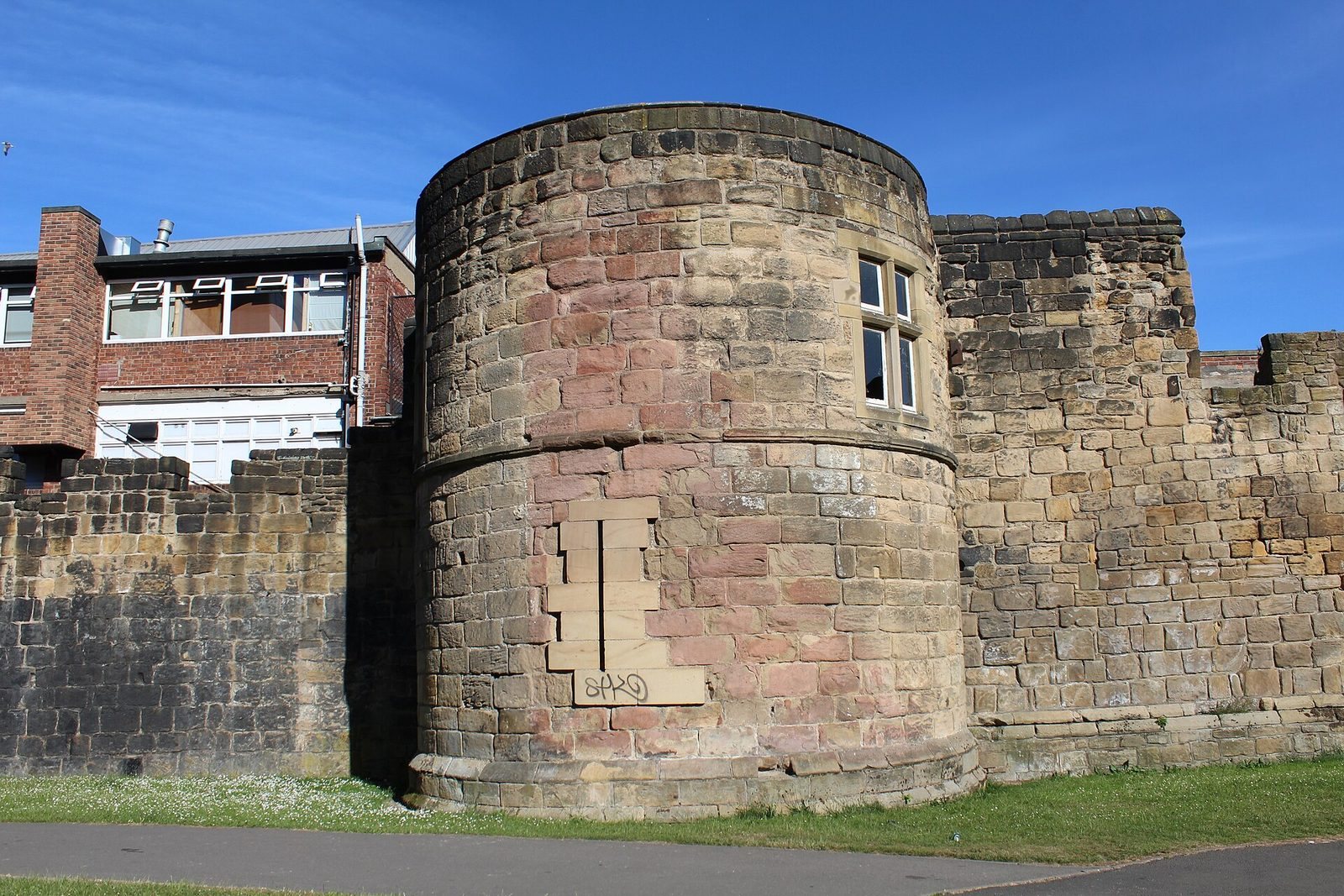
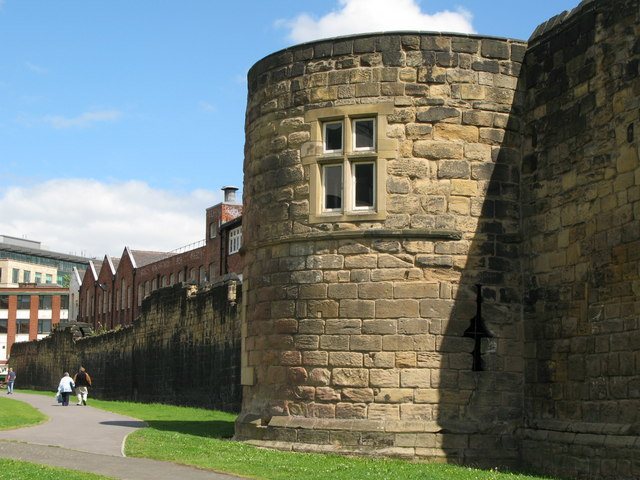
Morden Tower is a medieval defensive tower on the West Walls in Newcastle, United Kingdom. Built around 1290, it formed part of the town’s medieval wall.
From wall tower to trade company
From the sixteenth century, the tower housed the Company of Plumbers, Plasterers and Glaziers, a trade organization representing those crafts.
The poetry years
In June 1964, Tom and Connie Pickard took the lease, and Connie became the tower’s custodian. They established it as a venue for poetry readings. It became a major focus of the Newcastle Poetry Revival, a period of heightened poetry activity in the city, and gained a national and international reputation, particularly for readings by Beat Generation poets, associated with a postwar literary movement especially linked to American writers, and Black Mountain poets, experimental writers connected with Black Mountain College in North Carolina.
Pete Brown gave the first reading at the tower on 16 June 1964, Bloomsday, which commemorates the events of James Joyce’s novel Ulysses. On 22 December 1965, Basil Bunting gave the first public reading of his poem Briggflatts there. Allen Ginsberg presented the first European reading of Kaddish at Morden Tower, and Ed Dorn gave the first European reading of Gunslinger. The readings connected local audiences with writing from Edinburgh, Paris, San Francisco, Greenwich Village, Liverpool and Ladbroke Grove. During the 1960s and 1970s, the tower also inspired counterculture ventures and served as an outpost for a project associated with Scottish writer and counterculture figure Alexander Trocchi.
Publications, music and protection
Three publications were associated with the tower. King Ida’s Watch Chain (1965) collected poems by Bunting in a new-format magazine designed by Richard Hamilton. Hamilton also designed the cover and supplied photographs for Bunting’s The Spoils (1965), distributed by Migrant Press. In 1990, the tower and Bloodaxe Books published High on the Wall: A Morden Tower Anthology, edited by Gordon Brown to mark the tower’s first 25 years.
The tower also hosted experimental music. In 1983, Whitehouse performed there with Ramleh and The New Blockaders. The performance became notorious after Whitehouse member William Bennett slapped a woman in the audience, prompting most of those present to leave in protest. Morden Tower is protected as a Scheduled Ancient Monument, a legally protected historic or archaeological site, and is a Grade I listed building, the highest listed-building category in England.
Remains
The tower and its setting
West Walls
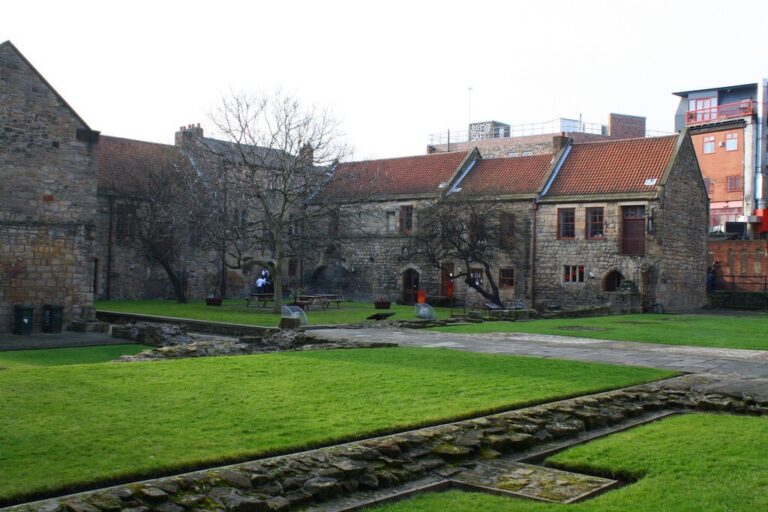
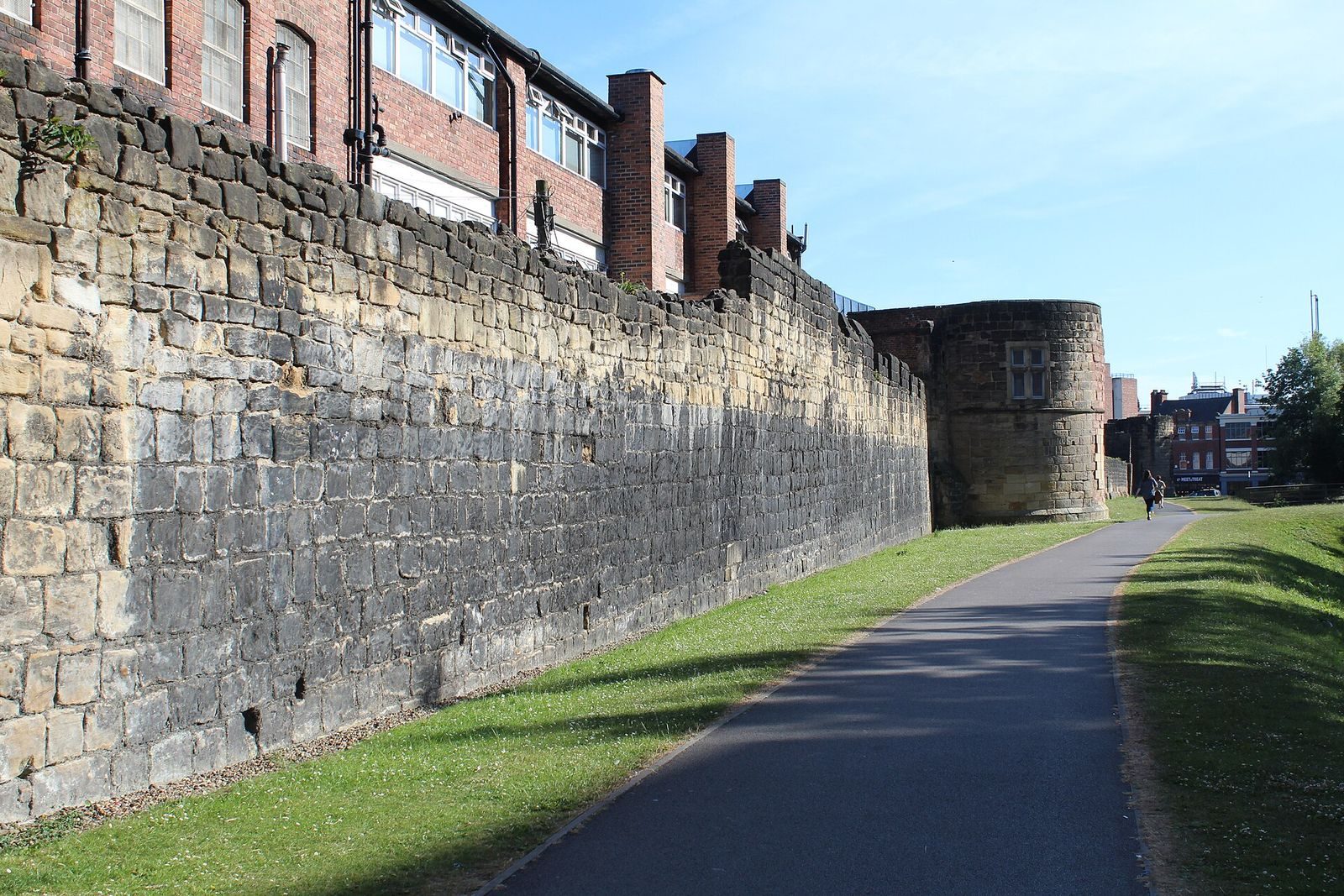
Morden Tower stands on Back Stowell Street as part of Newcastle’s West Walls. It is a drum tower, a rounded tower projecting from a defensive wall, and one of five surviving towers from the sixteen built into the medieval town wall. The tower and wall occupy ground that slopes southward, within the grounds of the Dominican community, whose friars were traditionally known as Blackfriars. Other buildings from the precinct also survive.
Upper room and book collection
The tower’s upper room is a simple, intimate space. Poets and audiences recognized it as well suited to spoken poetry. The room also served as a book room, holding books and pamphlets assembled by Tom and Connie Pickard, including material that was then difficult to find in bookshops.