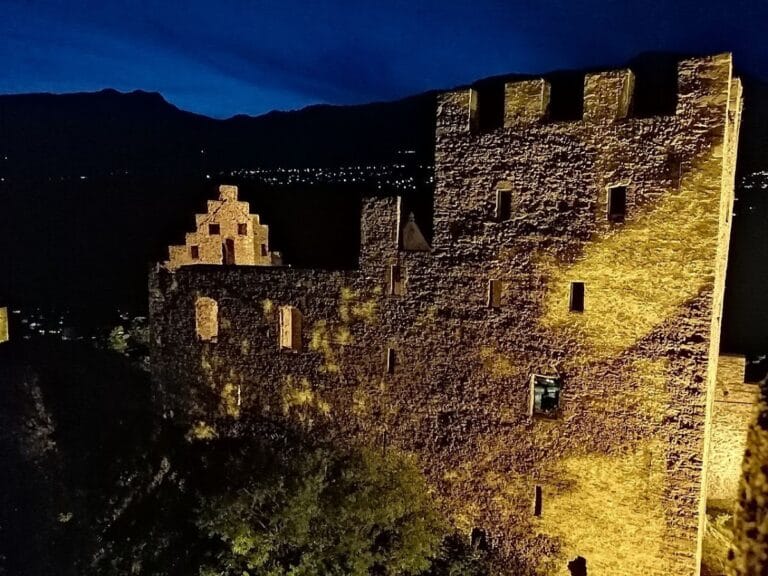
Montorge Castle Ruin: A Medieval Savoyard Fortress in Switzerland


Site at a Glance
- Rating
- 4.7
- Popularity
- Low
- Country
- Switzerland
- Primary era
- Medieval
- Eras represented
- Medieval
- Civilizations
- Unclassified
- Site type
- Military
- Remains
- Castle
On this page10 sections
History
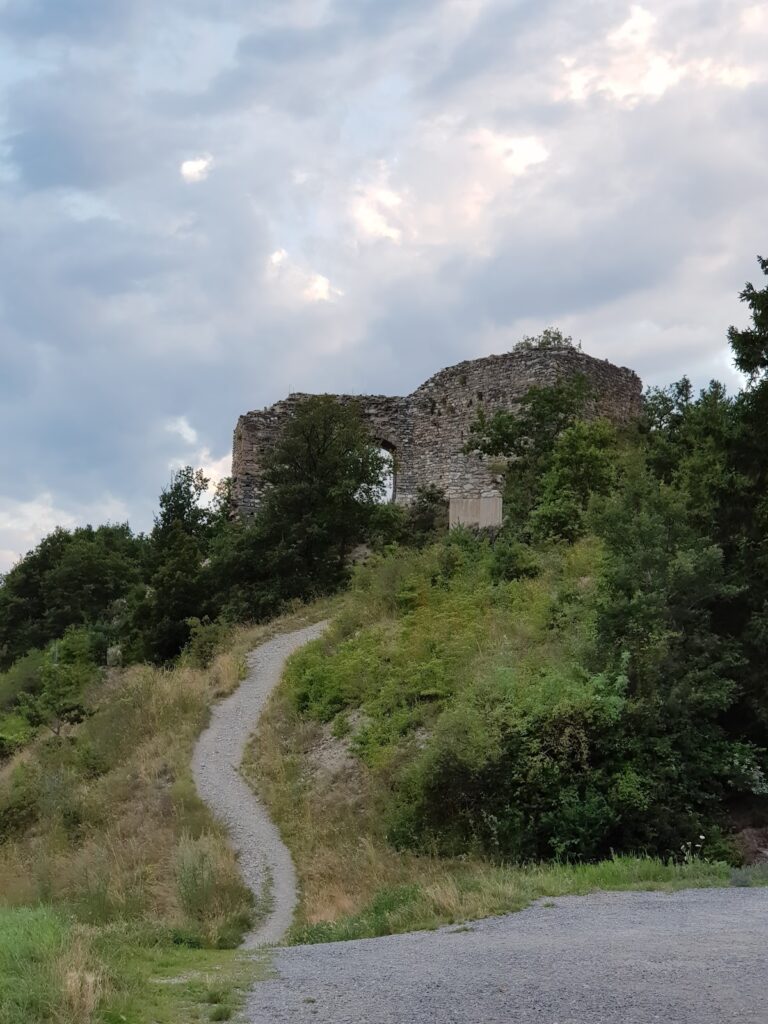
Montorge castle ruin is the remains of a medieval hill and rock castle above Sion, Switzerland, built around 1230 for the House of Savoy. Aymon de Chablais, son of Count Thomas I of Savoy, established the fortress on elevated ground overlooking routes into the Upper Valais.
A disputed Savoyard fortress
The castle stood on land belonging to the Bishop of Sion, who opposed its construction. The dispute developed into military conflict between the episcopal and Savoyard powers. In 1260, an agreement between Peter II of Savoy and Bishop Henri de Rarogne fixed their frontier at the Morge River. It also required the destruction of Montorge, which lay on the bishop’s side of the boundary. The Savoyards delayed carrying out the order.
In 1264, the bishop captured the castle by force but chose not to destroy it and annulled the earlier agreement. Soon afterward, Bishop Pierre d’Oron had Montorge renovated and supplied with a garrison, giving the fortress a renewed military role.
Fourteenth-century conflict
During the middle of the fourteenth century, Upper Valais troops under Antoine de la Tour threatened the lands of Bishop Witschard Tavel. Tavel sought help from Count Amédée VI of Savoy, who used the situation to invade Sion and recover Montorge Castle. The struggle contributed to a civil war in 1364, followed by the murder of Bishop Tavel at Soie Castle in 1375. Montorge subsequently returned to Savoyard control.
The Raron Affair and destruction
At the beginning of the fifteenth century, the Raron family gained control of the castle. Its leading figures included Bishop William II of Raron, also known as William V, and the governor Witschard von Raron. Their unpopular rule provoked the Raron Affair, a late-medieval political and armed rebellion by Upper Valais communities against the family’s influence.
In 1417, Montorge Castle was destroyed during the revolt, together with the nearby castles of Beauregard, Soie, and Tourbillon. It was never rebuilt. Archaeological research carried out between 2002 and 2005 was accompanied by consolidation of the masonry and improvements to access to the ruin. Montorge is classified as a Swiss historical monument of regional importance.
Remains
The ruins occupy the summit of the rocky Mont d’Orge, about 2 kilometres west of Sion, at an elevation of 782 metres. Built in stone masonry, the medieval fortress used the elevated rock for defense and surveillance over the Valais valley. Its layout was organized around a courtyard, approached along the ridge and protected by successive ditches, entrances, and defensive structures.
Approach and courtyard defenses
Ridge approach and entrances
The original approach followed the ridge and crossed a ditch cut into the rock by a drawbridge, a movable bridge that could be raised across the defensive gap. The route passed around the large tower before reaching a second entrance, which was also protected by a ditch and drawbridge. A heavily built gate then led into the courtyard. Parts of the gate frame and large tower survive.
Central courtyard buildings
A central building stood within the courtyard. Its lower level remains distinguishable, including a cellar and a water cistern. Two annex buildings occupied the area south of the central building, forming part of the internal arrangement of the fortress.
Defensive walls
Strong walls enclosed the northern and southern sides of the courtyard. The southern section is preserved most clearly and retains visible loopholes and latrines, features incorporated into the defensive and practical organization of the castle.
Western round tower
A round tower dominated the western side of Montorge. It was probably about 15 metres high and stood behind another defensive ditch. Archaeological investigations between 2002 and 2005 uncovered its foundations, adding evidence for the fortress’s western defensive line.