Monastery St. Peter: A Dominican Nunnery in Bludenz, Austria
Site at a Glance
- Rating
- 4.5
- Popularity
- Very Low
- Country
- Austria
- Primary era
- Early Modern
- External website
- Open
- Eras represented
- Medieval, Early Modern
- Civilizations
- Habsburg, Holy Roman Empire
- Site type
- Religious
- Remains
- Monastery
On this page14 sections
History
Monastery St. Peter is a Roman Catholic Dominican nunnery in Bludenz, Austria, whose origins date to a religious foundation established in the medieval period. The monastic building was begun in 1286 and expanded until 1354. Dedicated to Saint Peter, one of the Twelve Apostles of Jesus and traditionally regarded in Catholic Christianity as the first pope, the monastery is described as the oldest still-existing monastery in Vorarlberg. It belongs within the Roman Catholic Archdiocese of Salzburg.
Foundation and Dominican administration
In 1278, Count Hugo I of Werdenberg-Heiligenberg bequeathed the right of patronage over St. Peter’s Church, east of Bludenz, to the Augustinian nuns of Ottenbach near Zurich. On 26 July that year, Chur Bishop Count Friedrich of Montfort granted the women at St. Peter the Rule of Saint Augustine, a set of religious guidelines attributed to Saint Augustine of Hippo. Their earlier status is uncertain. They may have been Beguines, women living in a religious community without taking conventional monastic vows, or they may already have belonged to Ottenbach.
The church’s earlier history is poorly documented, although its dedication suggests an old religious tradition at the site. Responsibility for the community later passed to the Dominicans, a Roman Catholic order founded in the early thirteenth century and known for preaching, theological study, and organized communities of nuns and friars. An indulgence document from 1295 connected benefits for visitors and benefactors with the feast of Saint Dominic. In medieval Catholic practice, an indulgence was a remission of temporal punishment associated with sin and linked to specified religious acts. By about 1340, the community was explicitly identified with the Order of Preachers, the formal name of the Dominican Order.
Pilgrimage, destruction, and rebuilding
Monastery St. Peter became a pilgrimage destination and granted indulgences to visitors. For a long period, it provided for the daughters of noble families from the Walgau and Rhine Valley. Later, its community also received daughters from the region’s bourgeois and farming upper classes, giving the institution a continuing role in the social and religious life of the surrounding area.
The plague that struck Bludenz in 1560 killed all but one of the sisters, and the monastery stood deserted for sixteen years. Fires in 1552 and 1576 had already damaged the original Augustinian building. Dominican nuns from Hirschthal in Kennelbach subsequently took over the monastery. The buildings were restored between 1613 and 1616. During the Prättigau War in 1622, a conflict affecting the region, all but the three oldest sisters fled. The building was raised by an additional storey in 1656.
The present complex was built between 1707 and 1709 and enlarged between 1721 and 1723. The monastery church was consecrated in 1730. Its earlier church complex had been enlarged between 1640 and 1644 by the builder Hans Schueler. In 1796, Tyrolean territorial governor Ignaz Anton von Indermauer was murdered inside the monastery by participants in a peasant revolt, adding a violent episode to the institution’s history.
Military, educational, and modern use
From 1805 to 1814, the monastery housed a military hospital. In 1939, the south wing was adapted for the State Upper School for Boys, later known as the Bludenz Gymnasium. A Gymnasium is a secondary school in the German-speaking educational tradition, generally preparing pupils for the Matura, the school-leaving examination for higher education.
On 9 December 1941, the German Reich confiscated the Dominican nuns’ entire property, and the monastery was dissolved until 1945. A military hospital operated in the school during 1944 and 1945. French occupation troops were stationed in the monastery from May 1945. School use resumed in September 1950 as an Austrian state secondary school and continued until the school moved to a new building in Bludenz’s Unterfeld in 1961.
The monastery church was restored in 1948 and again in 1964. Its interior underwent further restoration in 1997 and 1998, while the entire monastery was extensively renovated in 2006 and 2007 and ceremonially reopened in September 2007. These interventions preserved a complex that had passed through religious, military, educational, and community uses over many centuries.
Landholding and urban setting
The monastery purchased the mountain pasture called Nonnenalpe above Bürs on 22 April 1521. Located on the northern slope of the Rätikon, a mountain range in the Alps along the border region of Vorarlberg, Liechtenstein, and Switzerland, the pasture stands at an elevation of 1,637 metres and continues to be used by the monastery.
Monastery St. Peter stands near the former eastern city gate of Bludenz, known as the Montafon Gate or Capuchin Gate. The gate formed part of the town’s former fortifications and stood beside the road leading over the Arlberg and into the Montafon. It and other sections of the fortifications were demolished in 1846.
Remains
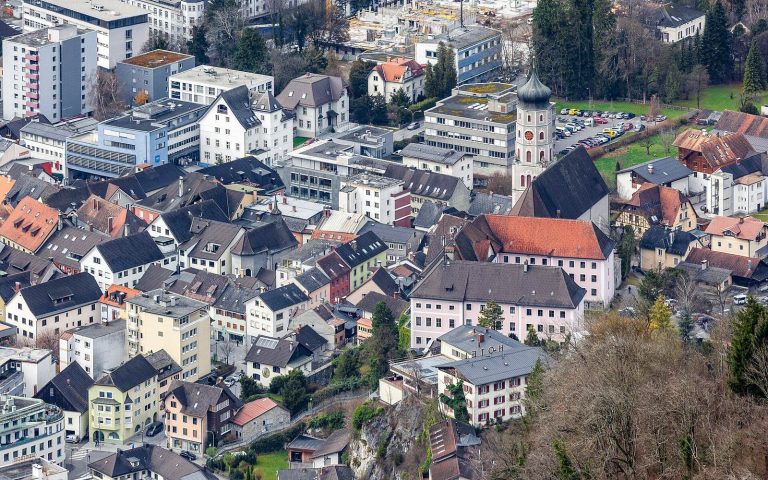
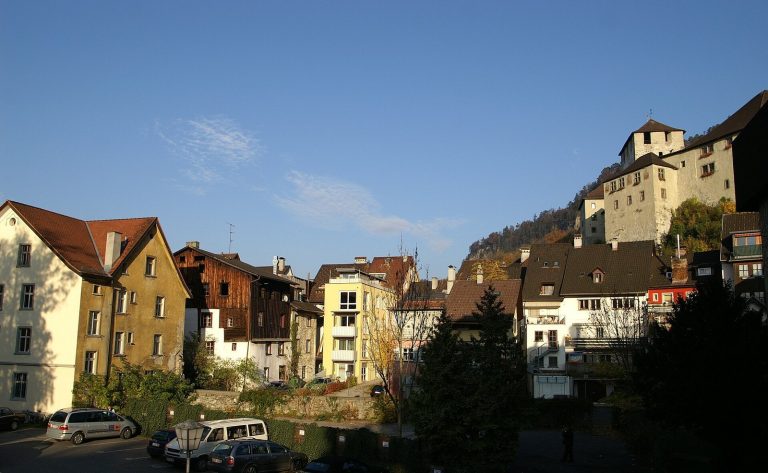
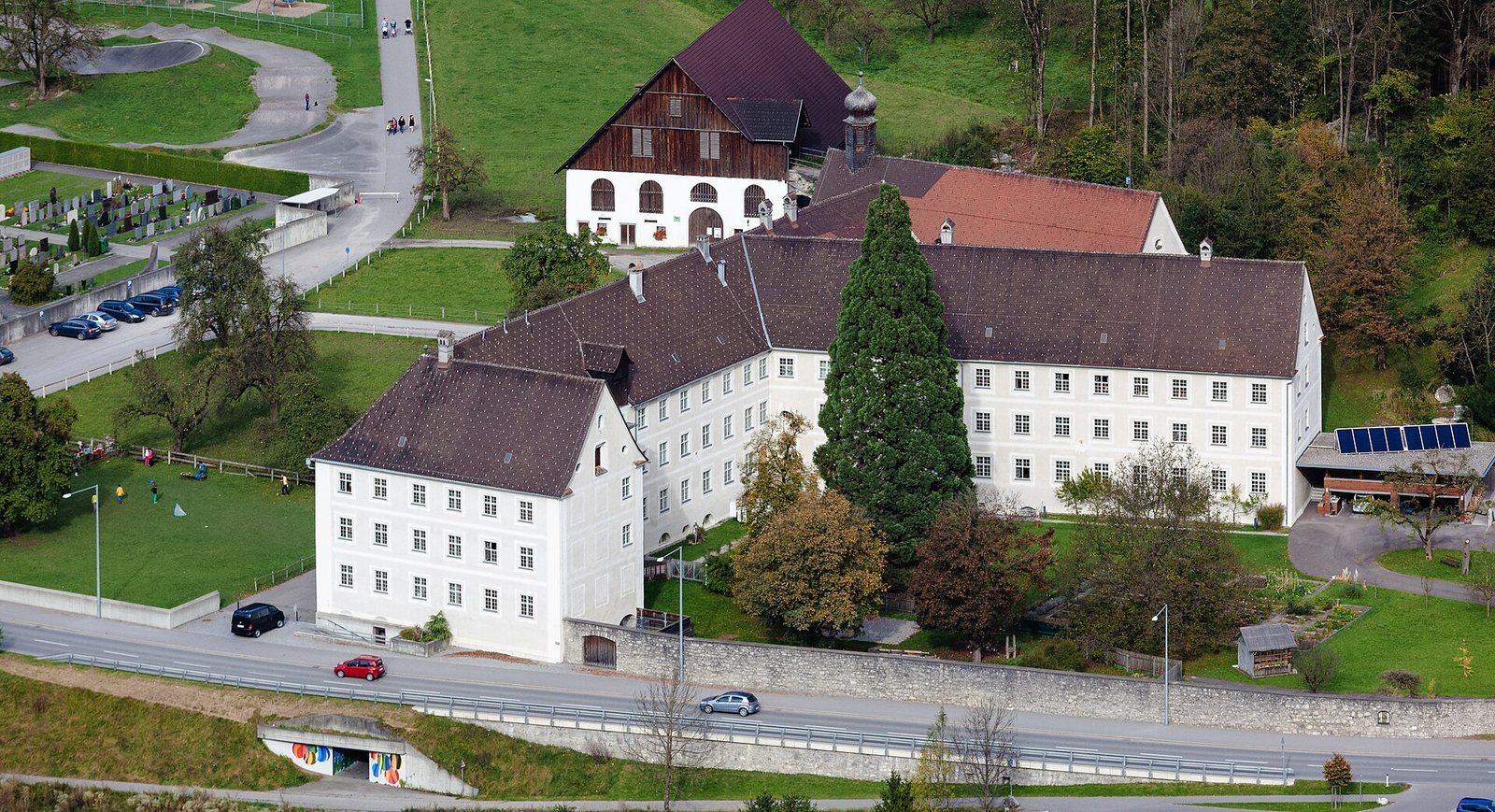
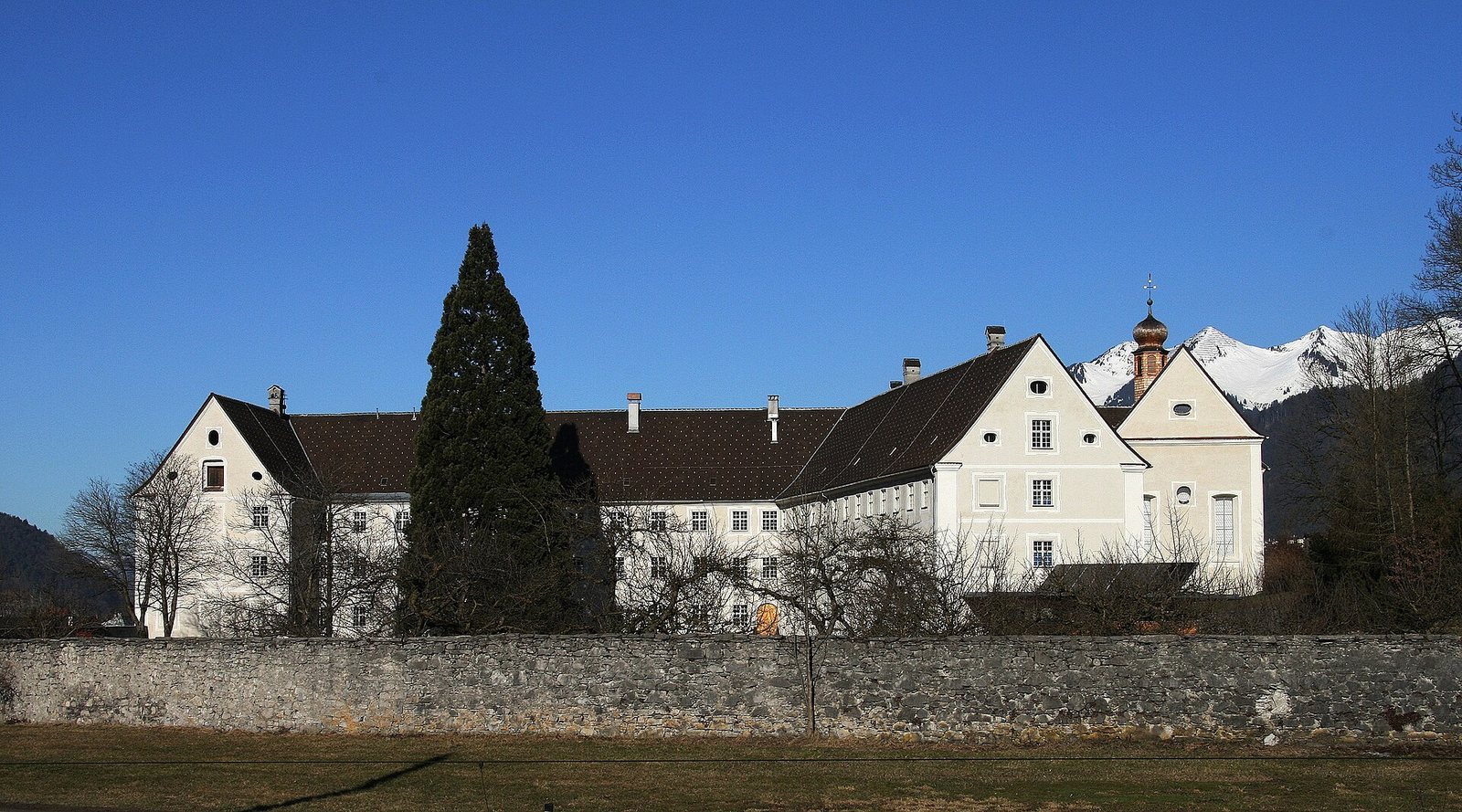
The surviving complex stands at the eastern edge of Bludenz, where the entrances to the Montafon and Klostertal valleys meet. Its present ensemble is chiefly the result of construction in 1707 to 1709 and enlargement in 1721 to 1723, while earlier fabric reflects the medieval foundation, later fires, restoration, and the raising of the building by one storey in 1656.
Church and monastic buildings
Monastery church
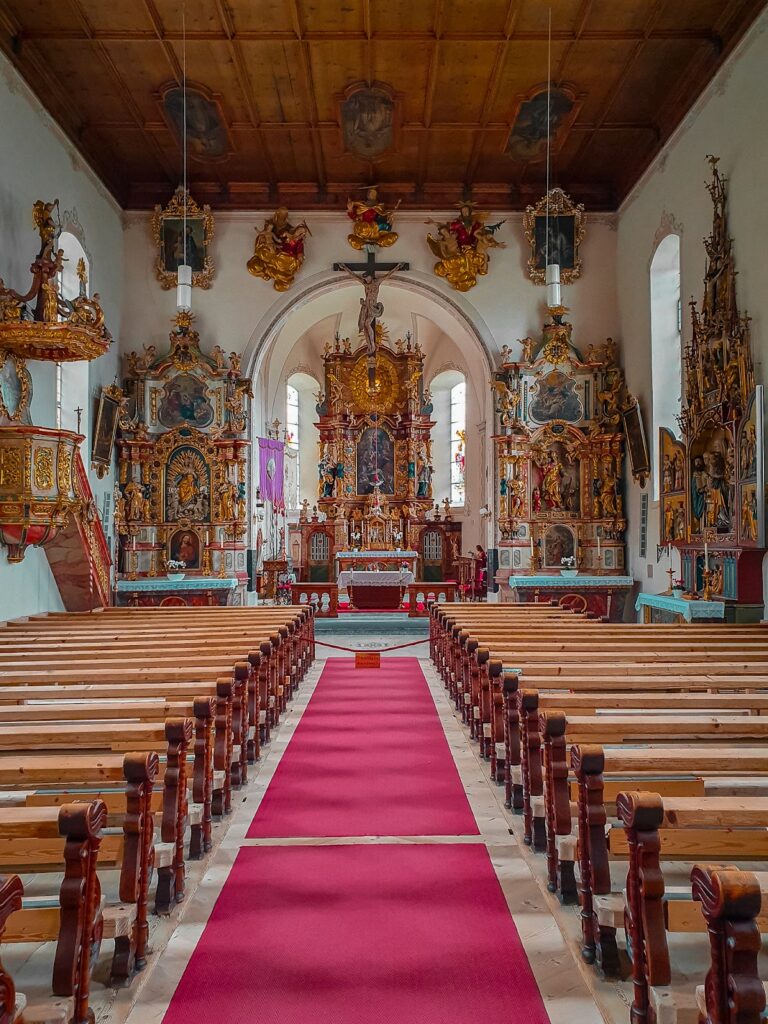
The church forms the religious centre of the complex and is dedicated to Saint Peter. The church complex was enlarged between 1640 and 1644, and the present church was consecrated in 1730. A crucifix dated 1735 stands on the altar wall. The late Baroque sculptor Johann Ladner of Tyrol made it. The church was restored in 1948 and 1964, followed by an interior restoration in 1997 and 1998.
Monastery building
The first monastic building was begun in 1286 and expanded through 1354. Fires in 1552 and 1576 damaged the building, which was restored between 1613 and 1616. The structure was raised by one storey in 1656 before the present ensemble was built in 1707 to 1709 and enlarged in 1721 to 1723. The south wing later contained school rooms, including a ground-floor classroom known colloquially as “the Hole.” This room had one barred window opening onto the schoolyard. A school barrack was erected in the monastery meadow in 1952 to ease the shortage of classroom space. Comprehensive renovation of the monastery took place in 2006 and 2007.
Farm buildings and surrounding features
Farm buildings and stable
The monastery’s farm buildings and stable were destroyed by fire in 1920. Their history forms part of the working agricultural dimension of the complex, which also extended to the monastery’s mountain pasture at Nonnenalpe above Bürs.
Nonnenalpe
Nonnenalpe lies at 1,637 metres on the northern slope of the Rätikon above Bürs. Purchased by the monastery in 1521, the pasture remains in monastic use and is an associated surviving part of the institution’s landed property.
Montafon or Capuchin Gate
The former Montafon Gate, also called the Capuchin Gate, stood near the monastery as part of Bludenz’s eastern fortifications. The gate and other fortification elements were demolished in 1846.
Monastery Curve
A curve of the Arlberg Railway passes the southeast corner of the complex. This section of the railway is known as the Monastery Curve and remains a named feature of the site’s surrounding urban setting.