Monastery of Saint Paul the Anchorite: A Coptic Orthodox Monastery in Egypt
Site at a Glance
- Rating
- 4.9
- Popularity
- Medium
- Country
- Egypt
- Primary era
- Early Modern
- External website
- Open
- Eras represented
- Classical, Medieval, Early Modern, Modern
- Civilizations
- Ottoman, Roman
- Site type
- Religious
- Remains
- Fortified Monastery
On this page15 sections
History
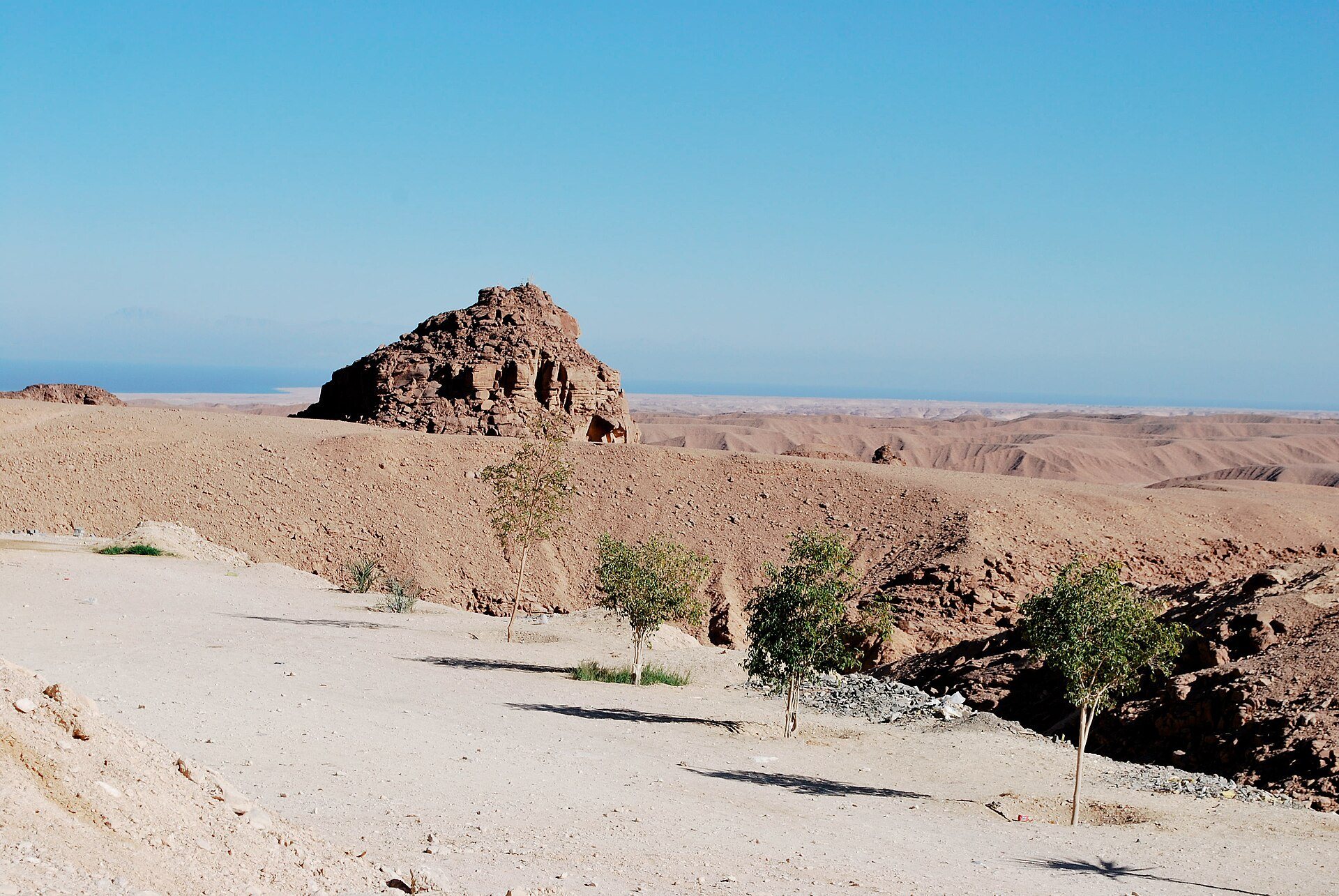
The Monastery of Saint Paul the Anchorite is a Coptic Orthodox monastery in Egypt, located on the Galala plateau near the Red Sea Mountains. Its history is associated with Paul of Thebes, traditionally regarded as the first Christian hermit, who sought refuge in the Eastern Desert around AD 250 during the persecution linked with the Roman emperor Decius. Paul is believed to have lived in a cave there for more than eighty years, or almost ninety years, as an anchorite, a religious solitary who withdrew from ordinary society for ascetic devotion.
Paul of Thebes and the First Monks
The monastery was established over or around Paul’s cave. Its foundation is dated variously to the third or fourth century, while another tradition places its establishment in the late fourth or early fifth century. In every formulation, the institution grew from the memory of Paul’s desert retreat and continued from late antiquity into the modern period.
Saint Jerome’s account, written in AD 375–377, relates that disciples of Anthony the Great learned of Paul shortly before his death. Anthony was an early Egyptian monk whose followers helped shape Christian monastic traditions. Some of these disciples became among the first monks associated with the monastery. Melkite monks may have occupied it briefly, followed by Egyptian and Syrian monks, and Syrian monks may still have been present during the first half of the fifteenth century.
Patriarchal Exile and Repeated Attacks
An isolated Ethiopian reference states that Gabriel II, the seventieth Coptic Orthodox pope, was banished to the monastery for three years during his papacy, which lasted from AD 1131 to 1145. In the Coptic Orthodox Church, the pope is the patriarch and senior bishop.
Bedouin attacks brought repeated destruction. In 1484 many monks were killed and the library was burned. The monastery was attacked and looted twice more during the second half of the sixteenth century, after which the monks abandoned it. It remained deserted for 119 years.
Repopulation and Rebuilding
Monks from the Monastery of Saint Anthony later returned under the patronage of Pope John XVI of Alexandria, who promoted extensive reconstruction in 1701. An earlier rebuilding effort had also received the support of Pope Gabriel VII of Alexandria, whose papacy lasted from 1526 to 1569. Gabriel VII sent ten monks from the Syrian Monastery to repopulate the community.
In 1727, the Coptic patriarch John XVII, who had previously been a monk at Saint Paul’s, founded the Church of the Archangel Michael. In 1781, the prominent Coptic official Ibrahim Al-Jawhari built the Church of Saint Mercurius. These rebuilding efforts formed part of the monastery’s renewed life after its long abandonment.
The monastery remains an active Coptic Orthodox institution. Its historical importance rests on its association with Paul the Anchorite and on the continuity of its monastic community, buildings, and library through repeated attacks, destruction, and periods of renewal.
Remains
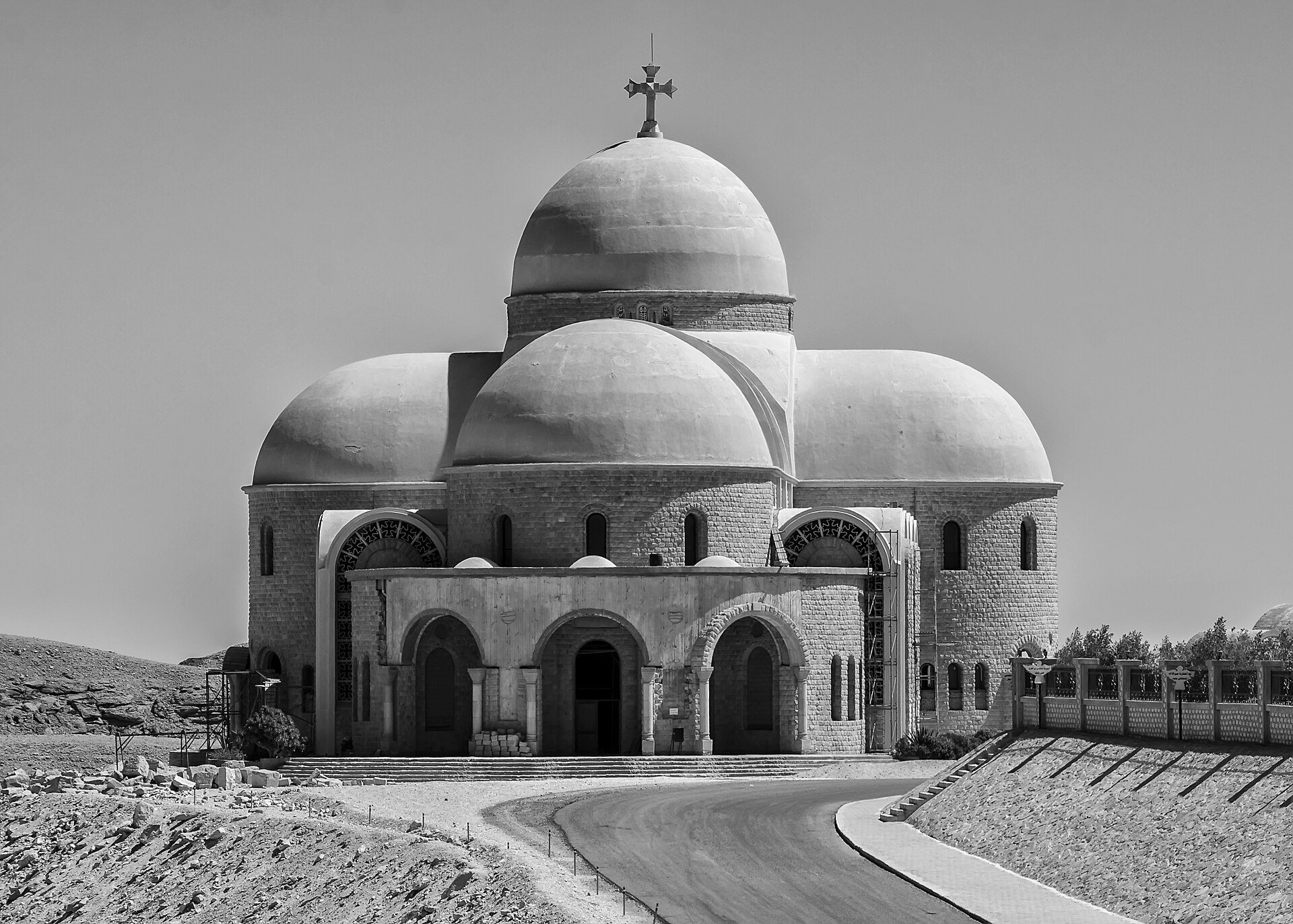
The monastery occupies sandstone terrain among elevated desert plateaus on the Galala plateau. High walls, constructed during the eighteenth and nineteenth centuries, enclose the complex. Within them are churches, caves, a fortified keep, service buildings, springs, and a library connected with the continuing monastic community.
The Cave Churches
Church of Saint Paul
The principal church is dedicated to Saint Paul and incorporates the cave associated with his hermitage. Soon after Paul’s death, the cave was converted into a chapel. Its interior was later cut and altered in the rock, creating an underground church with two rooms. The first is a haykal, or sanctuary chapel, dedicated to Paul and decorated with frescoes from the twelfth and fourteenth centuries. The second is a small nave containing a cenotaph, a commemorative tomb or monument that does not necessarily contain the person’s remains.
Church of Saint Mercurius
A rock-cut corridor and staircase rise from the underground church to the Church of Saint Mercurius, also called Abu Sayfayn. Saint Mercurius is traditionally depicted as a mounted Christian martyr holding two swords, and Abu Sayfayn means “Father of Two Swords.” Built in 1781, the church incorporates Paul’s cave church and contains three domes and barrel vaults.
Principal Church and Desert Caves
Church of the Archangel Michael
The largest church in the monastery is dedicated to the Archangel Michael and was built in 1727. Its main nave is divided into three sections: the first for people who have not yet been baptized, the middle for the laity, and the section nearest the sanctuary for communicants.
Three separated haykals occupy the church. The southern sanctuary is dedicated to the Archangel Michael, the central sanctuary to John the Baptist, and the northern one serves as a sacristy. Decorative screens probably date from the church’s construction.
Saint Markus’s Cave
Several caves lie in the rock at the southern end of the monastery garden. One was used by Saint Markus, a fourteenth-century monk. It contains three rooms, including a chapel, and its arrangement was probably modeled on the cave associated with Paul before that cave became a church.
Fortifications and Community Buildings
Sandstone Keep
The monastery’s sandstone keep rises through four storeys. Its entrance is on the second storey and connects with the Church of Saint Mercurius by a wooden drawbridge. Each storey contains between four and seven rooms, while the flat roof is protected by crenellations, the notched parapet used along the top of a fortified wall or tower.
Refectory, Mill, and Springs
The complex also contains an ancient refectory and a mill. One spring is traditionally believed to have served Paul during his years of seclusion. A second, known as the Pool of Mary, is traditionally associated with Mary, the sister of Moses, who is believed to have washed her feet there during the Exodus.
Library
The monastery library contains approximately 7,000 manuscripts and books. Its holdings include illustrated manuscripts, a Coptic version of the Divine Liturgy, and a commentary on the Epistle to Titus attributed to Saint John Chrysostom.