Monastery of Saint Athanasius: An Active Bulgarian Orthodox Monastery


Site at a Glance
- Rating
- 4.7
- Popularity
- Low
- Country
- Bulgaria
- Primary era
- Modern
- External website
- Open
- Eras represented
- Modern
- Civilizations
- Bulgarian, Ottoman
- Site type
- Religious
- Remains
- Monastery
On this page8 sections
History
The Monastery of Saint Athanasius is an active female Bulgarian Orthodox monastery in Bulgaria, traditionally founded by Athanasius of Alexandria in 344 after the Council of Serdica. Athanasius, also known as Athanasius the Great, was a fourth-century Christian bishop who defended Nicene Christianity against Arianism, a theological position that disputed the full divinity of Christ. Bulgarian archaeological and historical research in 2004 identified the monastery as the oldest active monastery in Europe and the oldest monastery in Bulgaria.
Foundation and medieval history
According to the foundation tradition, Athanasius was returning from the Council of Serdica, a fourth-century Christian council held at Serdica, the ancient city corresponding to modern Sofia. He stopped at a nearby Roman fortress and slept there before establishing the monastery in response to the influence of Arianism among the Goths in the Beroe region. The tradition connects the foundation with the passional of Saint Athanasius, the annals of the Patriarchate of Alexandria, and research in the Vatican Secret Archives.
An expedition led by the physician and academician Rosen Milev affirmed this tradition on 18 January 2004. Archaeological material indicates that the monastery existed during the Middle Ages, while written evidence appears from the twelfth century in the annals of Anna Comnena.
Ottoman rule and the national liberation movement
During Ottoman rule, the monastery church was wooden. The complex also served as a refuge for Paisius of Hilendar, an eighteenth-century Bulgarian monk and author associated with the development of Bulgarian historical and national consciousness, as well as for hajduk leaders, Vasil Levski, and other participants in the Bulgarian movement for national liberation from Ottoman rule.
Vasil Levski, a leading nineteenth-century Bulgarian revolutionary and organizer of that movement, visited the monastery during his travels in Bulgaria in the late nineteenth century. A hiding place associated with him is preserved among the monastic cells.
Twentieth-century rebuilding and continuing religious life
After 1944, during the communist period, a livestock shed belonging to the local agricultural cooperative stood about 100 to 150 metres from the monastery. The area later became the monastery car park. In the early 1950s, the monastic buildings were returned to ecclesiastical use. The church was restored in 1961, and the complex was renovated in the late 1970s on the initiative of the Ministry of Culture. New monastic wings were built in 1979 at the prompting of Lyudmila Zhivkova, and the present buildings are also dated to the 1980s.
Patriarch Peter VII of Alexandria visited the monastery in 2003 to venerate Saint Athanasius. He presented an icon of Anastasius the Great, a late-antique Christian saint and patriarch of Antioch, painted in Alexandria. Monks from Mount Athos donated another icon.
The monastery celebrates Saint Athanasius on 2 May, the feast of his Dormition, and also observes 18 January in memory of the saint’s final return after he had been expelled five times by the Arians from his episcopal office. Saint Petka’s feast is held annually on 14 October. A chapel dedicated to her was built during one of the monastery’s repeated revivals under Ottoman rule and was later destroyed. The monastery is maintained partly through the work and financial assistance of volunteers from nearby villages and elsewhere in Bulgaria. Pilgrims from the surrounding area commonly stay for several days, while visitors also come from abroad, including Poland and other Catholic countries.
Remains
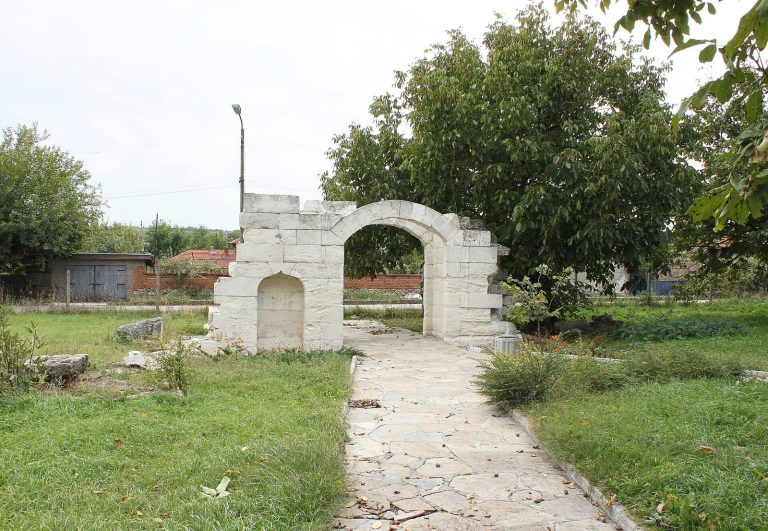
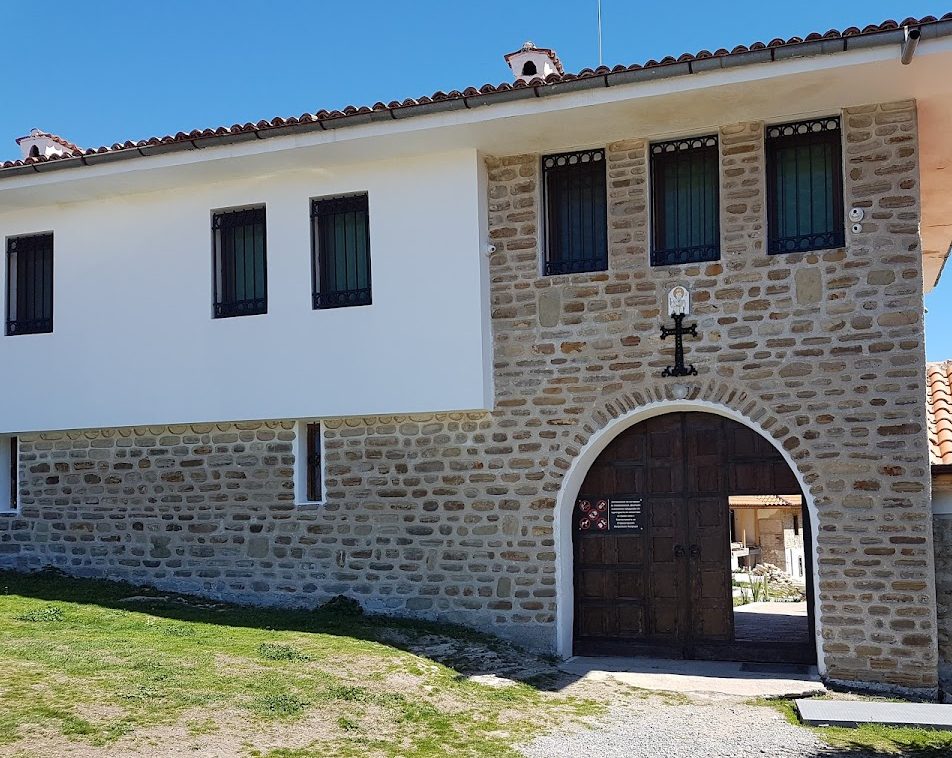
The monastery stands on a hill above Zlatna Livada, on the right bank of the Stara River, near the river’s confluence with the Maritsa and close to the remains of a Roman fortress. It lies approximately 14 kilometres from Chirpan and 53 kilometres south of Stara Zagora. The complex combines a church, monastic buildings, a cave hermitage, a sacred spring, older structures from 1840, and newer wings built in 1979 in a traditional style.
Church and monastic enclosure
The monastery church forms the religious centre of the complex. An icon of Saint Petka as a Bulgarian saint hangs above the altar. The monastic enclosure includes cells and the hiding place associated with Vasil Levski. Older buildings dating from 1840 remain unrestored, while the newer wings of 1979 and the buildings dated to the 1980s give the complex its present scale and spaciousness.
Cave hermitage and sacred spring
The Stara River separates the cave hermitage from the monastic enclosure. The hermitage is associated with the place where Saint Athanasius fasted and prayed after stopping at the Roman fortress. An ayazmo, a spring regarded in Orthodox Christian tradition as sacred and potentially healing, is also part of the complex. Local tradition attributes the discovery of its healing power to the ancient Thracians. Believers associate its water with relief for skin diseases, improved eyesight, cleansing of the internal organs, and benefits for people with tumorous illnesses. Stories also tell of people with paralysis regaining the ability to walk, while the cave itself is likewise believed to have healing effects.
Rheims Gospel and devotional objects
The monastery keeps a Bulgarian copy of the Rheims Gospel, made by Bulgarian artists and donated to the institution. The original is held in the library of Rheims. The copy is described as the first Bulgarian-language version of the sacred book over which French kings swore oaths of fidelity to God and their people for more than 200 years. The monastery also preserves the icon of Anastasius the Great donated by Patriarch Peter VII of Alexandria and another icon given by monks from Mount Athos.