Merton Priory: An Augustinian House of Learning and Diplomacy
Site at a Glance
- Popularity
- High
- Country
- United Kingdom
- Primary era
- Medieval
- Eras represented
- Medieval
- Civilizations
- English
- Site type
- Religious
- Remains
- Monastery
On this page8 sections
History
Merton Priory was an Augustinian priory founded in 1114 by Gilbert Norman, Sheriff of Surrey, in present-day Colliers Wood, within the London Borough of Merton, United Kingdom. The site was then in Surrey. By 1117, Augustinian canons from Huntingdon Priory had settled at Merton, and the priory had moved closer to the River Wandle.
Foundation and scholarship
The priory stood within the manor of Merton, a landed estate, and belonged to the Diocese of Winchester, an area administered by a bishop. The area is now within the Diocese of Southwark. The priory’s lands included cultivated fields and pasture in Surrey, estates elsewhere in England, and the right to nominate clergy to some churches. It developed into a centre of learning as well as a religious house.
Nicholas Breakspear, later Pope Adrian IV, was among its students. Thomas Becket studied there briefly around 1130 and later wore the clothing of a Merton canon. His successor as Archbishop of Canterbury, Hubert Walter, did the same. Walter de Merton probably studied at the priory in the 1230s. He established a house for Merton scholars at Old Malden, which was later transferred to Oxford and developed into Merton College. Edmund of Abingdon also wrote some of his Oxford lectures at Merton.
Royal and political events
Merton’s role extended to royal diplomacy. In 1205, King John sent one of its canons as an ambassador to Normandy. After peace talks that culminated in the Treaty of Lambeth in 1217, Prince Louis of France performed penance at the priory. He later became King Louis VIII of France.
In 1236, Henry III held a parliament at Merton, where the Statute of Merton was passed. It is regarded as the first recorded statute of the first recorded English parliament. Among its provisions, the statute allowed lords to enclose common land as long as enough pasture remained for their tenants. On 1 November 1437, shortly before his sixteenth birthday, Henry VI took part in a crowning ceremony at the priory. The precise nature of the ceremony is uncertain.
Dissolution and demolition
A survey of England’s religious institutions commissioned in 1535, the Valor Ecclesiasticus, valued Merton Priory at £960, 16 shillings and 6 pence, a relatively high sum. On 16 April 1538, John Bowles, also known as John Ramsey, surrendered the monastery, which then had 14 canons. It was demolished that year during Henry VIII’s Dissolution of the Monasteries, the closure and confiscation of England’s monastic houses. Much of its masonry was reused at Nonsuch Palace.
Remains
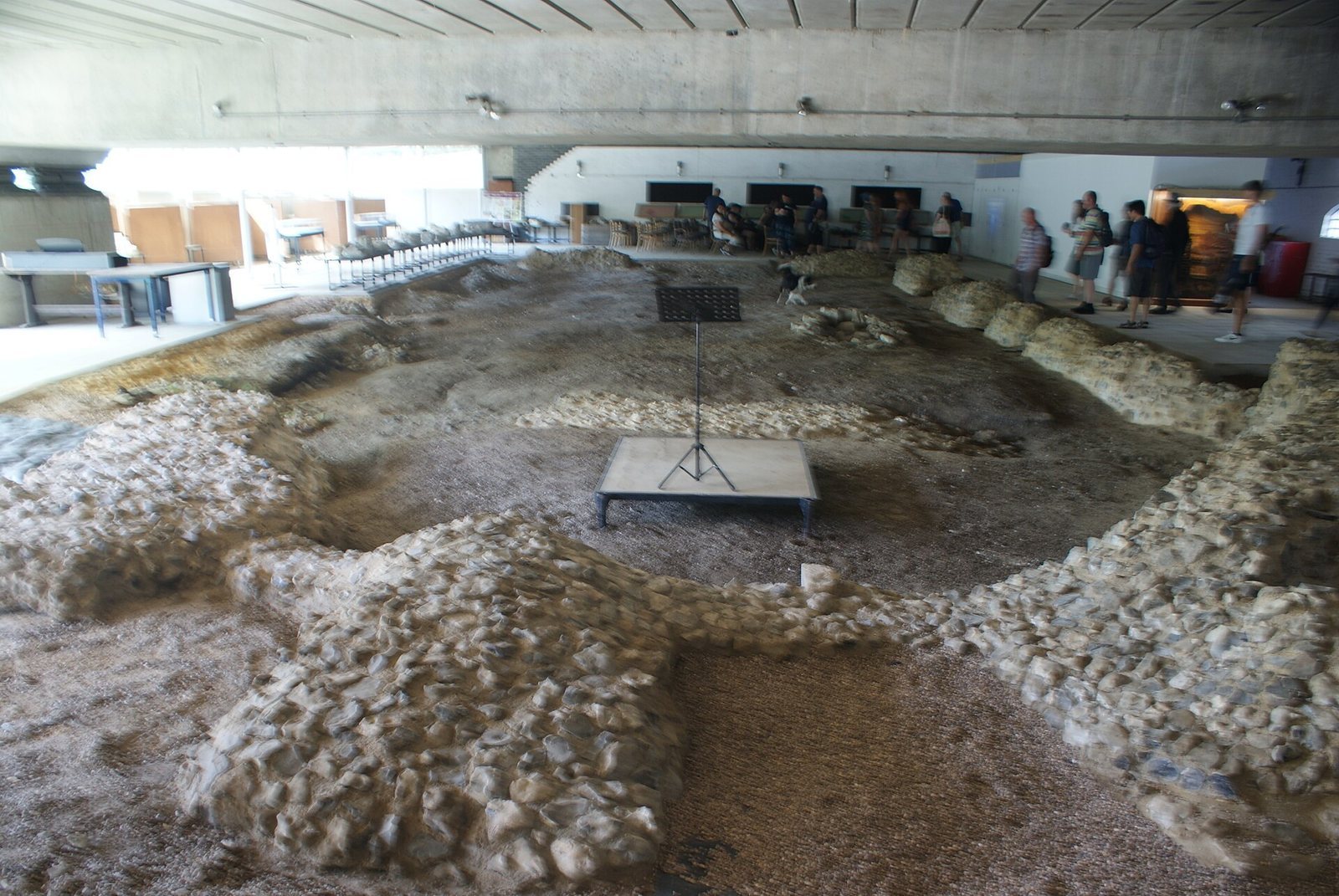
The priory buildings stood where the River Wandle crossed Stane Street, the Roman road to Chichester, around 10 kilometres from the City of London. The site is now occupied by a Sainsbury’s supermarket, while remains of the chapter house are preserved in a museum beneath Merantun Way.
Architectural remains
Chapter house
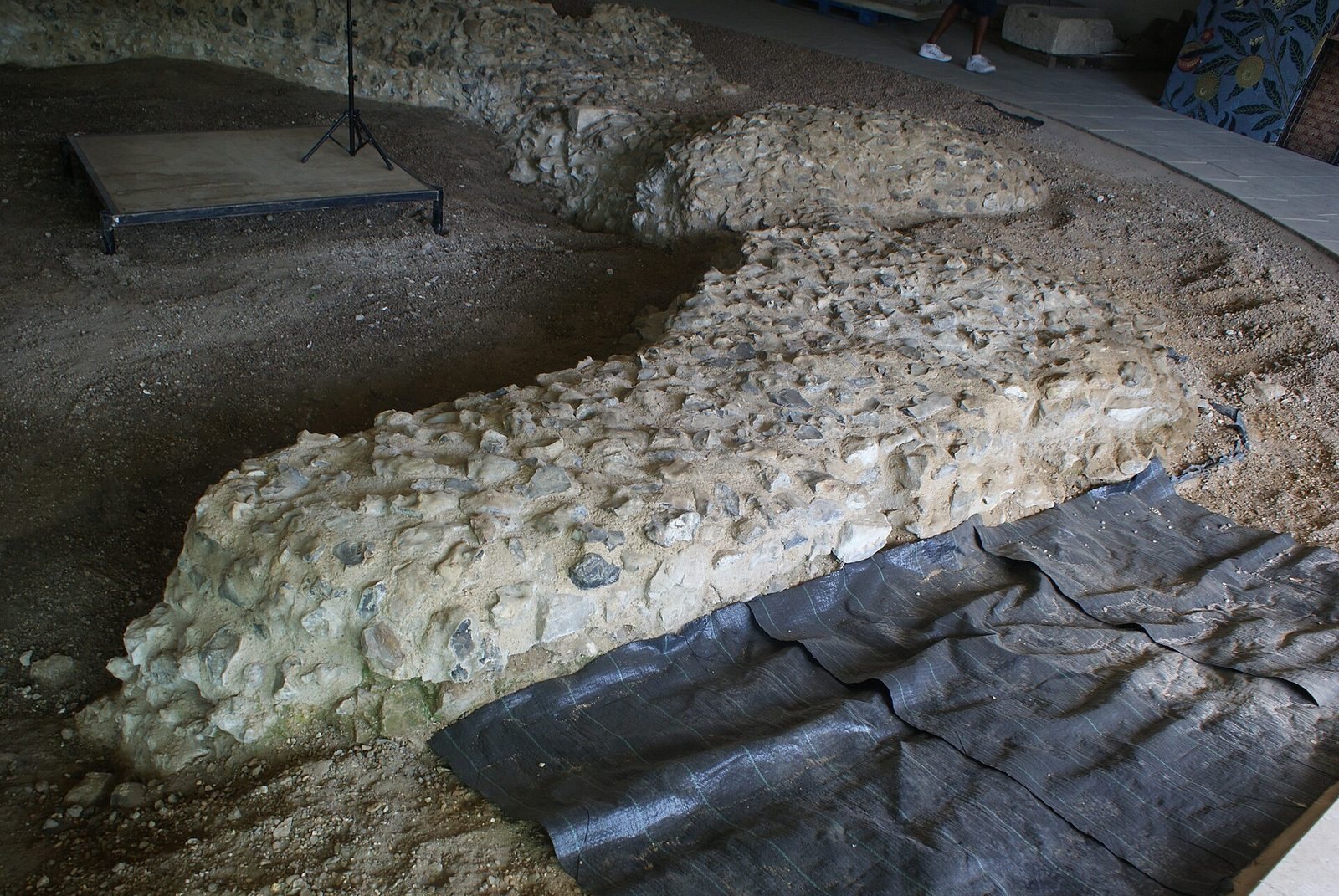
A chapter house was the room where a religious community met for discussion and business. Remains of Merton’s chapter house are preserved in a museum in the pedestrian tunnel beneath Merantun Way, between the supermarket and Merton Abbey Mills.
Window tracery
Window tracery, the stone framework dividing a window into sections, from the priory was displayed at the Museum of London in February 2010.