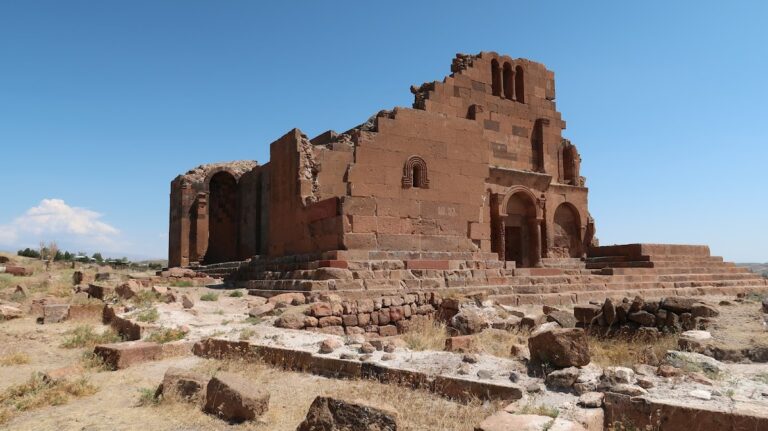
Menüçehr Mosque: An Early Islamic Monument at Ani


Site at a Glance
- Rating
- 4.8
- Popularity
- Low
- Country
- Turkey
- Primary era
- Medieval
- Eras represented
- Medieval
- Civilizations
- Seljuk
- Site type
- Religious
- Remains
- Mosque
On this page6 sections
History
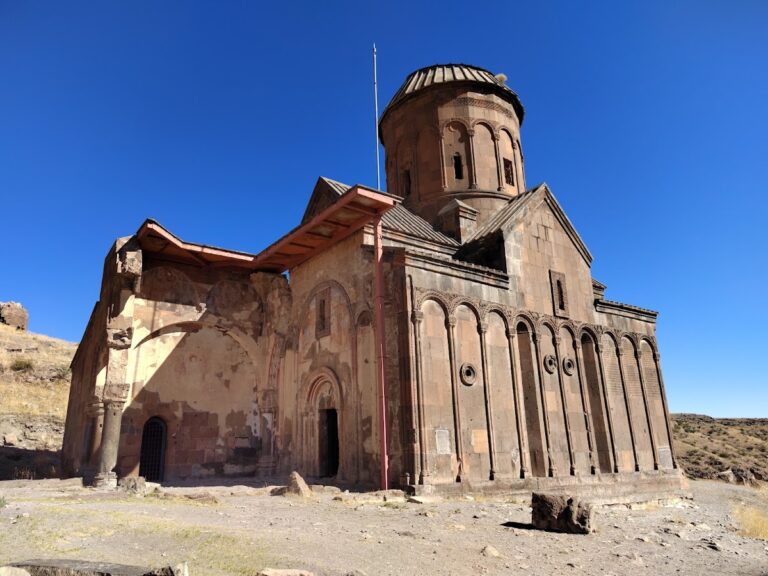
Menüçehr Mosque is a medieval Islamic monument in Ani, Türkiye, built between 1072 and 1086 by Manuchihr ibn Shavur of the Kurdish Shaddadid dynasty. It is considered one of the earliest mosques built in modern Türkiye after the Turkish conquest of Anatolia. The Shaddadids, whose territories included Ani, were politically connected to the Great Seljuk Empire, the larger Islamic imperial power of the period. The mosque’s foundation inscription places its construction under Seljuk Sultan Malik-Shah I.
Foundation and disputed function
The building’s original purpose and date remain subjects of debate. It has been interpreted as a mosque, but also as a palace, customs building, catholicosate building, or an annex known as a jamatun, an attached church hall used for gathering, entry, or burial-related activities. The vault has been compared with the vaulting of the gavit, or attached hall, of Ani’s Church of the Holy Apostles, which was built before 1217. This comparison has been used to suggest broadly similar dates and circumstances for the two structures.
Later inscriptions and modern use
A small inscription dated to 1237–1238 was written in Persian, Georgian, and Armenian. Its Persian text referred to a person named Zikéria, its Georgian text recorded Atabeg Zakaria’s confirmation, and its Armenian text invoked God’s blessing on those who maintained the building. Marie Felicité Brosset recorded the inscription in the 1860s, and the Georgian scholar and archaeologist N. Marr found it in 1909. The inscription is now lost. A large Mongol Ilkhanid inscription placed above it dates to 1319 and records a taxation edict issued under the Ilkhanid administration.
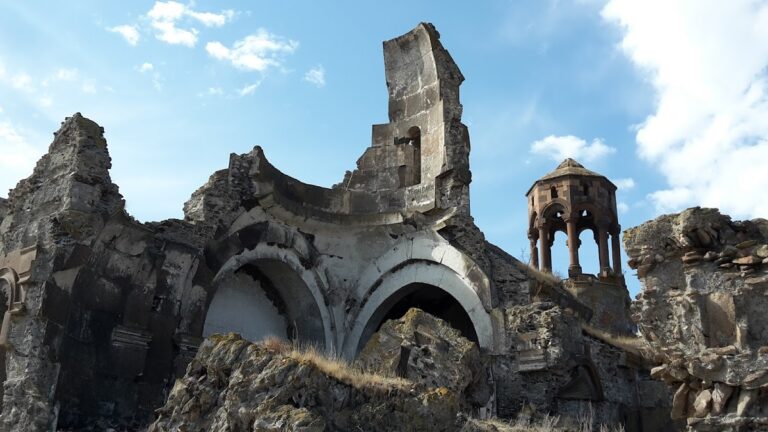
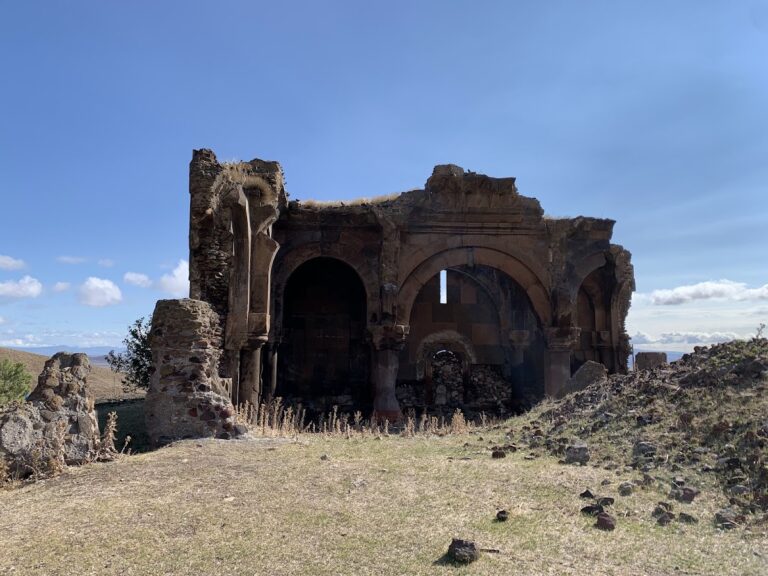
Restoration work began in June 2020. An agreement reached in 2022 enabled prayers to be held in the mosque and the call to prayer to be recited five times daily. Menüçehr Mosque is included on the UNESCO World Heritage List as part of the ancient city of Ani.
Remains
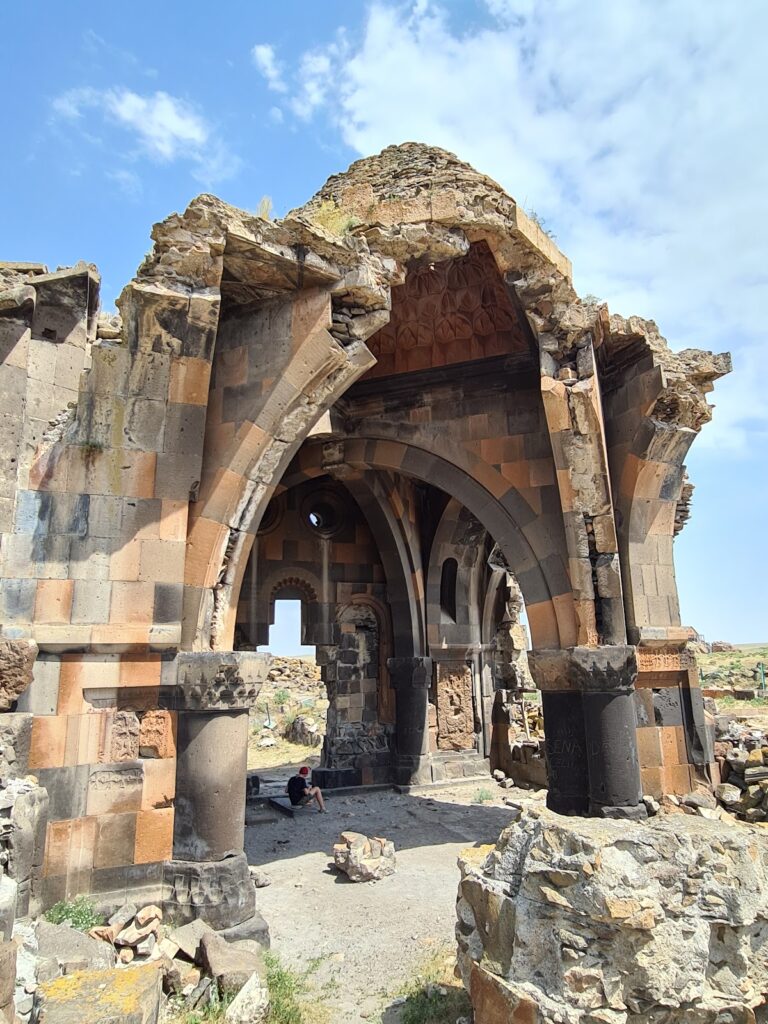
The surviving building combines colored-stone construction and decoration with a single octagonal minaret. Its interior includes geometric patterns formed from colored stones, while the ceiling carries muqarnas, a three-dimensional ornament made of tiered, niche-like elements. The vault’s form has been compared with that of the gavit or jamatun at the Church of the Holy Apostles, linking the mosque’s surviving architectural features with the wider medieval building tradition of Ani.
Minaret and architectural decoration
The octagonal minaret is considered older than the surviving main building. Its form has been compared with architectural styles associated with the Karakhanids of Central Asia. Inside, colored-stone geometric decoration appears across the ceilings, where it is combined with muqarnas ornament. These features preserve the building’s distinctive use of stone patterning and three-dimensional ceiling decoration.
Foundation and administrative inscriptions
A long Kufic inscription on the left side of the façade identifies the patron as the great emir Shuja al-Daula Abu Shuja Minuchir ibn Shavur and mentions Malik-Shah I in connection with the mosque’s foundation. The former trilingual inscription occupied the lower-left corner of the building, also described as a position on the western wall. Above it, the large Ilkhanid inscription of 1319 records a taxation edict, showing how the building’s walls later carried administrative as well as religious texts.
Nearby sites