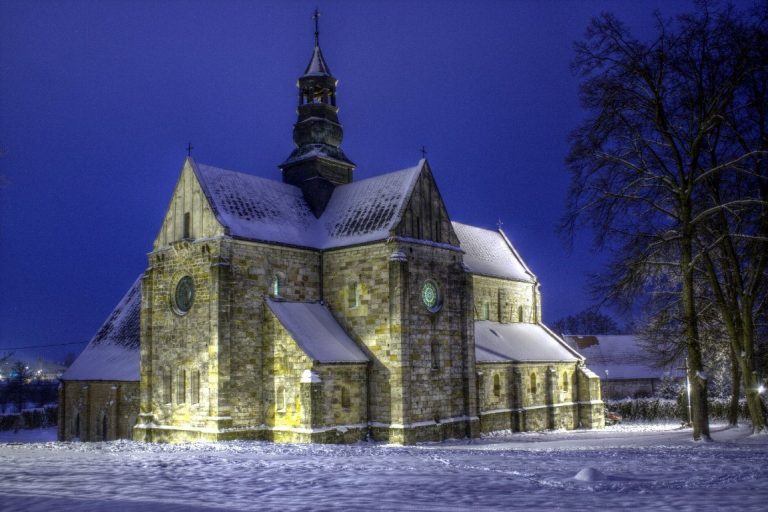
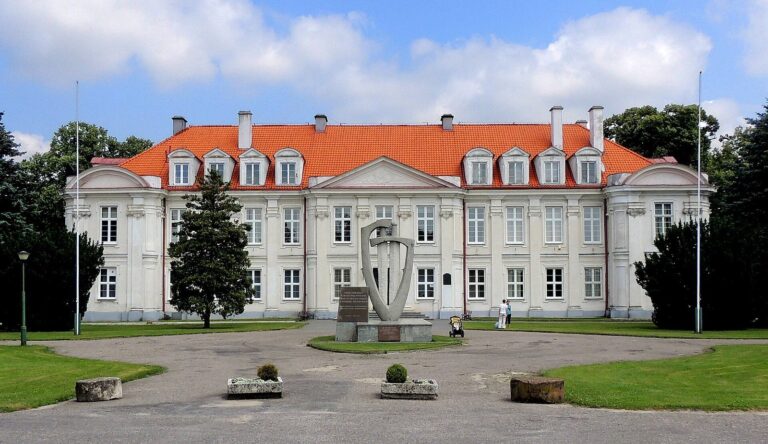
Manor House in Bełchatów: An Eighteenth-Century Manor and Regional Museum
Site at a Glance
- Popularity
- Medium
- Country
- Poland
- Primary era
- Early Modern
- Eras represented
- Early Modern, Modern
- Civilizations
- Polish–Lithuanian Commonwealth
- Site type
- Domestic
- Remains
- Manor House
On this page9 sections
History
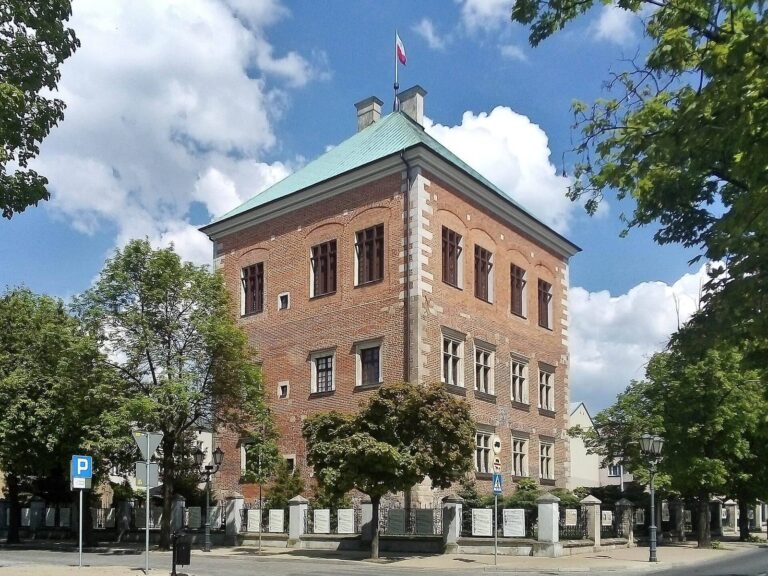
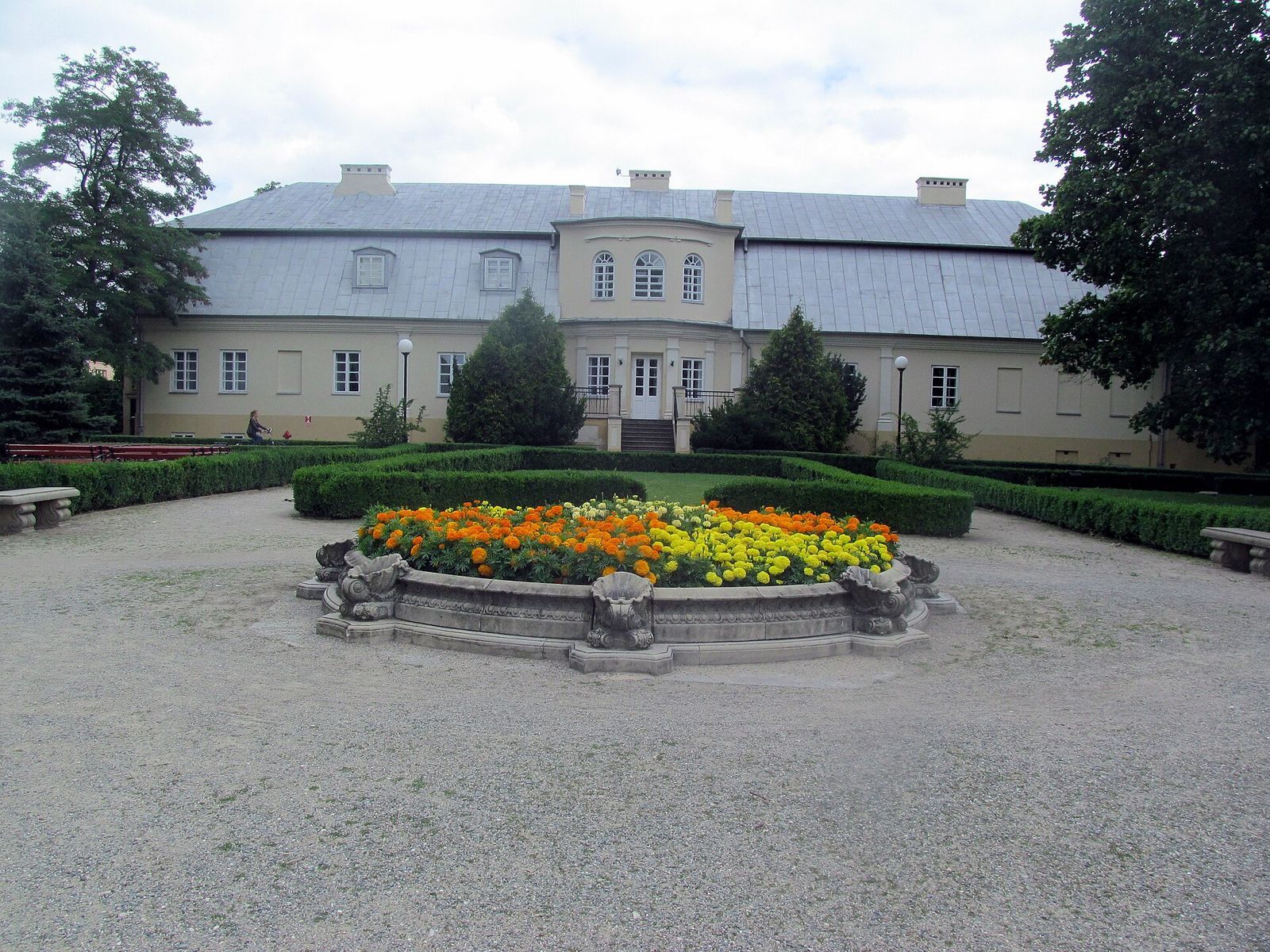
The Manor House in Bełchatów is a late-Baroque manor in Poland, built in the first half of the eighteenth century as part of a manor-and-park complex. Baroque was a European artistic and architectural style associated with elaborate forms and ornament. The Rychłowski family, who used the Nałęcz coat of arms, owned the estate when the manor was built. A coat of arms was a heraldic emblem identifying a noble family. The Kaczkowski family, associated with the Świnka coat of arms, later enlarged the building. Lodovico Coci, an Italian architect to the bishop of Płock, was probably its designer.
Eighteenth- and nineteenth-century development
The park originated in the eighteenth century and was reshaped during the first half of the nineteenth. In 1867, the Kaczkowski estate was auctioned. Later owners included Reinhold Spiller and Ernest Ludendorf. Henryk Hellwig, who was Bavarian by origin, bought the property from Ludendorf in 1887. The Hellwig family retained the manor until the end of the Second World War.
The Hellwig family and the 1920 war
Albert Hellwig’s son Stefan served as a private in the 7th Company of the 2nd Infantry Regiment of the Legions during the 1920 Polish-Soviet War, fought between Poland and Bolshevik forces. Aniela Maria “Nelly” Hellwig, née Piętków, worked as a nurse at Field Hospital No. 1013. Stefan was killed on 2 September 1920 at Trzeszczany, near Hrubieszów. After his body was taken to Warsaw, Nelly died by suicide on 20 September.
Stefan received the Independence Medal posthumously on 2 August 1931 for his work with the Polish Military Organisation, an independence movement. The street where the manor stands was named for him. The couple’s grave is the focus of annual candle and flower tributes on 15 August, during Polish Armed Forces Day observances marking the anniversary of the Battle of Warsaw, a major engagement of the 1920 war.
Restoration and public use
After the Second World War, the property passed to the Olszewski family and the manor and park fell into neglect. The family continued to care for the estate until 1987. After Wacław Olszewski Jr. died, the city authorities bought the building back, and renovation was completed in 1998. The manor now houses a Regional Museum, with displays about Bełchatów and the surrounding region, as well as exhibitions by cultural creators.
The manor entered the register of monuments on 26 May 1967; the park was registered on 31 August 1983 and 22 April 1994. The complex is dated in the register to the second half of the eighteenth century and the beginning of the nineteenth.
Remains
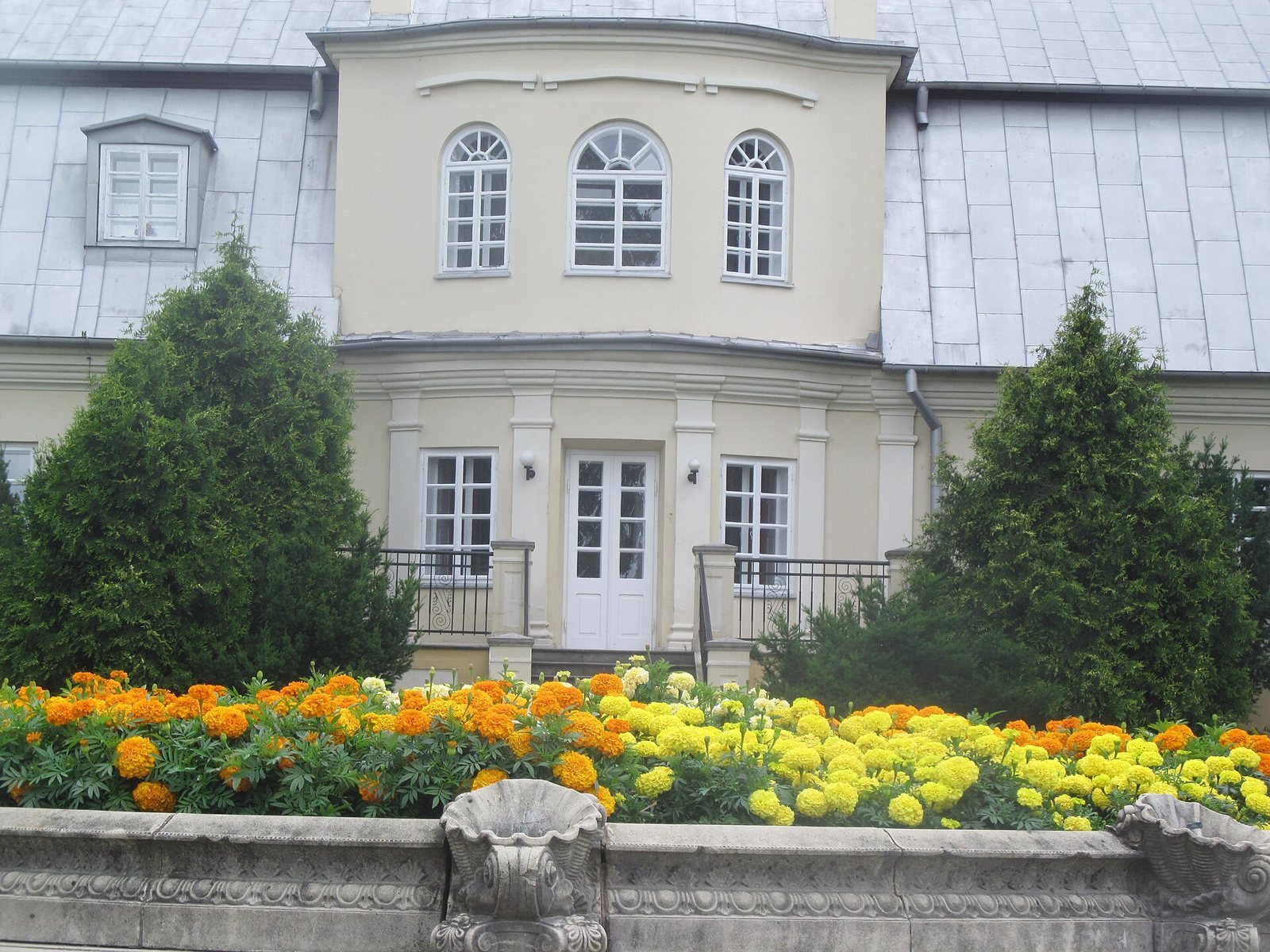
The late-Baroque manor stands amid surviving traces of the eighteenth-century park. Its preserved fabric includes the roof truss, parts of the doors and windows with glass panes, a fireplace, and patterned mosaic parquet flooring.
The Manor and Its Interior
The Fireplace Room contains a restored nineteenth-century sandstone fireplace. Other furnishings include a stone-topped table made in the Renaissance style, an earlier European artistic tradition associated with classical art and learning, for a samovar, a heated vessel used to prepare or serve tea. A historic traveling trunk with brass fittings is also inside. Above the fireplace hangs a portrait of Albert Hellwig, a local civic figure, painted by Stanisława Pytaszowa.
The Park and Its Features
Temple of Reflection and Grave
The park contains the grave of Stefan and Aniela Maria “Nelly” Hellwig at the place known as the Temple of Reflection, formerly a meeting place for the couple.
Geological Trail
Established in October 2005, the park’s geological trail features rock fragments supplied by the Bełchatów Lignite Mine, including silicified wood, in which silica has made the wood stone-like. A limestone specimen with flint nodules came from a depth of 68 metres, on the southern slope of the Kleszczów Graben, a block of the Earth’s crust lowered between faults. It dates to the Upper Jurassic, a geological interval, about 150 million years ago. Quartzite sandstone from 143 metres below ground formed when silica hardened local quartz sands. It dates to the Miocene, an interval in the Neogene, about 10 million years ago, and came from the base of clay-and-sand deposits.
Fragments of silicified tree trunks were carried by a river and redeposited among sands. They came from a depth of 53 metres in a clay-and-sand deposit and are associated with the Pliocene, a later Neogene interval, about 4 million years ago. Woody, earthy lignite, a low-rank coal, came from the main seam at a depth of 207 metres in a coal-bearing deposit. It dates to the Miocene, about 20 million years ago. The trail also includes boulders carried from the Scandinavian Peninsula by a glacier during the Pleistocene, an interval of the Quaternary, about 200,000 years ago. They came from depths of 10 to 15 metres among deposits left by the Central Polish Glaciation, a regional name for a glacial episode in Poland, and represent the upper geological level.