Manoir de Vauville: A Fortified Manor in Normandy
Site at a Glance
- Popularity
- Medium
- Country
- France
- Primary era
- Early Modern
- Eras represented
- Medieval, Early Modern
- Civilizations
- Duchy of Normandy, French
- Site type
- Domestic
- Remains
- Castle
On this page10 sections
History
Manoir de Vauville is a fortified manor in Normandy, France, on the northwestern Cotentin Peninsula. Richard de Vauville, a Norman lord, began its lordly residence in 1163. Later rebuilding gave the house its regional Renaissance character while retaining the medieval keep, the castle’s principal defensive tower.
Early fortress and medieval lordship
André Davy places a feudal stronghold at Vauville as early as the tenth century, during the arrival in northern France of the Normans, people of Scandinavian origin. Vauville was a feudal holding requiring knightly service, held under the barony of Bricquebec, a territorial lordship. Richard de Vauville began the residence in 1163. Much of the manor’s history is incomplete because bombing destroyed departmental archives in Saint-Lô during the Second World War.
Thomas Hélye, a chaplain to Louis IX who is venerated as Blessed, died at the gatehouse on 19 October 1257. In the fourteenth century, the La Haye family held Vauville, followed by the Carbonnel and Le Sauvage families.
Costentin rebuilding and succession
In 1663, Jeanne Le Sauvage, daughter and heir of Julien Le Sauvage, married François-César de Costentin. François-César rebuilt the residence, kept the medieval tower, and added two side wings. Their two surviving sons inherited the lordship in turn: Jean-Michel de Costentin, known as the Marquis of Tourville, and then Jean-Baptiste César de Costentin, the Count of Vauville.
In 1713, Jean-Baptiste killed Pierre-Alexandre Hellouin in a fit of jealousy. Hellouin was a squire, royal councillor, bailiff (a judicial or administrative officer), and lieutenant general of Saint-Sauveur-Lendelin. Jean-Baptiste took refuge at Vauville and hid there for a long time. He eventually obtained a pardon by appealing to a privilege held by Rouen’s cathedral chapter to pardon a prisoner.
Nineteenth century to the present
General Jean Le Marois (1776-1836), a deputy for Manche and aide-de-camp to Napoleon Bonaparte, also owned the manor. In 1837, his son Polydore ordered the gatehouse demolished; the manor’s ancillary buildings were destroyed around the same time. The manor belonged to Henri Gayard in 1890, and his family maintained and restored it. It was pillaged and badly damaged during the Second World War.
Nicole and Éric Pellerin moved into the manor in 1948 and established a botanical garden. In 1972, the manor’s and dovecote’s façades and roofs, along with the former coastal fort and its guardhouse, were listed as historic monuments. The garden received historic-monument listing in 1992, was included in France’s General Inventory of Cultural Heritage, and was recognized as a Remarkable Garden in 2020. In 2025, the manor was identified as heritage at risk.
Remains
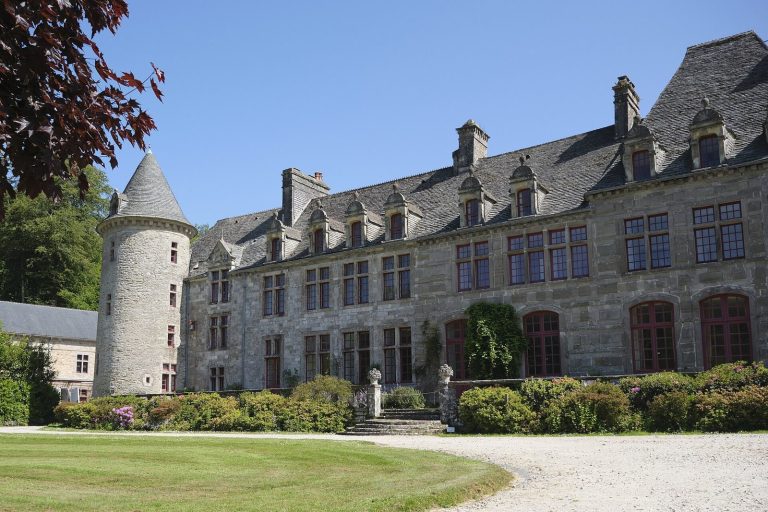
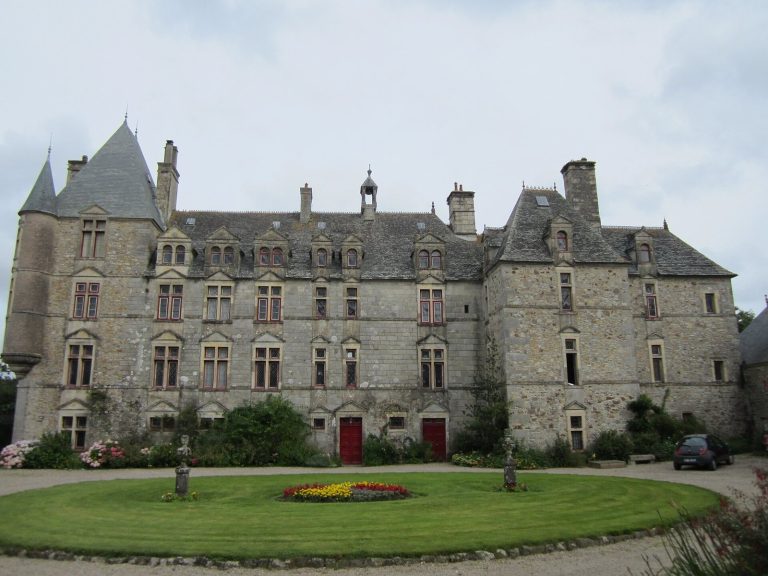
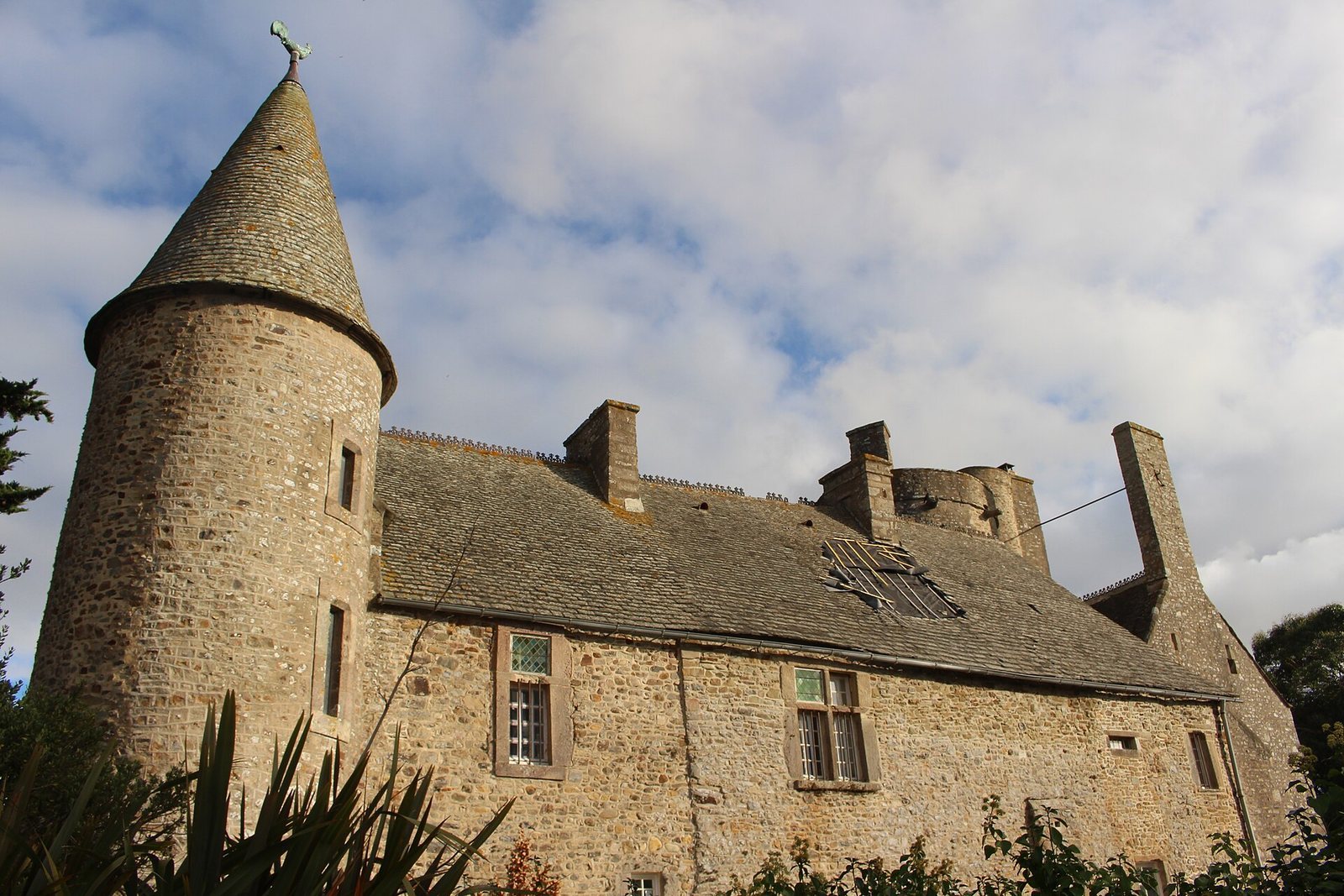
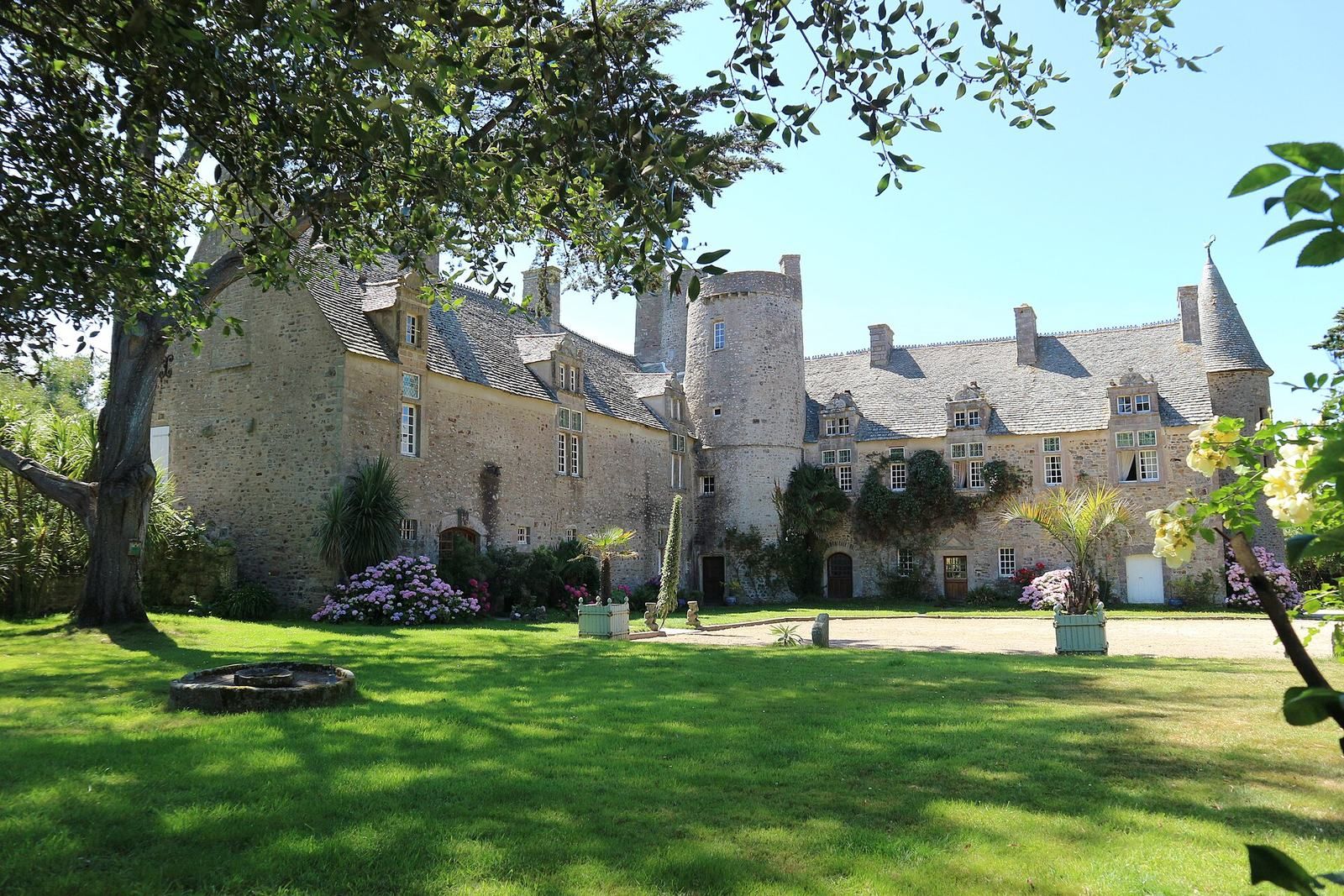
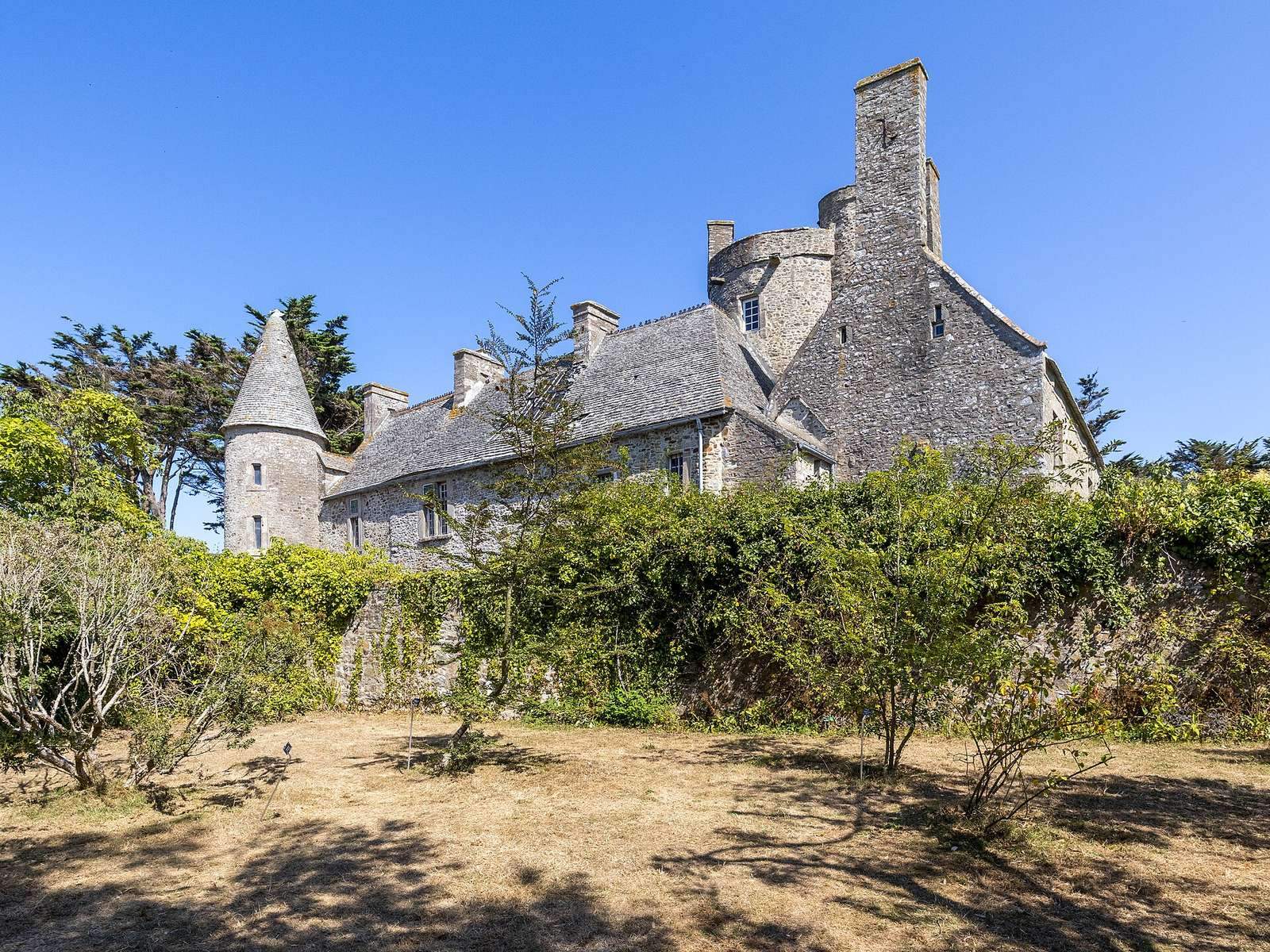
The surviving layout brings together the residence, remains of a medieval enclosure, a dovecote, and a former coastal fort with its guardhouse. The manor’s two ranges meet at right angles and connect with the keep; the garden now covers the area of the former moat. Local stone and regional Renaissance architecture characteristic of the Cotentin define the buildings. The manor lies near the present shoreline and Saint-Martin church. When the ramparts were built, the sea may have reached their foot.
The manor and medieval enclosure
The residence
The manor is built of local stone, with walls nearly a metre thick in places. Its features include broad fireplaces, a slate roof, and windows divided by vertical stone bars. Dormer windows have ornamental gable tops decorated with ball-shaped motifs. The manor is regarded as one of the finest examples of fortified-manor architecture in northern Cotentin.
Keep and enclosure wall
The surviving keep dates to the twelfth century, and part of the enclosure wall also remains. The keep has been compared with the one at Château de Beaurepaire in Martinvast.
The dovecote
Built outside the enclosure wall in 1732, the dovecote, a building for nesting pigeons, contains more than a thousand nesting niches.
The coastal fort
The former fort stands at the edge of the English Channel and has an associated guardhouse.