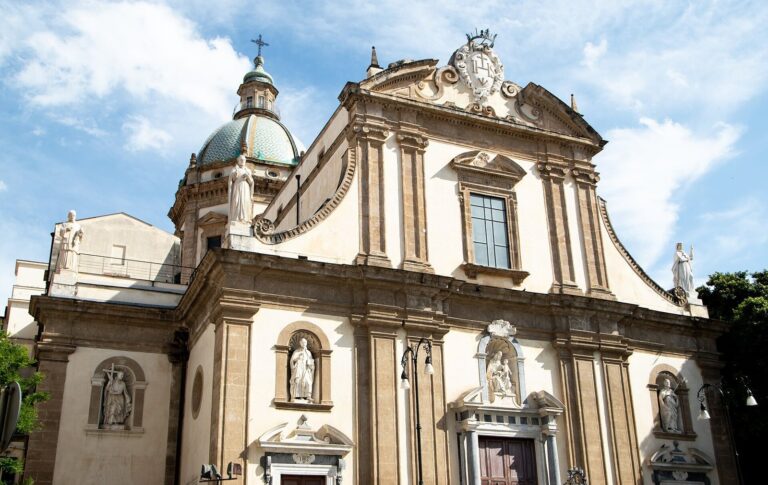
Madonna Assunta: A Discalced Carmelite Church in Palermo
Site at a Glance
- Popularity
- Medium
- Country
- Italy
- Primary era
- Early Modern
- Eras represented
- Early Modern, Modern
- Civilizations
- Kingdom of Sicily, Spanish
- Site type
- Religious
- Remains
- Church
On this page18 sections
History
Madonna Assunta is a Roman Catholic church in Palermo, Italy, built between 1625 and 1628 as part of a Discalced Carmelite monastery on Via Maqueda in the historic Kalsa quarter, between Via Santa Rosalia and Piazza San Nicolò degli Scalzi. The Discalced Carmelites are a reformed branch of the Carmelite order associated with Teresa of Ávila. The church is dedicated to the Assumption, the Christian belief that Mary was taken into heaven.
Foundation and religious administration
Giovanna de la Cerda, Duchess of Montalto, founded the monastery with her husband, Antonio d’Aragona Moncada. On 9 February 1625, Antonio obtained a formal papal document from Pope Urban VIII authorizing the institution. Its administration and property initially remained under diocesan authority, meaning the bishop or other official responsible for the diocese. The church was built over the following years, and Cardinal Giannettino Doria blessed it on 13 June 1628.
After one of her sons died, Giovanna took Carmelite vows at the Monastery of San Giuseppe in Naples in 1626 and adopted the name Teresa of the Holy Spirit. Antonio joined the Society of Jesus, the Catholic religious order also known as the Jesuits. Their surviving son, Luigi Guglielmo I Moncada, Prince of Paternò, later sought to transfer the monastery from diocesan authority to the Teresian fathers, the male religious of the Carmelite reform associated with Teresa of Ávila.
Luigi’s petition resulted in a new papal document on 14 April 1632. Officials from the convent of Santa Maria dei Rimedi inspected the institution on 22 April, and a prior, or monastic superior, assumed office on 6 July. After 1730, administration returned to the diocese and remained there until 1861.
Damage and later use
The Pollina earthquake of 5 March 1823 damaged the church’s decoration, brought down part of its façade, devastated the choir, and ruined the entrance flooring. In 1861, the monastic order was suppressed and its property passed to the state. The monastery buildings were transferred to the Municipality of Palermo in 1904 for use as schools.
The Confraternity of Maria Santissima della Mercede, a lay religious association founded in 1909 at the now-destroyed church of San Giosafat, was entrusted with Madonna Assunta.
Remains
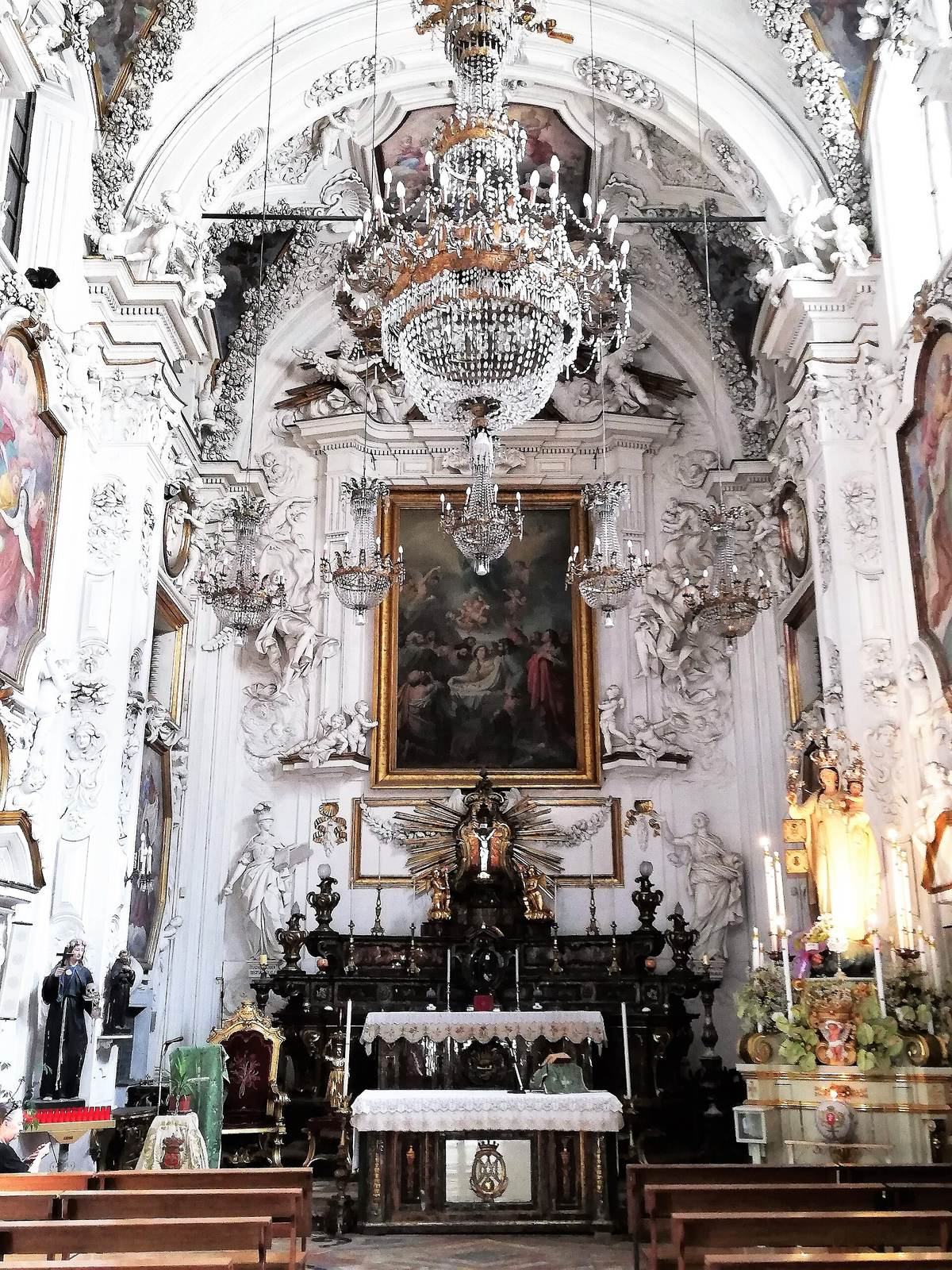
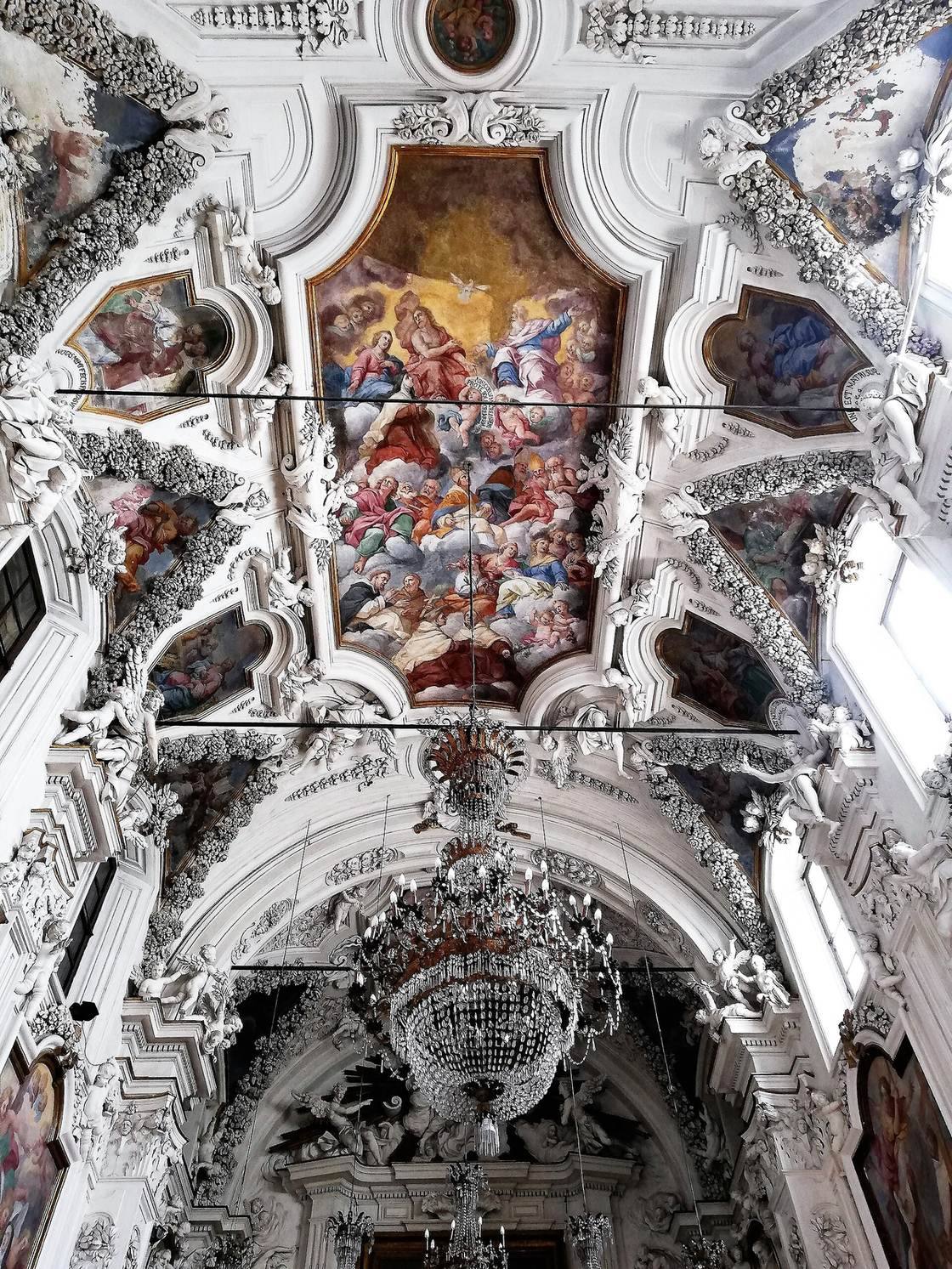
The complex combines a west-facing church with a plastered monastery exterior. Inside, the church has a single main space, a choir at the wall opposite the façade, and an altar area ending in a rectangular apse. Its decoration brings together stonework, paintings, carved figures, and plaster ornament.
Exterior
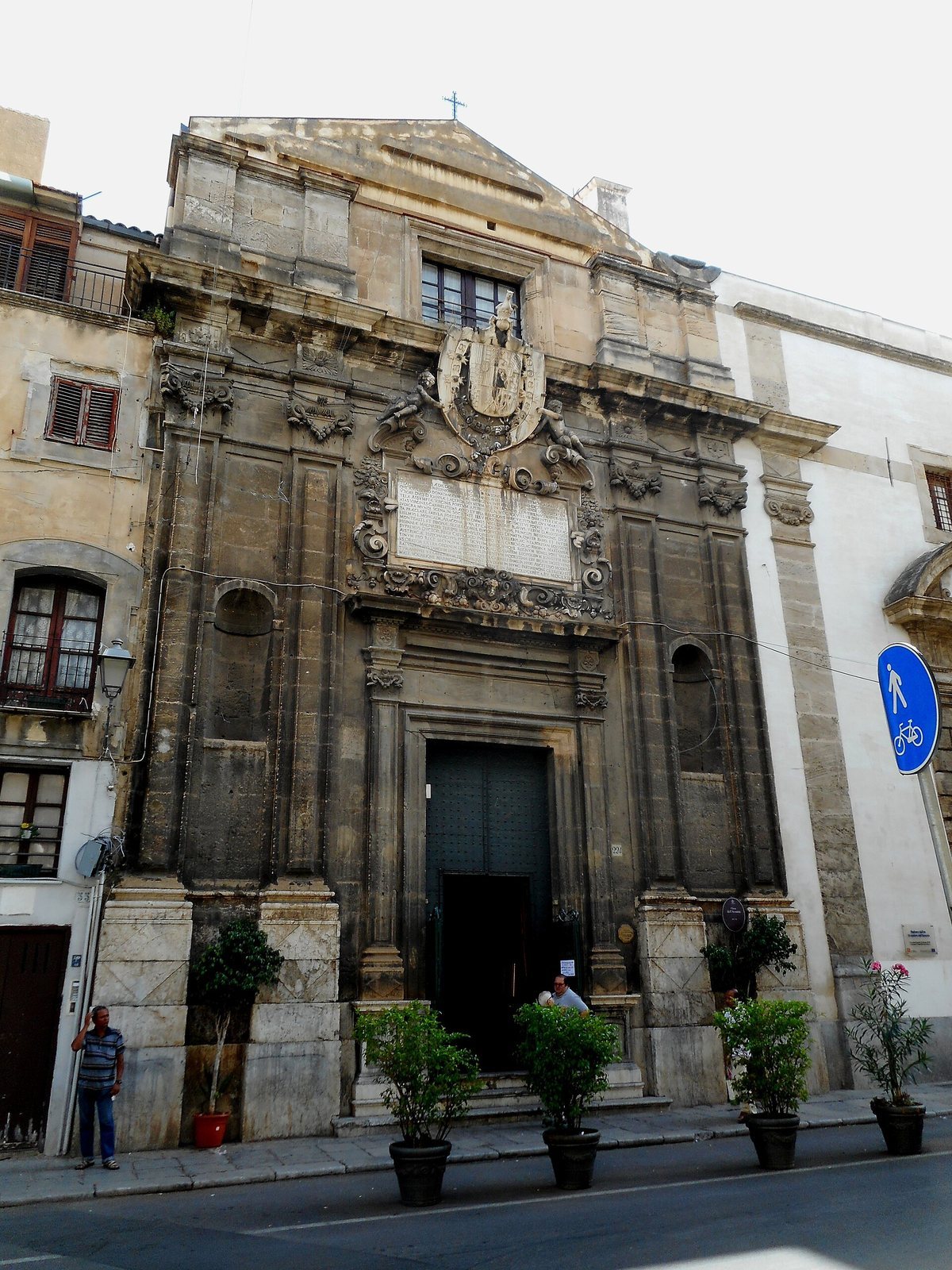
Church façade
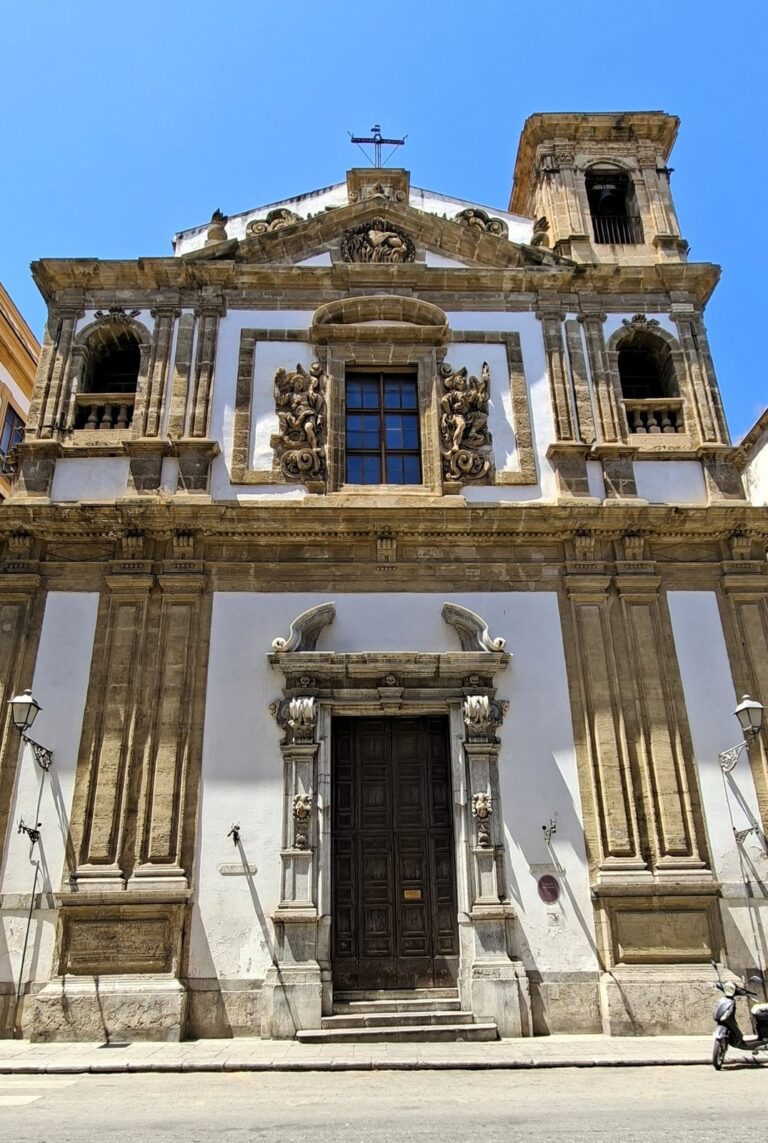
The church’s west-facing façade is built of ashlar, finely dressed stone blocks. Pairs of flat, column-like projections rise from tall marble bases. Above the entrance, carved garlands surround capitals shaped with acanthus leaves. A plaque and the Moncada family arms occupy the area above the portal, with childlike decorative figures supporting the arms and a griffin above them. A projecting ledge separates the main façade from a narrower upper level with a central window, which is crowned by a triangular pediment. Niches are set between the vertical elements.
The plaque, dated 1662, records the institution’s dedication to women from noble families. It names the consent of Philip III of Sicily, also known as Philip IV of Spain, and his wife Maria Anna of Austria, as well as authorization by Emperor Leopold I. The Moncada arms include the collar of the Order of the Golden Fleece, a European order of chivalry. The Spanish king awarded it in 1607 to Antonio de Moncada, fourth Prince of Paternò.
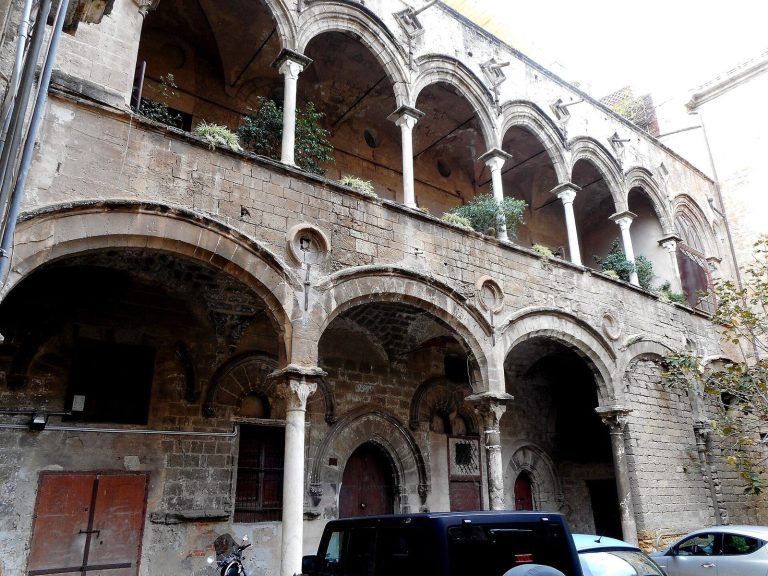
Monastery exterior
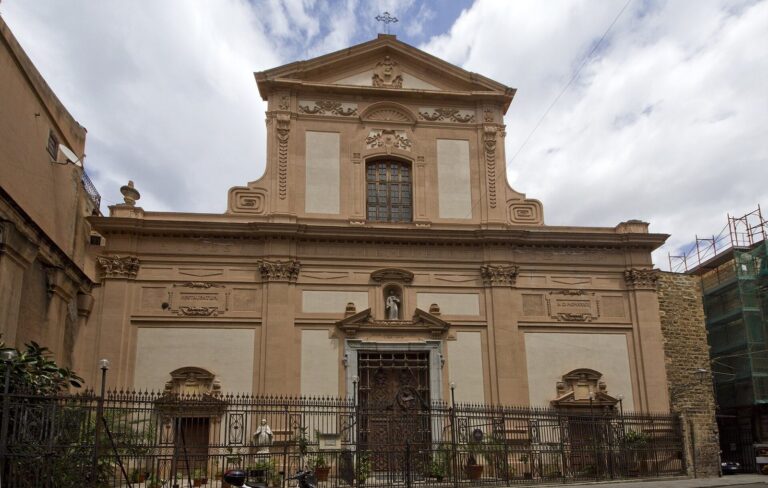
The monastery’s restored exterior is white plaster. Prominent flat, column-like projections frame its entrance, whose stonework has a deliberately roughened surface. Above the doorway is a broken-arch pediment, with a window set between its separated sections.
Nave and decoration
Nave and choir
The church’s single nave, or main interior space, has a polychrome marble floor laid in 1638. A grille encloses the choir at the inner wall opposite the façade. Within it stands a pipe organ made by Pietro Lugaro in 1861.
Painted and sculpted decoration
The interior’s decorative program dates to 1710 and focuses on Saint Teresa of Ávila. Guglielmo Borremans painted frescoes beneath the choir. On the nave ceiling, Filippo Tancredi’s Glory of Saint Teresa of Ávila is accompanied by scenes from her life in the ceiling sections, framed with floral plaster garlands. Works by Antonio Grano also form part of the interior decoration.
Statues, ornamental details, small stage-like settings, and plasterwork are attributed to Giuseppe and Procopio Serpotta. A relief depicting angels and God the Father is attributed to Giacomo Serpotta, a Sicilian sculptor known for his Baroque plasterwork.
Chapels and devotional features
Chapel of Saint Teresa of Ávila
The chapel’s altar painting by Gaspare Serenari shows Teresa pointing toward the Monastery of San Giuseppe. Plaster figures representing Divine Wisdom and Fortitude flank the painting. A painted wooden statuette of the Immaculate Conception, dating to the eighteenth century, stands on the altar table. In front of the tabernacle, the vessel that houses the consecrated Eucharist, are painted wooden busts of Teresa of Ávila and John of the Cross, both from the Neapolitan school.
Chapel of the Holy Crucifix
An eighteenth-century crucifix with a tortoiseshell cross stands in this chapel, accompanied by plaster figures of the grieving Mary, Mary Magdalene, and John the Evangelist. Plaster representations of Charity, Mercy, Fortitude, and Divine Wisdom frame the altar. In front of the tabernacle is a wooden bust of Saint Albert of Trapani, from the Neapolitan school. Beneath the altar table is a wax representation of the Dormition, a Christian depiction of Mary’s death.
Right-side niches and images
Beneath the choir on the right, one niche contains a wax image of Mary in sorrow beneath a fresco. Another holds a statue of Jesus presented before his crucifixion; its broken-arch crown frames an oval, stage-like setting below a fresco. A further right-wall niche contains a painting of Our Lady of Health. Its broken-arch frame includes an oval display setting beneath a fresco of Teresa and John of the Cross. Near the arch separating nave and sanctuary, a processional platform carries a wooden statue of Maria Santissima della Mercede, attributed to Rosario Bagnasco and dated 1910.
Left-side niches and images
Beneath the choir on the left, a reliquary urn containing the body of the Roman martyr Saint Theodora stands below a fresco. Pope Clement XIV gave the relic to Gioacchino Castello, parish priest of Sant’Ippolito Martire at Porta Carini, for the monastery. A further left-wall niche has a broken-arch frame, an oval, stage-like setting, and a fresco of Teresa in ecstasy. Near the arch between nave and sanctuary stands a wooden statue of Saint Rosalia.
Presbytery
Wall paintings and sacristy passage
A fresco on the right wall of the altar area depicts Teresa’s vision of mystical marriage, in which Jesus offers her a nail from the Cross. A circular panel above it contains a bust of the Apostle Paul. On the left wall, an opening leads to the sacristy. Its fresco shows Teresa at the Virgin’s feet receiving a veil from Saint Joseph, with a circular panel of the Apostle Peter above.
Main altar and apse
The altar area ends in a rectangular apse, the terminal space of the church, framed by an arch marking the transition from nave to sanctuary. The main altar is made from hard and semi-precious stones, including agate and lapis lazuli, and has two steps and vases at either side. Plaster statues of Faith and Charity by Procopio Serpotta flank it. A raised niche holds Giuseppe Patricolo’s painting of the Assumption, dated 1800.
Above the altar, the arch’s curved panel carries the plaster Glory of the Father, attributed to Giuseppe and Procopio Serpotta. A ceiling fresco shows Teresa venerating the Crowned Virgin. On the altar table, the tabernacle is topped by a figure of the risen Jesus surrounded by rays.