Loggia Palace: Koper’s Venetian Gothic Civic Hall
Site at a Glance
- Rating
- 4.5
- Popularity
- Medium
- Country
- Slovenia
- Primary era
- Medieval
- Eras represented
- Medieval, Early Modern
- Civilizations
- Venetian
- Site type
- Civic
- Remains
- Town Hall
On this page8 sections
History
Construction and civic life
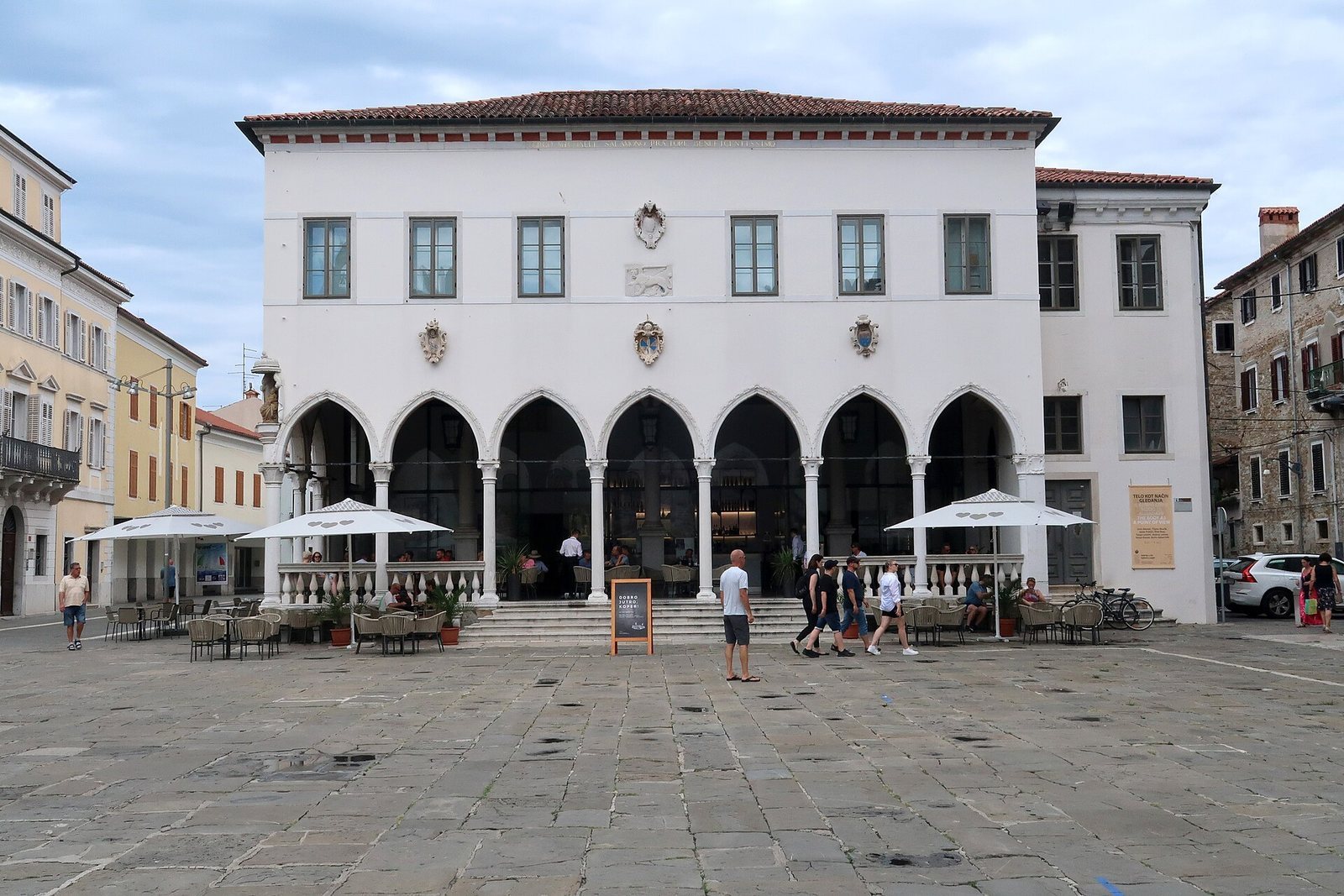
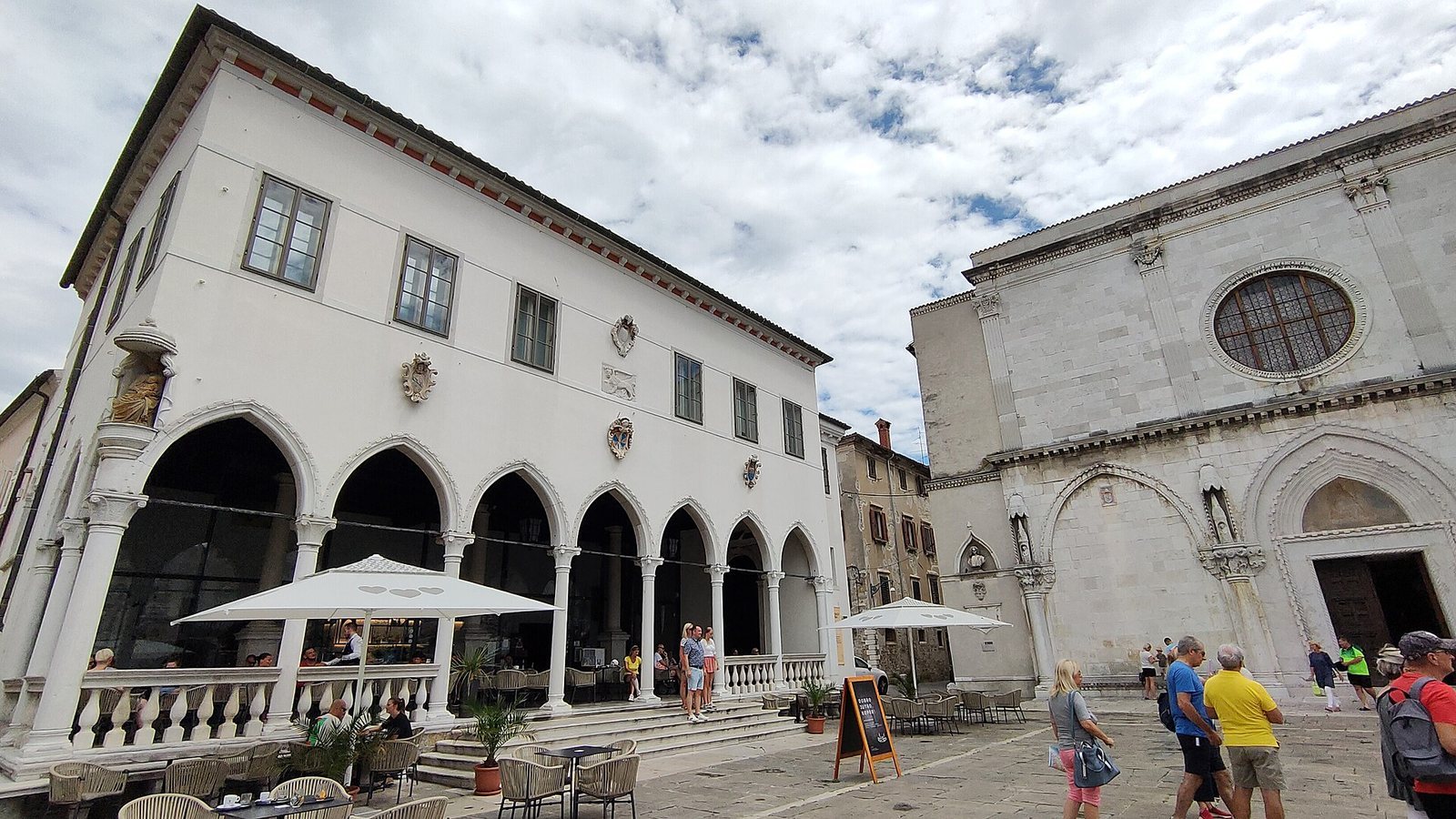
The Loggia Palace is a civic loggia, a roofed, open-sided public space, in Koper, Slovenia. Built in the mid-fifteenth century, it combines Venetian Gothic, a regional style linked to Venice and its historical sphere of influence, with Renaissance elements. The municipality commissioned the building, whose earliest phase dates to 1462. It replaced an earlier structure on the same site known as the old loggia.
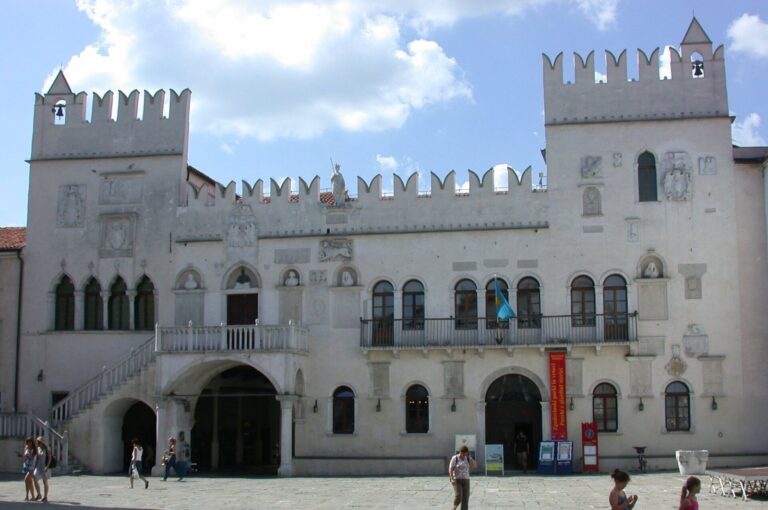
The building took shape during a reorganization of Koper’s civic center under Venetian rule. Koper belonged to the Venetian Republic, a maritime state centered on Venice with territories around the Adriatic. Across the main square from the Praetorian Palace, the government seat, the Loggia provided a public setting for civic and commercial life. Merchants met there to make agreements, while residents discussed matters that could be taken to the city council. Wealthy townspeople and members of noble families also gathered there. Authorities allowed gambling on the premises so they could supervise it and collect fees.
Plague and enlargement
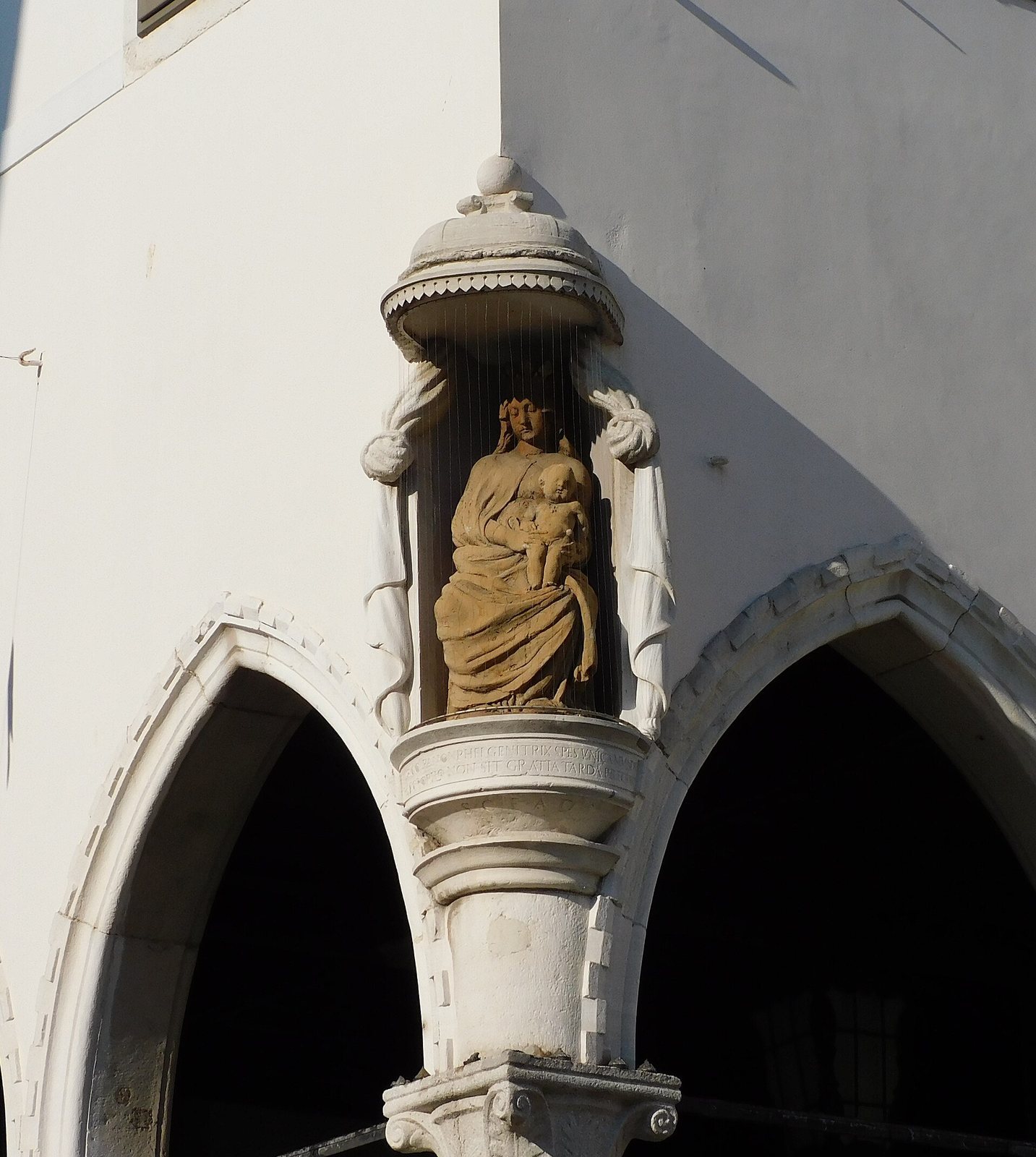
After plague struck Koper in 1553–1555, coats of arms were added to the façade. In 1555, a terracotta statue of Mary and the infant Jesus was installed as a votive offering of thanks for the plague’s subsidence. In 1698, Koper’s Venetian governor, Marco Michele Salamon, initiated an enlargement that added a second storey and extended the façade.
Café and present use
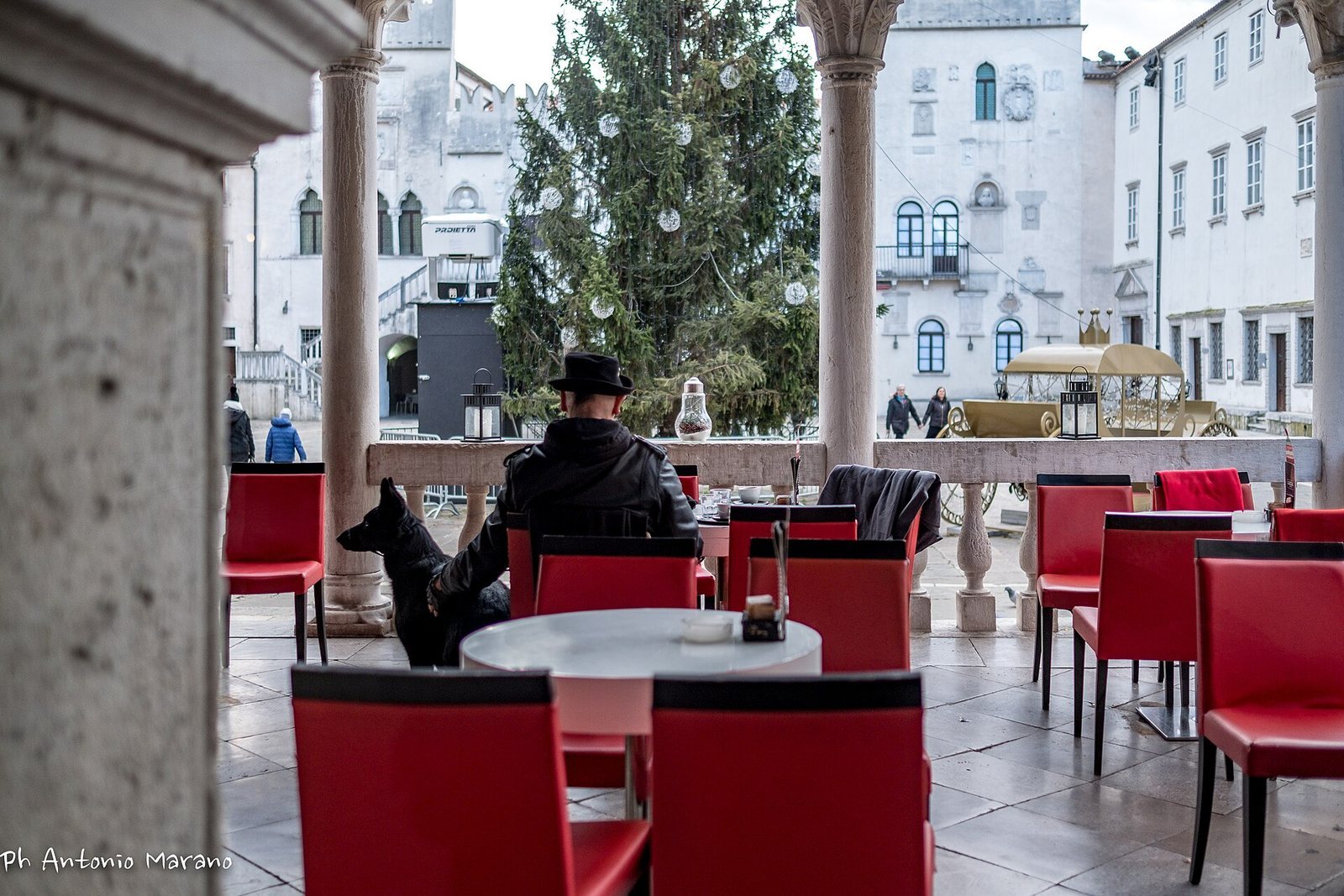
A café opened on the ground floor in 1846. It became a meeting place for residents and people active in the cultural life of the northern Adriatic, and is among Slovenia’s oldest operating cafés. The ground floor continues to house a café, while the second floor contains an art gallery operated by Piran Coastal Galleries. The Loggia is Slovenia’s only surviving Gothic municipal loggia and only preserved Gothic town hall.
Remains
The two-storey building faces Koper’s main square, opposite the Praetorian Palace. Its layout includes an open arcade at ground level, an upper floor, and an external staircase on the east side.
Square-facing arcade
Slender stone columns with decorated tops support the pointed arches along the ground floor. The three central arches open into the interior, set three steps above the square; stone balustrades close the outer pairs. Stone benches run along the exterior. Two arches on the square-facing façade were transferred from the building’s west side.
Upper floor and windows
The west wall contains a Gothic window divided into two lights by a central column. On the east side, an external staircase leads to the upper floor. Together, these features connect the building’s side elevations and upper level with its square-facing ground floor.
Façade sculpture and emblems
The façade displays coats of arms of Koper’s Venetian governors, including Salamon’s name and arms, and a relief of the Lion of Saint Mark, Venice’s emblem, holding a closed book. A terracotta statue of Mary and the infant Jesus occupies a niche above the left corner column. The original statue was moved to a local museum and replaced by a copy.