Lenno Palace in Łupki: A Baroque Residence in Poland
Site at a Glance
- Popularity
- Medium
- Country
- Poland
- Primary era
- Early Modern
- Eras represented
- Early Modern, Modern
- Civilizations
- Unclassified
- Site type
- Domestic
- Remains
- Elite Residence
On this page9 sections
History
Early palace and Koulhas residence
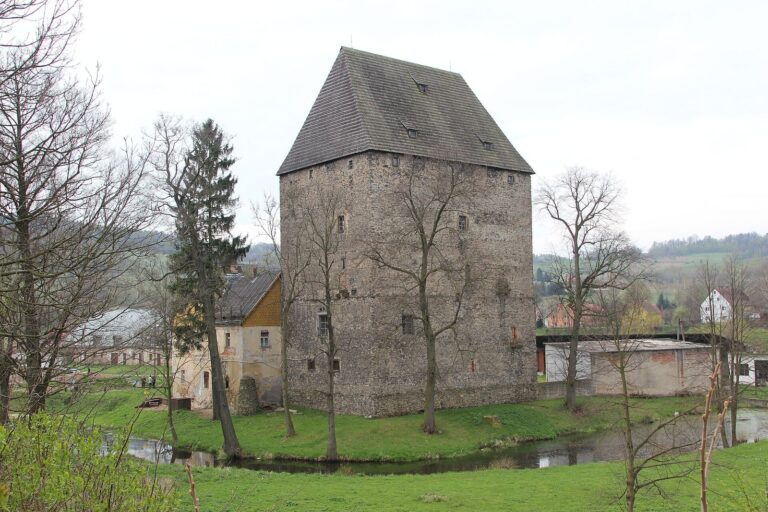
Lenno Palace in Łupki, Poland, was built by Adam Koulhas in 1662 as his residence. It may have had an earlier beginning as a fortified house in the sixteenth century. The palace is also known as Lehnhaus Palace, while the name Kohlhaus was used in connection with Koulhas.
Heinrich von Reichenbach owned the estate in 1652, and Koulhas acquired it the following year. Koulhas had served as a French colonel under Louis XIII, king of France from 1610 to 1643. After Koulhas died, his widow, Anna Ursula née von Debschütz und Neukemnitz, retained the estate until their son Leopold Rudolph took ownership in 1685.
The Grünfeld estate
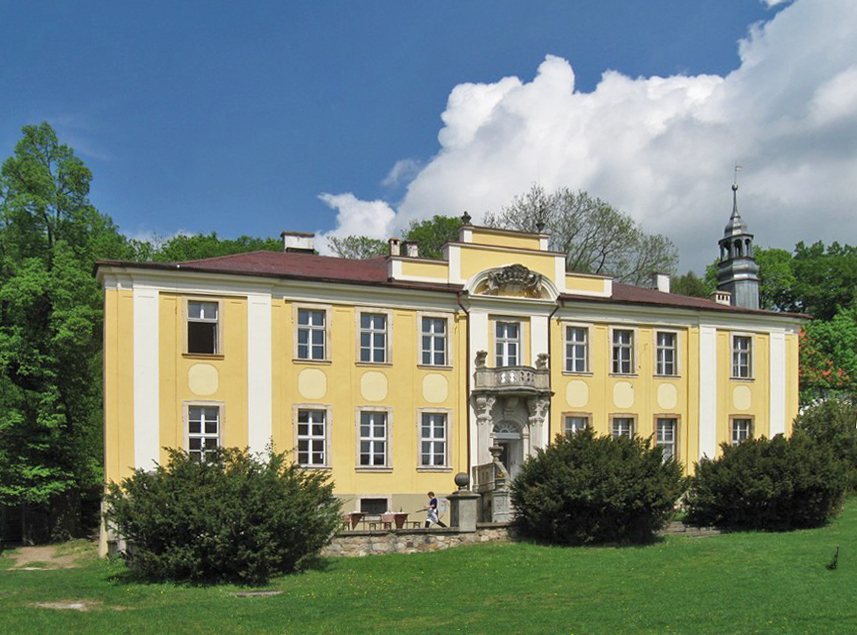
The von Grünfeld family acquired the palace around 1730. During the eighteenth century, they remodeled it in the Baroque style, an ornate European architectural style associated especially with the seventeenth and eighteenth centuries. Ownership later passed to Friedrich Wilhelm von Grünfeld und Guttenstädten, district administrator of Löwenberg-Bunzlau, and then to his son, Friedrich Gotthard Ehrenreich von Grünfeld und Guttenstädten.
Friedrich Gotthard married Charlotte Auguste von Richthofen in 1785. After his death, Charlotte cared for and improved the estate and arranged a memorial near the old castle. She married Georg Friedrich von Tempsky in 1808. Her only son, Friedrich Wilhelm Leopold, died at Hainau on 26 May 1813, after which she commissioned a monument to him.
Later ownership and reuse
After 1827, the palace belonged to the von Haugwitz family. A severe fire in 1933 destroyed its interior. Following 1945, the Polish State Railways used the building as a sanatorium. The palace was later restored.
Remains
The palace
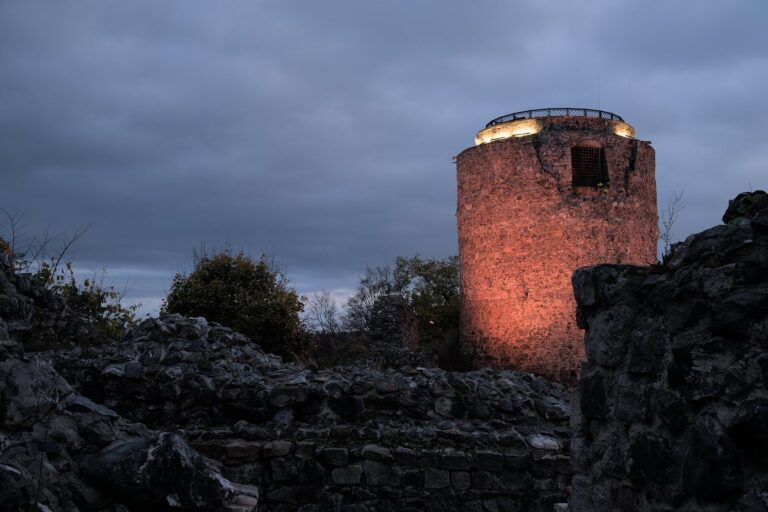
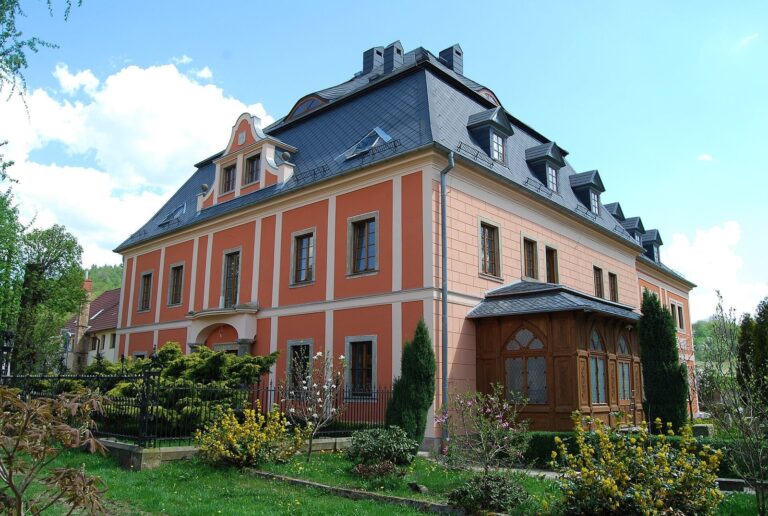
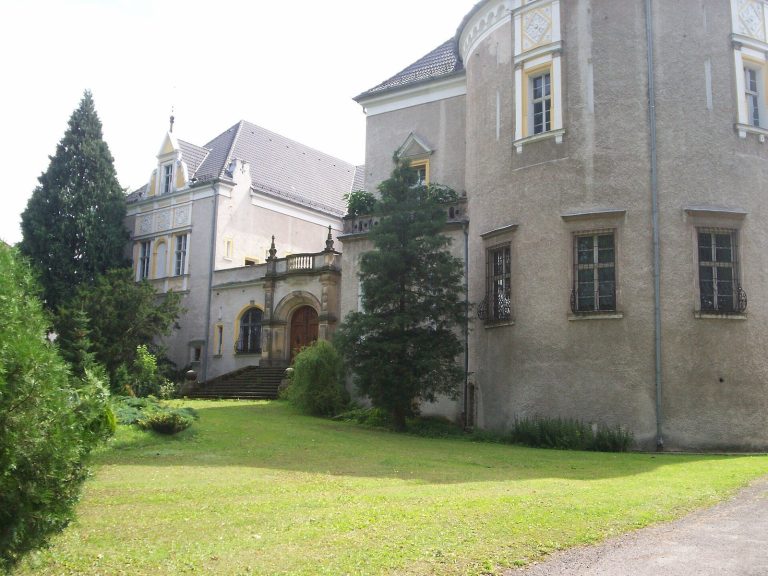
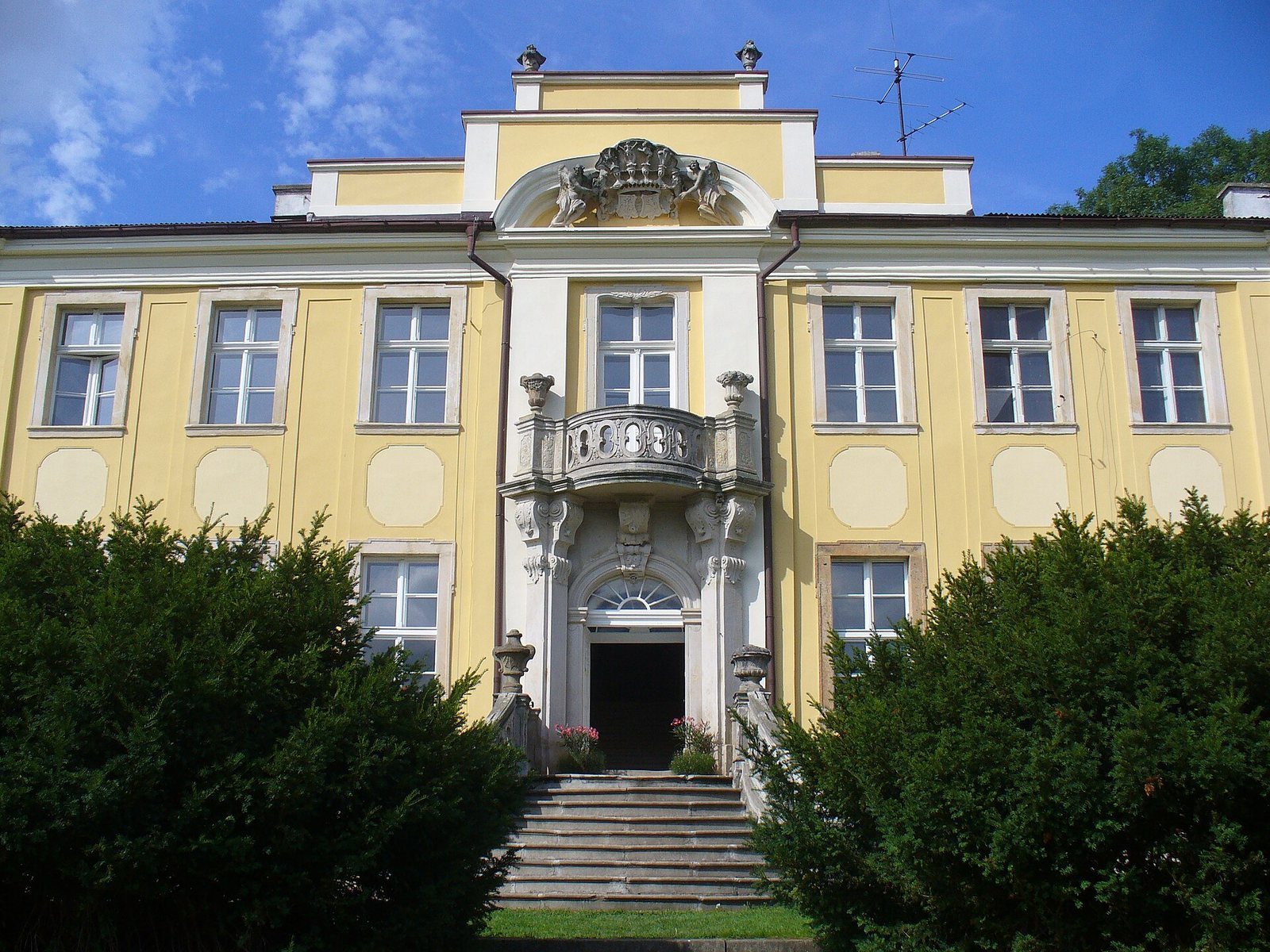
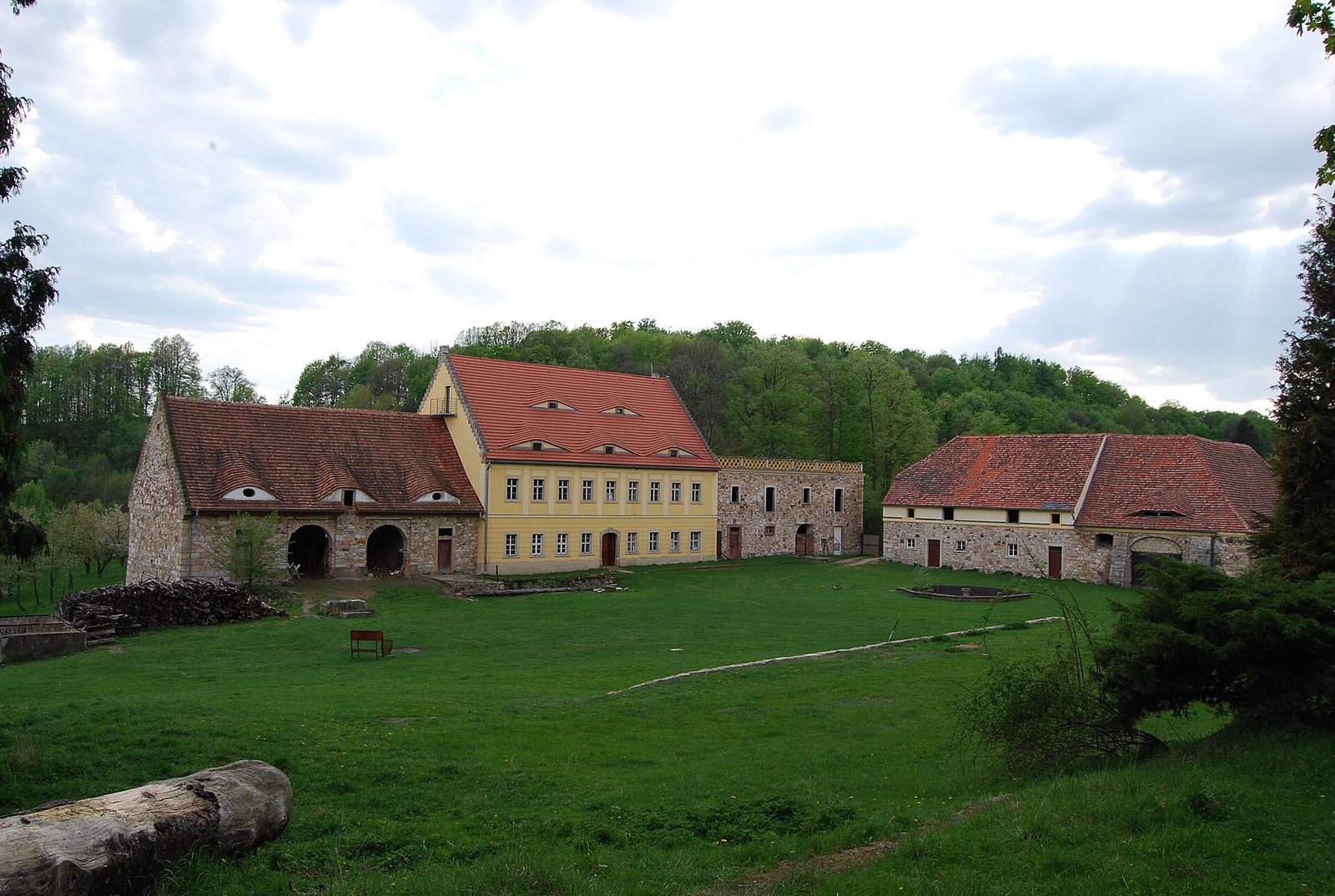
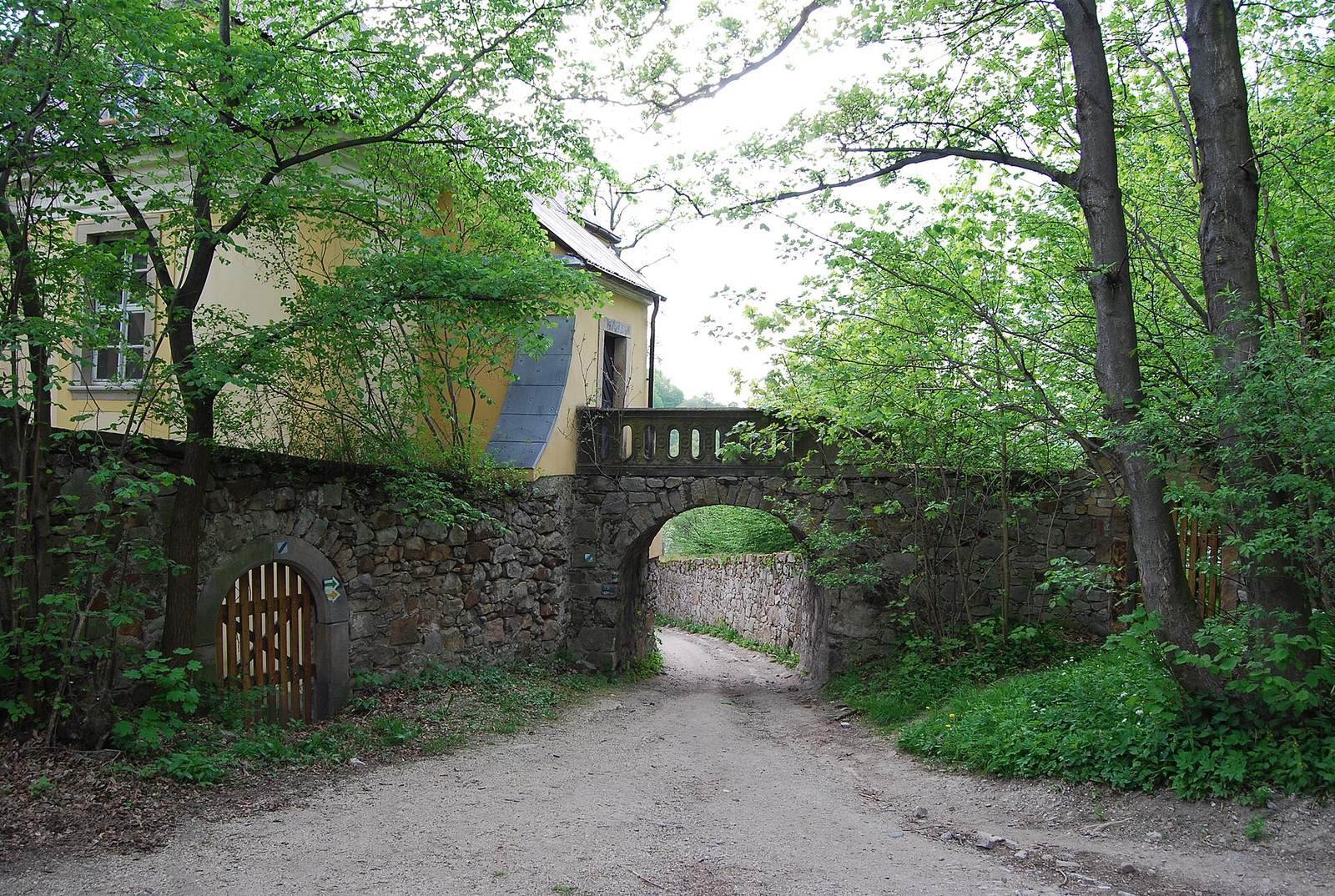
The palace stands on a mountain saddle, a low pass between higher points on a ridge, below Lehnhaus Castle. Its façade is arranged along nine vertical lines of architectural features, with two projecting sections at the sides and a narrower projection at the center. A curved gable above the entrance bears the combined coats of arms of the Grünfeld and von Unruch families. Inside are a Baroque stone staircase and wall paintings dating to around 1800.
Garden buildings
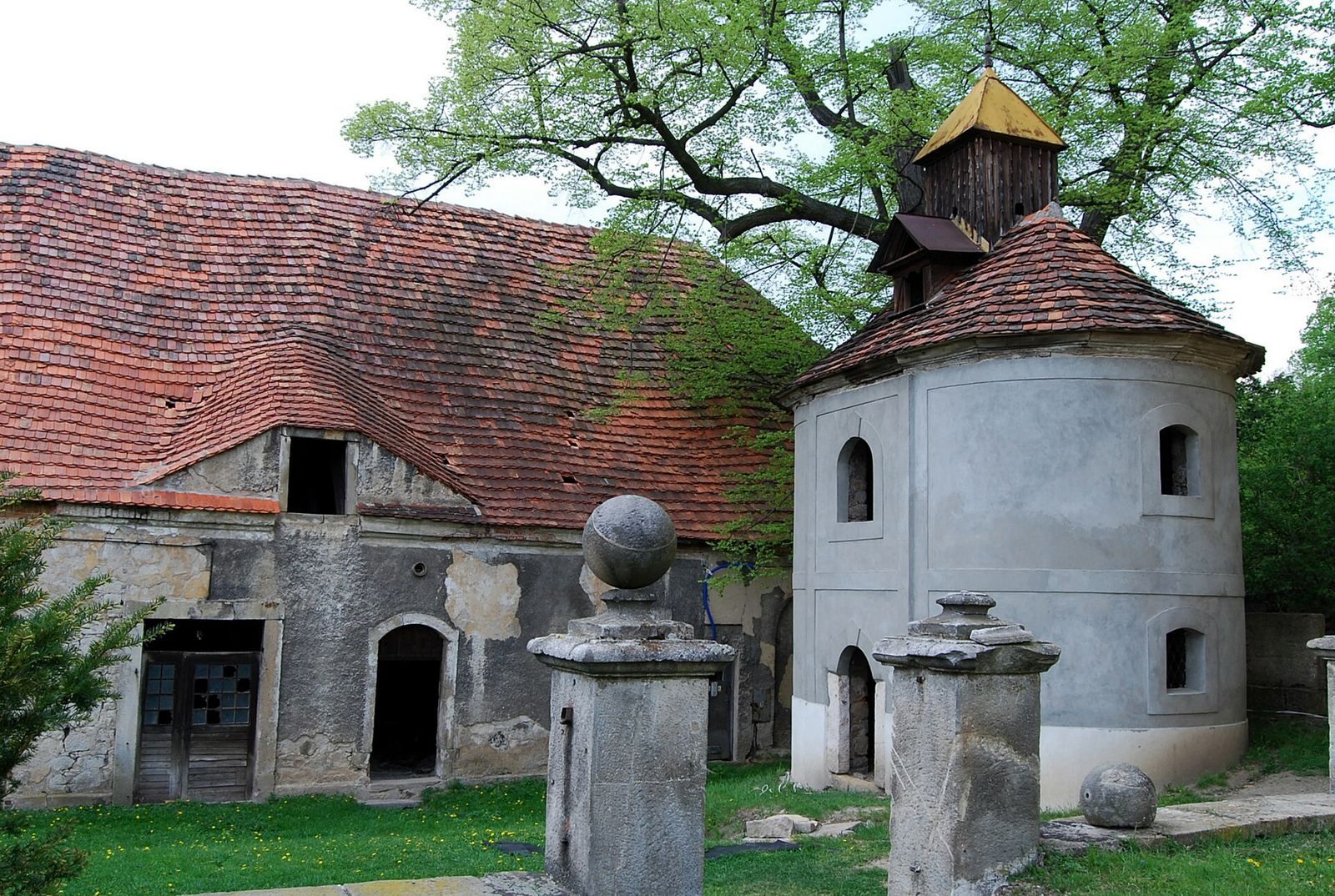
The palace ensemble includes a park, a garden pavilion dating to the early eighteenth century, and a dovecote from the late eighteenth century. A dovecote is a building for housing pigeons or doves.
Castle church
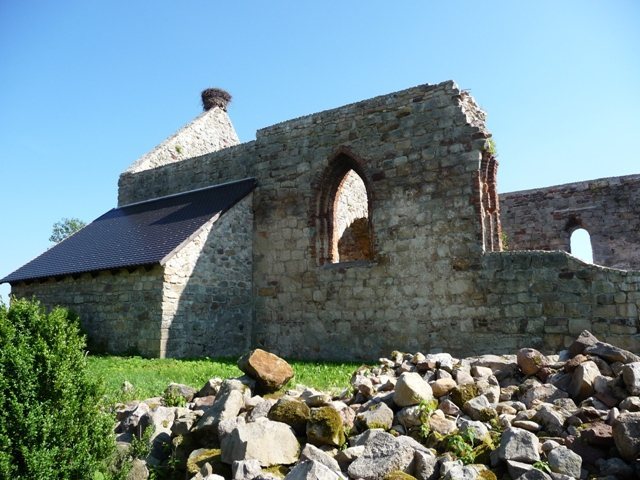
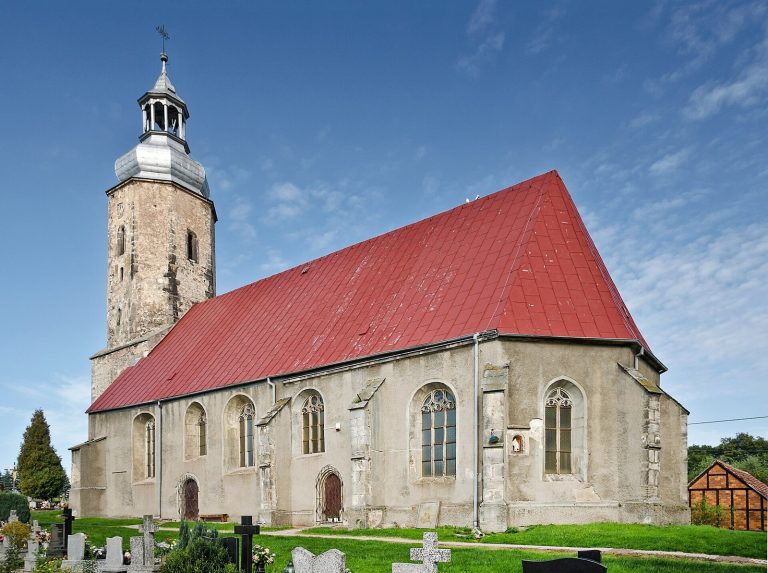
The castle church, also known as Hedwig’s Church, was built in 1662. Its name recalls Saint Hedwig of Silesia, a medieval duchess venerated as a Christian saint and associated with Silesia.
Memorials
Near the old castle stands a gray-blue marble stele by the German sculptor Gottfried Schadow. It features allegorical figures of Religion and the Angel of Death, along with the family’s broken coat of arms. A separate monument to Friedrich Wilhelm Leopold is housed in a small building between the palace garden and the old castle.