Le Breuil-Benoît Abbey: A Medieval Monastery in France
Site at a Glance
- Rating
- 4.8
- Popularity
- Low
- Country
- France
- Primary era
- Medieval
- Eras represented
- Medieval, Early Modern
- Civilizations
- Duchy of Normandy, French
- Site type
- Religious
- Remains
- Church
On this page9 sections
History
Foundation and Cistercian affiliation
Le Breuil-Benoît Abbey is a medieval monastery at Marcilly-sur-Eure, France, founded on 8 May 1137 by Foulques de Marcilly and his son Guillaume. Monks from Vaux-de-Cernay established the community after Foulques made a vow in the Holy Land. It first belonged to the Savigniac congregation, a monastic association that later joined the Cistercian movement. The abbey’s name refers both to the Rule of Saint Benedict and to the place called Le Breuil; its Latin name was Brolium Benedicti.
The abbey founded a daughter house at La Trappe in 1140. In 1147 it joined the Cistercian order, a Catholic monastic order that follows the Rule of Saint Benedict, and became part of the network associated with Clairvaux Abbey. It belonged to the Diocese of Évreux and had Notre-Dame, a title for Mary, as its patron.
Church construction and destruction
After returning from a crusade, Guillaume de Marcilly provided support for construction of the abbey church. Work began in 1190, and the Gothic church, dedicated to Mary and John the Baptist, was consecrated in 1224 by Richard, bishop of Évreux, and Gautier, bishop of Chartres.
In 1421, troops of Henry V of England, king from 1413 to 1422, occupied the abbey. They set fire to the church, plundered the convent buildings and killed the monks.
Decline, dissolution and restoration
By 1762, after the abbey came under commendatory abbots, who held its title and revenues and often were not resident monastic leaders, only two monks remained. The abbey was dissolved in 1790 during the French Revolution, a period of major political change in France. Sold as national property, it was partly dismantled for its stone, particularly in the transept.
Gustave de Reiset bought the property, and restoration began in 1842. The church was reconsecrated in 1854, and further restoration work on it is dated to 1855. The count of Reiset established a museum in the abbey, with displays arranged to suit its buildings. Its collections included The Feast in the House of Levi, a long Venetian-school painting from around 1700 that had belonged to Cardinal Fesch. After Reiset’s death in 1905, parts of the collections were dispersed in public sales, notably in 1922, and maintenance of the abbey ceased. The church became a French historic monument, a building protected under heritage law, in 1993; new owners began further restoration in 1995.
Remains
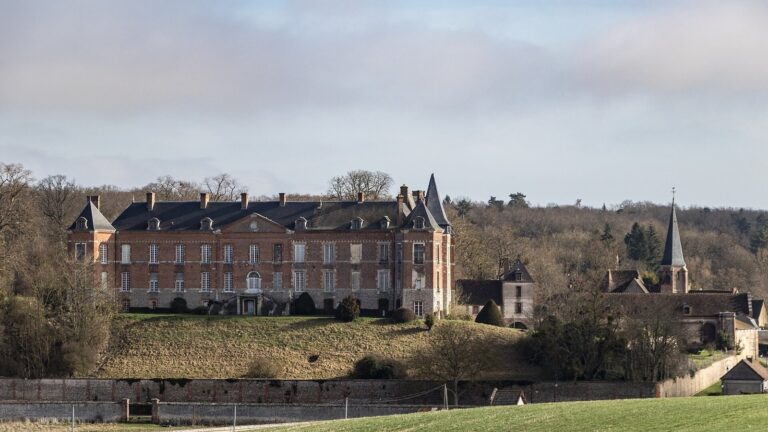
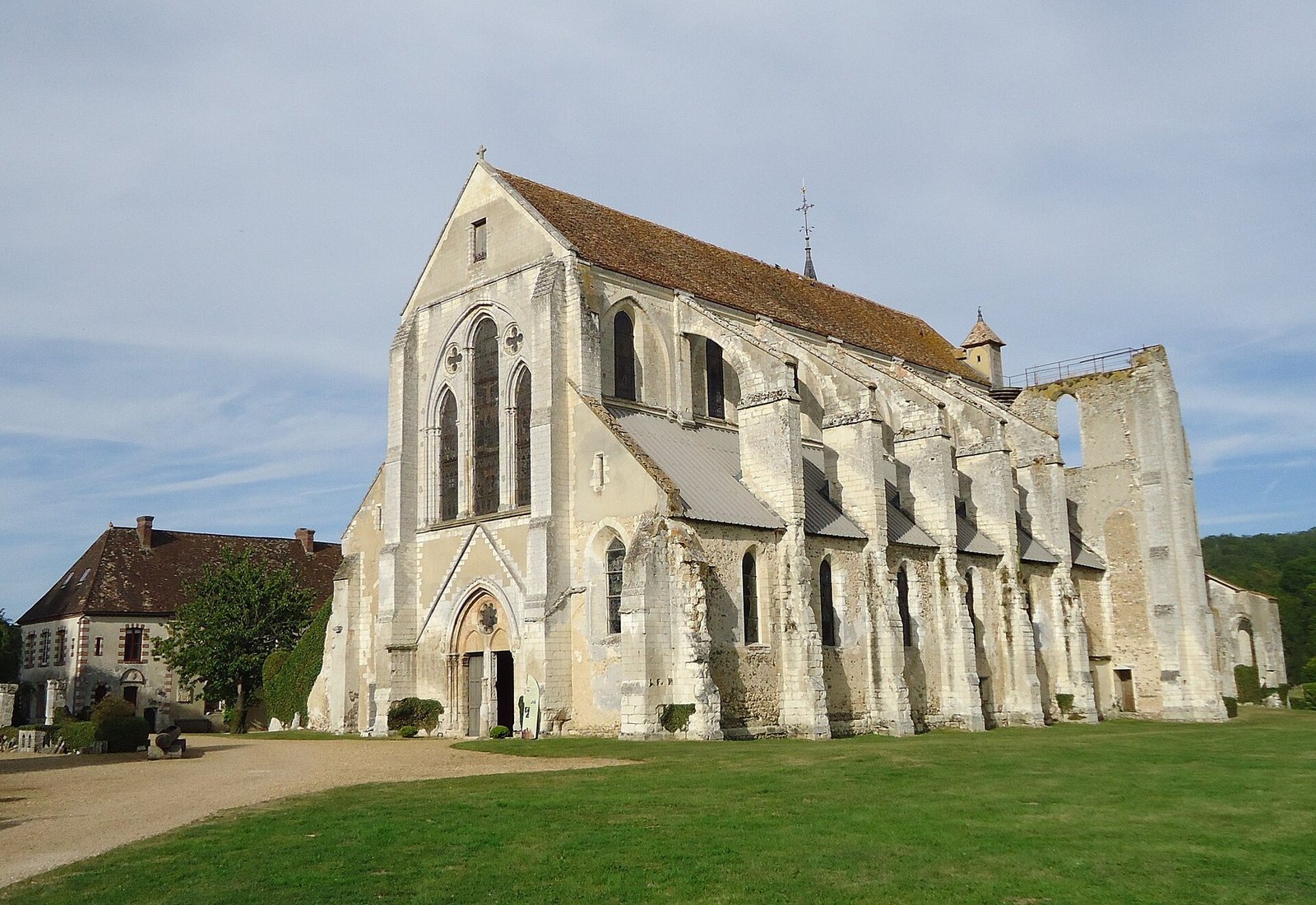
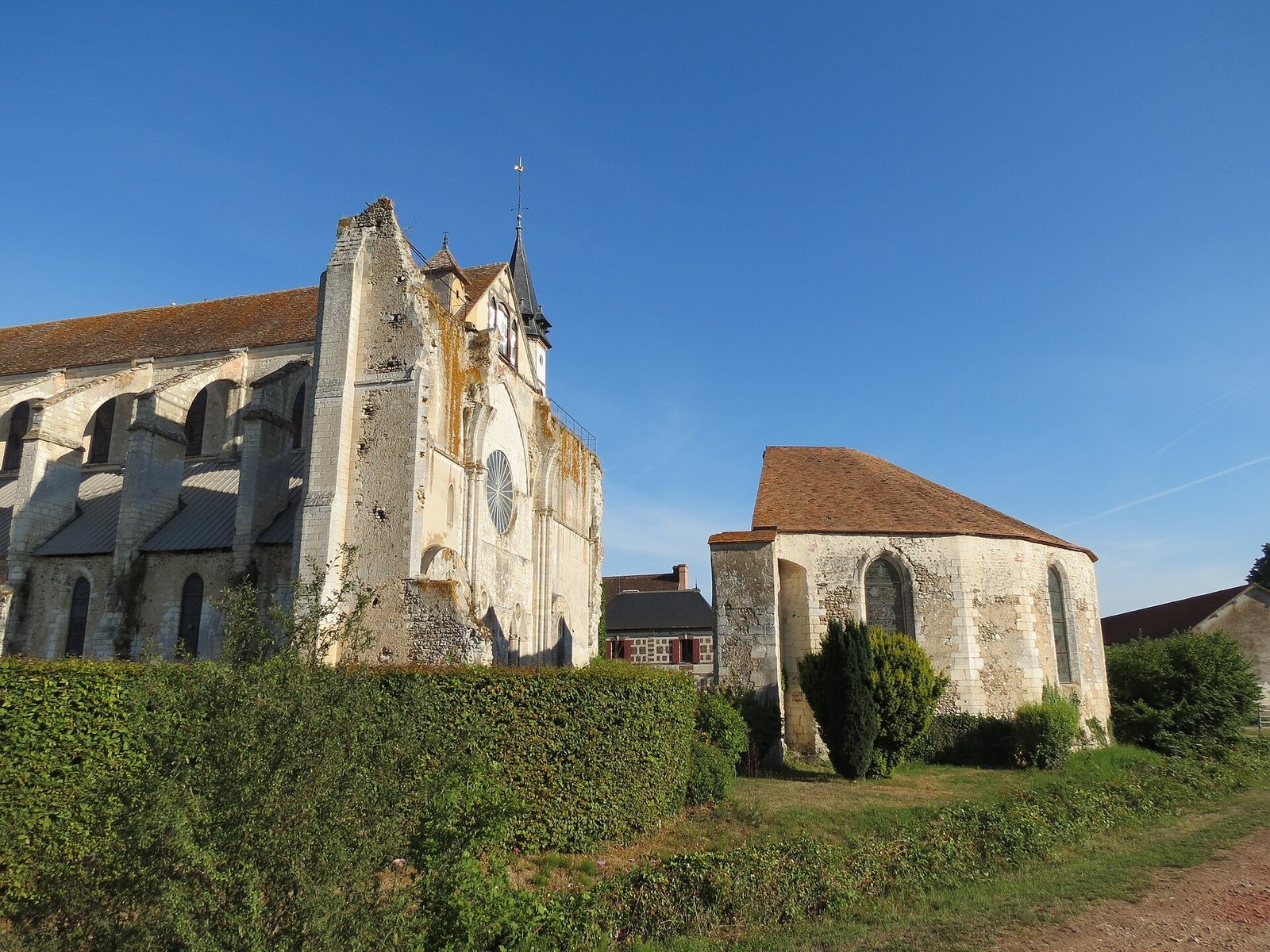
The abbey stands on the left bank of the Eure, about 10 km west of Dreux, within grounds now laid out as a park. Its surviving Gothic church is the only Cistercian church still standing in Normandy.
The abbey church
Nave and west front
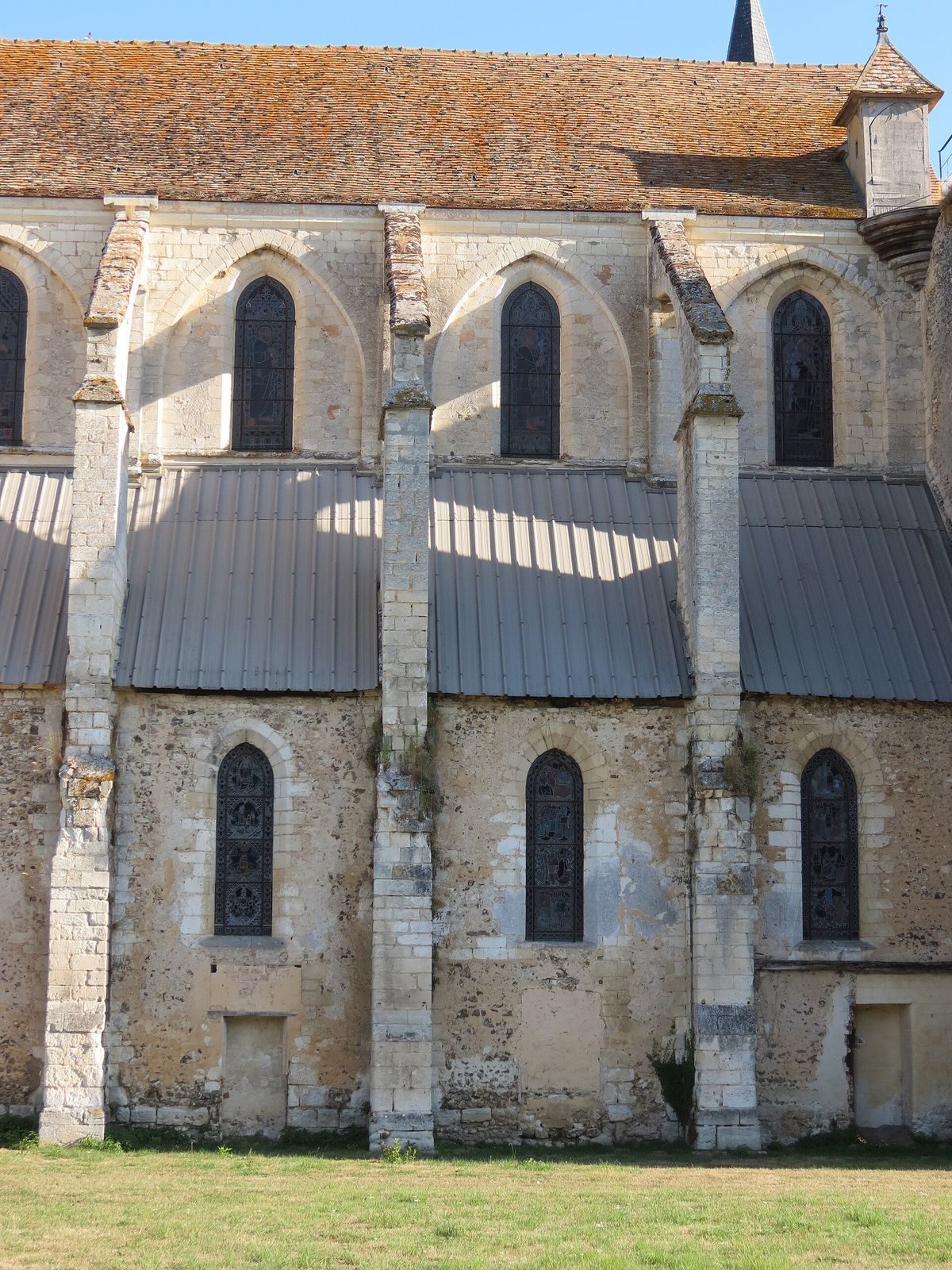
The standing nave has six bays and three aisles, with ceilings formed where barrel vaults intersect. Its west front retains narrow pointed windows, two round windows and a double doorway.
Transept and choir
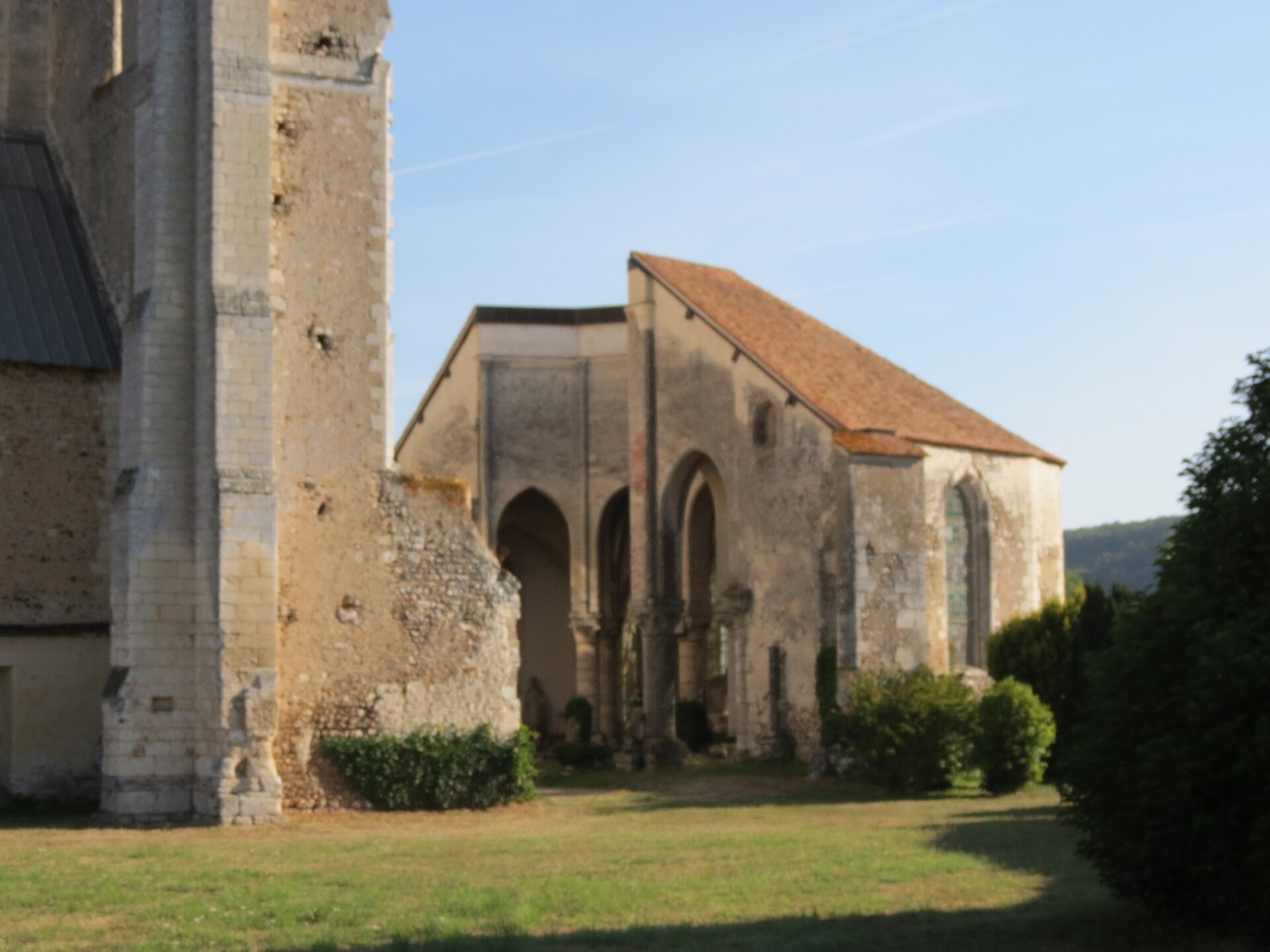
The west walls of the transept survive; the transept originally had three square bays. The church’s standing core was reduced to the six bays of the nave. In the original eastern arrangement, five chapels formed a semicircle behind the choir around an ambulatory, a passage around the sanctuary.
Abbot’s house
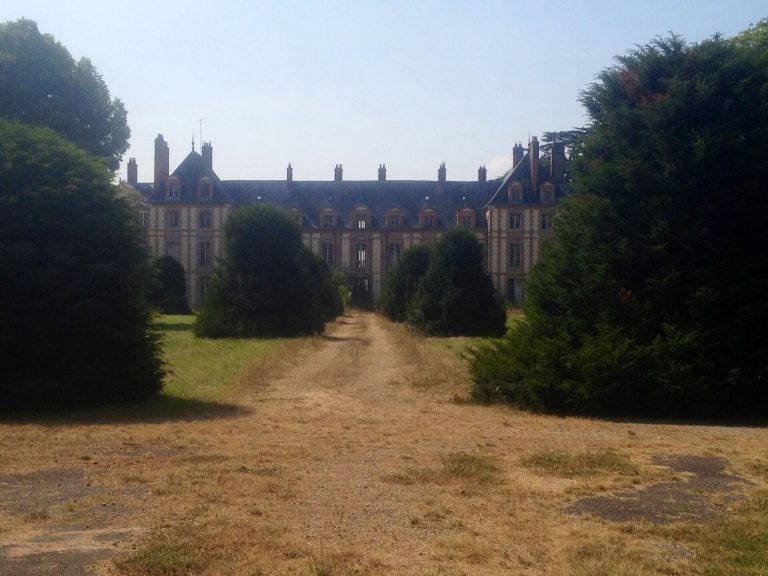
The abbot’s house dates to around 1550. It survives as a building converted into a manor house.