La Trappe Abbey: A Cistercian Monastery in France
Site at a Glance
- Popularity
- High
- Country
- France
- Primary era
- Modern
- Eras represented
- Medieval, Modern
- Civilizations
- French
- Site type
- Religious
- Remains
- Monastery
On this page10 sections
History
La Trappe Abbey is a Cistercian monastery at Soligny-la-Trappe in France, established by monks from Breuil-Benoît in 1140. Dedicated to the Virgin Mary, it later became the center of a reform that shaped the Trappist identity; its surviving buildings are Neo-Gothic.
Foundation and early growth
The abbey’s beginnings lie in an oratory, a small place for prayer, built in 1122 by Rotrou III, Count of Perche. He dedicated it to the memory of his wife, Matilda FitzRoy, daughter of Henry I of England. She had died in the White Ship disaster of 1120, a shipwreck in the Channel that killed many nobles. Monks from Breuil-Benoît settled beside the oratory on 10 September 1140, and Pope Eugene III confirmed the abbey’s charter in June 1147. The community was also known as La Grande Trappe.
La Trappe first belonged to the Congregation of Savigny, a federation of monasteries, before joining the Cistercian Order in 1147. It then came under the authority of the abbot of Clairvaux. Breuil-Benoît remained its mother house, the abbey from which a community was founded or governed, until 1660; Clairvaux held that relationship until 1790. The abbey belongs to the Diocese of Séez.
La Trappe prospered under Anglo-Norman rule, receiving early gifts of property at Moulins-la-Marche, Mélicourt, and Ballon in the forest of Breteuil. Its greatest spiritual and material prosperity came under its third abbot, Adam Gautier. During his tenure, the church was completed and consecrated on 27 April 1214. On 3 October 1215, the abbey founded the Cistercian women’s house of Les Clairets at Mâle.
The origin of the name “Trappe” is disputed. One proposed link is the Latin plant name Trapa natans, although that plant is not found in the Perche. Another connects it with the Irish word Treabh, meaning family or clan, an explanation that would imply an earlier settlement. A Germanic origin in Treppe, meaning stair or step, is considered more likely and has been associated either with the terrain or with poaching in the forest.
Warfare and royal control
The Hundred Years’ War, a series of conflicts between the English and French crowns during the fourteenth and fifteenth centuries, repeatedly disrupted the community. The monks left for about two years around 1360 and took refuge at Bonsmoulins Castle. Around 1376, the abbey was burned and largely destroyed, though its church and chapter house, the room where monks met for community business and readings, survived. After rebuilding, the abbey was pillaged in 1434 and again later in the fifteenth century.
In 1527, Francis I, king of France from 1515 to 1547, imposed the commendatory system under the Concordat of Bologna. A commendatory abbot received authority and income through appointment rather than election from the monastic community. The monks elected their own regular abbot in 1548, but the king revoked the choice the next day. The first commendatory abbot, Jean du Bellay, also governed at least five other abbeys.
Rancé’s reform and the Trappist identity
Monastic observance declined during the sixteenth and seventeenth centuries. In 1660, Armand Jean le Bouthillier de Rancé began a stricter reform at La Trappe. He found seven monks there and judged their way of life distant from prayer, so he required them to choose between adopting reform and leaving. He brought in six monks from Perseigne Abbey and sought guidance from abbots who had introduced strict practices elsewhere. After completing a novitiate at Perseigne, he became La Trappe’s regular abbot in 1664.
Rancé’s reform, first described as stricter observance and later called the Strict Observance, attracted new members and gave rise to the Trappists, members of the Cistercian Order of the Strict Observance. Rancé opposed the abbots of Cîteaux, the original Cistercian abbey, who preferred a relaxation of the rule. Louis XIV, king of France from 1643 to 1715, supported the common observance partly to keep non-French abbots involved in the Cistercian council and preserve royal influence over it. For a time, La Trappe was the only house following Rancé’s reform. François-Nicolas de la Forest de Somont, abbot of Tamié, adopted it after visiting La Trappe.
After Rancé died on 27 October 1700, Louis XIV allowed the monks to elect their own abbot. In 1705, Abbot Jacques de la Court sent eighteen monks to establish a reformed community at the Cistercian abbey of San Bartolomeo di Buonsollazzo in Italy; it grew to fifty monks within about fifty years. Between 1714 and 1790, 300 monks made their formal vows at La Trappe, most of them lay brothers, whose traditional duties centered on manual work and service.
Revolution, exile, and return
French laws enacted in 1790 first prohibited monastic vows and then religious orders. Augustin de Lestrange, the novice master, left with the monks rather than give up monastic life. Of 24 brothers initially allowed to accompany him, 21 ultimately went. They settled at La Valsainte in Switzerland in 1791. After France occupied Switzerland in 1797, the community was displaced through central and eastern Europe. Expelled from Russian territory in 1800, the monks settled at Darfeld in Germany. Lestrange fled Napoleon’s forces in 1811, and the exiles returned to France in 1814. Some monks were executed, imprisoned, or deported during the Revolution.
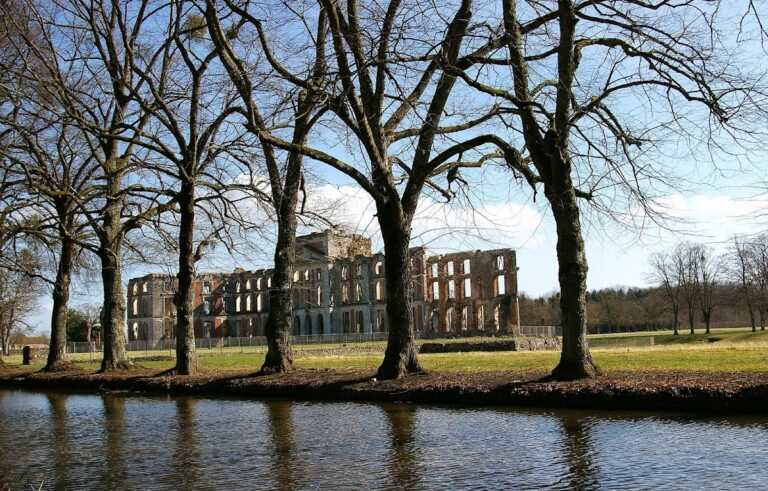
Sold as national property during the Revolution, the abbey was stripped of its materials. Its church, cloister, and chapter house were demolished, and construction materials were sold locally; trees previously kept for building timber were also cut down. Lestrange bought the property back in 1815. The returning Trappists split between those following his rule and those adhering to Rancé’s. A dispute between Lestrange and the local bishop temporarily prevented monastic life at Soligny, and the community took refuge at Bellefontaine. It returned to La Trappe in 1827, after Lestrange’s death.
Renewal and later history
La Trappe became a mother house again after the community’s return, founding or serving as the parent abbey for several Trappist communities: Bellefontaine in 1816, Timadeuc in 1841, Échourgnac in 1852, and Tre Fontane in 1867. The monks were expelled under French laws against religious institutions in 1880 but returned a few years later. The Cistercians of the Strict Observance gained official recognition and autonomy in 1892. When Cîteaux was restored in 1898, La Trappe ceased to lead the order that had taken its name. The abbey was listed as a historic monument in 1975.
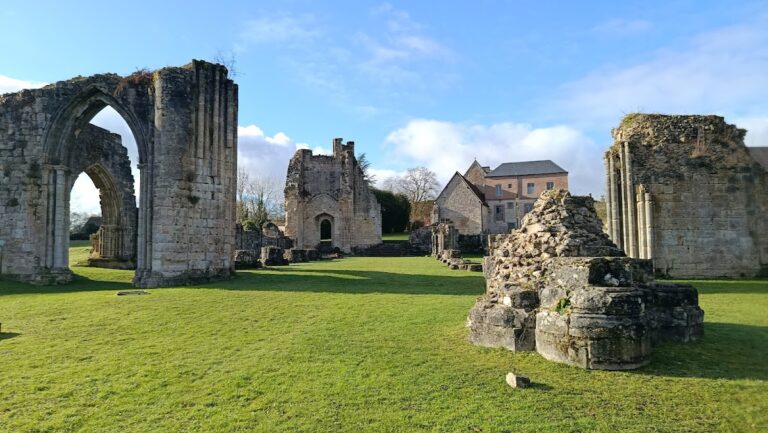
Remains
The abbey stands beside the Itonne, a small right-bank tributary of the Iton, at the foot of the western slope of a low plateau that extends into the state forest of Perche and La Trappe. Four ponds dug by the monks border the site to the east and south: Robin, Dais, Chaumont, and Rancé, in that order from upstream to downstream. The abbey is oriented nearly 60 degrees toward the northeast, rather than following the conventional eastward alignment of churches.
The reconstructed abbey
Church
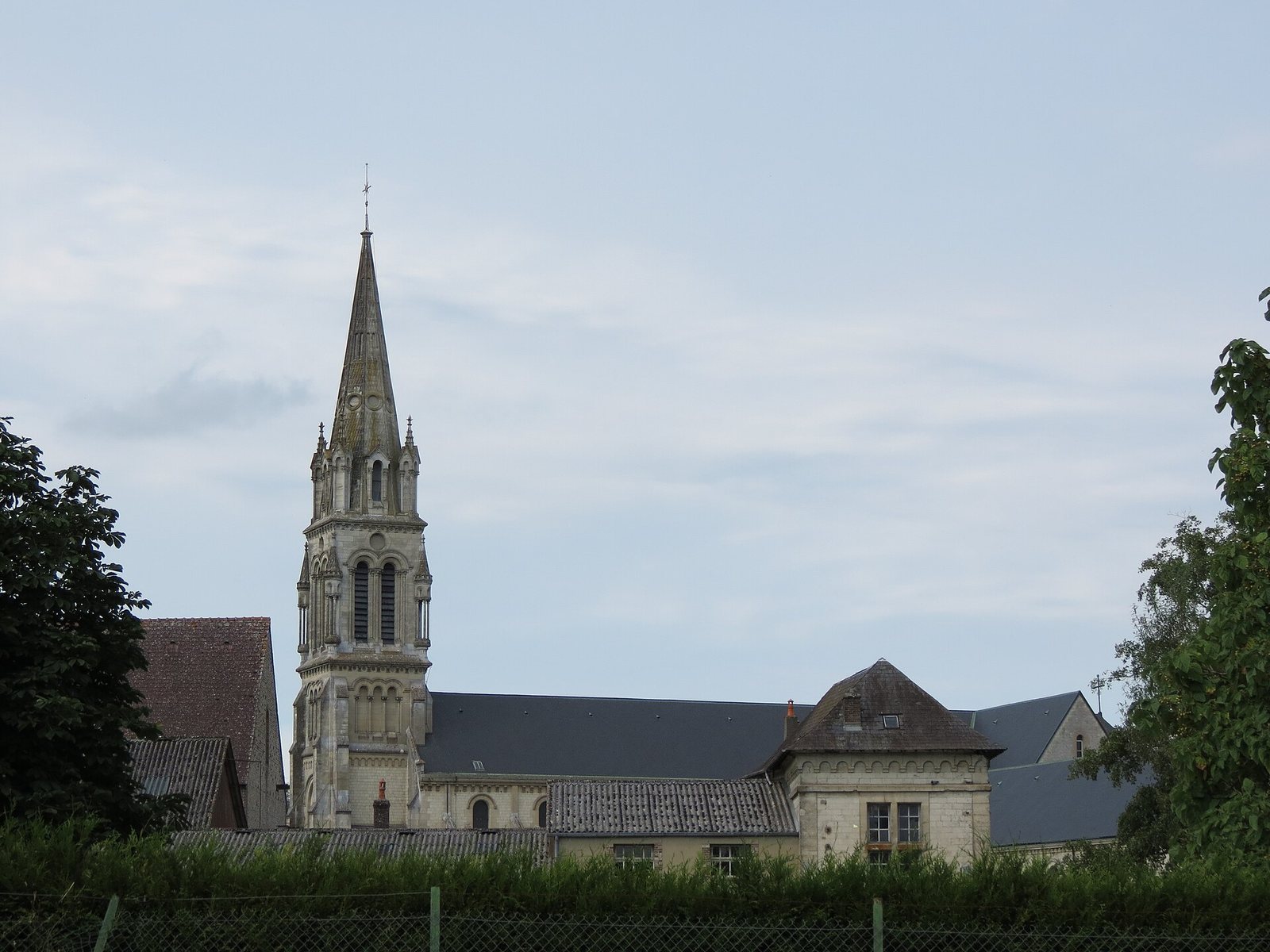
A new church was consecrated on 30 August 1832. The present church, the third built on the site, was constructed and consecrated on 30 August 1895.
Monastic buildings
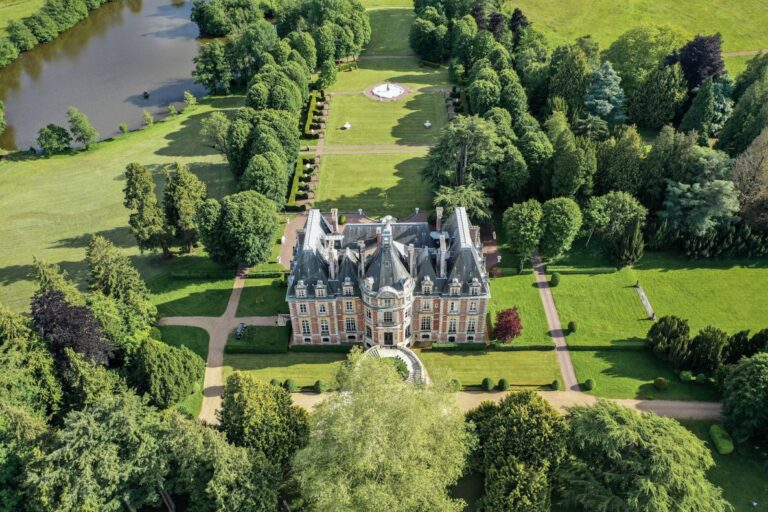
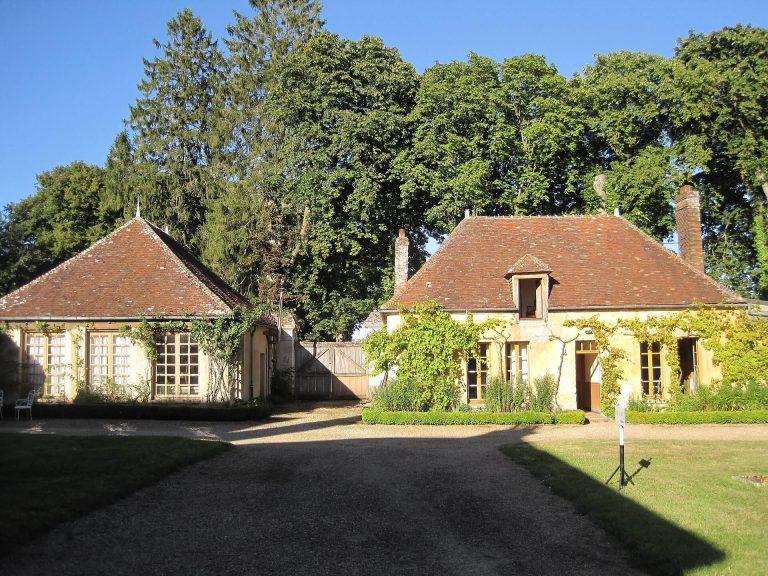
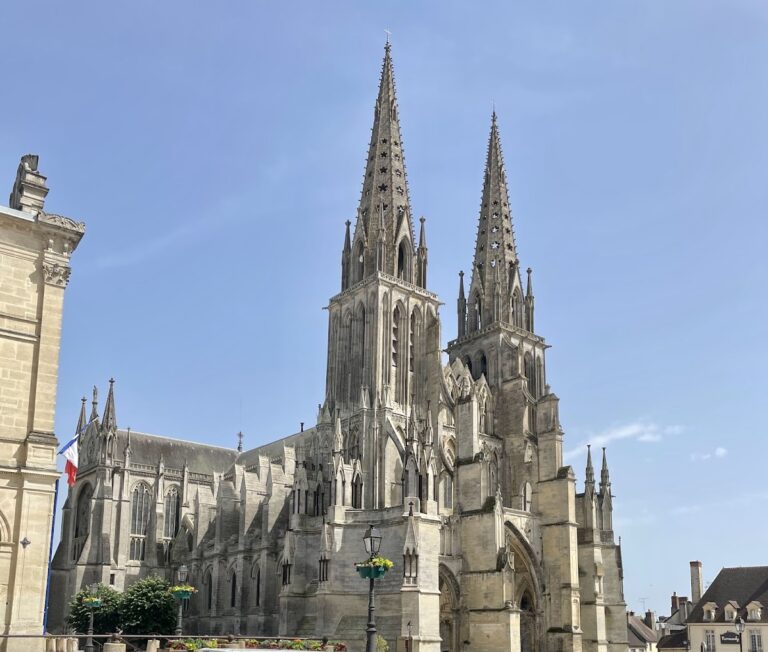
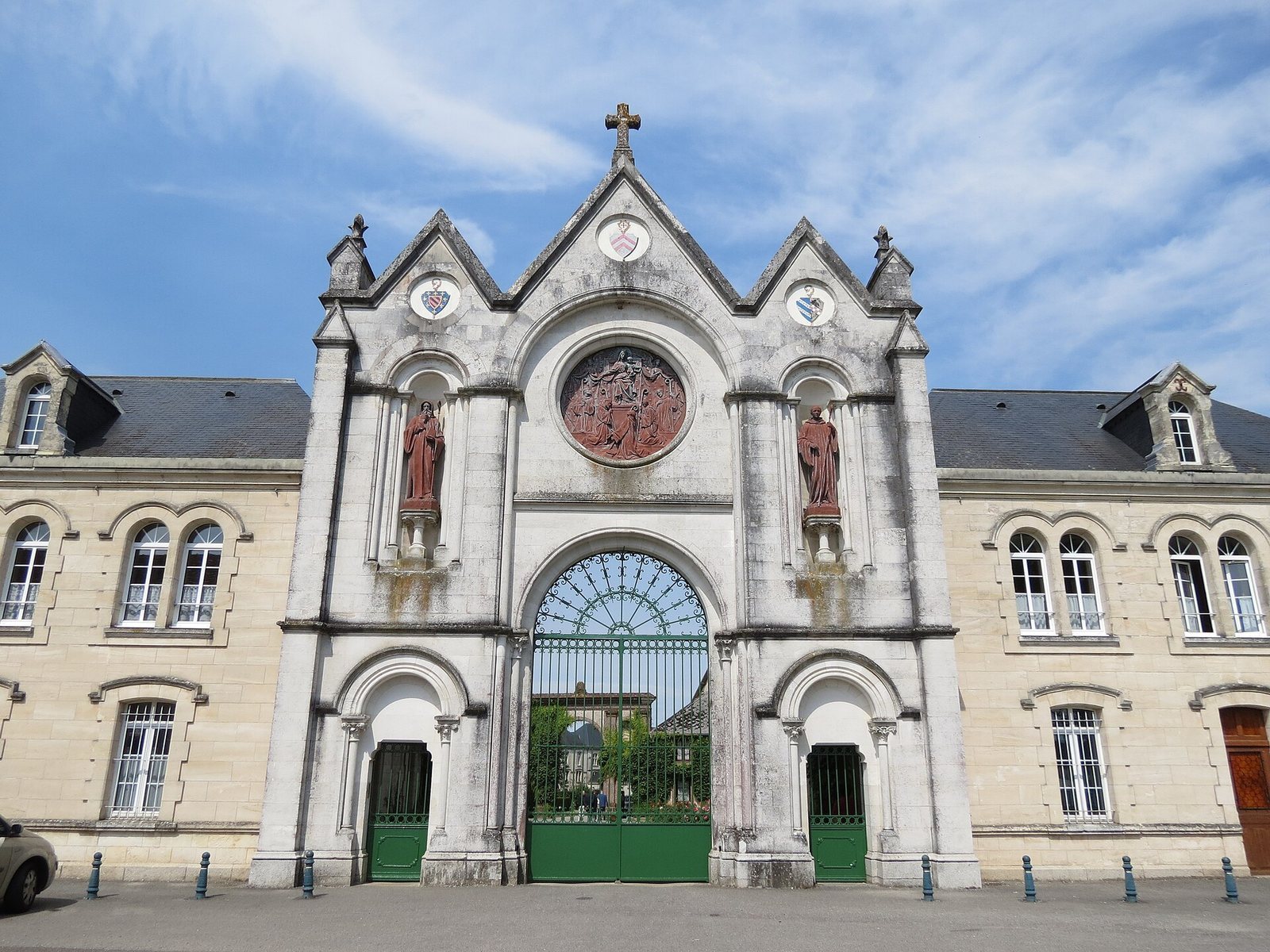
The abbey’s buildings were reconstructed in Gothic style between 1829 and 1895. The surviving buildings are described as Neo-Gothic.