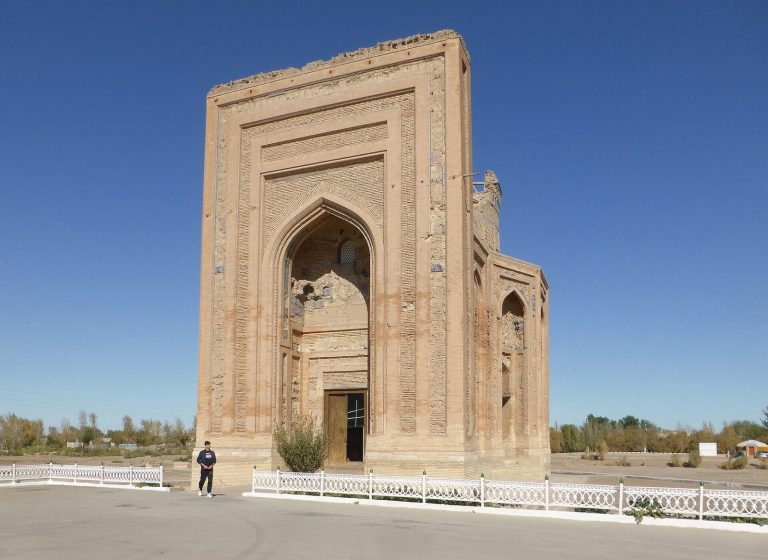
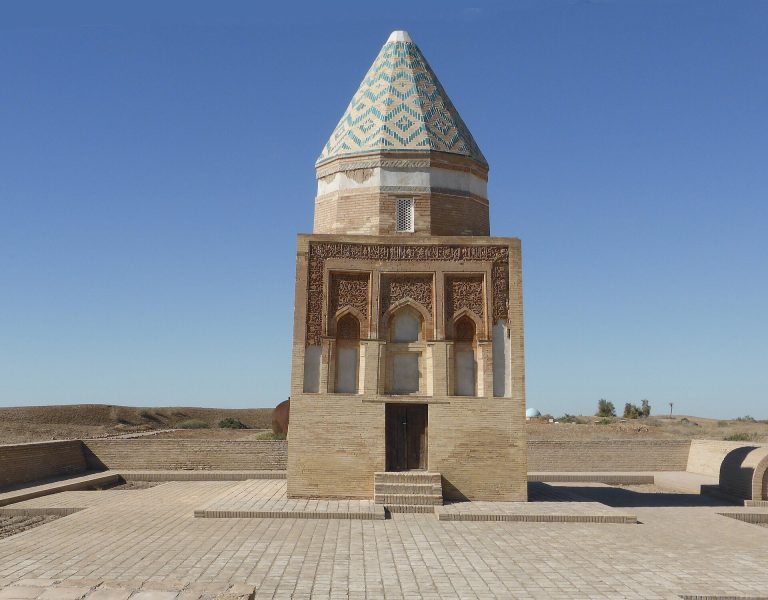
Kutlug Timur Minaret: An Islamic Tower of Old Urgench
Site at a Glance
- Popularity
- Very Low
- Country
- Turkmenistan
- Primary era
- Medieval
- Eras represented
- Medieval
- Civilizations
- Golden Horde, Khwarazmian
- Site type
- Religious
- Remains
- Minaret
On this page6 sections
History
Kutlug Timur Minaret is an Islamic tower at Konye-Urgench in Turkmenistan, within the ruins of the ancient city of Old Urgench. It belongs to the Khwarezmian architectural tradition, although its chronology remains uncertain. An early phase is dated to 1011, while the surviving form is variously placed between about 1320 and 1330 or between 1321 and 1336.
Khwarezmian and Golden Horde phases
One chronology places the beginning of the minaret under a Khwarezmian ruler and connects its completion or restoration with Kutlug Timur after Genghis Khan destroyed the city in 1221. Kutlug Timur governed Konye-Urgench and the surrounding territory as an official of a Golden Horde khan. The Golden Horde was the Mongol khanate that later controlled much of northern Central Asia and the Eurasian steppe.
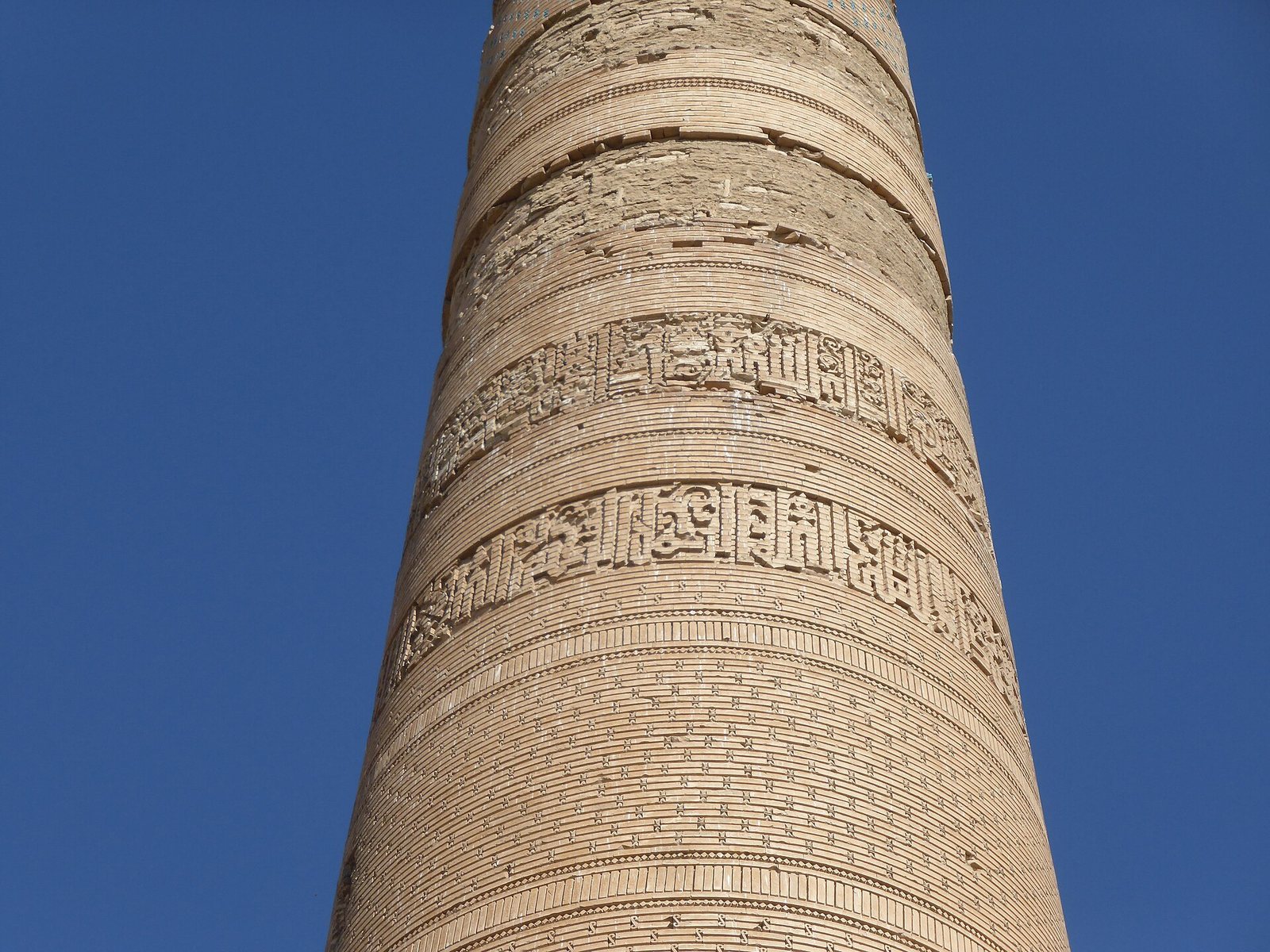
During its use, the minaret belonged to the city’s great mosque, which stood directly beside it. The original entrance to the tower was inside the mosque. Kufic inscriptions, an angular form of Arabic script used widely for monumental writing, preserve the names of Kutlug Timur and Uzbek Khan, who ruled the Golden Horde from 1313 to 1341. Kutlug Timur was probably Uzbek Khan’s cousin through the female line.
Modern heritage
Kutlug Timur Minaret forms part of the Kunya-Urgench UNESCO World Heritage property, inscribed in 2005 as a cultural site under criteria ii and iii. It also lies within the Konye-Urgench National Historical and Cultural Museum-Reserve. The tower appeared on a 500-manat Turkmen banknote issued in 1993, although that note is no longer in circulation.
Remains
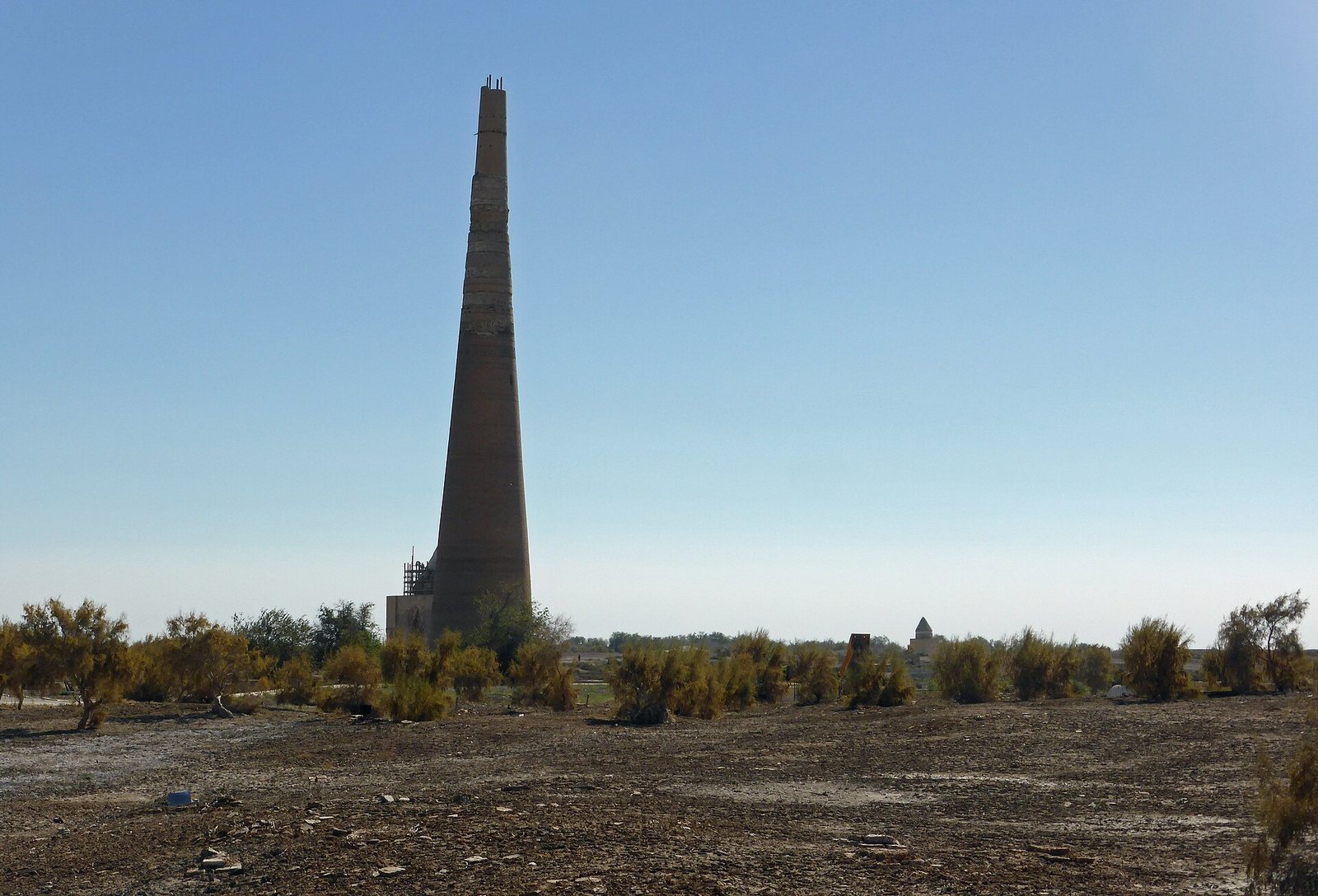
The minaret is a tapering circular tower built from ceramic brick. It rises approximately 60 metres, with another stated measurement giving a height of 62 metres. Its diameter is about 12 metres at the base and approximately 2 metres at the top. Patterned polished brickwork decorates the exterior, while Kufic inscriptions remain on the surface. The nearby mausoleum of Sultan Tekesh stands beside the tower.
The tower and its interior
An internal spiral staircase contains 145 steps. The present entrance is above ground level, and the minaret cannot be climbed. The tower leans, especially toward its upper section. Earthquakes or a fire that heated the masonry unevenly have been proposed as possible causes of this distortion.
Architectural comparisons
Kutlug Timur Minaret belongs to a group of approximately 60 minarets and towers built between the eleventh and fourteenth centuries across Central Asia, Iran, and Afghanistan. The Minaret of Jam in present-day Afghanistan provides a comparable example. The tower has been described as the tallest minaret and architectural monument in Central Asia. The Minaret of Islam Khoja in Khiva is 56.6 metres high, while the minaret of the Hast-Imam Mosque in Tashkent is 53 metres high.