Kurangun: An Elamite Religious Rock Relief in Iran
Site at a Glance
- Popularity
- Medium
- Country
- Iran
- Primary era
- Bronze Age
- Eras represented
- Bronze Age, Iron Age
- Civilizations
- Elamite
- Site type
- Civic
- Remains
- Rock Art
On this page7 sections
History
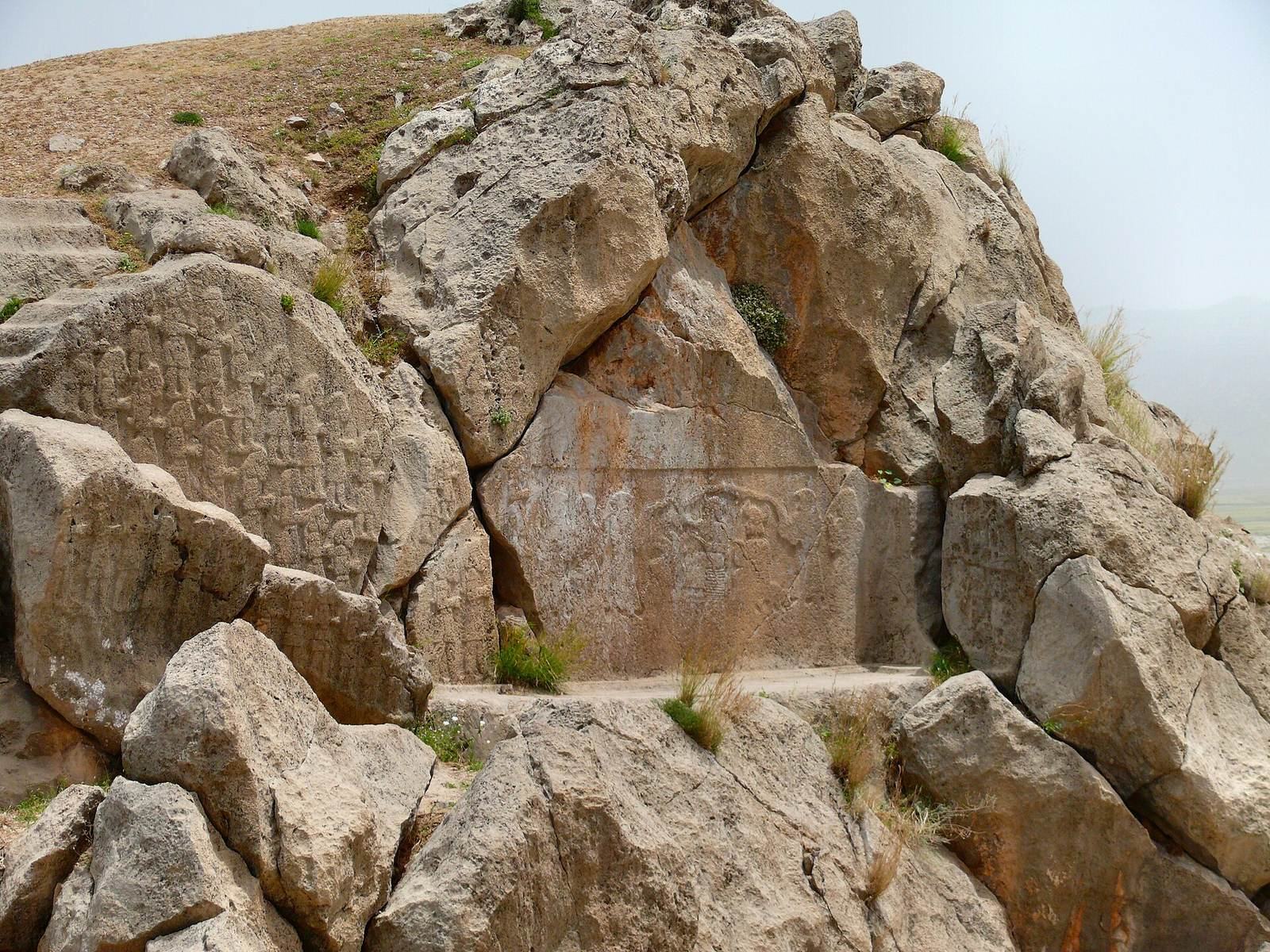
Kurangun is an Elamite religious rock relief, a scene carved into a natural rock face, in Fars Province, Iran. The Elamites were an ancient people of southwestern Iran. The relief’s central scene is tentatively dated to around 1700 BCE, while its flanking carvings probably belong to the eighth or seventh century BCE.
Dating and Religious Interpretation
The relief’s chronology remains disputed, and the central scene and side panels may have been made more than a millennium apart. The scene is associated with the worship of water. The identities of the seated deities are uncertain: proposed pairings include Inšušinak and Napiriša, Homban and Kiririsha, or Homban and Aparti, also called Parti.
Recognition and Interpretation
German historian and archaeologist Max von Oppenheim first brought the relief to wider attention. Walter Hinz, a scholar of Elamite and Iranian history, interpreted the cup-bearing figures as a king and his brothers or successors. Kurangun is registered as one of Iran’s national monuments.
Remains
Setting and Layout
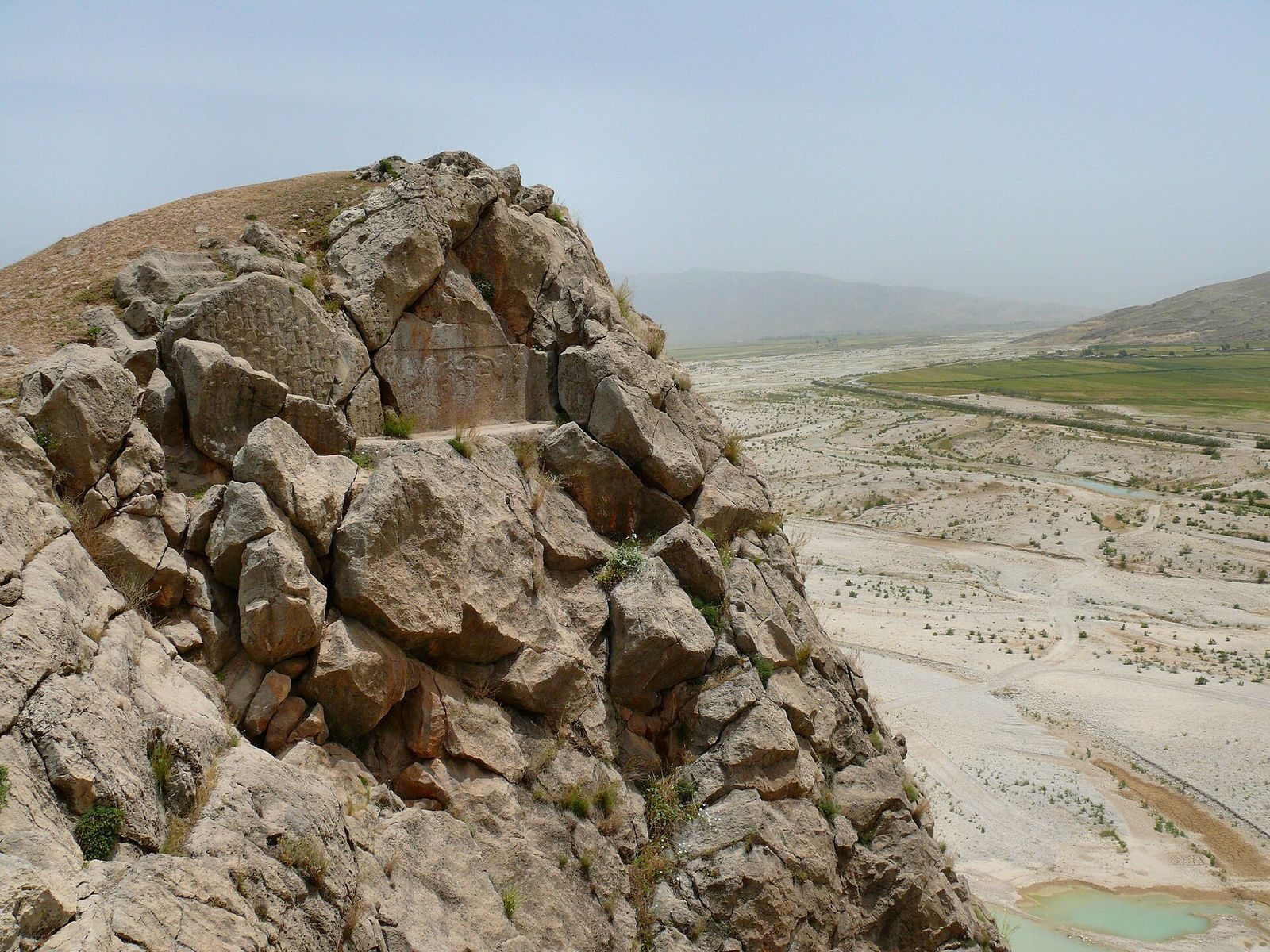
The carving occupies a large rock above a road, facing west and overlooking the Fahliyan River. It is near the village of Sa Telun, about 5 km south of Masiri and about 10 km northwest of Fahliyan. Janjan Palace and the ancient city of Lidoma are each about 1 km away. Several eagle nests are present around the relief.
Central Scene
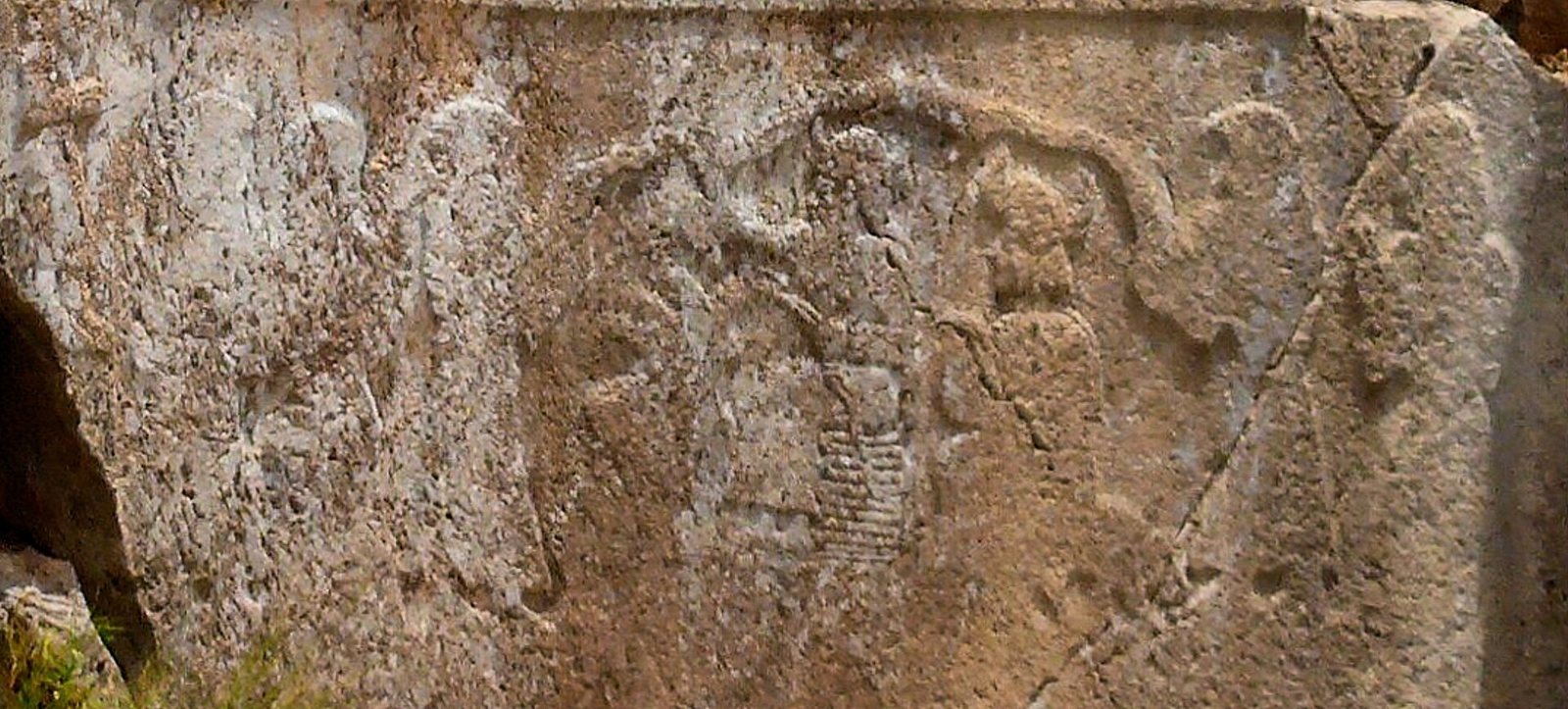
A male deity and a goddess sit side by side on thrones resembling coiled serpents, both wearing horned crowns. The goddess’s long garment covers her body and legs, and her hands are folded before her chest and abdomen. The male deity holds a cup; two streams, described as water-like or lightning-like, extend toward nearby figures and enter the cups they hold.
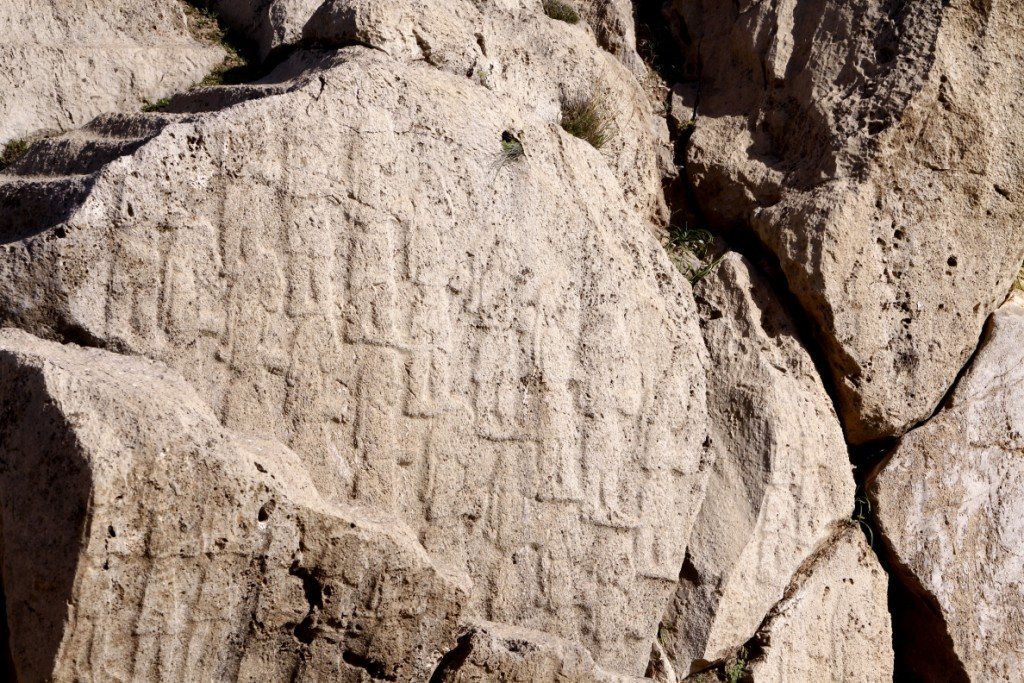
Figures and Surrounding Motifs
Two figures stand behind the deities, one apparently praying and the other holding a cup. A burning altar stands before them, with three more figures in front: a figure in a longer garment between two men, and a foremost figure holding a sacred cup. Standing figures frame the central scene in two side panels, with the right-hand panel added later. Worshippers appear in groups to the left and in rows in the right-hand panel. The carving also includes a riverbed with swimming fish and striated, cloud-like forms above the deities, interpreted as smoke or vapor.