Mangyu Temple Complex: An Early Buddhist Monument Group in Ladakh
Site at a Glance
- Popularity
- Medium
- Country
- India
- Primary era
- Medieval
- Eras represented
- Medieval, Early Modern
- Civilizations
- Unclassified
- Site type
- Religious
- Remains
- Temple
On this page12 sections
History
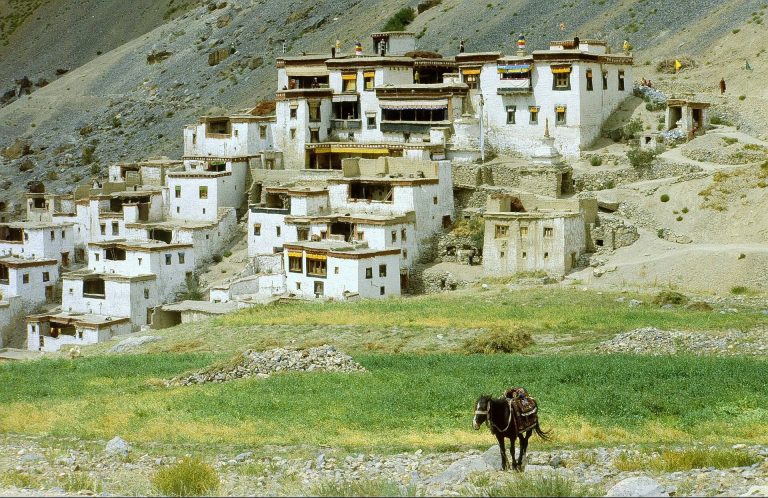
The Mangyu temple complex is a Tibetan Buddhist monument group in Mangyu village, Ladakh, India. Its earliest buildings are generally dated to the late 12th or early 13th century, and the group is among the earliest Buddhist monuments in Ladakh. Its temples are considered broadly contemporary with those at Alchi and Sumda Chun.
Local oral tradition credits the temples’ establishment to Rinchen Zangpo (958–1055), a prominent translator of Buddhist scriptures into Tibetan. This traditional attribution differs from the later date generally assigned to the earliest buildings.
Likir Monastery administers the early temple group, and a monk appointed by the monastery conducts religious activities there. A newer temple, built slightly above the early structures, is administered by Matho Monastery.
Restoration work began in the late 2000s. INTACH’s Delhi chapter conserved the temples and chapels over five seasons, including work on paintings in the Sakyamuni temple.
Remains
The early complex stands at about 3,500 metres above sea level. Its principal group consists of two small temple halls, dedicated to Vairocana and Sakyamuni, with a chapel on either side.
Temple halls and chapels
Vairocana temple
Also known as Nangbar Nangzad, the Vairocana temple has an assemblage of sculptures on its northwest wall. Some of its wall paintings have been lost or repainted, while high-quality original paintings survive in the complex.
Sakyamuni temple
The Sakyamuni temple is also called the Chenrezig Lakhang, or Avalokiteshvara Temple. An image of Sakyamuni is set into its northwest wall. Sakyamuni was the original principal image, and an Avalokiteshvara sculpture was added much later.
Maitreya chapels
The chapels flanking the halls are known as the Chamba Lakhang, or Maitreya chapels. Each contains a large image of Maitreya, the Buddha expected to appear in the future. One image has two arms and the other four, and the figures differ in style and religious representation.
Paintings and carved decoration
Temple decoration
The Sakyamuni temple contains images of Buddhas, Hindu deities including Varuna, Indra, Shiva as Mahakala and Ganesha, as well as celestial beings and imagined animals. Its decoration draws on Kashmiri and Tibetan influences. Carved reliefs, especially the details of divine faces and eyes, and symbolic religious diagrams called mandalas are finely executed. Paintings were built up in multiple layers, and two images of Manjusri appear on the temple’s southwest wall.
Paintings at the monastery entrance
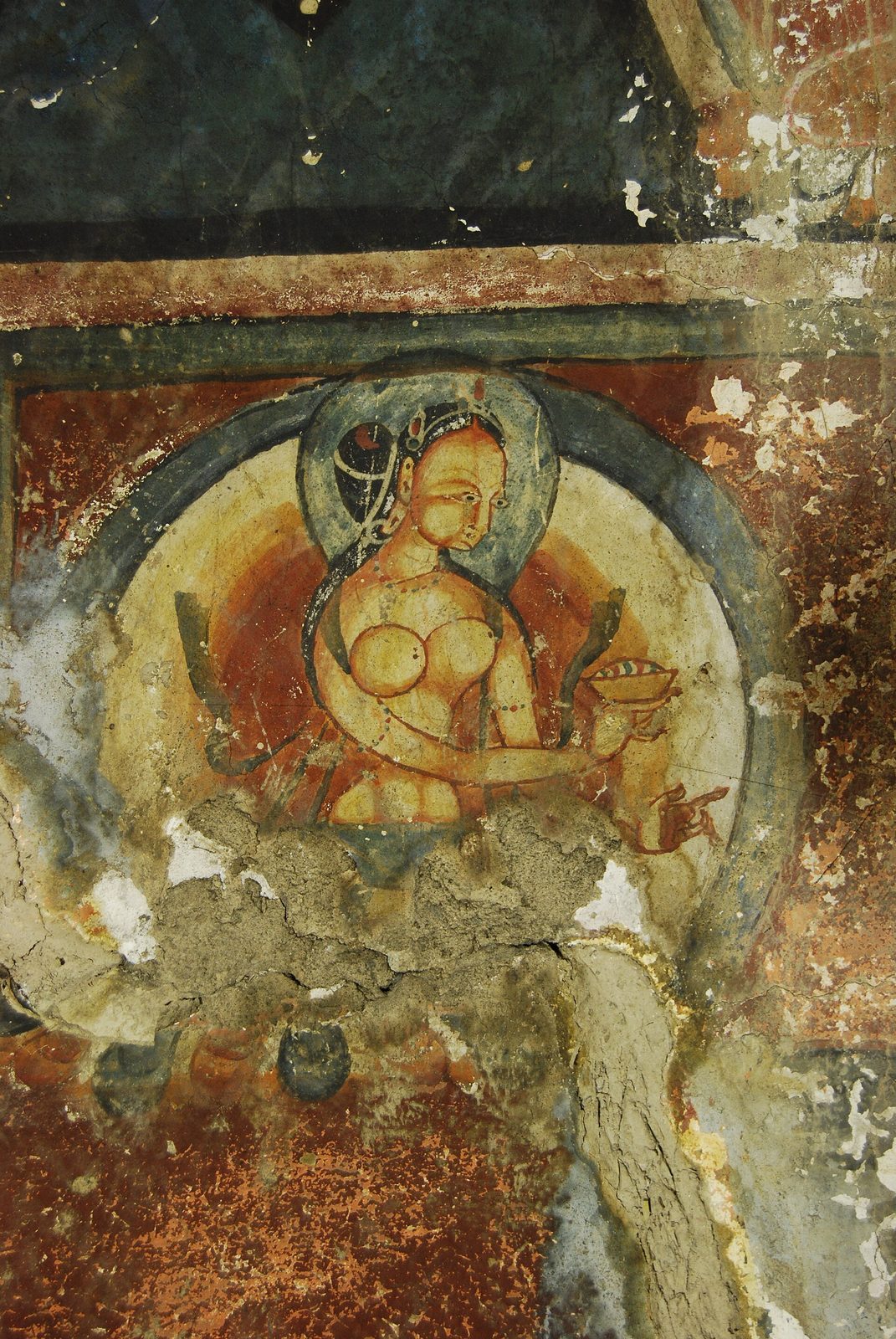
A 16th-century scene of a royal drinking gathering is painted at the monastery entrance. A painting of a female deity is also identified at Mangyu.
Chortens
Two early painted chortens, Buddhist monuments of the stupa type, are associated with the complex.
Chorten beside the temple group
One stands beside the temples and belongs to a type also found at Alchi.
Four Image Chorten
The Four Image Chorten stands on the slope above the complex, behind village houses. It is richly decorated and contains four sculptures.