Kriemhildenstuhl: A Roman Quarry in Germany
Site at a Glance
- Rating
- 4.7
- Popularity
- High
- Country
- Germany
- Primary era
- Classical
- Eras represented
- Classical
- Civilizations
- Roman
- Site type
- Economic
- Remains
- Quarry
On this page12 sections
History
Kriemhildenstuhl is a Roman sandstone quarry northwest of Bad Dürkheim in Germany, operated around AD 200 by the 22nd Legion, a Roman army formation based at Mogontiacum, the Roman name for Mainz, about 60 kilometres away. An estimated 20,000 cubic metres of quartz-rich sandstone was extracted; roughly 10,000 cubic metres was transported away as ashlar, stone cut into regular building blocks.
Medieval traditions and changing names
In the Middle Ages, the quarry was mistakenly associated with the Burgundians and the Nibelungenlied, a medieval German epic connected with Burgundian legends. In the early twentieth century, its local name was Krummholzer Stuhl. Some publications from 1867 to 1939 instead called it Brunholdisstuhl, an unverified identification. These mistaken associations also prompted claims that another Roman quarry lay nearby.
Excavation and reinterpretation
Excavations took place in 1884, 1893-94, 1916-17, 1934-35, and 1937-39. During the Nazi period, efforts to establish that the quarry had been an ancient Germanic cult site proved unsuccessful. Speculation published in 1934 met strong opposition from the Nazi Party’s monitoring office. In 1937, the Ahnenerbe, an SS-linked research organization pursuing claims about ancient Germanic culture and ancestry, revived the idea.
Excavations in the second half of the twentieth century added evidence about Roman quarrying methods and the organization of its workforce, and brought further inscriptions to light. The Drachenfels Club owns the quarry. An ordinance dated 14 December 2001 designated it a monument zone, a protected historic area; it is also listed as an individual monument.
Remains
Quarry form and setting
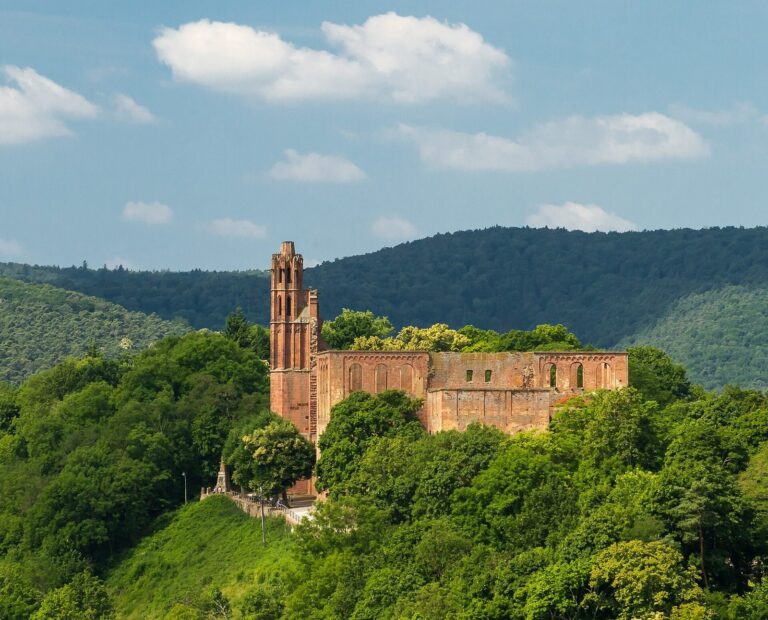
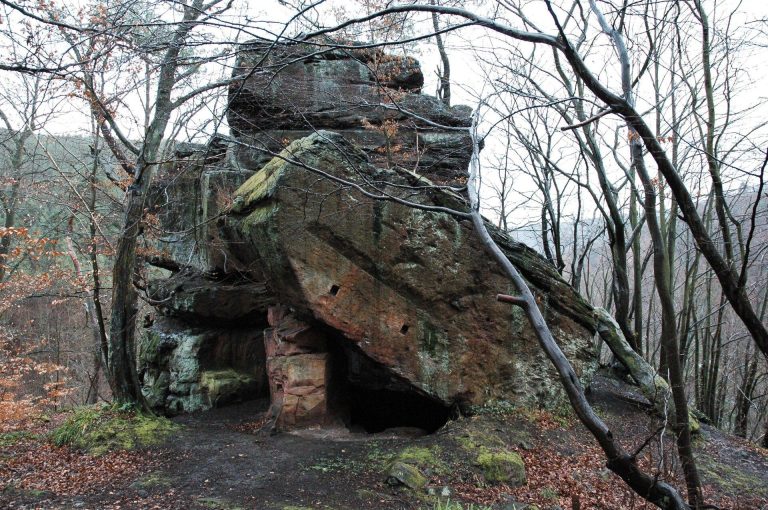
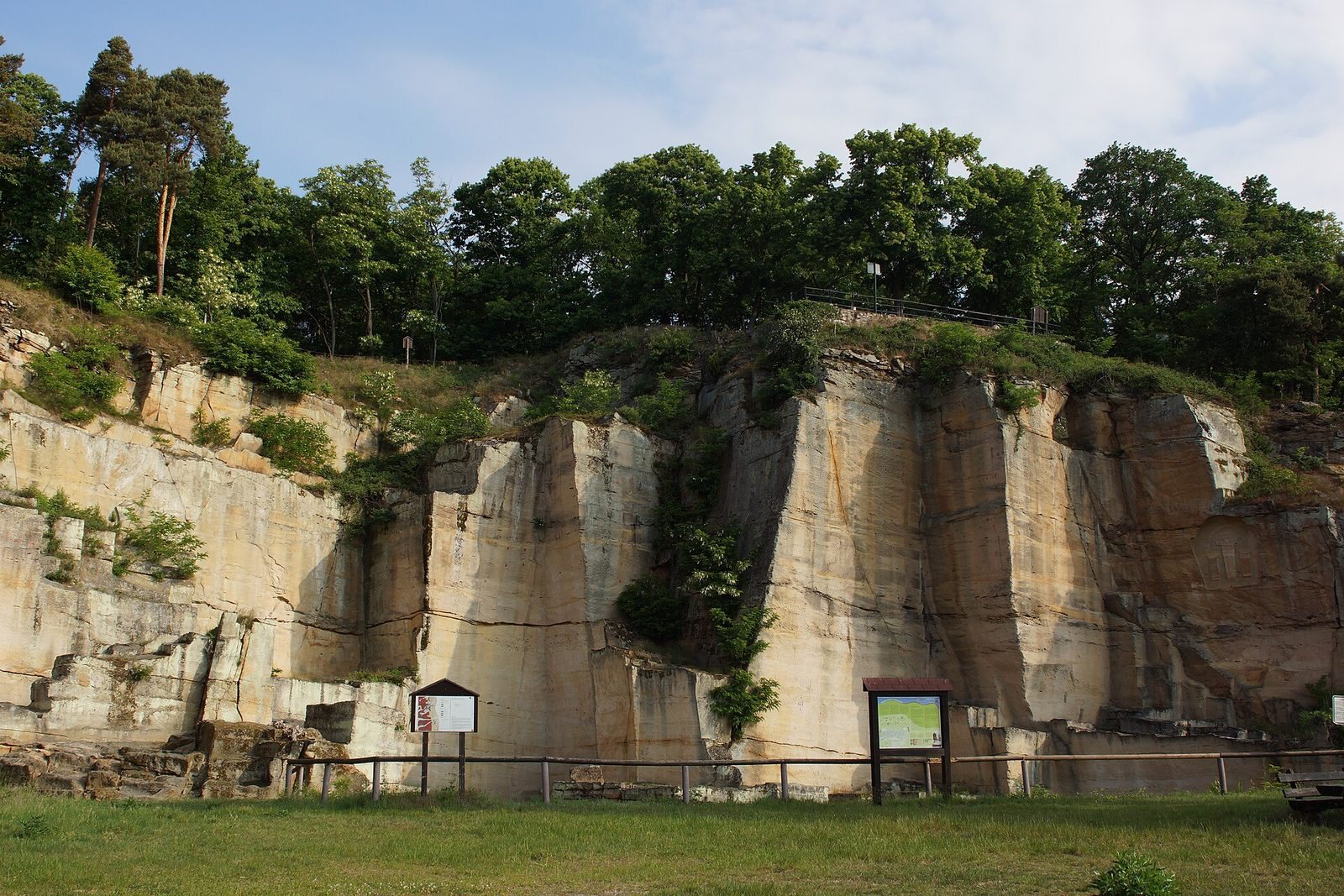
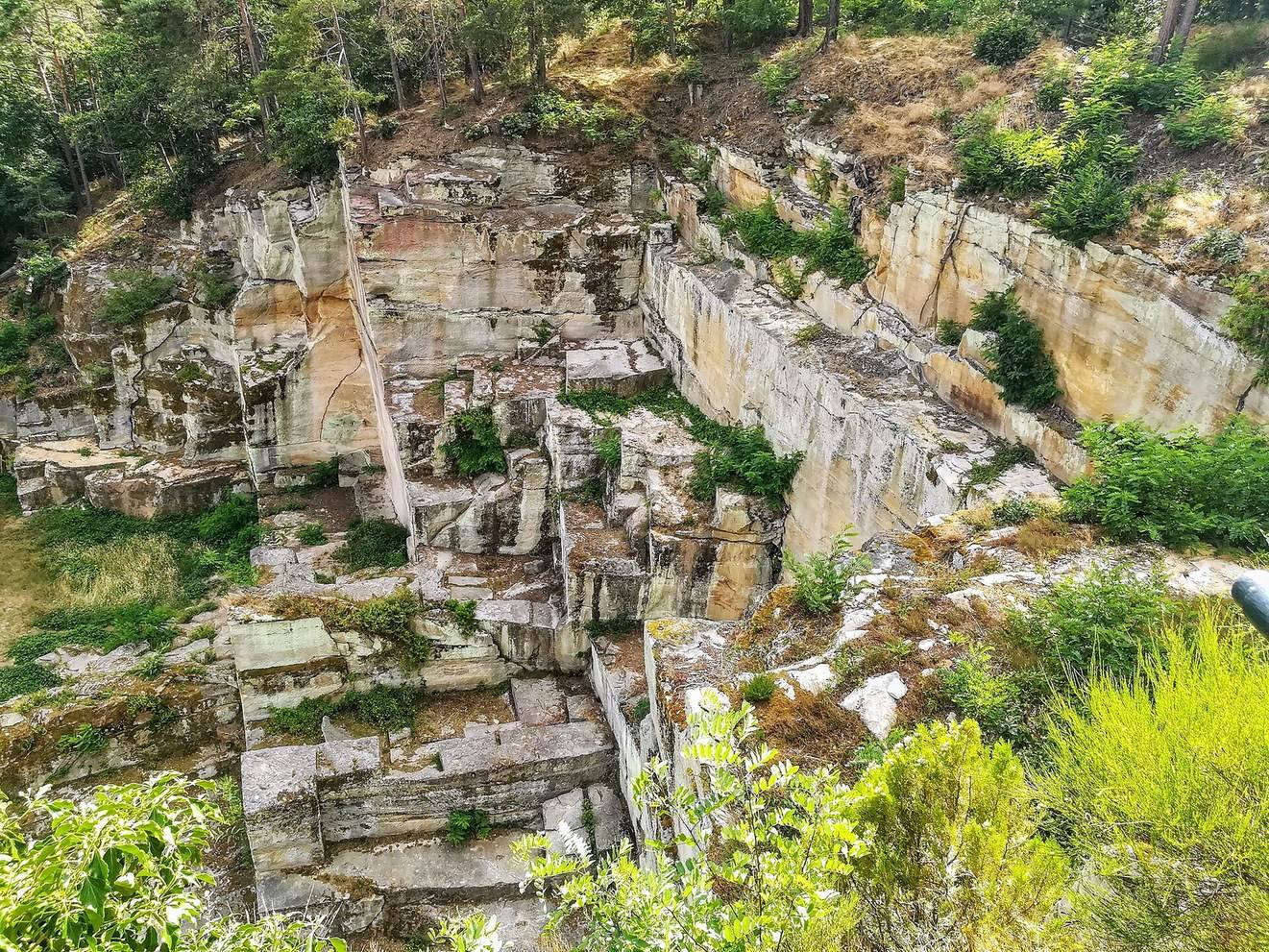
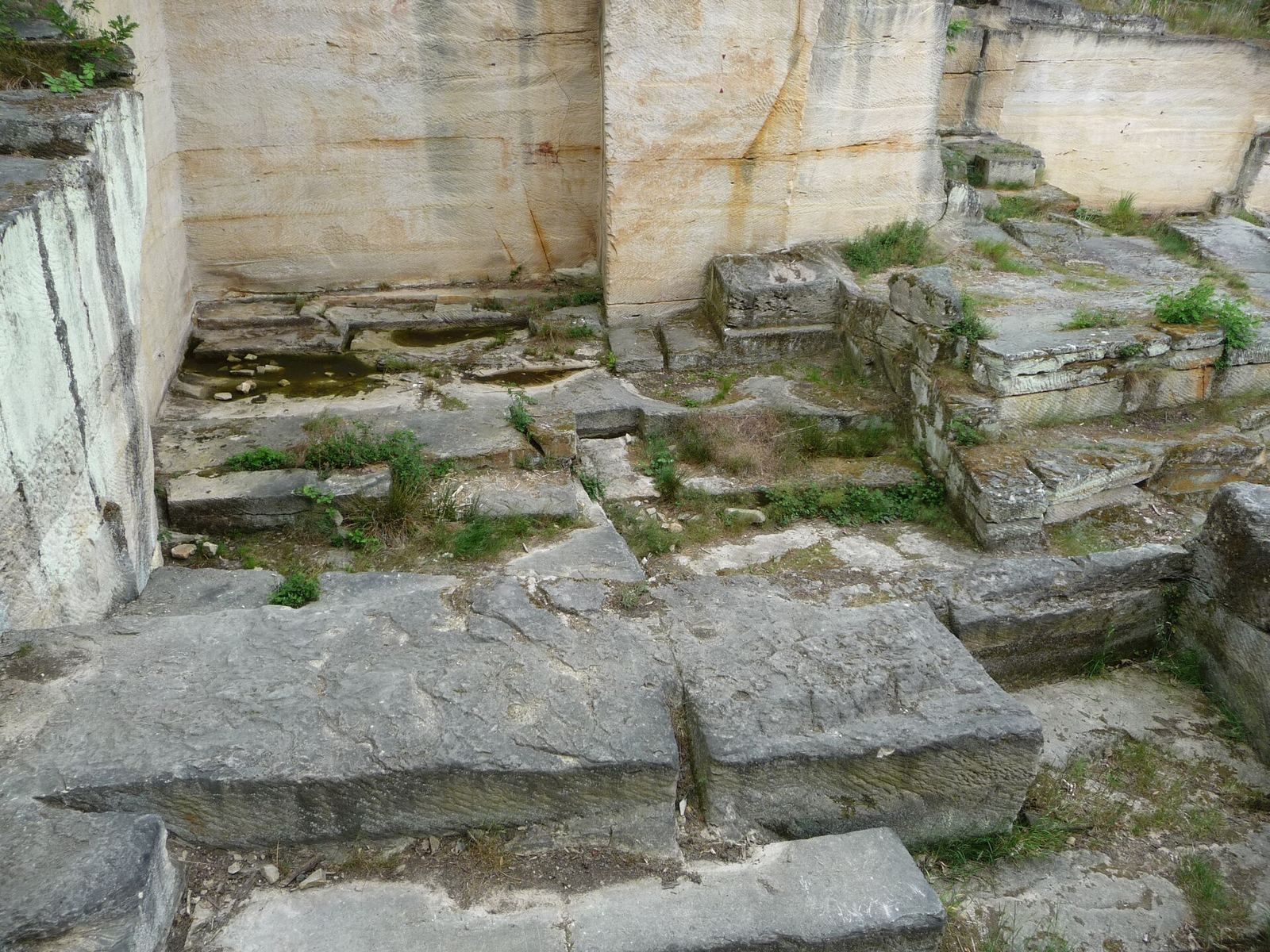
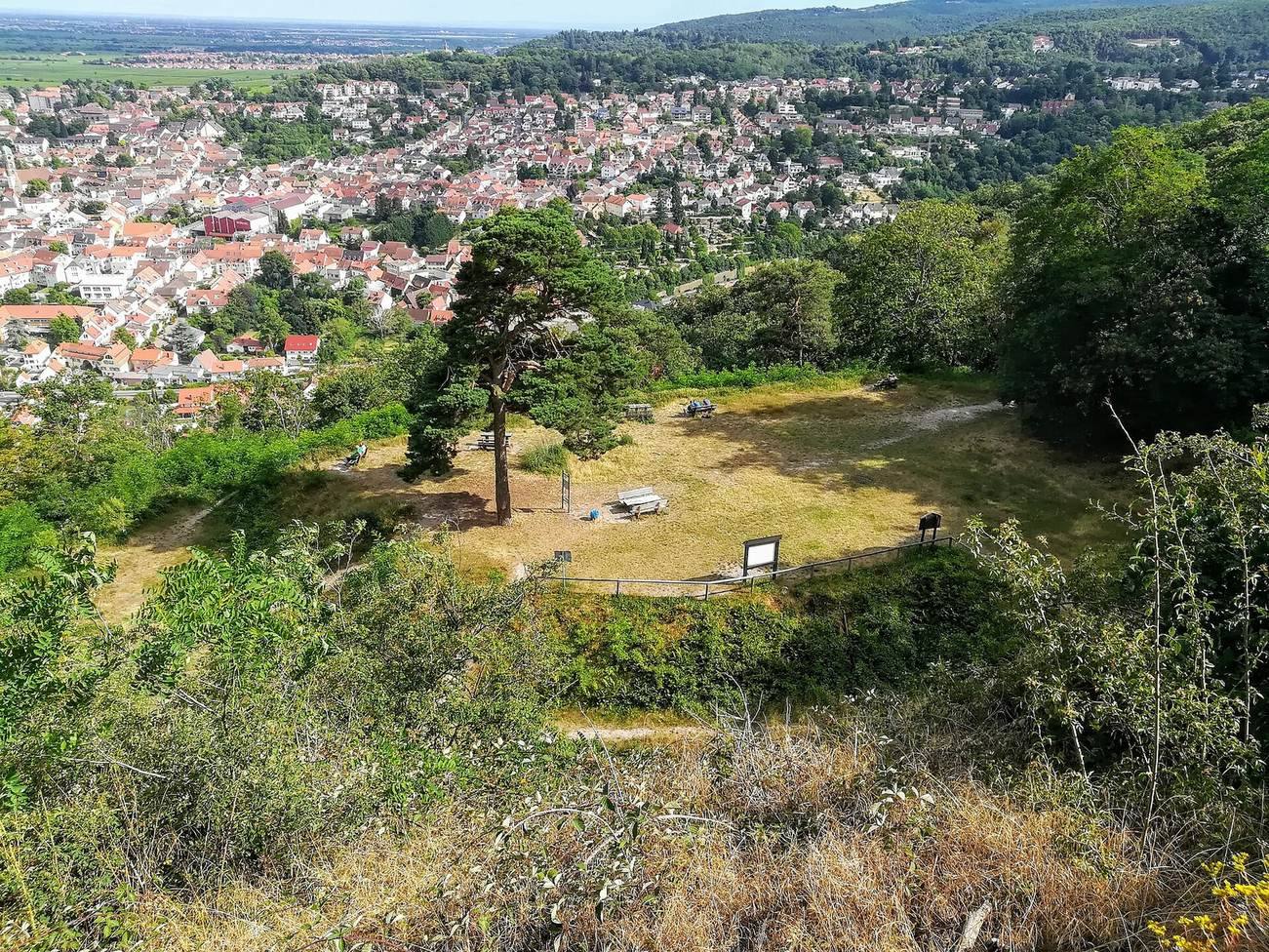
Kriemhildenstuhl is a semicircular, terraced excavation cut into pale, quartz-rich sandstone. It lies on the left side of the Isenach, at about 240 metres above sea level on the southeastern slope of the 300-metre Kästenberg. That hill is a southern spur of Teufelsstein, which reaches 319 metres, in the Haardt on the eastern edge of the Palatinate Forest. The site faces the Rhine Plain and overlooks Bad Dürkheim and the plain. Immediately above the quarry, the fortified Celtic settlement of Heidenmauer covers 26 hectares. It dates to the late Hallstatt period, an early Iron Age period in Central Europe.
Quarrying and moving the stone
Working faces and cut blocks
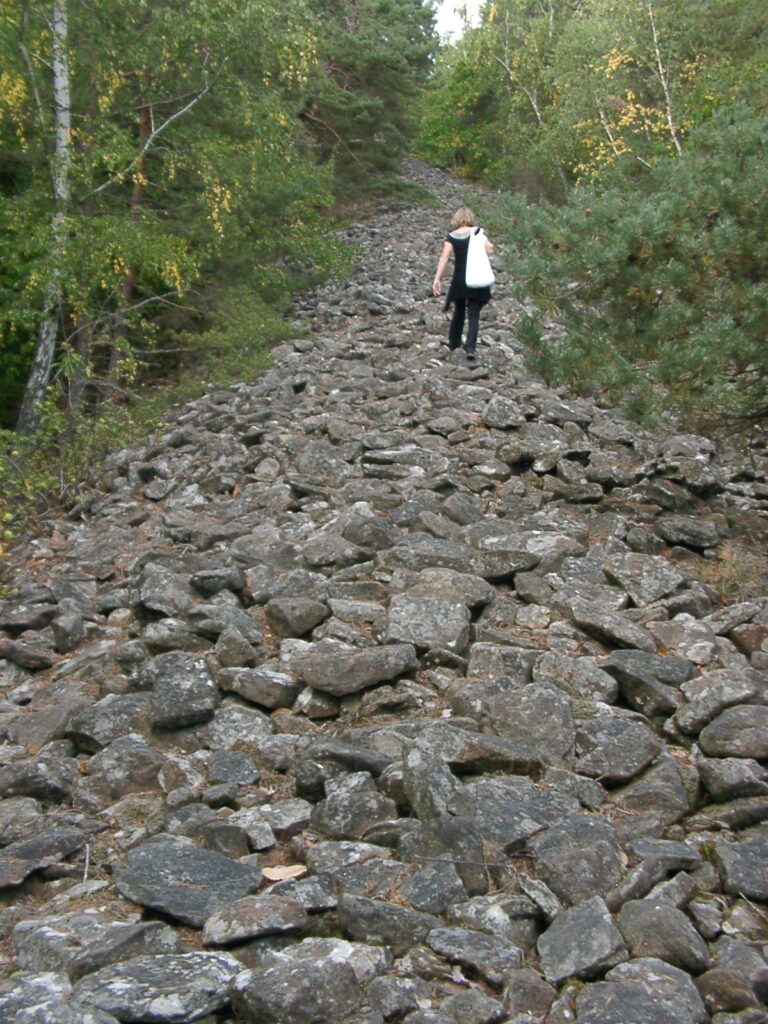
Quarrying concentrated near the plateau, probably because the soil covering the rock was thin there. The sandstone may also have been chosen for its stable quality, unlike softer and more brittle stone found elsewhere. Work advanced upward from lower levels across several working faces; individual faces lay about 25 metres above the level below. Marks on the rock indicate blocks around 1.20 to 3 metres long, 0.6 to 1.4 metres wide, and up to 0.6 metres high. Workers also cut some capitals and rounded stones, possibly for columns.
Tools and transport channel
Workers freed blocks from two sides of the rock face with stone-splitting hammers, then loosened their undersides with setting tools. Excavations recovered both kinds of tool. A channel for moving blocks downhill on skids and rollers remains visible. Waste from quarrying accumulated in the lower levels and helped preserve traces of Roman tools, inscriptions, and drawings.
Inscriptions and rock drawings
Work assignments
Inscriptions preserve details of the quarry’s work organization. One names Aicus’s working face; another assigns Hostilis Genialis the face associated with Quintus Purpurio. A further inscription records the handover of Septimus’s working face on 8 August.
Dedications and quarry workers
A dedication made by a detachment of the 22nd Legion addresses Jupiter, a principal Roman god, and the protective spiritual force associated with Emperor Septimius Severus, who ruled from AD 193 to 211. Other inscriptions commemorate Dativus Proculus, a standard-bearer, and identify Natalis as a soldier and Vogellinus Perpetuus as a member of the legion. Another names the soldiers Gettonius, Ursus, and Dossus, although the legion’s title in that inscription is unclear. It may use either Antoniniana or Primigenia Pia Fidelis.
Carved figures and symbols
Rock drawings include horses, human figures, male and female sexual imagery, wheel symbols, and swastikas. The horses may have served as an emblem for the group working at the quarry. The sexual imagery may have had a cult purpose or been graffiti; the wheels and swastikas may have been religious symbols or marks of work. The wheel signs lie on a rock surface already worked during Roman quarrying, so they do not substantiate later claims of an ancient Germanic cult site. A swastika alone is inconclusive because Romans also used varied forms of the symbol.