Church of the Assumption in Pęzino: A Late Gothic Roman Catholic Parish Church
Site at a Glance
- Popularity
- Very Low
- Country
- Poland
- Primary era
- Early Modern
- Eras represented
- Early Modern, Modern
- Civilizations
- Duchy of Pomerania, German, Holy Roman Empire, Kingdom of Prussia
- Site type
- Religious
- Remains
- Church
On this page13 sections
History
The Church of the Assumption in Pęzino is a late Gothic, Roman Catholic parish church in Poland. Completed in the mid-sixteenth century, it is dedicated to the Assumption of the Blessed Virgin Mary, the Catholic belief that Mary was taken body and soul into heaven at the end of her earthly life. The feast is observed on 15 August.
Foundation and family burials
Maciek III of the Bork family, a noble lineage of historical Pomerania, funded the church while he owned Pęzino. He died in 1566. The crypt beneath the church served as a burial place for successive owners of Pęzino from the Bork, Witucki, Hirschfeld, and Puttkamer families.
Tower and parish changes
Lightning struck the church’s wooden tower in 1902, and the resulting fire destroyed it. A replacement tower was erected in 1906. After the Second World War, the church was consecrated for Catholic worship on 12 August 1945. It first belonged to the parish in Marianowo, then became the seat of an independent parish in 1959.
Remains
Plan and exterior
Church plan and materials
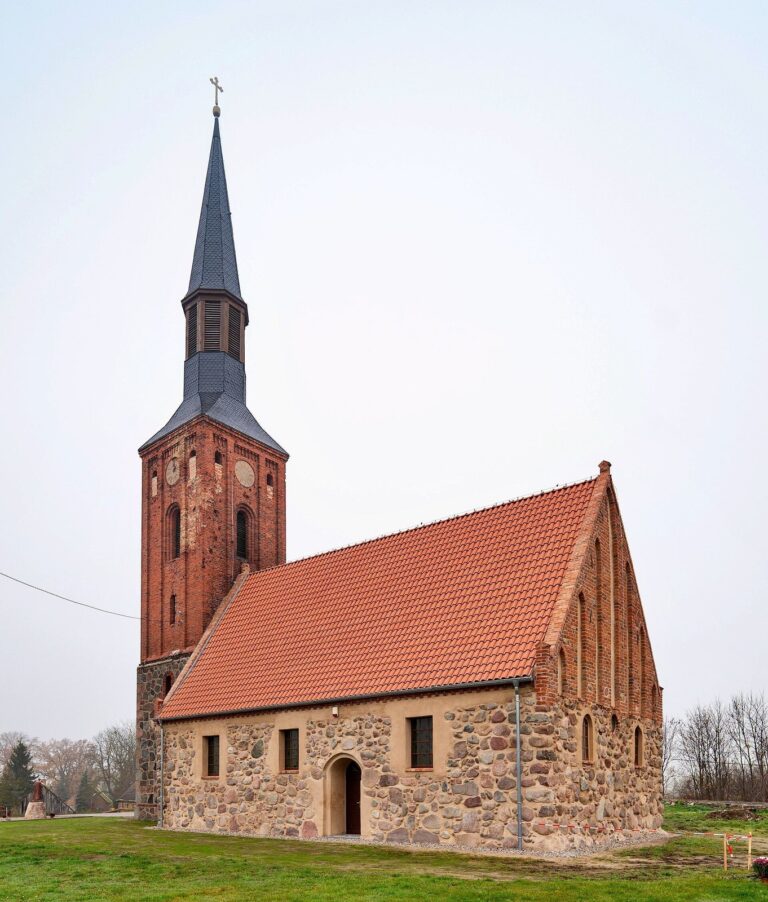
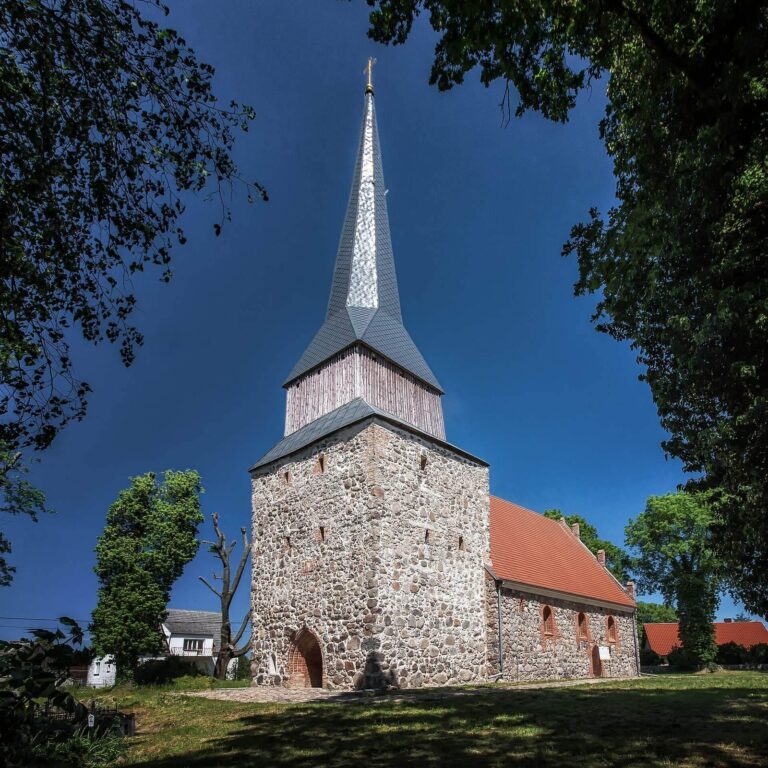
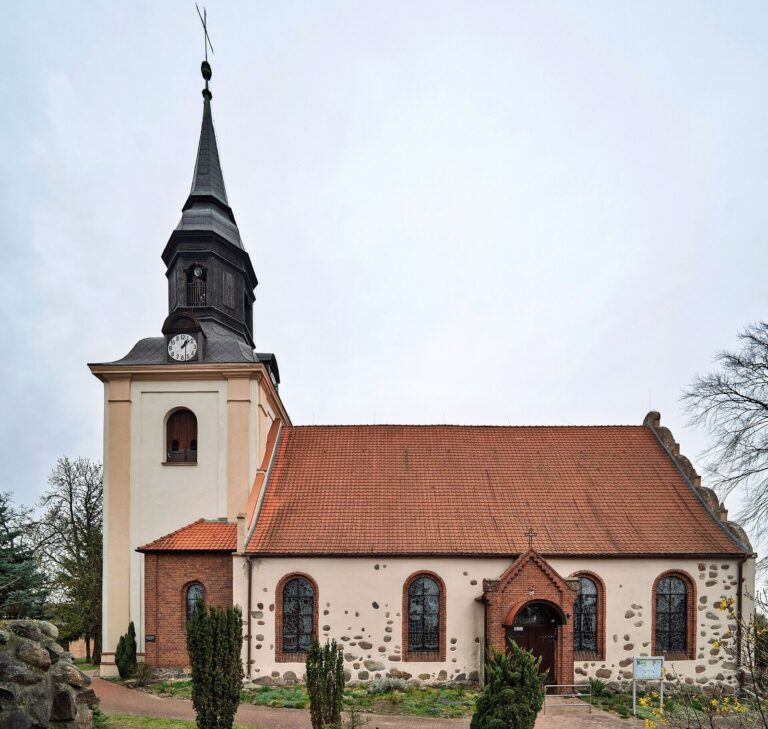
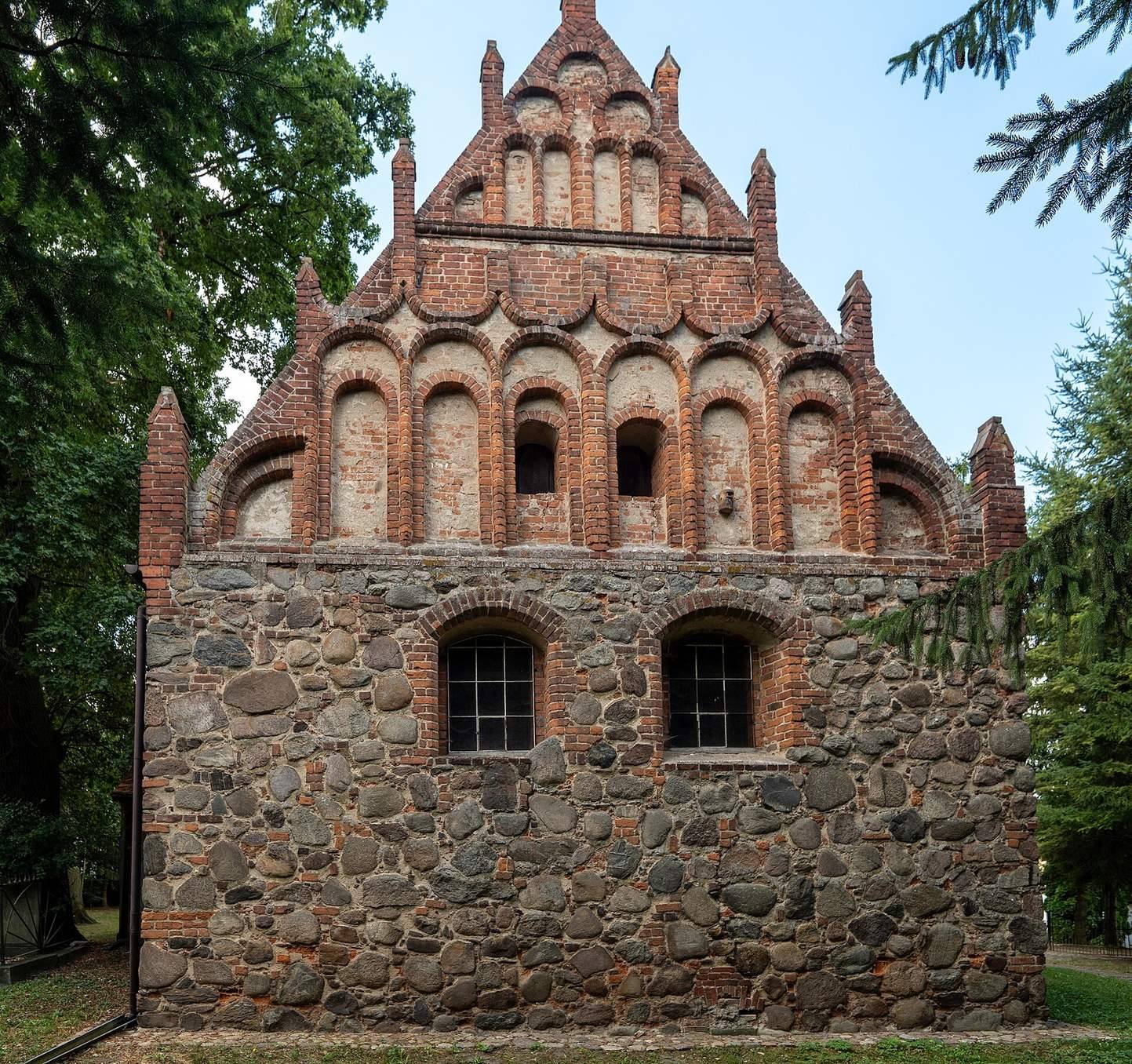
The church has a rectangular plan and is built from glacial erratics, stones transported and deposited by glaciers. Its chancel, the area around the altar, ends in a straight wall. A chapel adjoins the south side.
East wall and gable
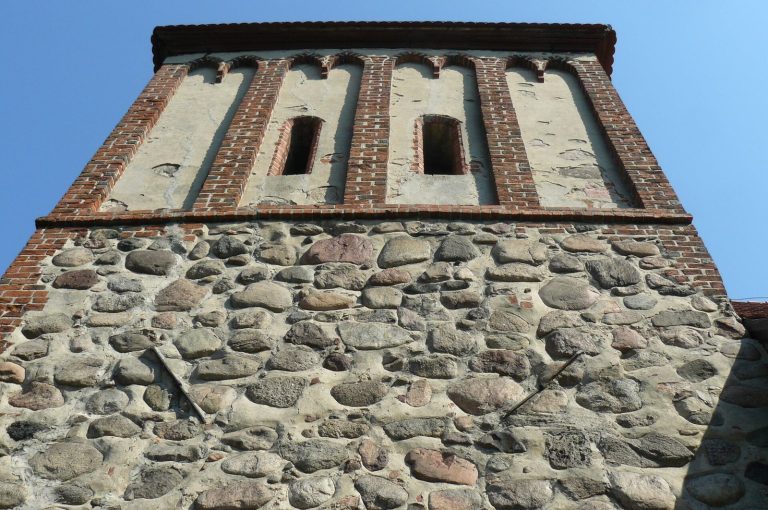
Two windows in the east wall hold stained glass installed in 1893, showing the Resurrection and the Nativity of Jesus. Above them, the gable is decorated with blind arcading, shallow arches set against a wall.
West tower
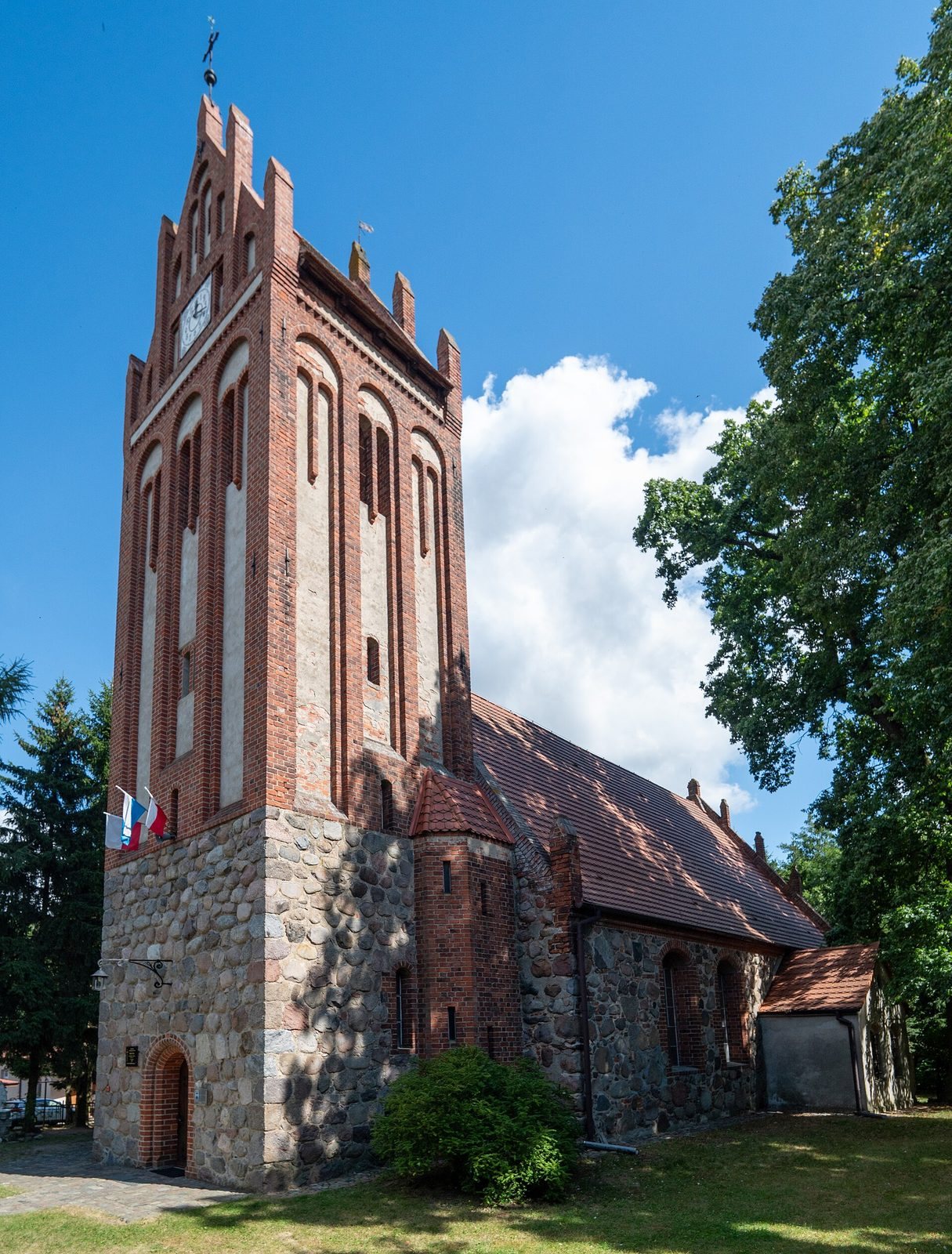
A single tower of stone and brick stands at the west end of the church.
Side windows and north vestibule
Altered windows in the side walls received stained glass in 1906, depicting the four Gospel writers. A vestibule added on the north side that year now serves as the sacristy.
Interior and memorials
Ceiling and entrance gallery
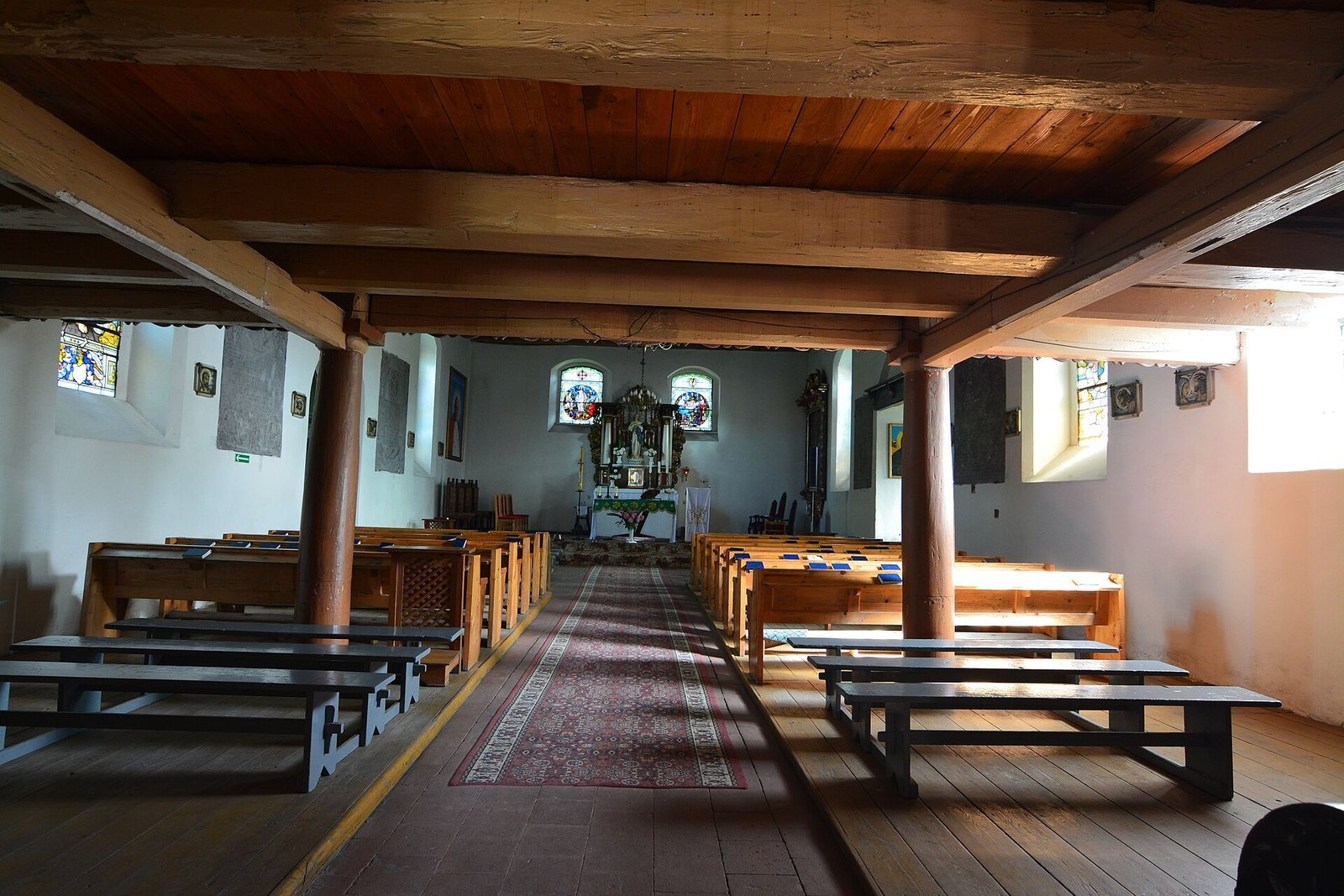
The interior has a wooden beamed ceiling. Above the entrance, a gallery rests on two pillars and carries sixteen paintings of saints.
Altar and commemorative features
The chancel contains an eighteenth-century Baroque altar, in a later European artistic style, bearing the founders’ coats of arms. The church also preserves four historic epitaphs, or memorial inscriptions, four commemorative plaques, and two tomb slabs.
Crypt
The crypt lies beneath the church.