Konzilgebäude Konstanz: A Medieval Trading House and Papal Election Venue
Site at a Glance
- Rating
- 4
- Popularity
- Medium
- Country
- Germany
- Primary era
- Medieval
- Eras represented
- Medieval, Modern
- Civilizations
- German, Grand Duchy of Baden, Holy Roman Empire
- Site type
- Economic
- Remains
- Warehouse
On this page12 sections
History
The Konzilgebäude Konstanz is a medieval stone trading house on the German shore of Lake Constance. The Free Imperial City commissioned it in 1388; as a city within the Holy Roman Empire, Konstanz held a degree of self-government and answered directly to the emperor. Completed in 1391, the building served trade for centuries and hosted the papal election of 1417. It is regarded as the largest surviving medieval secular building in southern Germany.
Trade and the papal election
A delegation of Milanese merchants sought a base for long-distance trade in 1387. Wars involving the Swiss had altered the north–south Alpine route, and much of the commerce between northern Italy and the Upper Rhine passed through Konstanz. The city began construction in March 1388, and the warehouse opened floor by floor as work continued through 1391. Goods were kept briefly on the ground floor and for longer periods upstairs, where merchants also conducted business. For almost five centuries the building functioned as a trading and transfer point at the harbor, and trade fairs took place there.
During the Council of Constance, a major church council held from 1414 to 1418, the building housed a conclave, a closed election by cardinals to choose a pope, from 8 to 11 November 1417. Concern that the election might be disputed led to tight security. A fence and guards protected the building, its windows were closed except for narrow slits, and the interior was divided into 56 cells for the cardinals and six delegates from each of the five participating nations. The electors chose Oddo di Colonna, who became Pope Martin V and was recognized as the sole pope. The election was intended to end the Great Western Schism, a prolonged division in the Western Church in which rival claimants competed for the papacy. Martin V was crowned on a platform in front of Konstanz Minster. The council’s main sessions took place in the minster, making the election the Konzilgebäude’s principal religious event.
Nineteenth-century changes in use
The building continued as a trading house into the nineteenth century. In 1824, the antiquarian Josef Kastell began displaying objects associated with the papal election in the Council Hall. The name Conziliumsgebäude arose during the nineteenth century; locally, the building is now commonly called the Konzil. In 1836, because the city lacked funds for maintenance, the customs authority moved in and added a single-storey extension on the eastern, lakeside side. Harbor works carried out between 1839 and 1842 moved the shoreline away from the building. After Konstanz joined the railway network in 1863, a track ran through the ground floor and was later removed. Customs remained until 1872, after which the building served as a market hall until 1910. At the end of the First World War, it was used as a military hospital.
Restaurant, event venue, and modern uses
A conversion to a restaurant and event venue was approved in 1910 and carried out in 1910–1911. The new facilities included a restaurant, a concert hall for about 600 people, a garden terrace, and a large congress and event hall with up-to-date technical equipment. The renovated building was inaugurated on 14 May 1912.
Renovation work in 1967–1970 secured the historic structure, modernized the catering areas, renewed electrical and sanitary systems and fire-safety equipment, and installed new roof battens beneath old tiles. In the years before the 2014–2018 anniversary of the Council, further work added basement storage and toilets, including facilities beneath the forecourt, and made an event room above the Upper Hall for gatherings of up to 200 people. Since the summer semester of 2023, the University of Konstanz has also used the building for lectures to offset a renovation-related shortage of campus classrooms. It continues to serve as a restaurant and a venue for congresses, concerts, and private events.
Remains
Building form and harbor setting
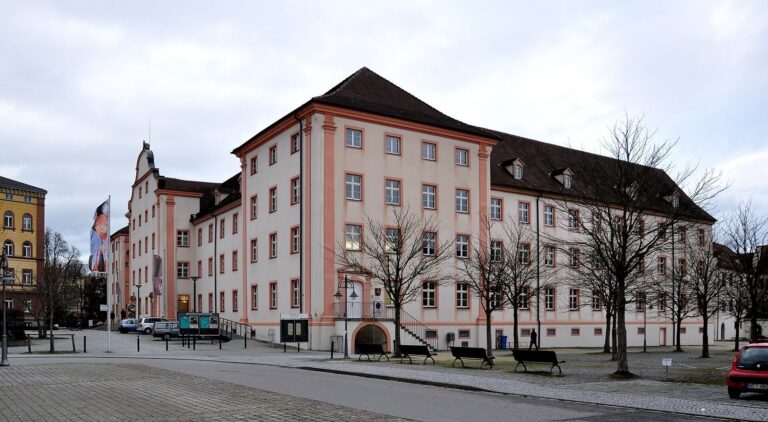
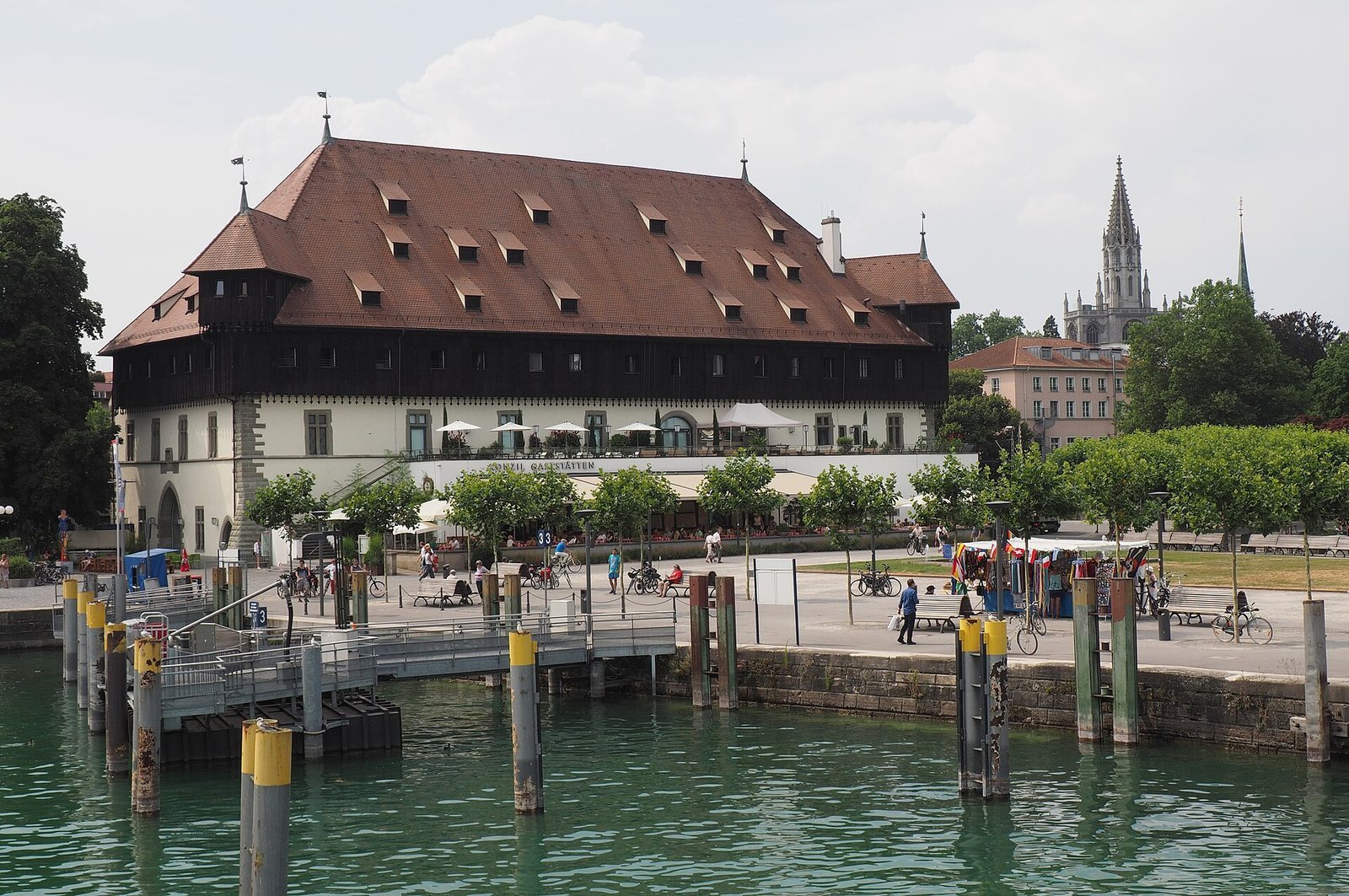
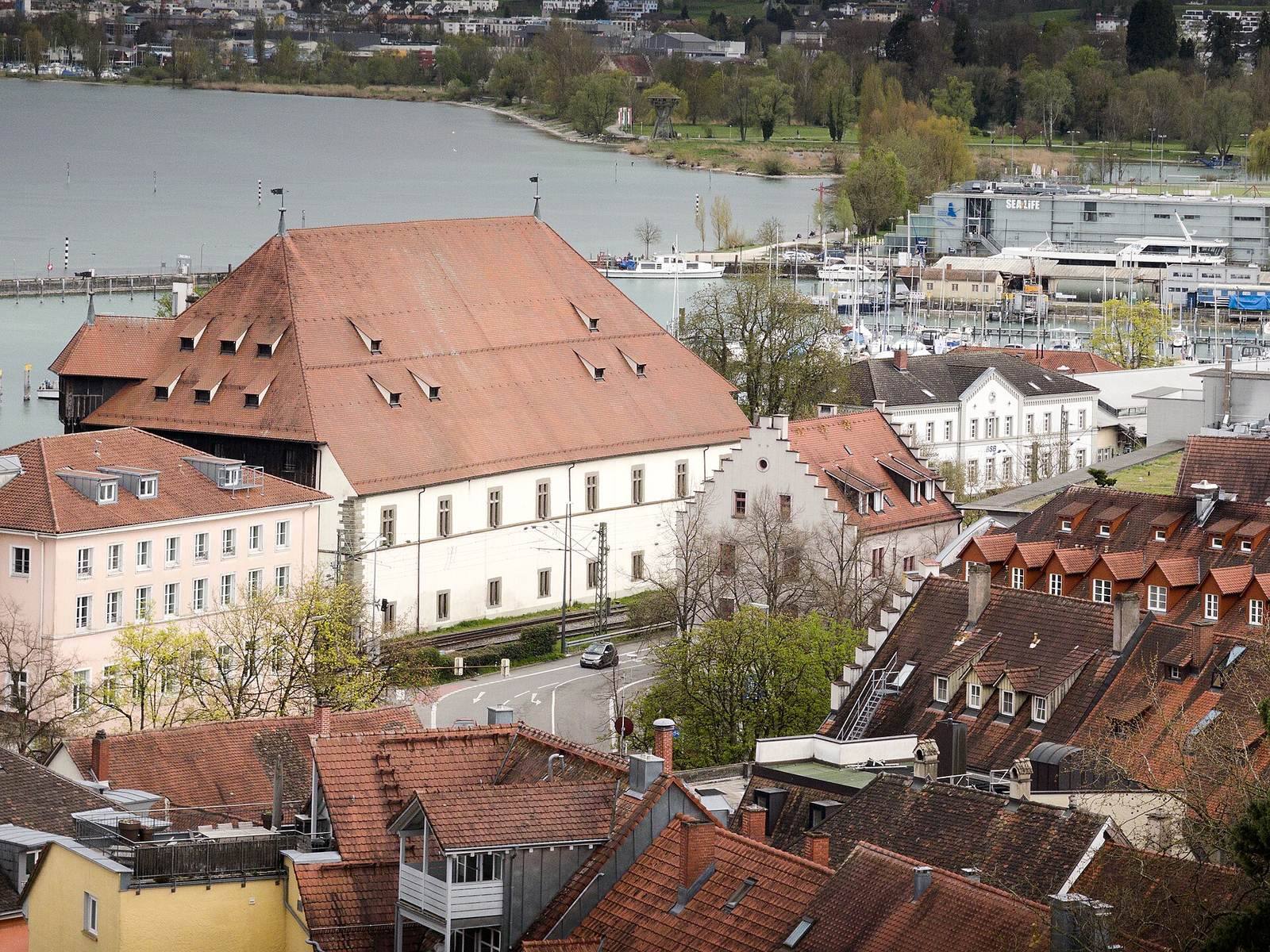
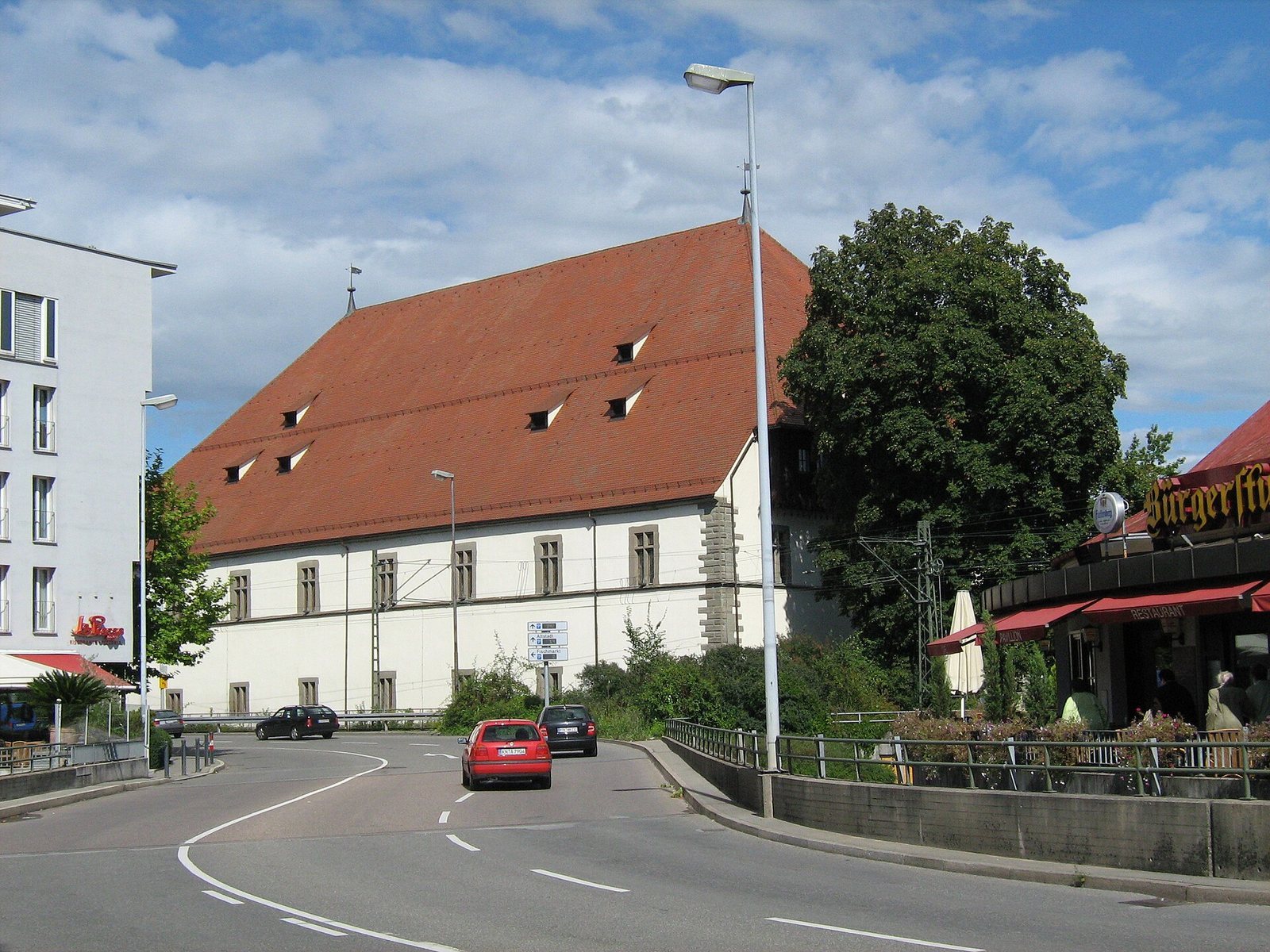
Raised ground beside Konstanz harbor places the rectangular building directly on the shore of Lake Constance. Its footprint measures 23 by 50 metres. The massive stone structure stands on hundreds of oak piles driven into the wet lakebed. It originally occupied the water’s edge and formed part of the eastern city wall, with the Marktstätte to the south and the fish market to the north. A shallow landing stage extended into the lake, and cranes in projecting bays lifted cargo from ships or the landing stage to the upper floors.
The three storeys rise about 11 metres, while the hipped roof reaches a ridge height of 28 metres. On the city-facing side, the eaves extend down over the first upper storey; the other three façades show three storeys. Two outward-slanting dormers project from the lakeside roof. A terrace and a low, flat-roofed annex built in 1911 occupy the lakeside. The annex serves as a restaurant dining room and has a roof terrace.
Interior halls and decoration
Hall structure
The lower two floors each contain a three-aisled hall divided into eight bays, or sections between supports. Fourteen substantial wooden posts in each hall carry the ceiling structure. The posts in the Lower Hall are thicker than those in the Upper Hall.
Upper Hall paintings
Friedrich Pecht and Fritz Schwörer painted the Upper Hall’s historicist frescoes between 1869 and 1876. These wall paintings, made on plaster, reflect nineteenth-century art’s interest in earlier styles and depict scenes from the city’s history.
Lower Hall paintings
In 1913, haberdashery manufacturer Hans Prym donated two monumental paintings for the Lower Hall. August Groh executed them in Art Nouveau, an international decorative-art style popular around the turn of the twentieth century. The lakeside painting shows a medieval cargo ship; the city-facing work depicts a medieval dance with musicians.
Restaurant-room frescoes
Sepp Biehler painted a series of frescoes in the restaurant rooms in 1937. Their subject is the history of shipping on Lake Constance.
South-side inscription
An inscription on the south side commemorates the end of the Great Western Schism.