Mauritiusrotunde: Constance’s Holy Sepulchre Chapel
Site at a Glance
- Popularity
- Medium
- Country
- Germany
- Primary era
- Medieval
- Eras represented
- Medieval, Early Modern
- Civilizations
- Holy Roman Empire
- Site type
- Religious
- Remains
- Chapel
On this page13 sections
History
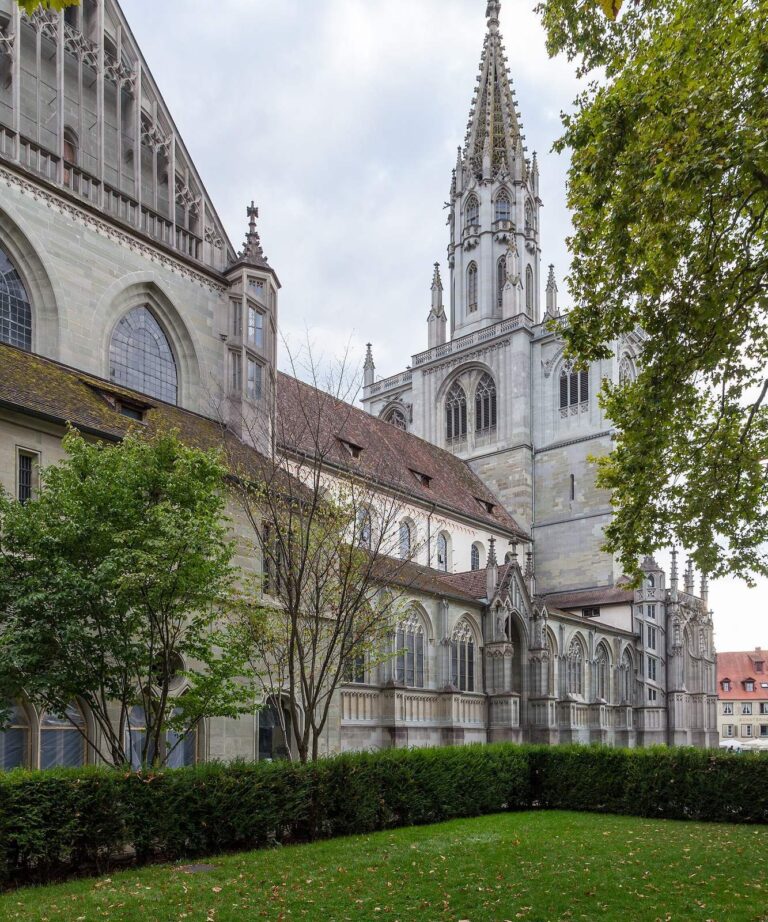
The Mauritiusrotunde is a circular chapel east of Constance Minster in Constance, Germany, founded after 940 by Bishop Conrad of Constance. Built in the pre-Romanesque period, it was conceived at half scale as a likeness of the central structure of Jerusalem’s Church of the Holy Sepulchre, the Christian shrine associated with Jesus’s burial and Resurrection. Dedicated to Saint Maurice, an early Christian martyr revered by Ottonian rulers, the chapel also expressed Conrad’s allegiance to the Liudolfing dynasty, the ruling house of the early medieval German kingdom and empire.
Foundation and church life
Conrad established the chapel after his second pilgrimage to Jerusalem; he made three such journeys during his life. Relics of Saint Maurice came to Constance from Reichenau through Ulrich I, bishop of Augsburg from 923 to 973. Conrad endowed the church with twelve canons, clerics who served a collegiate church, in a number corresponding to the twelve apostles. It became Constance’s third collegiate church, after the cathedral and Saint Stephen’s, but the canon positions were soon discontinued, probably for financial reasons.
The Mauritiusrotunde served as a station during cathedral processions and as the seat of Saint Maurice’s canons. Its altar also received regular income. Although it was sometimes associated with the route to the baptismal font, the chapel is not considered to have functioned as a baptistery.
The Holy Sepulchre, worship, and pilgrimage
A Holy Sepulchre stood in the rotunda from Conrad’s time. The later tomb replaced this earlier structure, which was said to have been made of gold and silver, or at least gilded. Easter worship probably included liturgical plays, religious dramas performed as part of services, that presented events around the tomb: the women’s visit, the disciples’ race, and the appearance of the risen Christ. Clergy performed the roles in Latin. The plays apparently belonged to cathedral worship and took place without a public audience. If so, the rotunda would be the oldest surviving post-antique stage.
The tomb’s rituals were linked with the former chapter cemetery and the cloister, where images depicted Christ’s Passion and its instruments. For centuries, pilgrims came to the chapel, particularly local people unable to travel to the Holy Land. They circled the tomb three times, and an indulgence, a remission of temporal punishment for sin in Catholic teaching, was granted to those who visited the cathedral and its Holy Sepulchre. A stone associated with Christ’s grave was believed to have been brought back by Conrad.
Conrad was buried beside the chapel’s outer wall. His grave probably became a pilgrimage destination soon after his death, and his canonization, the formal recognition of a person as a saint, in 1123 strengthened his veneration. A small chapel over the presumed grave was built at or before that time. The rotunda and tomb continue to form part of Holy Week worship, when the tomb serves as an Easter sepulchre.
Later changes and the Roman inscription
The chapel underwent extensive renewal around 1300, during the Gothic period, a medieval architectural style characterized by ribbed vaults and elaborate stonework. Damage from the Reformation, the sixteenth-century movement that divided Western Christianity and led to the establishment of Protestant churches, was repaired in 1571.
A Roman inscription dated 294 was brought to Constance from Vitudurum, near modern Oberwinterthur, in the early Middle Ages, perhaps by Conrad. Medieval citizens valued it because it named Constantius I, a Roman emperor of the late third and early fourth centuries whom they believed had given Constance its name. The stone was shaped to draw attention to the emperor’s name, which people took as proof that Romans had founded the city. In fact, the inscription concerns Vitudurum. Constance’s cathedral, however, stands on the site of a Roman fort dating to the fourth century.
People touched the inscription and then rubbed their faces with their hands. Leonardo Bruni, an Italian humanist who attended the Council of Constance, a major church council held in the city in the fifteenth century, described the practice. Hartmann Schedel’s World Chronicle of 1493 also recorded it, criticizing what he saw as misplaced reverence for a persecutor of Christians rather than a Christian saint. The inscription was given to Winterthur in 1968 and is now displayed in its town hall. The Mauritiusrotunde remains a stop on the Upper Swabian Way of St James and the Via Beuronensis, and a starting point for the Swabian Way toward Switzerland.
Remains
Rotunda and adjoining chapels
The circular chapel
The single-story rotunda measures 11.3 metres in diameter. It originally stood free northeast of the minster, which at the time had no transept, the crosswise part of a church that intersects its main body. Its position may have echoed the placement of early medieval mausoleums at the contemporary Saint Peter’s Basilica. The building reproduces at half scale the central structure of Jerusalem’s Church of the Holy Sepulchre as it stood before its destruction in 1009.
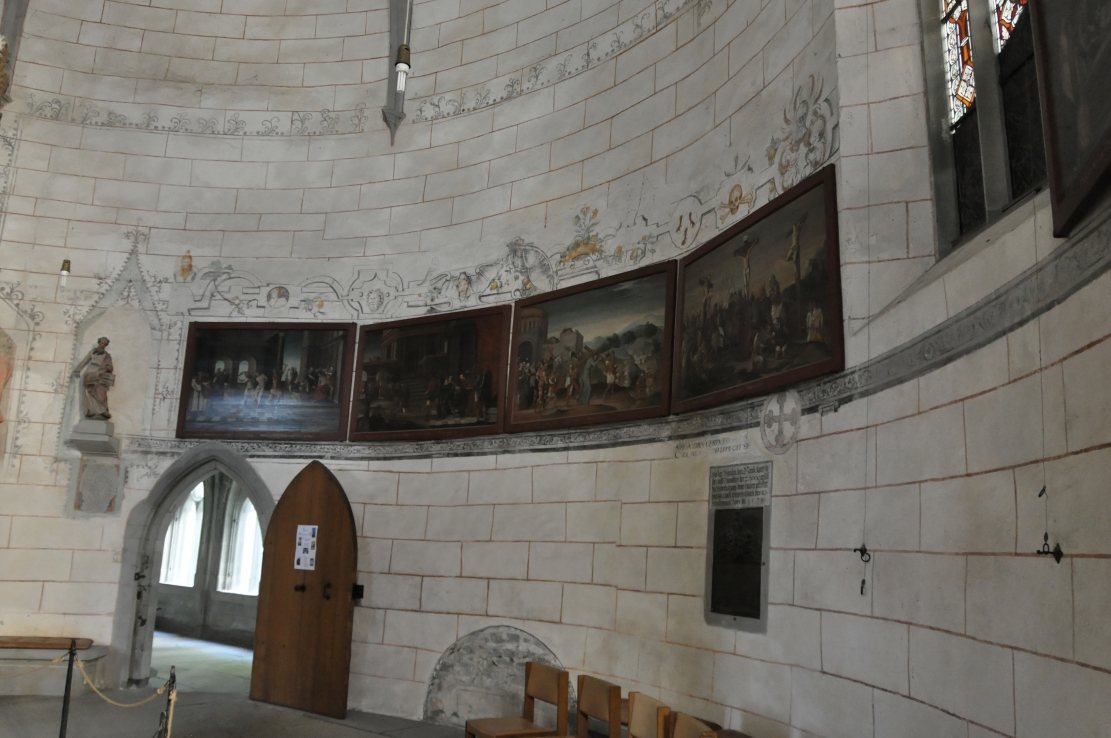
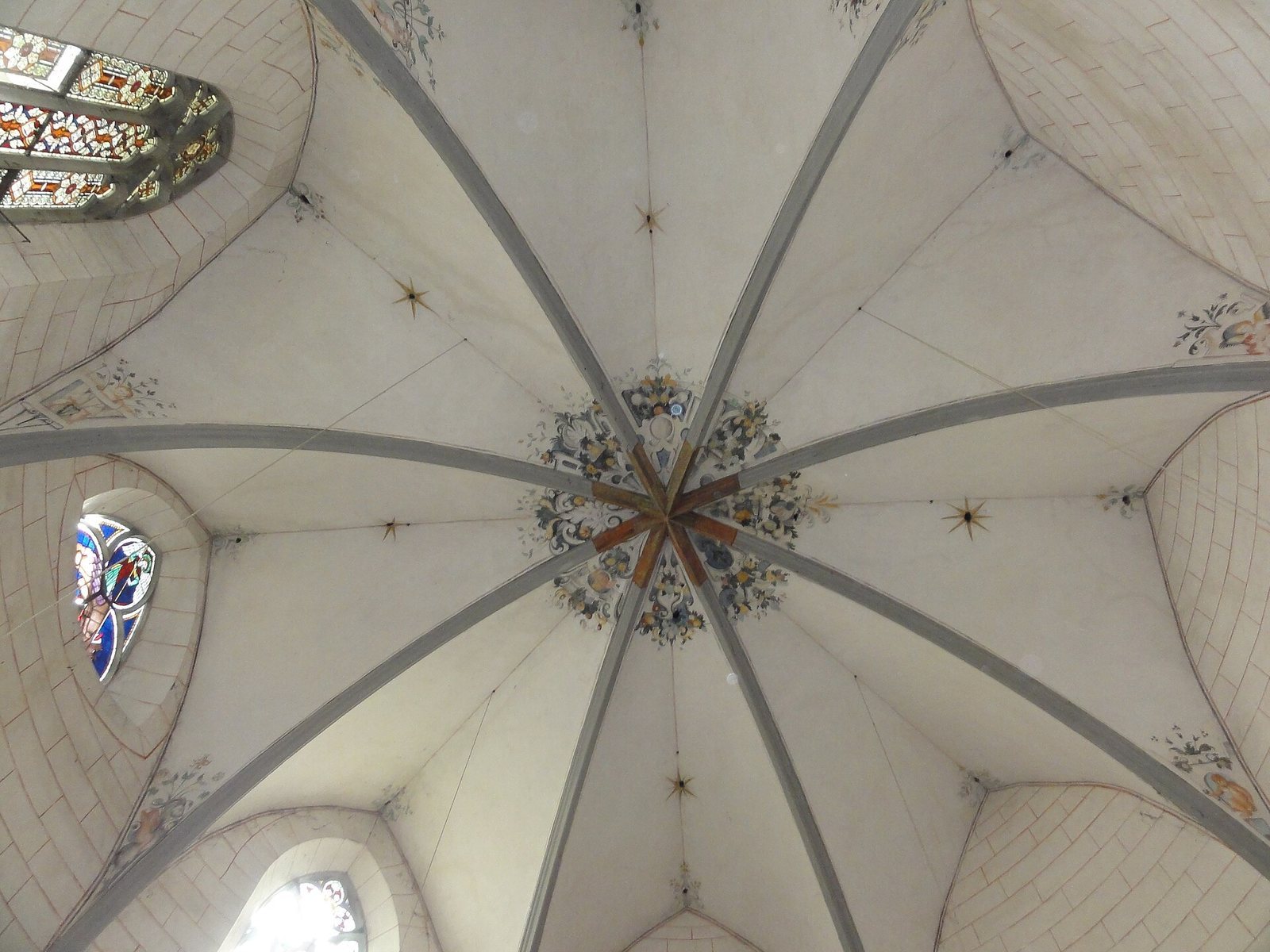
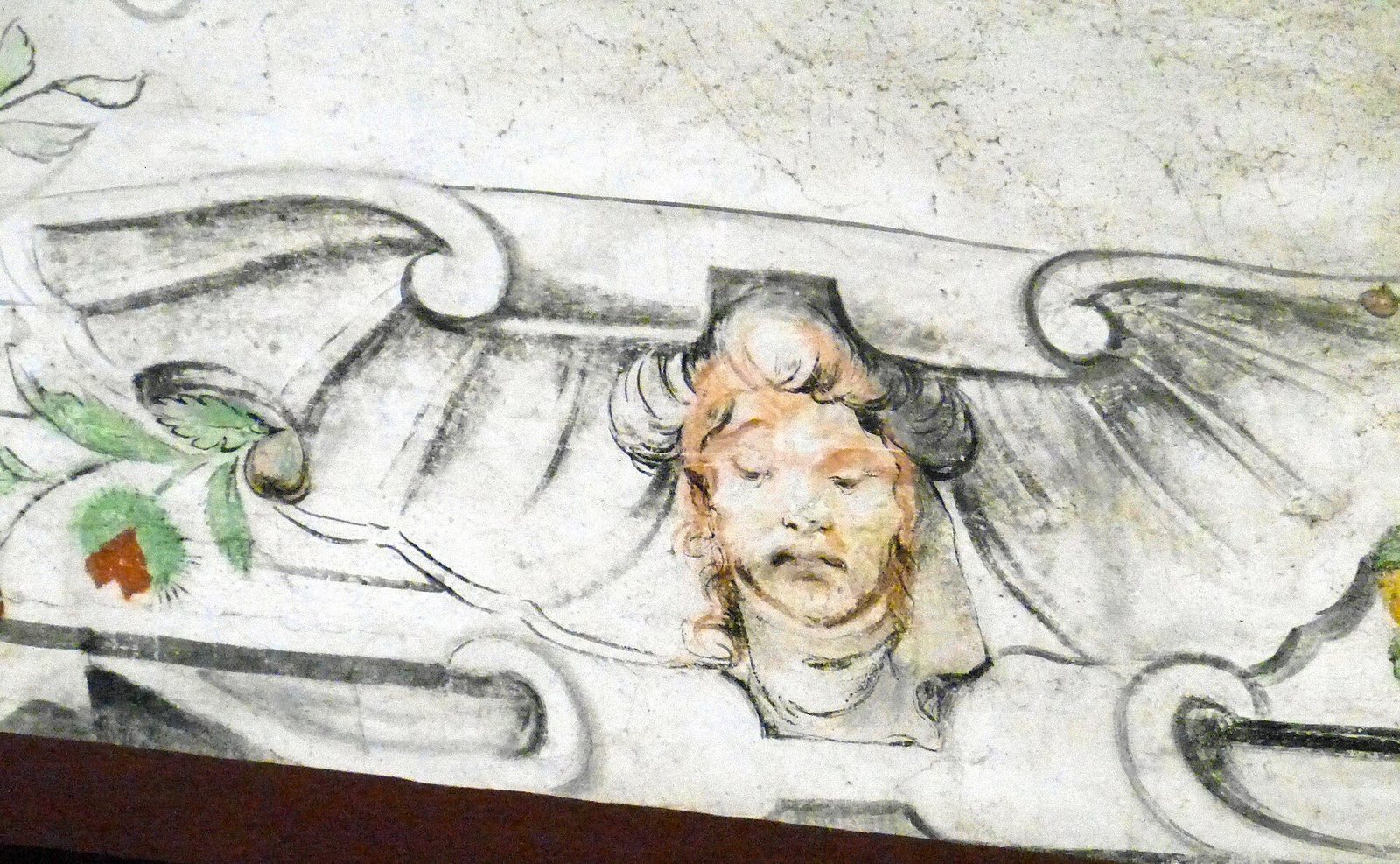
During its Gothic renewal, the chapel was raised and fitted with a ribbed dome and tracery windows. Tracery is ornamental stonework arranged in patterns. Inside, radiating ribs divide the vault into eight sections, with floral paintings between them dating to 1571. A cloister built around the same period links the rotunda with the minster’s north choir, crypt vestibule, former cathedral school, and chapter hall. Its decoration includes scenes of Christ’s Passion and the instruments associated with it.
East and south chapels
Four rectangular chapels once extended from the rotunda in a cross-shaped arrangement. The surviving east and south chapels each have an altar. The south chapel is also known as the Blasius or Trinity Chapel. In the east chapel, a sandstone memorial for cathedral canon Gottfried Christoph von Zimmern, who died in 1570, is set into the wall. Paintings beside it depict Saints Conrad and Pelagius, patrons of the church. Both chapels have painted vaults.
Conrad Chapel
The Conrad Chapel adjoins the west side of the rotunda’s base and can be reached only from the minster crypt. Its furnishings include the fifteenth-century Bockstorffer Altar and wall paintings in the Byzantine Christian art tradition, made by monks from Beuron Abbey.
The Holy Sepulchre
Form and exterior
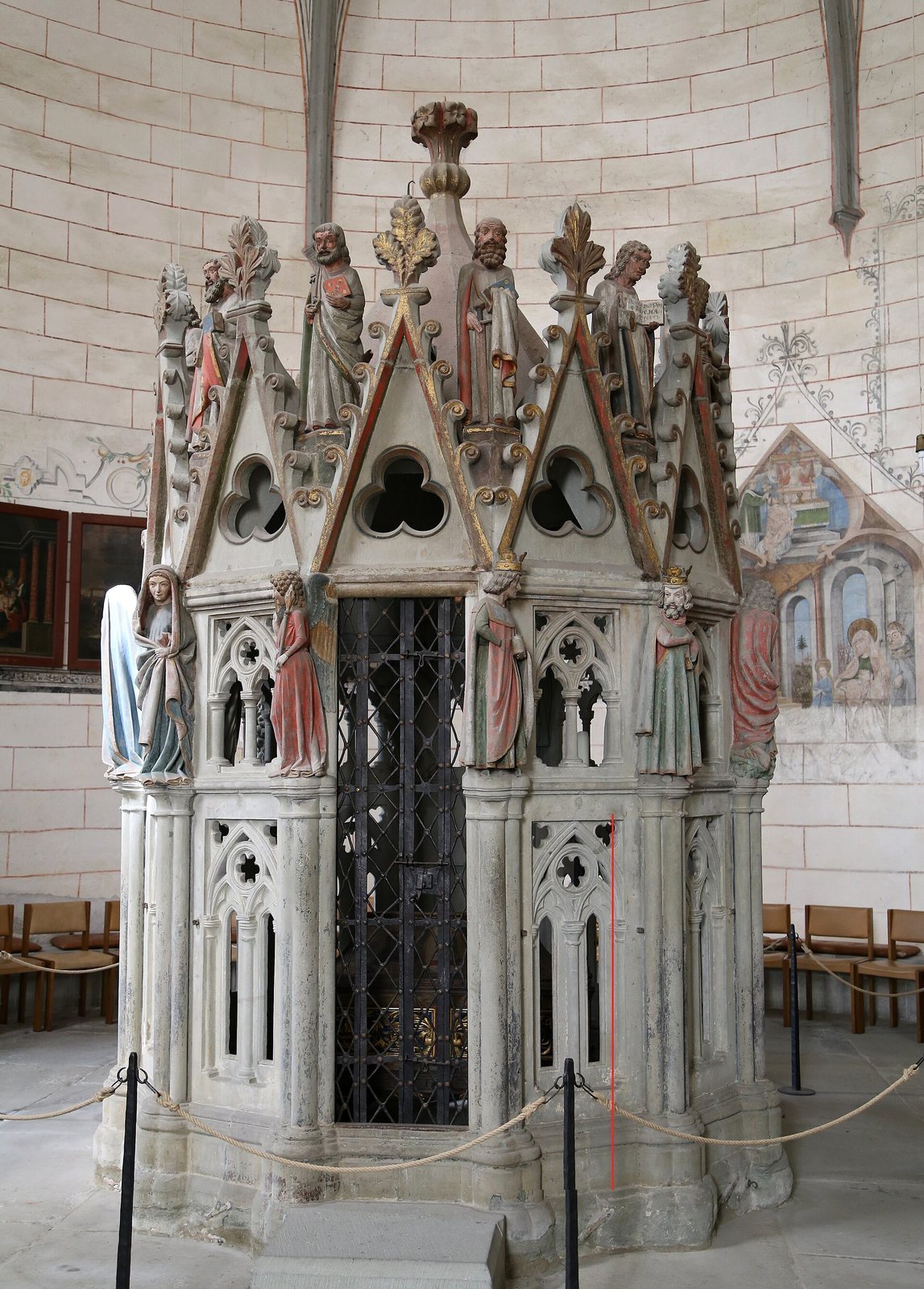
The sandstone Holy Sepulchre stands at the center of the rotunda. Dating to around 1260, it is twelve-sided, 2.43 metres in diameter, and 4.65 metres high. It is regarded as the minster’s earliest Gothic architectural sculpture. The tomb is among the few Holy Sepulchre structures still in their original architectural setting. It is also one of two identified High Gothic structures of an intermediate scale between monumental and miniature architecture; the other is in Magdeburg Cathedral. High Gothic refers to the mature phase of Gothic architecture.
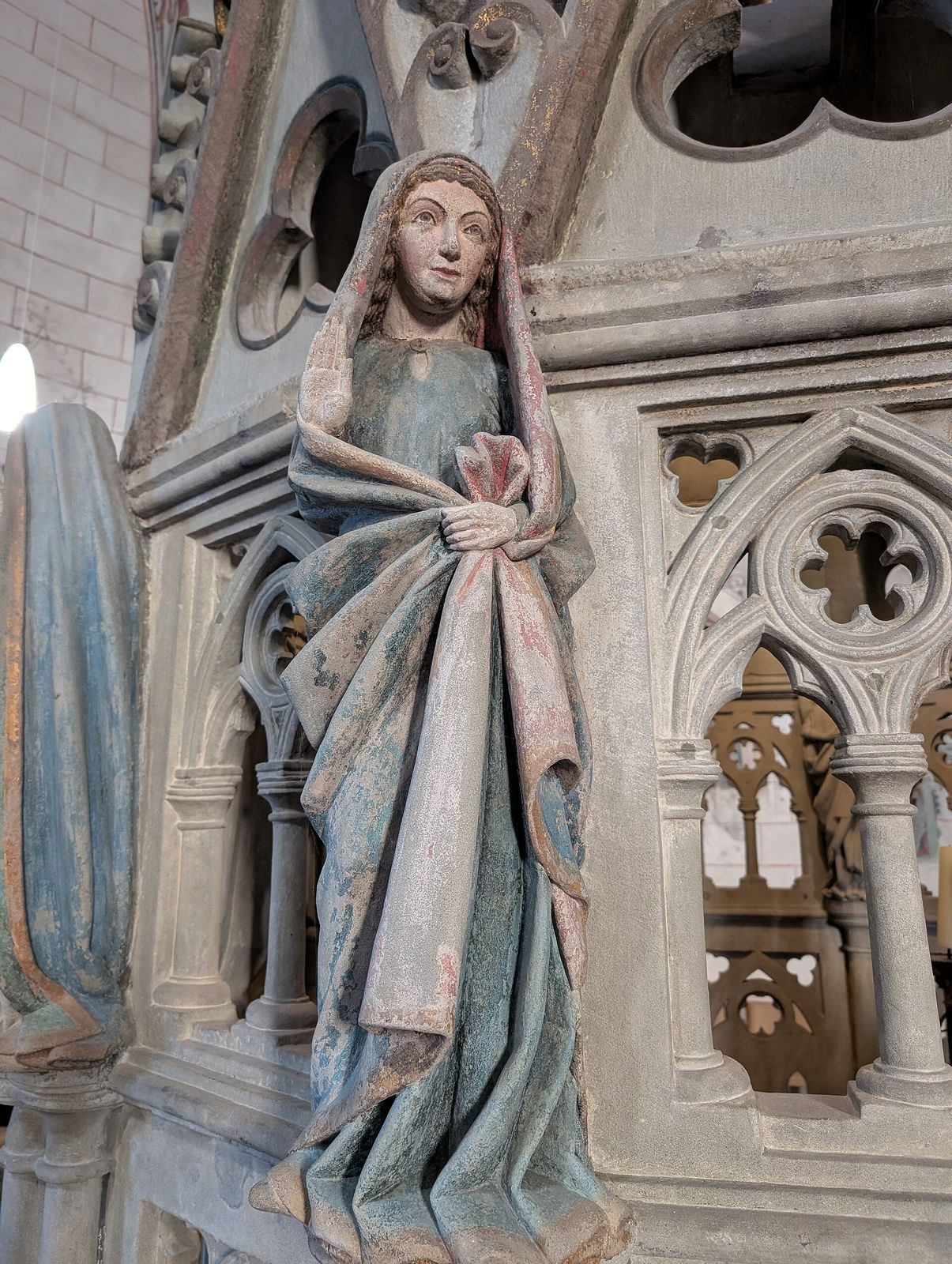
Two levels of façade are richly ornamented with French Gothic tracery. Twelve sculptures in the upper level were originally painted. Twelve gables, edged with small projecting ornaments, crown the tomb, with apostles at the corners between them. Behind these figures is a finely pierced, twelve-sided stone dome topped by a decorative finial. Around the tomb, twelve figures at roughly eye level alternate through scenes from the Nativity, beginning with the Annunciation. Their French Gothic style also reflects the intimate, expressive artistic tendencies associated with the Lake Constance region.
Interior scenes and shrine
Inside, three scenes of Christ’s burial and Resurrection are set at the level of the exterior sculptures. One depicts three women buying embalming ointment from an apothecary who wears spectacles, possibly the earliest sculptural depiction of eyeglasses. Another shows three sleeping guards in medieval armor; a third presents the women receiving news of the Resurrection from an angel. A grille door on the east-facing wall permits entry for liturgical use.
A rectangular wooden shrine has stood inside the tomb since 1552 and probably replaced a silver shrine destroyed during the Reformation. A small stone believed to come from Christ’s grave is embedded in the structure.
Roman inscription
A rectangular stone tablet measuring 1.63 by 0.74 metres, bearing part of the Roman inscription, was formerly set into the rotunda’s south wall. It came from a larger tablet at the Roman fort of Vitudurum. A copy of the inscription remains in the chapel.