Konstantin Battery: A Russian Imperial Fort at Sevastopol Bay
Site at a Glance
- Popularity
- Medium
- Country
- Russia
- Primary era
- Modern
- Eras represented
- Modern
- Civilizations
- Russian
- Site type
- Military
- Remains
- Fort
On this page10 sections
History
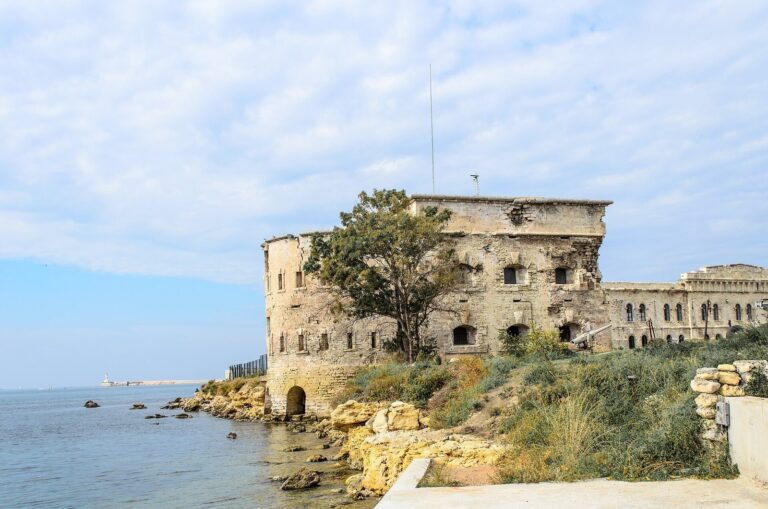
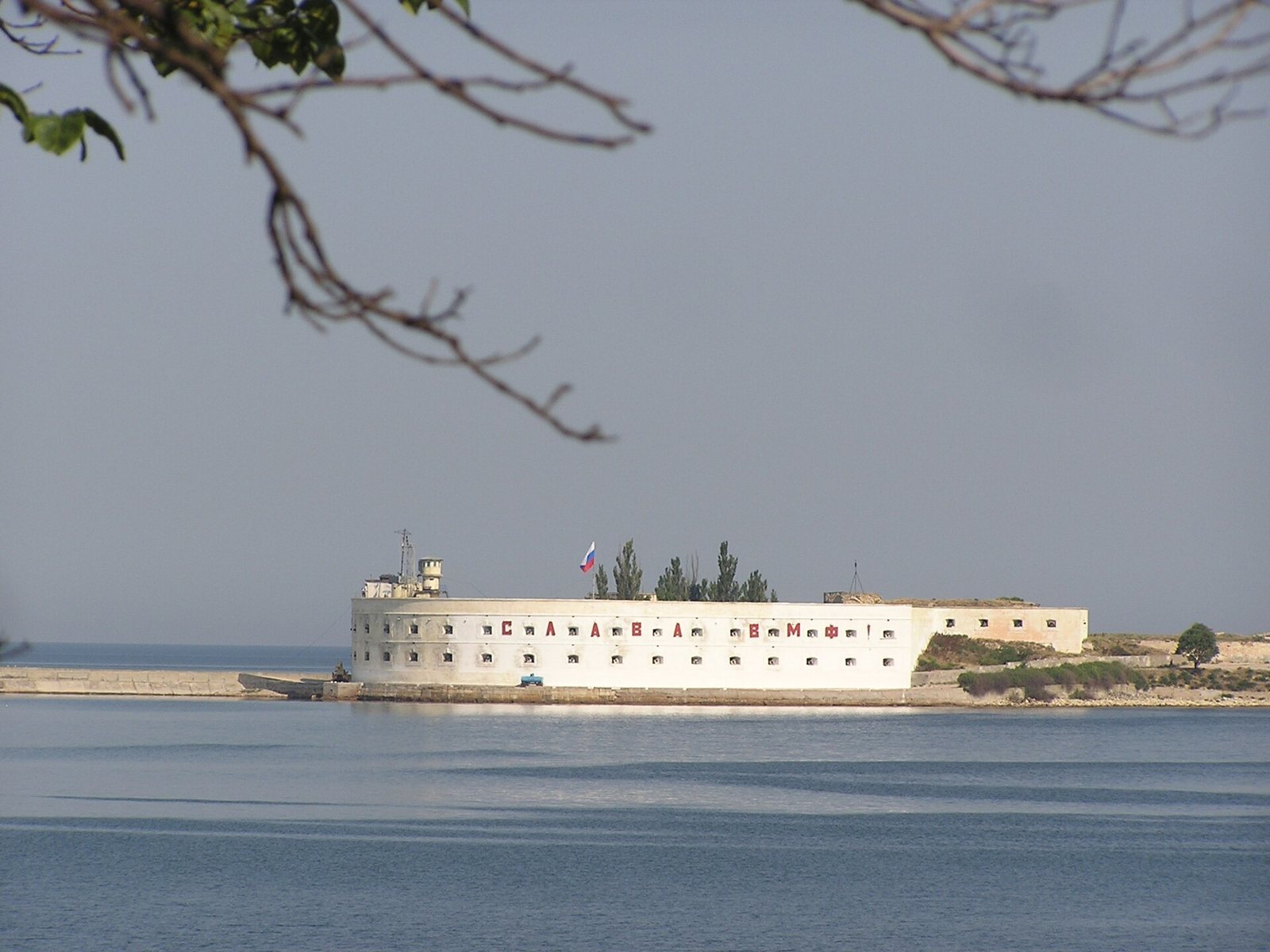
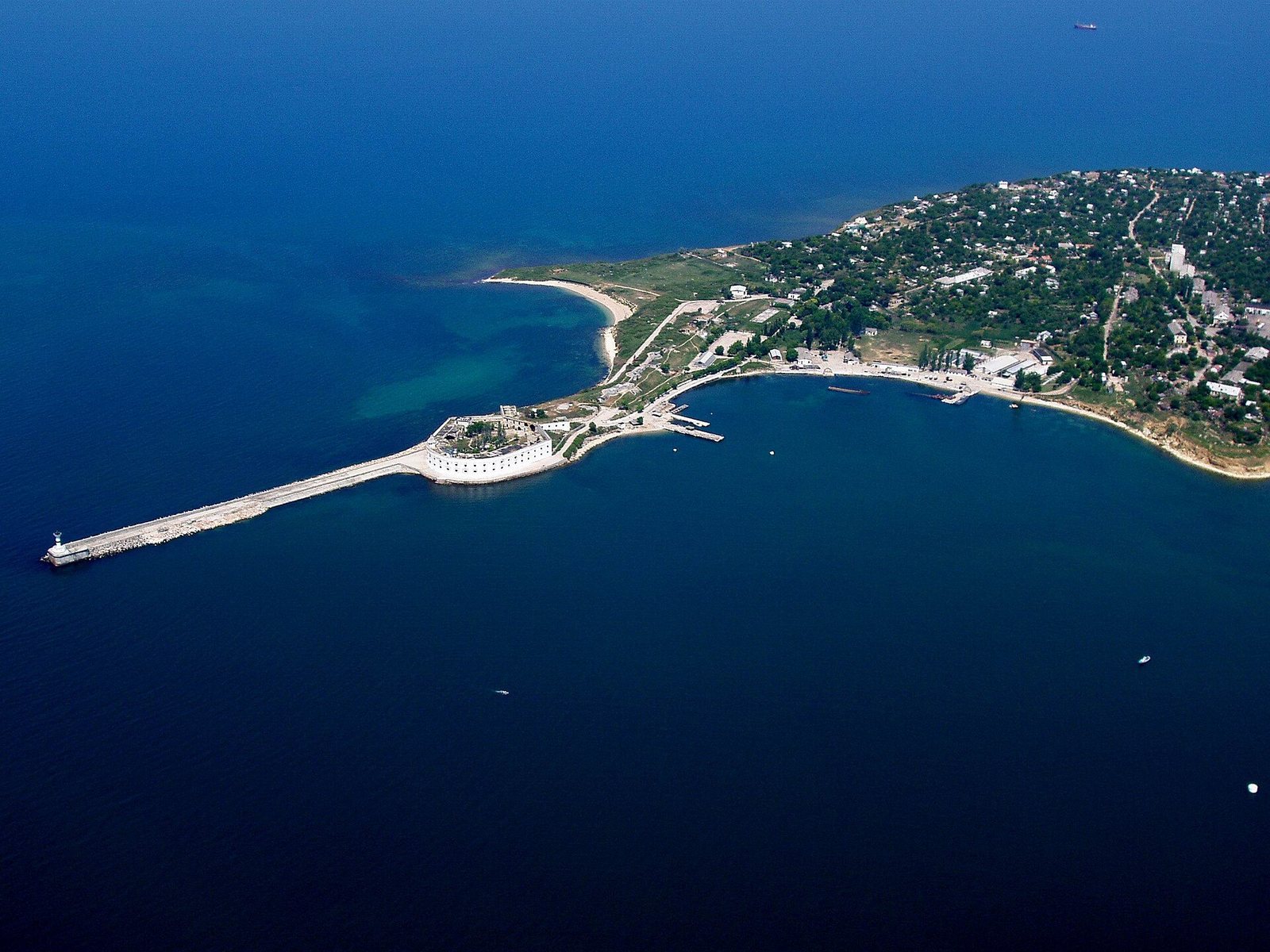
Konstantin Battery is a Russian imperial coastal fortification at the narrow entrance to Sevastopol Bay, on the northern side of Sevastopol, Russia. Completed in 1840 in the Classical style, which draws on ancient Greek and Roman forms, it was built to defend the bay and later became a frontline position in two wars. The fort is also called Fort Constantine and, less precisely, Konstantinovsky Ravelin, although it is the principal fortification rather than a ravelin, an outwork before a fortress’s main defenses.
Building defenses for the bay
The 1774 Treaty of Küçük Kaynarca ended the Russo-Ottoman War and renounced Ottoman claims to Crimea, but Ottoman ships continued to cruise off the peninsula. Seeking to secure Crimea without provoking another conflict, Empress Catherine II assigned Russian commander Alexander Suvorov to strengthen the entrance to Sevastopol Bay. On the night of June 15, 1778, Suvorov ordered earthworks built within range of about ten Ottoman ships. The ships sailed away after seeing the new defenses.
In 1794, Suvorov ordered the earthworks replaced by a two-tier fortification of stone and earth, designed by military engineer François Sainte de Wollant. A decision in 1834 called for this structure to be demolished and replaced by a stone battery with casemates, enclosed spaces for guns or troops, and newer defensive features. Engineer-Colonel Karl Burno designed the replacement. Engineers Gustav Efimovich von Volkersam and, later, Pavlovsky oversaw its construction through completion in 1840. The battery was named for Grand Duke Konstantin Pavlovich, a grandson of Catherine II and younger brother of Alexander I.
The Crimean War
During the Crimean War (1853–1856), in which Russia fought the Ottoman Empire and its allies Britain and France, seven old Russian ships were sunk near the battery on September 11, 1854, to block enemy vessels from entering the bay. They were the frigates Sizopol and Flora, and the ships Uriil, Three Hierarchs, Silistria, Selafail, and Varna.
On October 5, eleven British ships attacked. The battery’s 43 guns in the firing zone faced 428 shipboard guns. The bombardment badly damaged the fort and left five people dead and 50 wounded or concussed. Return fire started fires aboard British vessels, and three withdrew. The battery also came under bombardment in 1854 from the British ships HMS London, HMS Agamemnon, and HMS Bellerophon, and the French ship Napoléon. HMS is the prefix for commissioned ships of the British Royal Navy. In 1855, HMS Terrible and HMS Princess Royal shelled the fort during the Crimean War’s Battle of Kinburn. After the war, the battery continued to watch and guard the bay entrance.
The 1942 defense
During the German siege of Sevastopol in June 1942, the battery was one of four strongpoints on the city’s northern side ordered to resist as long as possible. Troops from the 95th Rifle Division, coastal batteries, and the Black Sea Fleet’s 178th Engineer Battalion withdrew there; I. P. Datsko commanded the 161st Rifle Regiment. Seventy defenders held out under heavy shelling for three days, protecting the bay’s roadstead, a sheltered anchorage outside a harbor, and helping make the city’s evacuation by sea possible. Some defenders escaped. As German forces approached, Commissar Kulynych, a political officer attached to a military unit, blew himself up with an ammunition store. The fighting severely damaged the battery.
Later use and restoration
Sevastopol and Mykolaiv began a noon blank-cannon tradition in 1819. It stopped in the 1920s, resumed in 1982 for Sevastopol’s bicentenary, ceased again in 2003 when blank-firing guns were unavailable, and restarted in 2016. The battery’s facade was restored from 1979 to 1983. After the Soviet Union dissolved, the complex was leased to the Russian Black Sea Fleet until Russia’s annexation of Crimea. Reconstruction began in 2015 under the Russian Geographical Society, a scholarly organization focused on geography and exploration. The battery now houses a museum.
Remains
The battery stands on the cape at the bay’s narrow entrance. Its horseshoe-shaped structure is 230 metres long and 25 metres wide, with the sea on three sides of the two-storey main block. Strong Krymbal limestone from Kilen-Balka, near Sevastopol, forms the principal building material.
Defensive structures
Main battery and gun positions
Inside, rooms follow an enfilade-and-corridor plan, meaning that successive rooms open along a line, and narrow loopholes provide openings for defensive fire. The flat roof has a protective parapet and was arranged for firing along the fort’s flanks. Barbette towers, raised gun positions from which weapons fire over a protective wall, close the two ends of the structure.
The original plan allowed for 94 guns: 50 24-pounders, 34 one-pood long unicorns, four one-and-a-half-pood unicorns, and six five-pood mortars. A pood was a Russian weight of about 16.4 kilograms; a unicorn was a Russian artillery piece designed to fire different kinds of ammunition. During the Crimean War, 27 guns occupied open barbette positions, while the others were placed in casemates.
Rear defenses and entrance
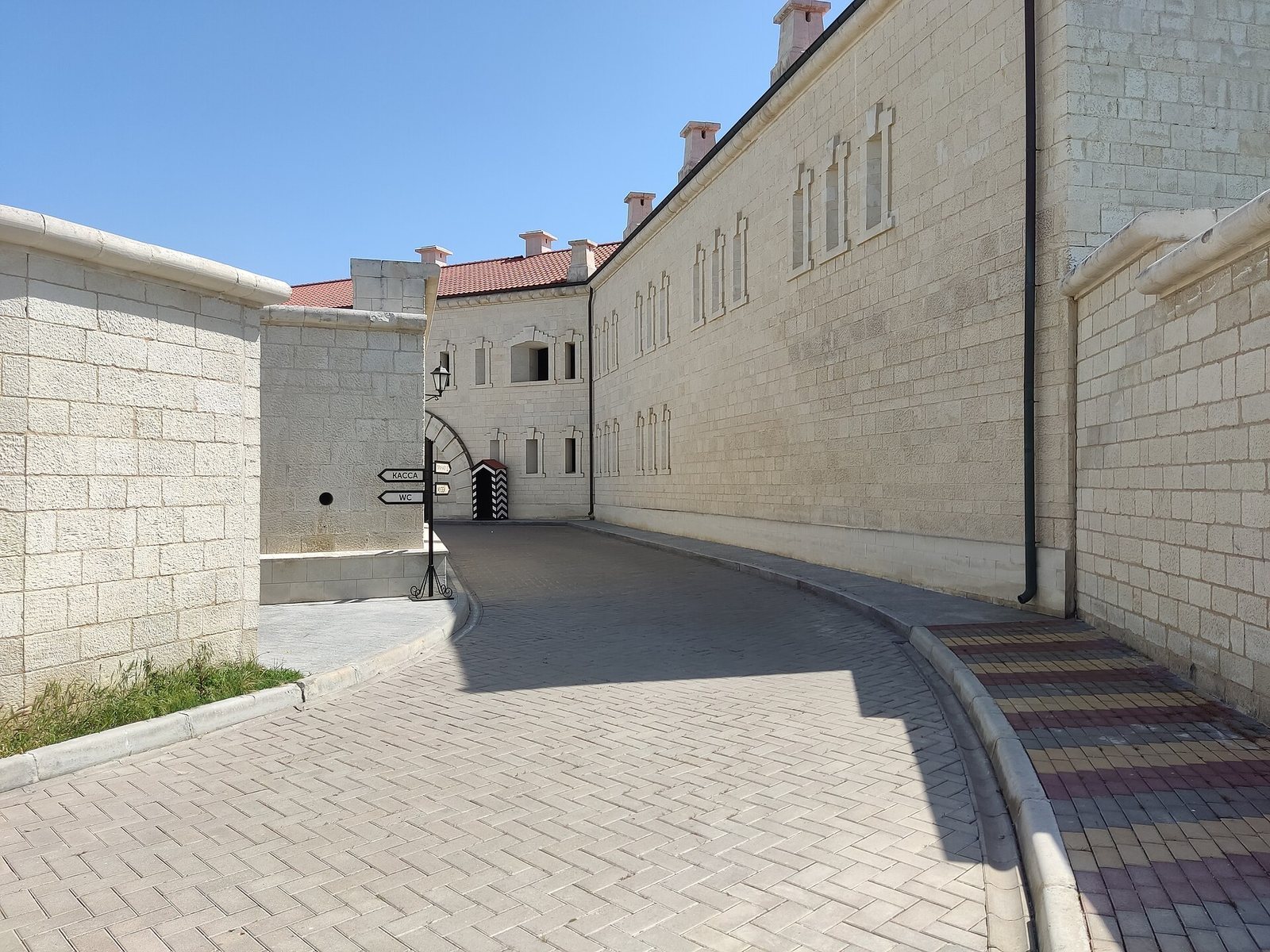
At the rear, or gorge, a two-storey barracks housed the personnel. A ditch and stone escarp, the steep inner face of a defensive ditch, protected this side of the fort. The barracks was almost entirely destroyed during the 1942 fighting. The entrance originally had strong wooden gates at the position of the arch used as the entrance today. A loophole between the gates allowed defenders to fire on attackers who had passed the first barrier.
Memorial
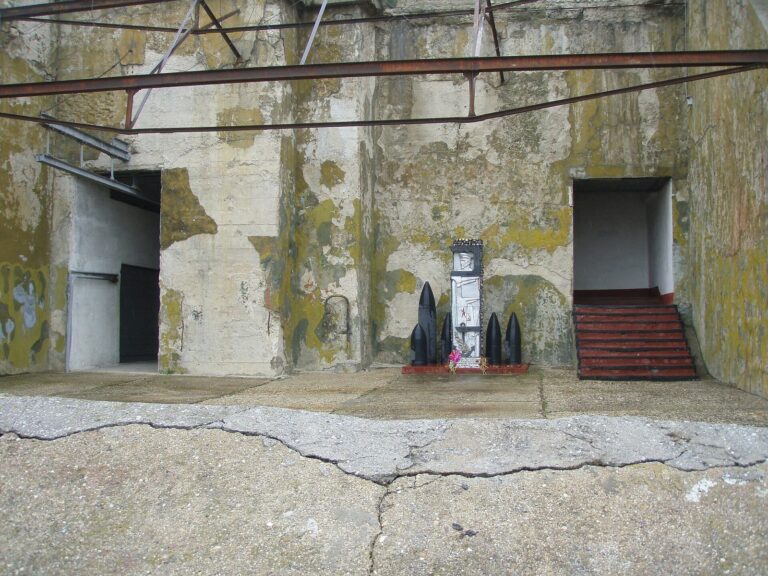
A monument erected in 1944 stands at the mass grave of defenders killed during the 1942 siege.